Episode #9: Maitry, PA in Radiation Oncology
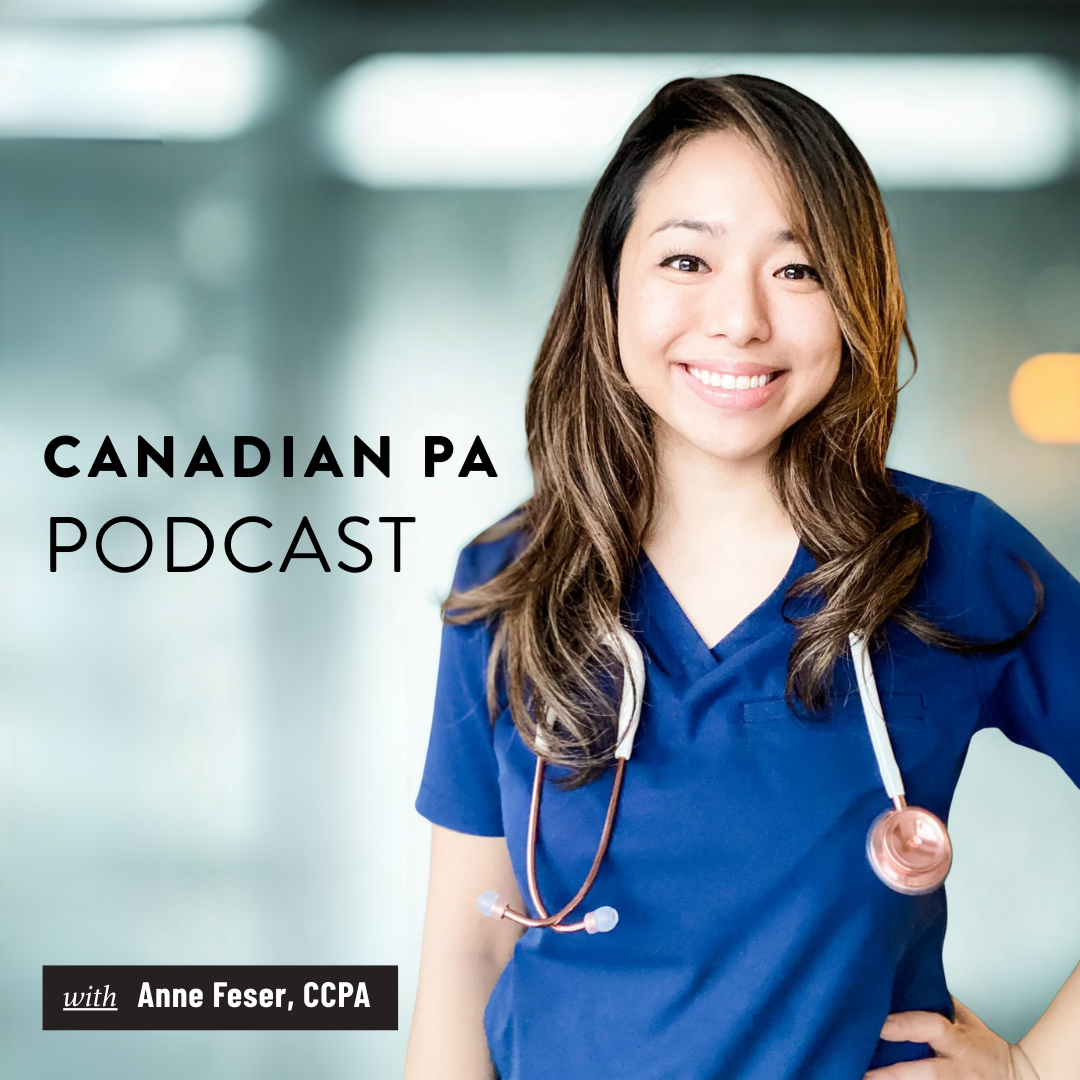
Maitry Patel, CCPA, has been practicing at Princess Margaret Hospital in Toronto's radiation oncology department since graduating from McMaster's PA program in 2014, making her one of the first PAs in Canada to work in this specialty.
Maitry walks through her week clinic by clinic including breast, GU, GYN, endocrine, ocular melanoma, brain METS, and explains exactly how she functions alongside 39 radiation oncologists, residents, and fellows. She's shares about what took time to learn (reading CT, MRI, and PET scans), what she had to earn through formal assessment (radiation prescription directives), and what the data actually showed when her department tracked her impact on wait times and patient volume.
WHAT YOU’LL LEARNHow to build a case for hiring a PA in an oncology department using wait time data and patient volume metrics
What radiation oncology actually involves and how a PA's scope differs from that of a radiation oncologist or fellow
How to use PA electives strategically to test whether oncology is the right fit before you graduate
What funding models exist for PA positions in academic oncology settings, including HFO funding and Ontario Oncology Association applications
GUEST BIOMaitry is a Canadian Certified Physician Assistant practicing at Princess Margaret Hospital (University Health Network) in Toronto, where she's spent her entire career since graduating from McMaster's 24-month PA program in 2014. She works primarily in Radiation Oncology, one of the few PAs in Canada doing so, covering 39 physicians across virtually every cancer site group, from breast and prostate to ocular melanoma and pediatric oncology.
Beyond her clinical work, Maitry is involved in resident and PA student teaching, PA-focused research, and is part of the planning committee for the American PAs in Oncology annual conference.

ON THE EMOTIONAL WEIGHT OF ONCOLOGY“These cancer patients are incredibly resilient. They will take everything you can throw their way. But sometimes being on the other side of things gets a little hard.”
— Maitry, PA in Radiation Oncology
ON HER CAREER TRAJECTORY“I did not see myself working in radiation oncology — that was one prospect I hadn't even considered. But now that I do what I do, I honestly can't imagine myself anywhere else.”
— Maitry, PA in Radiation Oncology
ON WHAT PATIENTS NEED“If you can help them through the entire journey, it makes the process a lot easier and the treatment a lot more bearable. They're not just a number in your chart.”
— Maitry, PA in Radiation Oncology
ON PATIENT-CENTRED CARE“Sometimes we have somebody on paper who looks like they've got every comorbidity in the book, but when you actually meet them, they're upbeat and they want everything possible for their cancer care.”
— Maitry, PA in Radiation Oncology
ON THE ADDITION OF A PA TO RAD-ONC SERVICE“Our wait times were up to two to three months. After I joined, we brought them down to about three weeks.”
— Maitry, PA in Radiation Oncology
-
From Undergrad to PA: Maitry's Path to Radiation Oncology
Anne [0:09] Can you tell us a little bit about yourself?
Maitry [0:12] I work in the Department of Radiation Oncology. I'm a Canadian certified physician assistant and graduated in 2014. I started working there as part of the HFO funding and I've been there since — this is Princess Margaret Hospital, University Health Network. My role is primarily clinical, but there is a teaching and research component as well. I went to McMaster. It's a 24-month program, so I graduated in November 2014.
Maitry [0:46] One of my current colleagues at UHN works in urology. She's also a family friend — she's from the first UofT graduating class and she told me about the profession. At the time I was in an undergrad program at York University and exploring my options.
Maitry [1:05] I knew I wanted to be in medicine, but I also knew I didn't want to go to medical school. I was considering nursing, PT, OT, and other allied health professions. She told me about the profession and about both the McMaster and UofT programs.
Maitry [1:21] I wasn't eligible for the UofT program because I didn't have any healthcare background, so I ended up only applying to McMaster.
Anne [1:29] For people who don't know, how would you describe what a PA is?
Maitry [1:34] I would say a PA is an extension of the physician's role. I know that term is used often, but in fact, I find that a PA is an extension of the entire healthcare team. A physician sometimes gets bogged down with work that only they are capable of doing — whether it's being the primary surgeon or a radiation oncologist who has to plan treatment. A PA can bridge the gap between the admin side, the nursing side, and the clinical aspects. I really do like to think of it as an extension of the entire healthcare team.
Maitry [2:18] This position was part of the HFO funding. When my class graduated, I had applied to this position right away. I knew from the interview it was an excellent opportunity.
Anne [2:31] Did you do any rotations in oncology prior to graduating?
Maitry [2:36] Part of my general surgery rotation at Mount Sinai Hospital was oncology-based — I got to work with a breast surgical oncologist, and we also saw some HIPEC surgeries for peritoneal malignancies. That was my first introduction to the clinical aspects of surgical oncology. I didn't do any other dedicated oncology rotations, but during my internal medicine rotation at Toronto Western Hospital, we saw a lot of oncology patients because it's connected to Princess Margaret. Toronto Western's emergency department also receives neuro-oncology patients, since Princess Margaret doesn't have an ER.
Maitry [3:20] If you divide oncology into three, it would be medical oncology, surgical oncology, and radiation oncology. Medical and surgical tend to be the most commonly known. Radiation oncology is the treatment of malignant cells with X-ray treatments — that's the basis. We use IMRT and VMAT techniques to deliver radiation. We also do intraoperative brachytherapy, which involves applying radiation seeds directly into a surgical cavity while the patient is on the table.
Maitry [3:56] We also do brachytherapy through insertion of seeds directly into the target — whether that's the prostate, a surgical cavity, the lungs, or for cervical and endometrial cancer patients. So there are different modes of delivery, but in one sentence: radiation oncology is the study and treatment of cancer using radiation beams in different forms.
Daily Life and Challenges as a Radiation Oncology PA
Anne [4:24] Within your department, what are some of the common types of cancers you come across?
Maitry [4:31] I technically work for the entire department, which is 39 physicians, so I work across all site groups. Over the past four years I've worked in lung, breast, GU, GYN, GI, HN, pediatric, endocrine, and ocular. On a general week, I end up seeing mostly breast and GU patients — as we know, breast and prostate cancer tend to be the most common.
Anne [5:07] What do you like about working in radiation oncology?
Maitry [5:12] I love working with oncology patients. What I really like about radiation oncology is that each and every treatment plan is custom-designed for the individual patient. I like being able to look at the entire person rather than applying one set plan for everybody. For example, sometimes on paper a patient looks complicated — comorbidities from meningiomas to cardiac conditions to bone issues — but when you actually meet them, they're upbeat and want everything possible done for their cancer care.
Maitry [5:50] On the other hand, we have patients who are quite frail and need a lot of support just getting to where they need to be. I like sitting with each individual, planning a treatment that's right for them, working toward the point where we are curing all of our patients. That's a big vision right now. Princess Margaret's tagline is to find a cure for cancer in our lifetime, and everyone I work with is working extremely hard toward that — pathologists, radiologists, radiation therapists, everyone. Being part of that team makes me feel like I'm doing something genuinely valuable.
Anne [6:39] What do you find challenging about radiation oncology?
Maitry [6:42] Recently I had a situation where I had to give bad news to a young patient who had already received one piece of bad news after another — first a cancer diagnosis, then a recurrence, then an extensive 14-hour surgery with bone and skin grafts, followed by intensive chemoradiotherapy that made him very sick. He was just starting to recover, and then I had to tell him about another incidental cancer finding we picked up while working up the first malignancy.
Maitry [7:27] Sometimes breaking bad news becomes difficult. These cancer patients are incredibly resilient — they will take everything you can throw at them. But sometimes being on the other side gets hard. I try to use it in a positive way: I can help them as much as possible, whether it's calling them a week later just to check in. That means a lot to them — just knowing their healthcare provider hasn't forgotten about them and that they're not just a chart number. It gets difficult sometimes, but it's something we can all learn from.
Anne [8:03] Do you do the same thing every day, or is there variability in your week?
Maitry [8:07] My schedule tends to stay the same for about six to eight months. My supervising physician and I go through it every six to eight months to see if any clinics need additional support. The beauty of having me versus an NP or a fellow is that I'm extremely flexible — I work for all the physicians and can step into any clinic and get started right away. Fellows are strictly associated with one site and usually one or two physicians, so you can't move a lung fellow into a GYN clinic just because it's overbooked.
Maitry [9:06] My hours are technically 9 to 5, Monday to Friday, but I'm almost always in by 7:30 or 7:45. I like to prep on my patients and read up on their full history before I go in. Monday morning I start with a breast clinic — we see a mix of new patients and surveillance patients. Some are on active surveillance, some are follow-up patients, and some come in sooner than scheduled because they have new symptoms or concerns.
Maitry [9:49] Monday afternoon is a GYN brachytherapy clinic where most of our cases are endometrial and cervical cancer patients. We also see palliative patients who are actively bleeding from gynecologic malignancies and need intervention promptly. We also see review patients — those currently undergoing radiation treatment who need close monitoring for side effects.
Maitry [10:23] Tuesday morning is a busy GU clinic where I mostly see prostate cancer patients needing post-operative radiotherapy in either an adjuvant or salvage setting. Tuesday afternoon I have an ocular melanoma clinic, which I've been doing consistently for four years since it was a new addition when I joined. Wednesday I do prostate clinic again and breast clinic in the afternoon.
Maitry [11:03] Thursday morning I have a combined head and neck and lung review clinic for patients currently on treatment. Thursday afternoon is an endocrine clinic where we see mainly thyroid cancer patients and occasionally endocrine or pituitary cancer patients. Friday morning until recently was my brain metastases clinic, where we saw all cancer patients with known brain mets in a multidisciplinary fashion. Friday afternoon I do resident teaching and catch up on charting. If I have students, I'll use that time for a teaching session with them.
How PAs Drive Change and Improve Access in Oncology
Anne [12:00] How do the docs work with you? How often are they interacting with you?
Maitry [12:03] What's great about my department is I have constant access to all my physicians. We're all on the same floor and most have an open door policy — I can walk in and chat about anything, whether it's patient care or clinic concerns. One supervising physician, Dr. Richard Tsang, oversees my entire schedule. We sit down every six to eight months to think about where I'm most needed. I tend to go to clinics that are very busy or understaffed. For example, when a radiation oncologist moved to BC and left a large prostate practice behind, one of the other staff and I covered that clinic for a period.
Anne [13:14] Is there any difference in what patients expect when they see you versus a physician or fellow?
Maitry [13:20] In clinic, there isn't much difference between whether they see me, a fellow, a resident, or the staff physician. For new patients, our work is quite similar: histories, physicals, communicating about the diagnosis, obtaining consent for treatment, going through the side effect profile, and talking about the anticipated treatment timeline.
Maitry [13:47] The biggest difference is what happens behind the scenes. The radiation oncologist — including residents and fellows — creates individualized radiation treatment plans for each patient. Because we're all anatomically different, you can't use one plan for every breast patient. It has to be carefully designed so we're not delivering toxicity to nearby organs. I don't have training in that aspect, so the radiation oncologists can dedicate more of their time to planning if I'm covering the clinical side.
Anne [14:28] How did they introduce you when you first started?
Maitry [14:32] They were very cooperative — they told me to think of myself as a fourth-year medical student or a first-year resident and to focus mainly on histories and physicals. Over time I learned more and more. I started by doing a cross-sectional anatomy course because PA school didn't have much focus on reading CT scans, MRIs, and PET scans, and radiation oncologists read their own diagnostic scans as part of their planning process.
Maitry [15:10] I had to become proficient in reading those scans, which meant learning the anatomical landmarks on CT, MRI, and PET. They were very helpful in getting me to the point where I was comfortable discussing radiation plans with patients, explaining the dose we would offer based on their comorbidities. Eventually I got to the point where I could put in radiation prescriptions and obtain consent to start the process without needing a supervising physician to cosign.
Anne [15:58] A lot of people would compare your role to a resident or fellow — but what are some key differences in how a physician works with a PA versus a resident or fellow?
Maitry [16:11] Whenever I start with a new physician I haven't worked with before, I sit down and ask them what their expectations of a PA are, because as the first PA in the department, most of them have never worked with one before. We do have some American-trained staff who worked with PAs in the US, so that helps. I like to understand their expectations before we get into a routine.
Maitry [16:53] Most physicians expect me to do everything they would do in clinic — see patients, discuss treatment plans, obtain consent, and walk the patient through their entire care journey. Every now and then there are physicians heavily involved in specific clinical trials I may not be aware of, so those become learning opportunities for both of us. Once we establish a routine, it becomes very seamless — I see all the new patients for the clinics I'm part of.
Maitry [17:32] If there is a resident, they will tend to see the new patients since that's where most of the teaching happens. For example, in the endocrine clinic I've now been in for four years, I can work through the entire treatment plan for radioactive iodine. But for residents, it's often their first introduction to that concept, so there's more of a teaching component when they're present versus when I'm working solo.
Anne [17:55] And residents, of course, rotate through and move on?
Maitry [18:02] Yes. Our radiation oncology residents are shared between Princess Margaret and Sunnybrook, and they do some rotations in rural areas as well. We sometimes go months without a resident because they're rotating elsewhere — and that's where having a consistent PA really makes a difference.
Anne [18:23] What difference has the department noticed since adding a PA and having that consistent presence for four years?
Maitry [18:30] The feedback I've received is that it's valuable to have one person who can cover any site group. For example, the week of Christmas when many staff are away, urgent consults can come from anywhere and it can be hard to find a covering physician or resident. Having a PA who can attend to any patient across any site group makes the process much smoother.
Maitry [19:11] For instance, on Remembrance Day Monday — a stat holiday with clinics cancelled — we had a patient I had never met with a badly bleeding fungating mass who needed attention urgently. She could have waited in an emergency department for hours, but because I was there, I could assess her, update the physician on my plan, and allow the physician to take over her care the next day. That kind of continuity is better for the patient and reduces the burden on our emergency departments and inpatient beds.
Anne [19:45] Are you tracking those numbers or doing research on them?
Maitry [19:50] Yes. In the first year, we collected a lot of that data and we're still tracking. What we noticed clearly was that when we lost two full-time staff physicians, we were able to compensate by adding the PA — I was able to see the same number of new and follow-up patients a staff physician would see. In the endocrine clinic, I was contributing roughly a third of the patient load, which made it financially feasible to keep me on while also improving access to care.
Maitry [20:38] One significant result: we only have one endocrine clinic per week with two physicians covering a large catchment area. Wait times had climbed to two to three months at one point. After I joined, we were able to see significantly more consults and follow-up patients, and our wait times came down to about three weeks. That kind of impact is why they will place me in a site group that's either short-staffed or overbooked.
Anne [21:25] There's a misconception that PAs replace doctors. Can you speak to that?
Maitry [21:33] I would definitely not say I'm replacing the radiation oncologist. There's a lot that happens behind the scenes that only they can do — treatment planning being the most significant part. What I can do is help them with the clinical workload, seeing patients so that those patients can actually be planned and set up for treatment in a timely manner. Cancer Care Ontario mandates we see new consults within two weeks of referral. These are cancer patients — time is of the essence. If I help see extra patients in clinic, it frees up the radiation oncologist to work on treatment plans, teach residents, and do research. I'm not replacing them; I'm an extra set of hands helping them cover the clinical load.
Anne [22:44] Are you involved in resident teaching as well?
Maitry [22:47] Most resident teaching happens one-on-one with staff doctors, but in the endocrine clinic I do some orientation teaching before residents start their rotation because it works a bit differently than their other clinics — in terms of how patients are seen, what issues to keep in mind, and the concept of radioactive iodine treatment, which tends to be new for them. I'm more involved with medical students and PA students. When they come through, I orient them, walk them through how things work at UHN and in our department, set expectations for their radiation oncology rotation, and act as a clinical point of contact who can liaise with the rest of the team if they have concerns.
Anne [23:45] Do the residents and medical students you encounter — have they ever interacted with a PA before?
Maitry [23:51] Most of them say I'm the first PA they've worked with. Every now and then, if they've done a rotation at Sunnybrook — which has a lot of PAs — they've had some exposure. Or if they've trained in the US, they'll be familiar with the concept.
Anne [24:10] What's your impression of what they think a PA does after interacting with you? Have you gotten feedback?
Maitry [24:17] The feedback has been very positive. They appreciate the extra set of hands in clinic. If residents have to dedicate all their time to patient assessment and clinical workload, they can't meet their research requirements or spend time learning radiation planning and other technical aspects of their training. Having someone in clinic who not only helps with the patient load but also supports the transition to the treatment plan helps them meet their curriculum goals. Many of the residents I started with are now staff at our department, and it's really gratifying to see that transition over time.
Anne [25:16] Are you the only PA working in radiation oncology in Ontario?
Maitry [25:19] I would have said yes up until about a month ago. Since then, a PA has been hired at London Health Sciences. One of our staff — someone I worked closely with for about a year and a half — became the Chief of London Regional Cancer Centre. He's been very enthusiastic about PAs and has attended our Queens Park Lobby Day events. As part of his broader vision for a multidisciplinary approach to cancer care — including PAs, NPs, and clinical specialist radiation therapists — he put in an HFO application this year and was approved to hire PAs.
Anne [26:11] It sounds like this model really works in radiation oncology. If a chief of staff or hospital is thinking about adding a PA to their radiation oncology department, what are some of the steps or considerations?
Maitry [26:30] The first thing I'd urge them to do is look at their numbers, because numbers speak volumes. We were able to show through our first study that introducing a PA to a busy academic centre — not just clinically busy but research-active — the PA can help significantly on the clinical side. The quality of care patients receive is identical to what a resident, fellow, or staff would provide, while freeing up more time for research, teaching, and other academic activities. If busy academic or non-academic centres can show that adding a PA will let them see more new consults or cut wait times, that's the first business case to build.
Navigating Funding, Directives, and Professional Development as a PA
Anne [27:33] Funding is a big concern. I remember you did a talk at CAPA on four different funding models. Can you walk us through what that looked like year by year?
Maitry [27:44] The first year was part of the HFO funding. The plan was for HFO to cover 50% of my salary, 25% from my department — essentially from the physicians' shared billing pool — and 25% from UHN. Starting in year two, the plan shifted to 50% from the department and 50% from UHN. But we had a change in administration and, as part of budgeting cuts, all PA funding was removed. That meant the department's goal of hiring two PAs had to go on hold, and they used the same money to pay one PA for year two.
Maitry [28:35] In the interim, we applied to the Ontario Oncology Association, which helps oncology departments hire additional staff in the form of GP oncologists, clinical specialists, or internists to help with the oncology workload. We used that process to apply for a PA position, and it was approved. Now I'm permanently funded through the physicians' shared billing pool — since I indirectly help generate that revenue through the clinical work I contribute.
Anne [29:31] What can support staff — nurses, admin — expect when interacting with you?
Maitry [29:38] With nurses, they know they have someone to turn to when the radiation oncologists aren't available. They can expect the same kind of response from me as from a staff physician — following up on results, following up on how a patient is doing clinically. We have a triage line for each site group managed by nurses. They handle most calls, but every now and then one comes through that needs to go to staff. In the past, nurses would have to hunt down a covering physician. Now they know to reach out to me for any site group, and things get resolved much faster.
Maitry [30:34] All support staff — nursing, social workers, admin — can expect the same quality of response and clinical judgment from me as from a staff physician, whether it's facilitating a referral, triaging an incoming concern, or managing something in clinic.
Anne [30:58] Do you work with medical directives?
Maitry [31:00] I do. UHN has a set of base medical directives that cover a lot. Within my department specifically, we had to add directives for me to put in radiation prescriptions — which is significant, because an incorrect prescription can be lethal. Thankfully, there are multiple checkpoints where things are assessed and reassessed before the dose is actually delivered.
Maitry [31:21] After six months on the job, I had a formal assessment with all the physicians I'd been working with. They individually observed me across multiple patients, covering everything from new patient interactions and histories and physicals, to consent, side effect counseling, review appointments, radiation prescriptions, and entering doses into our radiation system. Once all of that was approved by everyone, the medical directives went in.
Anne [32:11] Do you do anything outside of your clinical work?
Maitry [32:14] I am involved in teaching and research. Our department is research-heavy, so a lot of research happens in clinic through patient recruitment for studies. That naturally leads to conversations about what else we can do with existing or new data. For example, I was able to enroll one of the first patients for a PET scan study we're running at PMH — we're looking at whether PET scans can identify higher-risk prostate cancer patients who don't yet show conventional metastatic disease on standard imaging. It's about finding more innovative, safer ways to deliver radiation while minimizing toxicity.
Maitry [33:12] I'm also interested in PA-specific research. I want to focus it on PAs in oncology. One thing a colleague of mine, Nicolette, and I are working on is assessing the oncology curriculum across Canadian PA programs and identifying gaps or improvements. We know from medical school data that there's been a recognized gap in how oncology training is delivered — it tends to be broad and unfocused, and there's real value in streamlining it.
Anne [33:44] Are there any plans to further your education — a master's, leadership roles, more advocacy?
Maitry [33:53] I'm right in the middle of applying for the Emerging Health Leaders program at McMaster. It's designed for current students and recent graduates, though they were happy to accept my application even four years out. It's an intensive two-week program that develops leadership skills in new healthcare providers. I'm hoping to use it to advance the PA role in oncology and develop the next generation of PAs in this space.
Scope of Practice, Growth, and the Future of the PA Role
Anne [34:32] There's a misconception that once you become a PA, that's it — no more growth. What motivates you to keep developing?
Maitry [34:43] My staff and my department are very encouraging and supportive of new ideas. It's a genuinely innovative environment — people are always working on something, whether it's research, academic projects, conferences, or building new connections. Working with people like that keeps you energized and generating ideas of your own. I'm now part of the planning committee for the American PAs in Oncology annual conference, which gives me a chance to connect with American PAs, learn what they're doing differently or similarly, and hopefully move toward more consistent PA roles across both countries.
Anne [35:37] Your scope of practice has been evolving over four years. Do you see it continuing to change?
Maitry [35:46] In theory, we've talked about me doing courses in radiation planning. A lot of what we discuss is clinically needed, but there's currently a gap — I can't dedicate time to those courses without stepping back from the clinical work. It's a fine balance. Nothing is set in stone yet, but in theory, my scope of practice could eventually approach that of a radiation oncologist's. That's the long-term trajectory if things evolve the way they could.
Essential Advice for Aspiring Radiation Oncology PAs
Anne [36:27] If a PA student was interested in radiation oncology, what tips do you have for them?
Maitry [36:33] I would really urge them to use their electives to do rotations where they're exposed to different types of oncology settings — inpatient, outpatient, surgical, or a combination. Once you've immersed yourself in one of those settings, you come out knowing so much more about the process, and it puts you in the right headspace. You'll either know oncology is for you, or you'll find out it isn't — either way, the exposure is valuable.
Maitry [37:14] For new graduates already working in oncology, there are great resources available online through MD Anderson and Princess Margaret. Read up on them. Cancer patients aren't only going through cancer treatment — they're navigating a lot simultaneously, and so are their families: social concerns, family concerns, self-image issues. Make yourself aware of how to treat a cancer patient holistically.
Maitry [37:49] When you see a patient, try to pick up on issues that may or may not be directly tied to their diagnosis. If you can help them through the entire journey, it makes the process much easier and the treatment more bearable. That's one tip I'd give to anyone working in or thinking about oncology.
Anne [38:10] Great — get that exposure through electives. And how do you stay on top of current medical knowledge and your CPD hours?
Maitry [38:17] My department sends me to relevant conferences. The one I attend every year is the APO conference — American Physician Assistants in Oncology. It's highly relevant because I come away up to date on all the major oncology updates from the past year. I go to a wide range of sessions: surgical, medical, and radiation oncology, because most of our patients are being treated with a multimodal approach.
Maitry [38:56] I also try to attend radiation oncology-specific conferences, which tend to be more technical and intense. They help me keep up with new clinical trials — both trials my patients could potentially enroll in and new data that could change practice over time. In my career so far, I've seen a real shift toward minimizing treatment duration and reducing toxicities. Keeping up with that pace of change is really important. Most of my CPD also comes from tumor boards I attend — which count as non-accredited hours — and from resident teaching and learning sessions I participate in.
Reflection: Looking Back and Looking Ahead
Anne [39:39] When you look back and reflect on your decision to pursue a PA career, did you ever think you'd end up where you are today?
Maitry [39:48] Not at all. I went into the program wanting to learn as much as I could about the profession — which I definitely did. During rotations, I was very interested in emergency medicine. I loved the ER. I loved the hands-on, immediate nature of helping patients. Oncology is such a contrast because the process is long and sometimes you want to help right away but can't.
Maitry [40:23] I did not see myself in radiation oncology — that was one prospect I hadn't even considered. If I'd ended up in oncology, I thought it would be medical or surgical oncology. It's funny how things work out. But now that I do what I do, I honestly can't imagine myself anywhere else. I'll probably retire from this position.
Anne [40:45] Are you happy with your decision to become a PA?
Maitry [40:48] Absolutely. There's nothing I would change — not my role, not how I got here. Going to McMaster, getting that training, being exposed to so many different clinical environments in first year and on rotations, building PA colleagues and friendships over time. I would highly recommend this profession to anyone, and I say that genuinely, not just because I'm in it.
Anne [41:16] Is there anything else you'd like to add?
Maitry [41:21] I think we've covered almost everything about my role. I'm happy to help anyone who's thinking about oncology from a PA perspective.
Anne [41:33] And how should they get in touch with you?
Maitry [41:35] Anne has my contact information. Email is probably the best way to reach me — I'm almost always on my work email.
Anne [41:47] Excellent. Thank you so much.
-
About Me
I am the first Canadian Radiation Oncology Physician Assistant working on the front line since my graduation from the McMaster Physician Assistant Education Program in 2014.
I am an active member within the outpatient clinics in breast, lung, eye, endocrine, head & neck, skin, genitourinary, gastrointestinal, gynaecology and brain metastases sites. I act as a liaison for University of Toronto and McMaster University PA students at UHN.
I am proactive about creating accessible patient education material using plain language and providing faultless transition to community or palliative care services for oncology patients.
Outside of work, I have recently been elected as the Alternate Director for Ontario on the Canadian Association of Physician Assistants (CAPA) Board of Directors, due to start my term in October 2019. A true Torontonian at heart, I feel committed to being the voice for Ontario PAs in the rapidly changing healthcare environment. Beginning October, I will be working closely with Sahand Ensafi (Emergency Medicine PA at UHN) for leading the development of the PA role at at a provincial level.
1. What is a Physician Assistant?
A PA is an extension of the physician’s role. This term has been used often, but I do find that PA’s are an extension of the entire health care team.
A physician sometimes gets bogged down with work that only they are capable of doing, whether it’s being the primary surgeon, or it’s being the radiation oncologist who has to plan their patient’s radiation treatment.
A PA can bridge the gap between the admin side of things, nursing side of things and the clinical side things.
How I learned about the PA profession
One of my current colleagues at University Health Network – Dhiral is a PA who works in Urology.
She is from the first University of Toronto PA Class of 2010 and also family friend who told me about the PA program while I was in my 3rd year university.
I was exploring options at that time and I knew I wanted to be in medicine but I did not want to go to medical school. I was deciding between nursing, physiotherapy, occupational therapy other allied health programs.
Dhiral told me a little bit about the PA programs at McMaster University and the University of Toronto. I was not eligible for University of Toronto, because at the time UofT required paid health care experience (which is now different). I only applied to the McMaster PA program, and got in.
What is Radiation Oncology?
If you have to divide Oncology into three, it would be:
Medical Oncology
Surgical Oncology
Radiation Oncology
Medical and Surgical Oncology tend to be the most known type of Oncology. Radiation Oncology is the treatment of malignant cells with x-ray treatments.
“Radiation oncology is the steady end treatment of cancer using radiation beams in different forms.”
We use IMR/VMAT techniques – these are different types of techniques we use to deliver our radiation.
We also do intra-operative radiotherapy, which is the application of the radiation seeds directly into the surgical cavity to be able to treat the patient while they are on the bed.
We also do brachytherapy which is the insertion of gold seeds into wherever it is we are targeting, whether that’s the prostate, a surgical cavity, lung, cervical cancer patients, endometrial cancer patients. So different modes of delivery treatment.
Common Conditions seen in Radiation Oncology
I work for the entire Department of Radiation Oncology, which is 39 physicians. That can I mean, it means I work at all site groups.
In the last 4 years I’ve worked in lung, breast, GU, Gynecology, GI, Eye, CNS, Paediatrics, Endocrine, Pituitary, and with our Palliative Clinic patients.
In a general week, I see mostly breast and GU patients, as we know breast and prostate cancer patients tend to be the most common in the general population.
A major component of my work is viewing, reading, and interpreting images in various forms, including but not limited to mammograms, X-rays, computed tomography (CT) scans, magnetic resonance imaging (MRIs), and nuclear scans such as positron-emission tomography (PET) and whole body iodine-131 (I-131) scans.
Through this medium, I will share some common and some unique uncommon oncologic findings. So let’s start with mammograms! It only makes sense as breast cancer was the most common cancer in women worldwide, contributing 25.4% of the total number of new cases diagnosed in 2018. In Ontario, where I practice, most women ages 50-74 are enrolled in the Ontario Breast Screening Program (OBSP), through which they get screening mammograms every 2 years.
When viewed on a mammogram, women with dense breasts have more dense tissue than fatty tissue. On a mammogram, non-dense breast tissue appears dark and transparent. Dense breast tissue appears as a solid white area on a mammogram, which makes it difficult to see through and identify areas suspicious of malignancy.
Starting My PA Career in Radiation Oncology
I work at Princess Margaret Hospital in the Department of Radiation Oncology, so my job hours would be Monday to Friday, technically 9 am to 5 pm, but I’m usually in at 7 am or 7:45 am as I like to prep on my patients and get the day started. I like to read up on my patients so that I know the full history before I go in. Every clinic and every day is variable.
This job was part of the Health Force Ontario funding when my class had graduated. I applied tothis Radiation Oncology position in addition to 7 other positions. Immediately after the interview, I knew this was an excellent position.
My Exposure to Oncology during 2nd year PA School
Part of my 2nd year PA school General Surgery rotation at Mount Sinai Hospital in Toronto was Oncology based.I got to work with a breast surgical oncologist, and the other aspect was also some of the HIPECC surgeries that they do for peritoneal malignancies. That was my first introduction to the clinical aspect of surgical oncology.
I did not do other dedicated rotations for oncology. However, during my internal medicine rotation at Toronto Western Hospital, I did see a lot of oncology patients as it was connected to Princess Margaret Hospital. We would send our neurooncological patients to Toronto Western Hospital as well since Princess Margaret Hospital does not have an ER department.
Getting Oriented as a new PA hire
They were co-operative in that they told me to think of myself as either a 4th year medical student, or a first year resident.
I was told to focus mainly on history and physicals, and eventually as time went on I learned more and more.
I started off by doing a cross-sectional anatomy course, in PA school there was not a lot of focus on reading CT scans and MRIs, PET scans, and radiation oncologists read their own scans whether its diagnostic scans or our own department scans.
We use these scans to plan radiation therapy. I have become proficient in reading these scans, which means that I am learning the anatomical landmarks as we see them on CT scans, MRIs and PET scans.
The staff radiation oncologists were very helpful in getting me to that stage. I was comfortable enough to discuss the radiation plans with the patients a and discuss the dose that we would offer to the patients because sometimes it can refer based on the patient’s co-morbidities will tailor our treatment plan.
And eventually we got to the point where I was able to put in the radiation prescriptions. I am able to obtain consent, and get the process started without a supervising physician to co-sign.
Working as a PA in Radiation Oncology
What I enjoy about working in Radiation Oncology
I love working with Oncology patients. What I enjoy about radiation oncology is that each and every treatment plan is custom designed the individual patient. I like being able to look at the entire individual and not just having one set of plan that is for everyone.
For example, sometimes we have somebody on paper that looks like they have co-morbidities – everything from meningiomas to cardiac conditions, to bone issues, but when you actually see the individual – they upbeat and they want everything possible for their cancer care.
In contrast, we could also have someone very frail and need a lot of initial support in getting where they need to get to eventually.
“I like being able to sit with each individual person, planning out a treatment plan which is right for them to be able to get to the point where we are curing all of our patients of cancer.”
Princess Margaret Hospital’s tagline is to come up with a cure for cancer within our lifetime, and everyone that I work with is working extremely hard to get to that point whether its pathologists, radiologists, or medical oncologists, surgical oncologists and just being part of that team, makes me feel like I’m doing something extremely valuable for the patients and I am being back to the community that I’ve taken from all these years.
What I find Challenging about Radiation Oncology
Recently I had a situation where I had to give bad news to an individual with a young family. For a few years I was delivering bad news to this individual – first a diagnosis of cancer, then recurrence that required extensive 14 hour surgery with bone grafts, skin grafts followed by extensive chemotherapy. They were very sick, and they were just getting to get better.
I had to give that patient another piece of bad news, there was another cancer picked up incidentally while doing blood work for the first malignancy. Iti s difficult when you have to break bad news, patients are very resilient, and that’s something I learned about these cancer patients is that they will take everything you can throw their way. But sometimes being on the other side of things get hard.
I try to use it in a positive way, that I can help them to the best of my ability, whether it is just calling them a week later and checking in, and saying ‘how are you doing?’ because that means a lot to them. Just knowing that their health care provider hasn’t forgotten about them, and they are not just a number in your chart. Sometimes that gets difficult, and its something we can all learn from as well.
PAs are filling in the gaps
My schedule changes every 6-8 months based on where the gaps are in the various Radiation Oncology Clinics.
Usually my schedule is the same for 6-8 months. My supervising physician and I will go through my schedule every 6-8 months just to see if there are any particular clinics that need additional help.
The beauty of having me versus a Nurse Practitioner or a fellow, is that I am extremely flexible. Like I said, I work for all the physicians, so I can be put into any clinic and could get started.
Fellows, strictly speaking associated with one site. You cannot just take a lung fellow, and put them in a gynecology clinic, even if gyne is behind in terms of the consults.
My Weekly Schedule
Monday:
I start off Monday morning with a breast clinic, usually most of my clinics are clinics we see some new patients and some surveillance patients. Our follow-up patients could include those who are active surveillance or patients we are just following without any imaging or blood work. Sometimes we follow patients with mammogram, or sometimes we see patients as part of our follow-up schedule, but they are coming in sooner than they’re appointment because they have concerns, questions about what they’ve gone through or what to anticipate.
I go to gyne clinic in the afternoon where most of our patients are endometrial and cervical cancer patients. We will see every now and then, palliative patients in those clinics. These are individuals, because of their gynecologic malignancies are bleeding actively, we do have to intervene sooner rather than later.
In clinic we will see review patients, who are patients that are undergoing radiation treatment right now. We need to keep a close eye on them and are experiencing anticipated side effects, but we need to keep on top of things.
Tuesday:
Tuesday mornings starts off with a busy GU clinic, where I mostly see prostate cancer patients. Most of them require post-operative radiation therapy either in an adjuvant setting or salvage setting.
And then I end off Tuesday with an eye clinic, which is ocular melanoma. I have been doing that clinic consistently over the past 4 years since it was a new addition to this schedule when I joined the department.
Wednesday:
Wednesday I would do prostate cancer and breast cancer clinic in the afternoon. Again, prostate and breast tend to be my heaviest workload.
Thursday:
Thursday morning, I have a head and neck and lung combined review. This is where we see head and neck, and lung patients who are currently undergoing treatment. If we are overbooked or behind in terms of Cancer Care Ontario (CCO) guidelines and when we have new patients, we will see 1-2 add on patients.
Thursday afternoon, I have an endocrine clinic, where I see mainly thyroid cancer patients, and every now and then we see neuroendocrine or pituitary cancer patients.
Friday:
Friday morning up until recently used to my brain metastasis clinic, in a multidisciplinary fashion we would see all of our cancer patients who have known brain mets, either they need surgery, radiotherapy, or one of the other form, or surveillance because they are on immune therapy.
Then Friday afternoon I attend resident teaching, finish up on my charting. If I have students at that time I will use that time to catch up with them which may include a teaching session, and I also use that time for research.
6. Impact of a PA in Radiation Oncology
How I work with 39 physicians in the department
What’s great about my department I have constant access to all of my physicians. We’re all on the same floor and most of them have an open door policy. I can just walk into their office and we can chat about whatever we need to, whether it’s patient care or clinic concerns.
My supervising physician is the one who is in charge of my entire schedule, and that is Dr. Richard Singh. We will sit down every 6-8 months and think about where I am needed most. I tend to go clinics that are very busy or full.
Over the years we have known that when a staff Radiation Oncologist leaves there is a gap that needs to be filled, and I end up covering those clinics.
For example, we had a radiation oncologist who moved out to British Columbia, and he had a big prostate practice. One of the other staff and I took over that clinic for a while. That would tend to be my role in how I interact with the physicians. Unfortunately, I have not had the opportunity to work with all 39 of them over the 4 years, as that is a lot to go through, but I have worked with a lot of the senior staff.
Patient Experience with a PA vs. MD
In clinic, there is not a lot of difference in whether a patient sees myself (PA), a fellow, a resident or the staff physician. Our practices are pretty similar for new patients. It involves history taking, physical examinations, communicating about the diagnosis, obtaining consent, going through side effect profiles, and talking to patients about the anticipated future timeline.
The biggest differences in patient care is what happens behind the scenes.
Behind the scenes, the radiation oncologist including the residents and fellows are involved in creating an individualized, personalized plan for each and every patient – because we are all anatomically different.
All of our organ sizes are different and how we are structured is different. We can’t just use one plan for every breast patient, for example, it has to be carefully designed so that you are not giving toxicity to the nearby organs.
I don’t have any training in that aspect, so I am not involved in that part of patient planning aspect, which is where the radiation oncologist can dedicate more of their time if I can help them clinically.
How I work with a NEW physician team member
Anytime I am starting off a new clinic with a physician that I have not worked with before, I usually sit down with them, and I ask them about what their expectations of a PA is.
This is because I am the first PA to be working in the Radiation Oncology Department at UHN, and it is likely they have not worked with a PA before.
Although, we do have some American staff Radiation Oncologists who have had opportunities to work with PAs in the United States.
“Most physicians, in fact, would expect me to do everything they are doing, which is being able to see a patient, discuss treatment plan, obtain consent, walk them through their entire cancer journey that the patient would expect to go through.”
Every now and then there are physicians who are either part of clinical trials and I may not be aware of all the clinical trials they are apart of, or trying to recruit patients for. It tends to be a learning and teaching opportunity for both myself and the physician.
Once I get started with the physician, and I am in a routine, we know exactly what we are doing. I see all the new patients for the clinics I am part of. If there is a resident, then the resident will see new patients and physicians will dedicate a little bit of extra time to do the teaching.
For example, I’ve been going to the endocrine clinic for the past four years. I can determine the dose to give to the patient for the radioactive iodine. We would go through the treatment plan, and for residents it ends up being the first time they are introduced to the concept of radioactive iodine treatment. Subsequently, there is a teaching component for staff physicians when they work with residents, as opposed to working with me as a staff PA.
Our radiation oncology residents are shared between Princess Margaret as well as Sunnybrook Hospital, and they do have some rotations they either have to do uptown or in rural areas. They will rotate through different site groups and we will go months without having a resident because they are doing their rotation at Sunnybrook.
Impact of having a PA work in Radiation Oncology
Benefit #1 – PAs help with reduced staff coverage on holidays
The feedback that I have received is, “its nice to have one person who can essentially cover any Radiation Oncology site group”. For example, during the week of Christmas, a lot of the staff members are away and we can get urgent consults from anywhere or patients who drop in. This may be difficult if you can’t find a covering physician and resident.
But if you have a PA who can attend to any of the patients for any of the staff it makes the process a lot easier. For example, on Remembrance day weekend, which is technically a stat holiday, our clinics were cancelled. We had a radiation oncology patient who bleeding fungating mass and they needed to be attended to.
The patient would have to go to the ER and wait a long time, but since the Radiation Oncology department has a PA – I was able to attend to them, and update the physician about what my plan of action was, and allow physician take over the care the next day.
“It makes the transition smoother for the patients, for the physician in charge and I hope it is reducing the load we are having to put on our Emergency departments and our inpatient beds.”
Benefit #2 – PAs can help take on the Physician workload
In the first year that I was there, we did collect data of PA use. We are keeping track of those numbers still. We have noticed reduction in two full time staff physicians, we were able to compensate for that reduction by hiring a PA. I was able to see the same number of new patients that a staff would see.
For example, there is two radiation oncologists who treat endocrine malignancies, so both pituitary and thyroid cancers. When I was introduced to the practice I was seeing 1/3rd of the patients.
“I was contributing just as much as a staff physician in terms of the number of new patients and follow up patients I was seeing, which made it financially feasible to keep me around, as well as improve our access to care.”
Benefit #3 – PAs can help increase # of patients seen while reducing wait times
One huge thing we noticed, is that we only have one neuroendocrine clinic per week, and like I said we only have two radiation Oncology physicians that are in charge of it. We also cover a wide catchment area, so our wait times at one point were up to 2-3 months, and although thyroid cancer tends to be slow growing, and it is safe to wait that long and pituitary tumors tend to be benign more often than not.
“When I was introduced, we were able to see a lot more consults and a lot more follow up patients. Our wait times is now 3 weeks, decresaed from an initial wait time of 3 months.”
The multiple site groups have had that opportunity, that’s why they’ll put me in a site group where there is a lack of a staff physician or where there are more consults than anticipated for that time frame.
The idea that “PAs replace physicians” is a misconception
PAs are NOT replacements for Radiation Oncologists. Like I said, there is a lot that happens behind the scenes that only the radiation oncologists can do, which I absolutely cannot help with. But what I can do is help Radiation Oncologists with their clinical workload, which is seeing patients. This frees Radiation Oncologists to perform treatment planning so that these patients can actually be planned and tee-ed up for their treatment, and treatment can then be delivered in a timely manner.
Cancer Care Ontario (CCO) mandates that we see our new consults within two weeks of the referral being sent to us. Radiation Oncology is not like other specialties where we can just hold on to these referrals and say ‘Oh we’ll see when we can get to you’.
These are cancer patients, and time is of the essence. We have to get to them sooner rather than later, and if I can help see extra patients in clinics, it frees up that much more time for the radiation oncologist to work behind the scenes, both for resident and fellow teaching, as well as being able to plan the radiation treatment plan for the patients.
I would not say that I am replacing them, I would be better described as an extra pair of hands that helps radiation oncologists cover the clinical load that we have.
How to Add a PA to a Radiation Oncology Department
If a group is contemplating adding a PA to their Radiation Oncology Department or Practice, I would urge others to do what we did – and that is to look at what their numbers are.
Numbers do talk. We were able to show with our first study that introducing a PA to an academic centre, which is very busy as is, not just from a clinical point of view but a research point of view, if you can hire PA or two in that setting, they can help significantly in a clinical aspect and the quality of care that the patient’s receive is identical to what the residents, fellow or staff would provide. And a lot more time can be freed up for research, teaching, and other activities that the radiation oncologists want to participate in.
If the hospital is part of a busy academic centre, or even if they are not an academic centre, and are a community hospital, if they have the numbers to show that the addition of a PA will help them see extra new consults per year, or help them cut down wait times to be seen by Radiation Oncology, that would be a good start to look of.
How My PA Job Was Funded
The first year I started off, like I said, I was part of the Health Force Ontario Career (HFO) Start funding. The plan was that HFO was going to provide 50% of my salary, 25% of was going to come from my department, which was all of the physicians have a pot and the pot pays for their salaries, and that pot would have paid 25% of my salary. The remaining 25% came from UHN.
Starting in my second year of employment, the plan was 50% was going to come from the department, 50% from UHN. But we had a change in our administration and as part of budgeting, they removed all of PA funding. What that meant was, my department’s goal to hire two PAs had to be put on hold, because now they had to use the same money to pay one PA, which is what they did for the second year.
In the interim, we were able to do our application for their Ontario Oncology Association (OOA), which is an association which helps other departments (Oncology Departments, Radiation Oncology) hire additional staff, in the form of either: GPOs (GPs in Oncology training) Clinical Specialists or Internists who help with Oncology workload, or PAs, or NPs. We used this process to apply for funding for a PA, which was approved.
Now we have finally gone into having me as a permanent part of the Department of Radiation Oncology. I am being funded by the ‘pot’ as we call it, which is where all of the Radiation Oncologists put their billings, and they all have set salaries, and I am paid through that same salary.
I technically indirectly help the pot but I do not do any of my own billings.
What Hospital Staff (nurses, support staff, allied health), can expect when interacting with a PA
With the nurses, they know they have somebody to go to if the radiation oncologists are not immediately available. They can expect the same kind of response from me as a PA, as they would from a staff radiation oncologist, which includes following up imaging results, triaging incoming referrals, facilitaitng referrals, updates on the treatment plan, and updates on how the patient is doing clinically.
In addition, we have a triage line for every Radiation Oncology site group which is manned by the nurses. They do try to cover all the triage calls as much as they can, but every now and then there is a call that comes through which has to be redirected to the Radiation Oncology staff.
Prior to having as a PA, the nurses would have to try to track down staff. However, if the Radiation Oncologist on staff is on leave, or at a conference, the nurses would have to try to find the covering radiation oncologist. Since I started working as a PA in Radiation Oncology, the nurses know I work in all of these different site groups and the triage nurses to know to turn to me if there are any concerns that crop up and it can be sorted a lot quicker and easier than having to hunt down the staff. At the end of the day, you do get the same answer whether from the staff PA or Radiation Oncologist.
Working with PA Medical Directives in Ontario
I do work with medical directives. So UHN has a set of base medical directives, which thankfully does cover a lot. So in my own department, we had to add the directives, including allowing the PA to be able to put radiation prescription, which obviously is a significant deal. If you put in the wrong prescription it can be lethal for the patient. Thankfully we have multiple check points where things get assessed and re-assessed before the dose is actually delivered to the patient. However this is a pretty important medical directive to get.
After 6 months of me working at Radiation Oncology, I had an assessment with all of the physicians I was working with at the time, they individually observed me with multiple patients to everything from new patient interactions, histories, physicals, obtaining consent, talking about side effects, seeing patients onboard with treatment, putting in radiation prescriptions, putting in radiation doses, the diagnoses in our radiation system, and once all of that was approved by all of the physicians I work with at the time, those medical directives went in.
8. Teaching Responsibilities
Most of the resident teaching in Radiation Oncology happens with one-on-one with the staff physicians, but in the endocrine clinic, I do tend to do a little bit of the resident teaching before the residents start their rotation, because it tends to be a little bit different than some of their other clinics – both with how the patients are seen, what kind of issues we need to keep in mind, and the concept of radioactive iodine treatment tends to be new for them.
I am more involved in medical student and PA student teaching, as these students come through the Department of Radiation Oncology. I am responsible for orienting them, and ensuring they are aware of how things are process at University Health Network, what to expect out of their rotation, and to have a clinical point of contact who can act as a liaison with other staff radiation oncologists, or team members if they have any concerns along the way.
How I enhance resident teaching
Many residents and medical students often tell me I am the first PA they have interacted with. Every now and then, they have done a rotation at Sunnybrook, and as we know Sunnybrook does have a lot of PAs – so they have interacted with a few of the Sunnybrook PAs. Or if they have done a rotation in America, they will sometimes be familiar with the concept of PAs.
If residents have to dedicate all of their time in assessing patients and doing the clinical workload, they can’t dedicate some of that time to their research requirements as part of being residents at University of Toronto. They learn the treatment techniques they have to learn, the planning, etc. Having somebody in clinic, who not only helps them with their patient workload, but helps them with their transition to the treatment plan, really helps them in meeting their curriculum goals, so they can dedicate that extra time to work with them and their requirements.
So far I’ve had excellent rapport with all of the residents I have interacted with, some of the residents that I started off with are now staff at our department so its really great to see that transition over time.
9. Tips for Learning about Radiation Oncology
If a student was interested in doing Radiation Oncology, I would really urge them to use their electives to do a rotation where they are exposed to different types of Oncology settings whether its inpatient, outpatient, surgical, clinical or radiation – or a combination of those. It is good to immerse yourself in those settings, you come out learning a lot more about process and it really puts in the right mindset you can find out if Oncology is for you, or you found out its not for you.
If you still don’t find out, then that’s okay but at least you’ve had the exposure to the kind of setting you can potentially work on in the future. If there is a new graduate looking to work in Oncology or just started to work in Oncology, there is a lot of resources online, both from UofT, MD Anderson, Princess Margaret.
Cancer patients are not only going through cancer treatment, they are going through a lot simultaneously and their families are going through a lot – whether its social concerns, family concerns, how they perceive themselves (image concerns).
Make yourself aware how to treat a cancer patient holistically, when you see somebody, try to pick up on what their issues might be, which may or may not be directly related to their cancer diagnosis. But if you can help them through the entire journey, it makes the entire process a lot easier and treatment a lot more bearable for them.
How I stay on top of current medical knowledge in Oncology
My department tis very cooperative and encouraging. They do send me to a lot of relevant conferences. The one I go to every year is the American Physician Assistants in Oncology (APAO), as I find it extremely relevant to me as I find that I am up to date on the Oncology updates that have come in the last year. I tend to go a lot of different sessions, whether its surgical, medical or radiation – as we are trying to treat our patients with a tri-modality approach.
I will also try to go to radiation Oncology specific conferences. They tend to be a lot more technical and a lot more intense in learning, but it helps me keep up to do ate with the new clinical trials that are ongoing, the new clinical trials that my patients could be part of, or new data that has come that could change things over time. And In my course of short career, I have noticed we have transitioned to minimal treatment and less number of days of radiation, minimizing toxicities. It’s important to keep up with all of that. Most of my CPDs come from conferences.
I do have tumour boards that I go to, which tends to be the non-accredited CPD credits I can account for. And some of it comes from resident teaching and learning sessions that I am apart of.
Final Notes
I went into the PA program wanting to learn a lot more about what the profession was, which I definitely did. When I was doing my rotations, I was very much interested in working in the Emergency, because I really loved the ER, I loved being hands on, I loved being able to help patients in that time.
And Oncology is such a contrast because it’s such a longer process, and because you want to help them right away but you can’t. So I think a lot have transitioned, I did not see myself working in Radiation Oncology, that was one prospect I had not considered.
I wanted to work in either ER or Oncology, and if was Oncology I wanted to work in surgical or medical oncology. Its funny how things work out over time. Now that I do what I do, I don’t think I can imagine myself anywhere else. I’ll probably retire in this position!
Reflecting on Deciding to become a PA
There is absolutely nothing I would change about my role, or how I got to where I am, which was going to McMaster, getting the training, getting exposed to all these individuals in first year and clerkship, meeting all these PA colleagues and friends over time. I would highly recommend the PA profession to anybody.