Episode #10: Maureen Taylor, PA in Infectious Disease
“I was 48 years old and took a two-year leave of absence to completely change careers. I’m still doing it 10 years later. I approach my job like a journalism assignment—research everything, gather it quickly, assimilate it, and move forward.”
Maureen Taylor is a former CBC journalist who spent 25 years covering health reporting before discovering the McMaster Physician Assistant program through a story assignment. At 48, she entered PA school, transitioned fully into clinical practice, and now works in infectious disease after an earlier role in emergency medicine at Sunnybrook Hospital.
She describes the infectious disease PA role as a consult-based service focused on antimicrobial decision making, complex inpatient cases, and hospital-wide collaboration. Her background in journalism shaped her ability to synthesize evidence quickly, communicate clearly with patients, and function effectively within fast-moving clinical teams.
WHAT YOU’LL LEARNHow to Maureen navigated a late-career transition from journalism into PA training and clinical practice
What the infectious disease PA role involves in hospital consult services and antibiotic stewardship
How fecal microbiota transplantation is used as a treatment for recurrent C. difficile infection
What transferable skills from health journalism translate directly into PA clinical decision making
GUEST BIOShe entered the McMaster University Physician Assistant program as a non-traditional applicant in her late 40s. The transition required stepping away from a long-established media career and adapting to the demands of rigorous medical training while leveraging her strong background in health communication and synthesis.
During PA school, she trained in a variety of clinical settings and went on to practice in emergency medicine at Sunnybrook Hospital before moving into infectious disease. In her current role, she works within a consult-based service focused on antimicrobial stewardship, interdisciplinary collaboration, and managing complex inpatient cases.
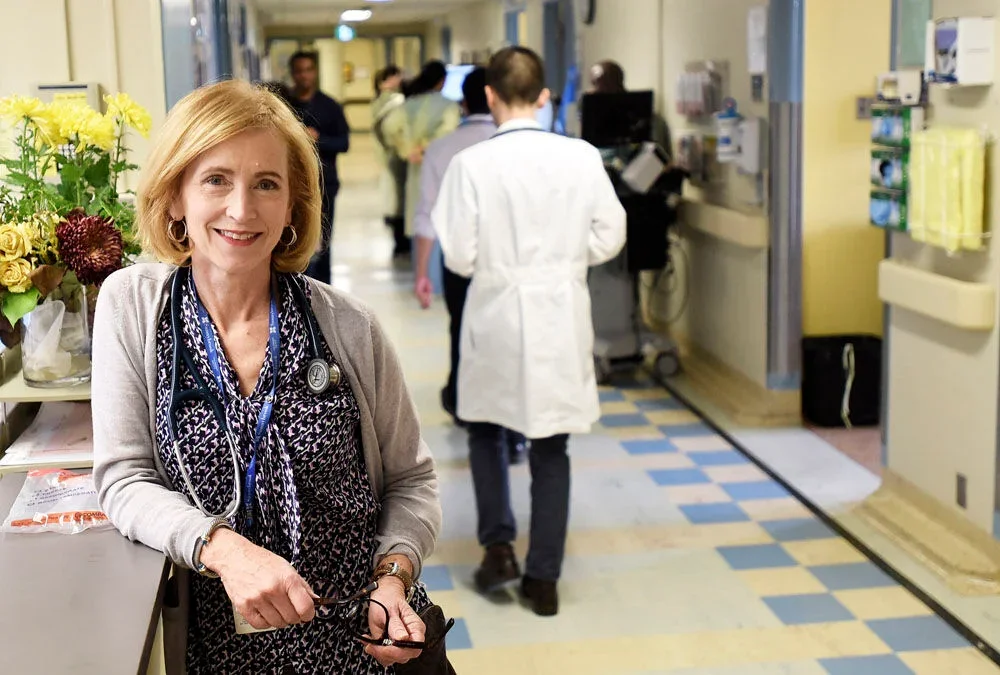
ON PA IMPACT AND DATA“Before we had a PA in ID, physicians would put in a consult and it might sit there more than a day. Now with the PA, we see all consults by end of day and discharge patients days earlier. If I had to quit tomorrow, they would definitely be advertising for another PA. It's the kind of thing they'll never be able to live without now.”
— Maureen Taylor, CCPA, PA in Infectious Disease
ON PATIENT CARE“Asking patients personal and uncomfortable questions is not a problem for me. That's what I did as a journalist. I deliver news to patients both bad and good, in a way that's accessible to them because I always had to do that as a medical reporter.”
— Maureen Taylor, CCPA, PA in Infectious Disease
ON HOW INFECTIOUS DISEASE FUNCTIONS“If you have an infection of a prosthetic knee, it's not just leaving the hardware in and prescribing antibiotics for three weeks. This is where ID and surgery working together promote better outcomes”
— Maureen Taylor, CCPA, PA in Infectious Disease
ON HOW PATIENTS FEEL ABOUT RECEIVING CARE FROM A PA“We have to know what we don't know and when to ask for help. That's what defines a good PA. Now when I simply say 'I'm a physician assistant,' patients don't ask me what that is anymore. They're just happy to see me.”
— Maureen Taylor, CCPA, PA in Infectious Disease
ON WORKING IN ID“I love figuring out how an infection came to be. It's like playing detective again and I love that aspect of it.”
— Maureen Taylor, CCPA, PA in Infectious Disease
ON C. DIFF & FECAL TRANSPLANTS“Once you collect a specimen and send it to the lab, it can take 48 hours to get a result. In the meantime, you don't know if the patient should be isolated or started on vancomycin. By taking stool from a healthy donor and transplanting it into a patient with C. difficile, we repopulate their gut with good bacteria in just 20 seconds.”
— Maureen Taylor, CCPA, PA in Infectious Disease
ON WORK LIFE BALANCE AS A PA“One of the best things about this job? I don't work nights or weekends. That was the job for me from day one. I'm 58 now, and my goal is to work part-time in ID in 3–4 years, then wind down to retirement with more travel. Life balance matters.”
— Maureen Taylor, CCPA, PA in Infectious Disease
-
From Journalism to Medicine: Maureen Taylor's Path to the PA Profession
Maureen [0:10] My name is Maureen Taylor. I was born in Detroit, which is weird, but I actually spent 99.9% of my life growing up in Ontario. Down here in Windsor is where I grew up. My first career was as a journalist, as a lot of people know.
Maureen [0:28] I spent 25 years, most of it at the CBC, but also at TV Ontario. The latter part of my journalism career was spent as the medical health reporter for CBC's The National, both radio and TV.
Maureen [0:43] That was where I guess I sort of started to wonder if I'd made the wrong career choice and maybe I should have gone into medicine. And one day this physician assistant program memo came across my desk as a story idea from McMaster.
Maureen [1:02] I had no idea what physician assistants were, and rather than do a story on it, I actually ended up applying to the program. At the time, I thought of it as a way to go back to school to learn more about medicine, and that would make me a better reporter. I also needed to get away from the CBC or I was going to kill someone.
Maureen [1:21] So I was 48 years old and I took a two-year leave of absence to do the program. But when I was graduating, I discovered that morale was still really low at the CBC and my friends encouraged me not to come back.
Maureen [1:37] So I went out and practiced as a PA and I'm still doing it 10 years later.
Anne [1:43] What drew you to the PA profession specifically?
Maureen [1:46] Well, for me, this doesn't sound like a really wonderful reason for doing it. But as I said, I actually didn't expect to practice as a PA. It was a way to get a mini medical education.
Maureen [2:02] For someone with a background in journalism, history, political science, and English, I wouldn't have had the science prerequisites to get into a program like the one at U of T or University of Manitoba.
Maureen [2:17] McMaster's approach to medicine, the way they approach medical school and the PA school, was really the only one that could have worked for me. And at 48, you're certainly not going to start all over again going back for science prerequisites and trying to get into medical school.
Maureen [2:34] So that's what drew me to it.
How Journalism Skills Enhance Physician Assistant Practice
Maureen [2:36] What keeps me there, I think, is the idea that I can provide this kind of hands-on patient care, very similar to what physicians do, but I do it in conjunction with the entire medical team. And I really enjoy that.
Maureen [2:53] I approach my job as I would a journalism story where I'd suddenly be handed an assignment and had to research everything about that particular story that day. So I know how to go out, research information, gather it quickly, and assimilate it.
Maureen [3:11] I'm never going to become the expert in a particular issue on that day, but I can say that I'm becoming very comfortable, at least with infectious diseases, after doing it for almost five years.
Anne [3:23] And how was your experience being part of the inaugural class at McMaster?
Maureen [3:27] That was just amazing. To be one of that class — I can still see everybody's faces sitting around doing the problem-based learning. And Dr. John Cunnington was just so great to have as not only the director of the program, but also providing a lot of the learning for us at the time. It was wonderful.
Maureen [3:49] I'm still really good friends with a lot of the people in my class. I just went on a trip to California and Arizona with a few of them. It's nice to be groundbreaking like that. There were hiccups, of course, that have been worked out since.
Maureen [4:07] But those were some good years for me.
Anne [4:10] What did you feel your medical journalism background brought to your education and practice?
Maureen [4:15] Well, let's put it this way — asking patients personal and uncomfortable questions is not a problem for me. That's what I did as a journalist. I think I have good communication skills. I deliver news to patients, both good and bad, in a way that's accessible to them because I always had to do that as a medical reporter.
Maureen [4:38] I had to take complicated studies from journals and break them down into bits and pieces that an audience would understand. I'm also used to working quickly to a deadline and working as part of a team. In television journalism especially, you've got a cameraman, a producer, usually a writer on the national desk, and an assignment editor.
Maureen [5:03] You're all trying to work together to make the best story possible. And that's what we have to do as PAs as well.
Understanding the Physician Assistant Role and Ideal Attributes
Anne [5:11] With that being said, in your own words, what is a physician assistant?
Maureen [5:17] I tell people that we are like the residents who never go away. That works really well with physicians, nurses, and other people in the healthcare profession. You have to massage that a little bit for the lay public who may not even understand what a resident is at the end of the day.
Maureen [5:36] But when you think about it — and I've been told this by physicians I've worked with in both emergency medicine and ID — we reach the level of a very senior resident. What's nice about it is we provide those physicians with continuity.
Maureen [5:57] They can teach us things like they do residents. But the problem is residents leave after a few weeks. What we provide the physician with is someone who says, "I remember you taught me how to do that. I know how you like the neuro exam done. I know how you like your documentation."
Maureen [6:13] They can rely on us to provide that continuity of care with their patients. That's how I explain physician assistants to the public. Sometimes you have to tell them we're like nurse practitioners, but we're trained more in the medical model that physicians are.
Maureen [6:30] That's sort of how I explain it to them. I have to say that in the last two or three years, when I just say I'm a physician assistant, I really don't get patients asking me what that is anymore. They're just kind of happy to see me.
Anne [6:44] What would you say the attributes are of an ideal PA?
Maureen [6:48] Obviously, empathy for the patient and putting patient-centred care first. You have to be able to think on your feet and have a good general knowledge of pathophysiology.
Maureen [7:04] Every healthcare professional should have a good knowledge of what it is they're practicing. But I think even more so for PAs — we have to know what we don't know and when to ask for help.
Maureen [7:19] The nicest thing about being a PA for me has been to see and acknowledge that I'm growing all the time and becoming more confident all the time. We generally get residents — we call them fellows in ID — who come through, and I then treat them as my staff for a little while and report to them.
Maureen [7:43] They're always surprised at how much I already know about infectious diseases. I certainly know as much as most general medicine residents who come through. Who would have thought that about me 12 years ago? If you'd told me I was going to be practicing at that kind of level, I would have told you that you were crazy.
Anne [8:07] Reporting on the stories and now you're actually living it.
Maureen [8:11] Yeah. I wake up and wonder if this has all been a dream.
Maureen's First Job as an Emergency Medicine Physician Assistant
Anne [8:17] Tell us about your very first job as a PA.
Maureen [8:20] My first job was at Sunnybrook Hospital in Toronto in the emergency department. Three of us from McMaster were all hired at the same time and we were lucky in that there was already an American-trained PA there. The ground had already been set.
Maureen [8:36] The physicians in the emerge already knew what a PA could do. I worked with about 30 different physicians and everybody bought into the PA role — there was never any issue. We had some issues with nursing at the beginning, but I always approached that by letting them know right off the bat how much I respected what they brought to the table.
Maureen [9:03] I wouldn't say I was 100% great with everybody, but many of them became my friends and respected what PAs do. Now that I've moved to a different position, I think we paved the way for the PAs coming after us — these things are not so much of an issue as they were when I first graduated.
Maureen [9:27] So yeah, emergency medicine was first.
Anne [9:29] And what did you enjoy about Emerge?
Maureen [9:32] I loved the fact that I saw a little bit of everything and honed my procedural skills. I was in a big academic hospital, so I had to acknowledge that residents also needed to get their emergency skills up. Did I ever successfully intubate anybody? No. Did I try a couple of lumbar punctures? I did suturing and became very comfortable with that, and with helping to set fractures and put casts on.
Maureen [10:11] I liked that you saw the gamut from things that were rather trivial to things that were really serious. We were a trauma hospital as well, so I got to look in on some of that. What I didn't like at my age was the hours. That was really what started my decision to eventually get out of emergency medicine, no matter what opportunity came along. It was really getting to me.
Maureen [10:32] I'm not a good sleeper at the best of times, so to ask me to come home at 8:00 in the morning and go to bed and get 8 hours sleep — that's not going to happen. So yeah, those were the things I liked and didn't like about it.
A Serendipitous Career Shift to Infectious Disease
Anne [10:45] Tell us about how you got the infectious disease job.
Maureen [10:47] It was so serendipitous. I remember meeting another PA, Melissa Declo, at a CAPA meeting, and I found out she worked in infectious diseases. A little background — my late husband was a microbiologist and infectious disease doctor, and we would talk about infectious diseases at the dinner table all the time.
Maureen [11:11] And as a reporter who covered things like SARS and H1N1 flu, I always liked infectious diseases. When I found out she had the job I thought, how did you get that sweet job? And she said she had the best job in the world. So that was in the back of my mind.
Maureen [11:28] I was just wishing that some other ID physicians would want a PA. Then she called me up and said she was going on mat leave — her first pregnancy — and they wanted to hire someone to fill in. At that point I was back at Sunnybrook in Emerge part time, still doing the odd evening and night shift, and wanting to find something that was better for my lifestyle.
Maureen [11:52] I was in a position where I could take a chance on a job that might only be a year long — that didn't really bother me. Melissa and I had talked about possibly job-sharing when she came back, which would have been fantastic.
Maureen [12:11] But she moved to Ottawa during that pregnancy and she's up there now. She never did come back, and I've just stayed at the job full time. Now it's almost five years.
Anne [12:22] That's incredible. I was actually speaking to Melissa recently — you have now been at that job longer than she was.
Maureen [12:26] Yeah. I just want to say I'm not as good at the job as she was. She was particularly brilliant and I think the physicians miss her every day. That's not to say I don't bring some things to the table, but they miss her all the time. I'm a little sick of hearing about it, actually. Kidding.
Exploring the Specialty of Infectious Disease and PA Contributions
Anne [12:47] For those that don't know, what is the specialty of infectious disease?
Maureen [12:51] The way we do it is this — when people are admitted to hospital for whatever reason, they're admitted under different services. Sometimes they have infections as the primary reason they come in, but sometimes they come in for another reason and an infection becomes an issue in hospital. So they consult the infectious disease service.
Maureen [13:09] Infections obviously cover everything from flu to a wound infection after surgery to pneumonia to gastrointestinal issues. We deal with a lot of abscesses — you'd be amazed at where pus collects in the body and has to be drained and treated with antibiotics.
Maureen [13:46] We also manage a lot of antibiotic use in the hospital because, as many people know, antibiotic resistance around the world is becoming a huge problem. We encourage physicians in the hospital who are putting patients on antibiotics to get us involved, because we can help select the best antibiotic — the one that will do the least amount of damage as far as promoting resistance.
Anne [14:03] So apart from antibiotics, what other circumstances are they consulting the ID service for?
Maureen [14:17] I'd challenge the premise of that question, because what I'm finding is that as medicine gets more and more specialized and as resistant organisms take over the normal flora in our body, a lot of physicians are not comfortable coming up with an antimicrobial regimen for their patients. That's not true of general internists — they're very comfortable. But surgeons, for example, have a lot to think about just managing the surgical aspects. When they find out their patient's wound swab is growing something that usually comes from the colon, it's just easier for them to contact the ID specialists and say, what do you think this patient should be on, for how long, and what else do we need to do?
Maureen [15:11] So that's what we bring to the table. Duration of antibiotics is an issue — sometimes people are left on them way too long. And then there's the issue of source control. If you have an infection of a prosthetic knee, it's not just a matter of leaving that hardware in and putting the patient on Keflex for three weeks.
Maureen [15:32] It may require you to remove the hardware, put in a spacer, leave the patient on antibiotics for three months, and then bring them back to the OR to put the new hardware in. This is where ID and surgery working together can promote better outcomes for patients over the long term.
Anne [15:52] Apart from prosthetic joint infections, what are some other conditions that you see come through?
Maureen [15:58] One of the big ones in hospital-acquired infections has been C. difficile, and that's become a sort of side specialty for me because I actually do fecal transplants in the hospital for people with refractory C. diff. I'll give you an example from this week — we had a patient who had had a benign liver cyst for years, found incidentally on CT scan, and they were just monitoring it every few years.
Maureen [16:37] But all of a sudden there was abdominal pain, and when they redid the CT, it had grown huge — practically taken over his liver — and he was febrile. We got involved because of the fever, and sure enough, that benign cyst had become infected and was now an abscess.
Maureen [16:58] That's the kind of case I really enjoy because the mystery is: what is the infection and how did this become infected? Where did the bacteria come from? We sit around and discuss the pathophysiology of how infections happen. To me that's like playing detective again, and I love that aspect of it. And then there's just the regular old diabetic feet, which can be quite disgusting, and whether something is cellulitis or just chronic venous stasis. I see all of those things and really enjoy it.
Fecal Transplants: A Unique PA Procedure in Infectious Disease
Anne [17:33] Can you tell us a little bit about the fecal transplants?
Maureen [17:37] C. difficile, as a lot of people know, is an infection that mainly happens in the hospital but is starting to be seen in the community. It usually happens when you've been put on antibiotics. They're there to destroy the bad bacteria, but as I tell patients in a very elementary way, they also destroy the good flora.
Maureen [17:53] When they do that, it allows C. diff to take over in our gut and causes profuse watery diarrhea. Sometimes very ill people can die of it, and we've seen that it was a huge problem in Canadian hospitals back in the early 2000s. I don't think anybody realized how easily it spreads around the hospital.
Maureen [18:15] There were drugs to treat it — first metronidazole, and that's starting not to work so well for those with more severe disease. So we treat them with vancomycin. But some people keep relapsing anyway. About a third of people will relapse, and of those who relapse a first time, about 50% will relapse a second time.
Maureen [18:48] By taking healthy stool from a donor and transplanting it into a patient with C. diff, we can repopulate their gut with good bacteria. The way we do it is through a simple rectal enema — it's done in about 20 seconds and it's over.
Maureen [19:13] When I came to Michael Garron Hospital, the ID physicians were already offering fecal transplants. I expressed an interest because I'd actually done a story about it as a health reporter and won an award for that story. I told them I'd like to get involved.
Maureen [19:32] These are usually done on an outpatient basis and I don't normally see outpatients, but I wanted to get involved. So I started being the one to prepare the sample — at first we had a blender for it, but now I have something way more high-tech that involves a Styrofoam cup and a popsicle stick.
Maureen [19:49] Then I went from mixing the sample to actually doing the transplants. I think my ID doctor Jeff Powis and I are doing up to 60 or 70 a year, and we get referrals from patients all over Ontario because this isn't offered in very many places. It's really gratifying to see patients get better with the fecal transplant. And one of my jobs is to spread the word that it's not that hard to do — this really should be the responsibility of ID doctors. We've recently been contacted by an ID physician and his team who want our protocol and to have us help them set up a program there.
Maureen [20:39] So that's really gratifying.
A Typical Day and Autonomy as an Infectious Disease PA
Anne [20:41] How would you describe your typical day or week in the life of being a PA in ID?
Maureen [20:48] I work with three different ID doctors and they all rotate — so every three weeks it's back to the other doctor again. I really enjoy that. When I get in in the morning, the first thing I'll do is look at the new consult list. Has anyone consulted us overnight or early in the morning? How many new patients are there to see? I'll usually get started with those, do all the research, maybe order some extra tests, make sure they're on the right antibiotic if they've already been started on one.
Maureen [21:28] Then the physician — depending on how they like to work — we get together, talk about the new patients, go see them all together, and put a plan in place. Then we have our follow-up list. When we see new patients, it's not just a matter of seeing them the first day and then signing off. Some need us to follow along because there might be outstanding tests in microbiology and imaging.
Maureen [21:47] So they become my follow-ups as well. I spend the rest of my day going to see follow-ups and writing notes. And let's face it, I spend a lot of my day dictating notes. That's a complaint of a lot of people who work in medicine. We seem to be quite tethered to our computers and not really spending as much time with patients as we'd like. My day is usually 8:30 to 5:00 or sometimes a little later.
Anne [22:24] Overnight or weekends?
Maureen [22:25] No, and that's the wonderful thing. When I first talked to Melissa about this job, she said she didn't work nights and didn't work weekends. And I knew that was the job for me.
Anne [22:39] How do you liaise with your supervising physician?
Maureen [22:42] We have the kind of relationship where we're in constant contact anyway by text, even if it's just "do you want a coffee this morning?" I feel very comfortable changing some patients' antibiotics, but for others I want to chat with the physician first. It's not even really a chat — it's like, "Can I change that to Pip-Tazo?" Often the physician is already looking at the new patients on the computer themselves, so we're totally in sync.
Maureen [23:21] It's just kind of evolved gradually as I've gained more confidence and do more things independently. But gaining more confidence hasn't stopped me from consulting them when I just want that second opinion and that blessing.
Maureen [23:40] I actually feel I have as much autonomy as I need. And that's because I have a great relationship with all the doctors I work with — and because the PA who came before me had already laid that groundwork.
Anne [23:53] Does it differ a lot between the three doctors you work with?
Maureen [23:56] They differ in how they like to receive updates. One of them likes me to let him know when I've seen each new patient right away throughout the day because he has so many other responsibilities in the hospital. Whereas a couple of the others would rather I see everyone in the morning and then sit down together at 1:00 to go over everything at once — a bolus of patients and follow-ups — and then we round on them all together. Then I get back to my desk and dictate all my notes.
Maureen [24:34] It's just how they prefer to organize their day. It really doesn't have anything to do with not trusting that I've done something right in the morning. It's physician preference.
Fostering PA Integration and Collaboration in Hospitals
Anne [24:51] What's your interaction like with the nurses and other healthcare providers on the floor?
Maureen [24:55] Absolutely great. Because I'm a consulting service, I don't really have to hang out in a specific ward all the time — I'm all over the hospital from the oncology ward to the respirology ward to the emergency department.
Maureen [25:11] We have PAs in our hospital who are in internal medicine and basically spend whole days on the wards. Those nurses are already used to PAs interacting with them and helping them. The thing about the nurses is I spend more time talking to them about things like: what did the bowel movements look like this morning? Did this patient have a fever this morning?
Maureen [25:34] I don't really have to instruct nurses to do something because it's all done electronically. All our orders are electronic. So if I want an antibiotic stopped and another one started, I put that into the system and the nurses don't care who put it in — it comes up in their system and they do it.
Maureen [25:52] The idea of "will they take orders from me" is not an issue in our hospital because of the electronic record, but also because of the hard work that's already been done to help all of the allied health understand what PAs are.
Anne [26:20] Any tips for hospitals looking to integrate PAs on how they can foster that kind of environment?
Maureen [26:26] Do some education ahead of time. Encourage allied health to talk to their friends and colleagues in other hospitals where there are already PAs. Show them the data that shows that PAs don't actually take away nursing jobs — there's absolutely no evidence that we've taken away nurse practitioner or nursing jobs.
Maureen [26:44] And if you talk to people who've had PAs for a while, I think they'll tell you, "Oh my God, I love having the PA, because I can never reach the physician, but I can always reach the PA." So that's what I would do.
Managing Patient Expectations and Discussing Palliative Care
Anne [27:04] What can patients expect from their interactions with you on the ID service?
Maureen [27:11] I think that they can expect two things. They will see me almost every day and I'll follow along with them, but they will also have met the physician who supervises me. That's something we always do on the first day. The physician will be there to answer their questions, but patients know that when they see me after that, if they have a question I don't have the answer to right off the bat, I'll speak to my physician and get back to them.
Maureen [27:43] A lot of times they ask me questions that have nothing to do with their infection — things like, "Do you think they're going to take the gallbladder out during this admission, or will they make me wait?" And I have no idea and no control over that. So a lot of it is just educating the patient about what I have control over and what I don't, because we're seeing patients for their infection, but that's sometimes not all that's going on with them.
Maureen [28:17] One other thing I want to add that's maybe different about me — you wouldn't think we see a lot of palliative patients in ID, but sometimes we do see patients in that transition from active treatment to palliation. They may have an underlying infection going on that has nothing to do with whether or how soon they're going to die.
Maureen [28:34] I let them know that I'm okay to talk about their death and their goals of care, even though it's not really my bailiwick. If they have questions around that — because I have an interest in palliative care and in dying — I let them know it's okay to talk to me frankly about their fears, because I've been there myself. So maybe that's something I'm adding to my practice that really has nothing to do with my role as an ID PA.
The Joys, Challenges, and Continuous Learning in ID
Anne [29:02] What are the things you enjoy about ID and what do you find challenging about it?
Maureen [29:08] As I said, I do enjoy figuring out how an infection came to be for cases that aren't obvious. There's epidemiology involved sometimes — especially in the hospital when we have an outbreak on a ward and we're trying to track it. I don't have that much to do with that sort of thing, but my bosses do, so I listen in on that and it's fun.
Maureen [29:26] I obviously enjoy the part where we try to choose the best antibiotic with the narrowest spectrum, because why not just put everybody on ertapenem, right? But there are good reasons not to. And I take cost into consideration. I have a long history of supporting a universal healthcare system in Canada, and I know that it's in jeopardy if we keep going at this rate. So I'm a big fan of "choosing wisely."
Maureen [30:03] I'd have to say I don't love walking into a room and being overpowered by the smell of diarrhea or a diabetic foot. But there's really almost nothing that grosses me out. They're not pleasant, let's put it that way.
Anne [30:37] And how do you keep on top of the latest medical knowledge in infectious disease?
Maureen [30:42] Twitter. Twitter is great. I follow journals in infectious disease and I follow smart micro and ID people. First thing in the morning, before I even get out of bed, I'm running through the Twitter feed. If there's an article I think I need to read, I flag it for later. That's mainly how I stay on top of things.
Maureen [31:19] But also, we're able to access grand rounds in ID throughout Toronto, so we try to make time in our busy day on Tuesdays to do that. And just talking to my physicians about these things all the time.
Anne [31:29] ID is often challenging for students because of the number of microorganisms and antibiotics. Any tips on being able to solidify that knowledge for PA students?
Maureen [31:38] This is what I tell students who come to me and seem scared — because I know how little ID you get in your training. I don't expect students to know antibiotics. That's not going to be their job right off the bat.
Maureen [32:01] But I would like them to know the difference between gram positives and gram negatives for bacteria, and just be able to name a few. That's fairly easy to get through. For viruses — you'd be surprised — we don't actually end up treating viruses as much in hospital as we do bacterial infections. There's not that much for viruses, and a lot of times it's just supportive care.
Maureen [32:17] So I tell them, don't worry too much about viruses. Focus on bacteria — gram positives and gram negatives — and come prepared to name a couple and the diseases that they cause. From there, you're going to go out and see patients on your rotation, and it will slowly dawn on you which ones are "above the waist" and which ones are generally "below the waist." That's oversimplifying, but it's certainly enough for a student to get started.
Demonstrating the Positive Impact of PAs in the ID Service
Anne [32:45] What impact has been noticed since adding a PA to the service?
Maureen [32:48] This work was done before I got there by Melissa and the team, but they actually collected the data. I won't know the study as well as Melissa would, but the gist of it was that they could show that when they got the PA in ID, the time from patient admission to discharge home was decreased by at least a couple of days.
Maureen [33:17] The physicians will tell you in plain language: before they had a PA, an ID consult might sit there more than a day before they could get to the patient. That means at least one extra day of not knowing whether to start antibiotics, or which antibiotics to start.
Maureen [33:36] With the PA, that never happens. We're able to see all the consults that come in between 8:00 and 5:30, and they know we're going to come up with a plan by the end of that day. I think the reason we're able to get patients out of hospital quicker is because we come up with a plan: Are you going home with IV and a PICC line? Who's going to follow you up? What imaging are you going to need? I help arrange all of that.
Maureen [34:02] I know that if I had to quit the job tomorrow, they would definitely be advertising for another PA to take my place. It's the kind of thing they'll never be able to live without now.
Anne [34:22] You also contribute to resident teaching.
Maureen [34:24] We don't have as many residents right now as we used to, but when we had the 4th year general internal medicine residents, I would say to them: if you have anything to teach me, especially about pathophysiology, I'm happy to learn. I used to say that more in the beginning than I do now.
Maureen [34:41] Now the people I work with most are fellows in ID — essentially R5s. They're very knowledgeable, about to write their Royal College exam, and up to speed on all of these drugs and bugs. So I learn from them. I don't have the clinical clerks or the R1s to teach, but I do get PA students.
Navigating Evolving PA Scope of Practice and Medical Directives
Anne [35:15] Can you speak to how your scope of practice has changed from when you started in ID to now?
Maureen [35:23] It was very obvious, especially starting in emergency medicine, that you weren't going to be able to walk in the door right after graduation and start ordering imaging. You're not going to be ordering an MRI or a CT with contrast right away — those are things where you want to be careful and know what the right indication is. And when PA students graduate, everybody wants to know what procedures you're doing. Everyone is very procedure-oriented when they come out of school.
Maureen [35:58] It's going to be gradual. The physicians are going to have to watch you do a couple and then they'll be comfortable letting you do it on your own. At Sunnybrook we didn't have official sign-offs like "I need to see you do 3 and then you can do 1 alone" — it was just a discussion between you and the physician. But your scope of practice definitely grew as you gained more experience and confidence.
Maureen [36:21] Now in ID, what would be a little beyond my scope of practice would no longer be whether I'm going to put a chest tube in — I don't do that, and my ID physicians don't do that either. The procedures we do are the occasional abscess drainage and, obviously, the fecal transplants.
Maureen [36:39] For me, scope of practice in ID is about when I'm going to be confident enough to know when we have to pull out ivermectin, or colistin, which is the antibiotic of last resort and is terribly toxic. We have ID pharmacists we work with as well, and even my physicians wouldn't start those things without first talking to the ID pharmacist and discussing it. So that's scope of practice in the ID world — which students might be thinking sounds boring, but to me those are the exciting things.
Maureen [37:24] Scope of practice is not as much of an issue for someone in a consult service like me as it would be in a more procedure-heavy setting like emergency medicine.
Anne [37:43] If a hospital is interested in adding a PA to their infectious disease service, what are some steps they should take or considerations they should think about?
Maureen [37:50] My boss told me he wanted to send me to our microbiology lab for a week just to watch how microbiology works at the bench side. So I went for a week and watched them take the plates with the agar, put the specimen on it, put it into the different machines, and see how they get answers.
Maureen [38:09] In retrospect, I went too soon. I had really just started. What would probably have been better was to first become more familiar with the different organisms we'd be dealing with and the antibiotics used to see what's susceptible and what's not — because that's how you find out what's resistant. Then go to the lab. It almost would have been better a year into things.
Maureen [38:46] So that would be one thing. Yes, they're going to need to learn more about microbiology, but first give them some practice with the simpler kinds of infections they'll run across in hospital and get comfortable ordering the drugs. It was a long time before I didn't have to look up the dose for many antibiotics anymore.
Maureen [39:22] It's amazing how the brain removes the information that isn't needed anymore. I don't order Tylenol for people now, so I probably couldn't even tell you the dose. I'd say to them: your PA will take time, but eventually they'll get very comfortable. And I can't reiterate enough — if an ID doctor has ever had an R4 resident who really took to ID and they were wishing they could stay, that's what a PA could do for you. That's all there is to it. It's not rocket science.
Anne [40:01] And do you work with medical directives?
Maureen [40:03] Yes, we have medical directives, and the ones in ID were just adopted from the ones already done for the general internal medicine PA. So we just have a few — the drugs would obviously be different — and we updated them a little while ago. That's actually the last time I had to look at them.
Leading Research on C. difficile Detection with Dogs
Anne [40:23] What are some clinical activities you're involved in outside of being a PA?
Maureen [40:28] I'm lucky in that the physicians I work with do some research. We're not like one of the downtown academic centres where we're involved in trials all the time, but they do some. I'm a bit busy to be involved in all of it because my primary job is seeing the consults in hospital.
Maureen [40:48] However, one of the ID doctors, Janine, had talked our boss Jeff into a trial where we looked at whether dogs could be successfully trained to smell C. difficile. We were thinking of this as a way to diagnose patients earlier — because once you collect the specimen and send it to the lab, it can take 48 hours to get a result. In the meantime, you don't know: should this patient be in isolation? Should we start vancomycin?
Maureen [41:06] Janine started the whole thing, found the dog trainer who found the dogs, and they started practicing in the hospital with specimens and going into real rooms. Then when they were ready to start the actual clinical trial, Janine went on mat leave — her baby came early. So Jeff turned to me and said, "Maureen, I'd like you to take over. You'll be the principal investigator, you'll run the trial, and then you're going to write the paper."
Maureen [41:57] This was amazing for me because I have written other papers that have been published before, but they've all been qualitative, which fits more with my background as a journalist. But this was quantitative data. And although I had lots of help, it was a great experience to run that trial and get it published in an infectious disease journal just a few weeks ago.
Anne [42:11] Congratulations. That's excellent to hear.
Maureen [42:15] The final result, just to give it away — the specificity and sensitivity are not bad, but the dogs did not have great inter-rater reliability, so it's probably not the way to go in the future.
Advocacy, Retirement Plans, and Professional Social Media Use
Anne [42:29] Are there any other health or advocacy initiatives you're involved in?
Maureen [42:36] When I was part of the graduating class, I saw myself as an advocate for the new PA profession. But now I think there are better people to do that — younger people who are carrying that torch.
Maureen [42:52] Because of my late husband — Don Lowe died of a brain tumor in 2013, at a time when the Supreme Court in Canada had not yet ruled on the legality of assisted death — a lot of people know that I've become an advocate for assisted death since then. Don died with palliative sedation, which was not how he wanted to die.
Maureen [43:24] So I made it one of my goals to see it not only legalized in Canada, but accessible. Things are certainly better than they were, and I'm really grateful we have the law. But you'd be surprised how many glitches there still are — not the least of which is people being able to access it in some religious hospitals and nursing homes. And the whole question of whether you should be able to use an advance directive to request MAiD if you develop a disease like dementia.
Maureen [43:48] I'm still doing a little bit on that front. But to be honest, the ID job keeps me very, very busy. I'm 58 now, and I'm thinking about how I'm going to wind things down — maybe in three or four years, when my kids are finally launched and don't require me as much anymore.
Maureen [44:23] My goal would be to work part time in a job share in ID, and then wind that down to retirement and do more travel.
Anne [44:35] You and I are both active on social media and I know there's quite a large medical community on Twitter. So apart from reading up on infectious disease, what are you using that platform for?
Maureen [44:46] It's hard to describe Twitter to people who've just scrolled through it and don't really understand it. There's a community of people we follow. For example, people in Australia and England who are dealing with assisted dying — they're back where we were five years ago, just starting on that journey. So I'm in contact with those people, mostly offering support. "Keep at it. Don't give up. It was like that for us too." So there's the assisted dying community, the medicine and infectious disease community, and journalism.
Maureen [45:31] I'm still interested in how the world works, especially politics in Ontario as it pertains to healthcare. All of that community is on Twitter — people I agree with and don't agree with. My kids are very impressed by how many followers I have. I think I'm at around 2,100 now.
Maureen [46:04] I don't use it and I'm not great at Facebook because of this — it's not where I put my personal life. I'm never going to go on a trip and post a lot of photos, and I'd never use Twitter for that. I consider Twitter more professional and I actually don't really like to see people I follow doing too much about their personal life. A little bit is okay, but not too much.
Maureen [46:26] Facebook — I have it but I'm not really into it. And Instagram is where I see what my kids have been up to in the last 24 hours. I like Instagram for photos, but I don't use it much for medicine and advocacy.
Anne [46:53] And what are some of your go-to hashtags on Twitter?
Maureen [46:57] I'm not a big hashtag follower — I'm more of a person follower. I tell my students when I do a class at McMaster on this issue that they should be following André Picard. They should be following other health journalists — Kelly Grant, Kelly Crowe from CBC.
Maureen [47:15] They should also be following David Yourlink, who's the person who really brought the opioid prescribing crisis to the forefront in Canada. He's great to follow. So I'm more of a person follower, and you won't find me doing a lot of hashtags — that's an afterthought for me.
How to Connect with Maureen Taylor and Episode Conclusion
Anne [47:52] What's the best way for viewers to reach you if they have any questions?
Maureen [47:57] You can reach out to me on Twitter and we can connect that way. I don't mind you putting up my Gmail address if you want to link to it as part of the interview. And the hospital email address is easy to find as well — we're now Toronto East Health Network, so tehn.ca, first name dot last name. Any of those ways work.
Anne [48:27] Great. Thank you so much for your time answering all of my questions. I really appreciate it.
Maureen [48:32] Happy to do this, yes.
-
Becoming a Physician Assistant
My name is Maureen Taylor. I was born in Detroit, but I actually spent to 99.9% of my life growing up in Windsor, Ontario. My first career was as a journalist, as a lot of people know, so I spent 25 years, most of it at the CBC but also at TV Ontario. And the latter part of my journalism career was spent as the medical health reporter for CBC, the national, both radio and TV.
And that was where I started to wonder if I’d made the wrong career choice and maybe I should have gone into medicine. And one day this memo came across my desk as a story idea from McMaster about their new Physician Assistant Program. I had no idea what physician assistants were. And rather than do a story on it, I actually ended up applying to the program at the time.
I thought of it as a way to go back to school to learn more about medicine and that would make me a better reporter. I was 48 years old and I took a two year leave of absence to do the program. But when I was graduating I discovered that morale was still really low with the CBC and my friends encouraged me not to come back. So I went out and practiced as a PA and I’m still doing it 10 years later.
What drew me to the PA Profession
Well for me, this, doesn’t sound like a really, a wonderful reason for doing it. But as I said, I actually didn’t expect to practice as a PA. It was a way to get a mini medical education. And for me as somebody with a background in Journalism, History, Political Science, English, I wouldn’t have had the science prerequisites to get into a program like the one at the U of T for example, or University of Manitoba.
So really McMaster’s approach to medicine, the way they approach medical school. And, then the PA school was really the only one that could have worked for me. And at 48, you’re certainly not going to start all over again going back for a science, a prerequisites and trying to get into med school. So that’s what drew me to it.
What keeps me there I think is the idea that I can provide this kind of hands on patient care, very similar to what physicians do, but I do it in conjunction with the entire medical team, and, I really enjoyed that.
“I would approach my job as I would a journalism story where suddenly I would be handed an assignment and I had to research everything about that particular story that day.”
I would approach my job as I would a journalism story where suddenly I would be handed an assignment and I had to research everything about that particular story that day. So I know how to go out and research information and gather it quickly and assimilate it. I was never been going to become the expert in that particular, issue on that day, but I can say that I’m becoming very comfortable, at least with infectious diseases now after doing it for almost five years.
My experience being part of the inaugural class at McMaster
It was amazing to be part of that class, I can still see everybody’s faces sitting around during the problem based learning and uh, Dr.John Cunnington, who was just so great to have been able to have him be not only the director of the program, but providing a lot of the learning for us at the time. It was wonderful.
I’m still really good friends with a lot of the people in my class. I just went on a trip to California and Arizona with a few of them. So it’s always, it’s nice to be groundbreaking like that. I think there were hiccups of course that have been worked out since. But those were some good years for me.
Medical Journalism & my PA Education
“Let’s put it this way – asking patients, personal and uncomfortable questions is not a problem for me. I mean, that’s what I did as a journalist.”
Let’s put it this way – asking patients, personal and uncomfortable questions is not a problem for me. I mean, that’s what I did as a journalist. So I think that I have good communication skills.
I deliver news to patient both bad and good news, in a way that’s accessible to them because I always had to do that as a medical reporter.
I had to take complicated studies in journals and then break them down into bits and pieces that an audience would understand. So I think that that’s all good.
I’m used to working as part of a team because especially in television journalism, you’ve got a camera man, you’ve got a producer, usually maybe a writer on the national desk. You’ve got an assignment editor. So you’re all trying to work together to make the best story possible within a deadline. And that’s what we have to do as well as PA’s.
What is a PA?
I tell people, that Physician Assistants are like the residents who never go away. So that’s really works well with physicians and nurses and other people in the healthcare profession. You have to massage that a little bit for the lay public who may not even understand what a resident is at the end of the day.
But when you think about it, and I’ve been told this by physicians that I’ve worked with in both emergency medicine as well as ID, that we reached the level of a senior resident, a very senior resident. And what’s nice about it is we provided those physicians that we work with that continuity, and they can teach us like they do residents. The main difference is that residents leave after a few weeks, while PAs stay on on the service.
What we also provide the physician with is a PA who can say, “Oh yeah, I remember you taught me how to do that. I know how you like the neuro exam done. I know how you like your documentation.” And so they can rely on us to provide that continuity of care with their patients as well. So that’s how I explain physician assistants to the public.
Sometimes you have to tell them we’re like nurse practitioners, but we’re trained more in the medical model that physicians are.
I have to say that in the last two or three years when I just say I’m a physician assistant, I really don’t get patients asking me what that is anymore. They’re just happy to see me.
Describing the Attributes of an Ideal PA
Well, obviously empathy for the patient and putting patient-centered care first.
You have to be able to think on your feet and have a good sort of general knowledge of pathophysiology. And that goes without saying, right?
Every healthcare professional should have a good knowledge of what it is they are practicing. But I think even more so for PA’s is we have to know what we don’t know and when to ask for help.
“The nicest thing about being a PA for me has been to see and acknowledge that I’m growing all the time and I’m becoming more confident all the time.”
The nicest thing about being a PA for me has been to see and acknowledge that I’m growing all the time and I’m becoming more confident all the time. And it’s great. We generally get residents, we call them fellows in Infectious Disease who come through and I then treat them as my staff for a little while and report to them.
And I think they’re always surprised at how much I already know about infectious diseases. And I certainly know as much as most of the general medicine residents who come through. Who would have thought that about me? 12 years ago if you’d told me that I was going to be practicing at that kind of level, I would have told you that you were crazy.
I wake up and wonder if this has all been a dream.
My First PA Job in Emergency Medicine
My first job was at Sunnybrook Hospital in Toronto in the emergency department.
Three of us from McMaster were all hired at the same time. And we were lucky in that there was already an American trained PA there. So the ground had been set.
The physicians in the ER had already known what a PA could do. And I have to say I worked with about 30 different physicians. Everybody bought into the PA role and there was never any issue.
We had some issues with nursing at the beginning, but I always approached that as I let them know right off the bat how much I respected what they brought to the table. And I wouldn’t say I was 100% great with everybody, but I know that many of them became my friends and respected what PA’s do.
And I have to say now that I’ve moved to different position, and there were many PA’s there before and I think we’ve really paved the for the PA’s coming after us and that these things are not so much of an issue as they were when I first graduated.
Prior to working as an Infectious Disease PA, Maureen worked in Emergency Medicine PA at Sunnybrook Health Sciences Centre.
What I enjoyed about Emergency Medicine
I loved the fact that in ER I saw a little bit of everything and honed my skills procedure wise.
I was in a big academic hospital, so I had to acknowledge that there were residents who also needed to get there emergency skills up to bat. So did I ever successfully intubate anybody? No. Did I try a couple times? Lumbar punctures? I did suturing. I became very comfortable with, and helping to set fractures and, put casts on and so on.
I liked that fact though that you saw the gamut from things that were rather trivial to things that were really, really serious. And we were a trauma hospital as well. So we got to look in on some of that.
What I didn’t like at my age was the hours and that was really what started my decision eventually too. I was going to have to get out of emergency medicine. Whether an opportunity came along or not, it [working in ER] was really getting to me, I’m not a good sleeper at the best of times. So to ask me to come home at eight o’clock, in the morning and go to bed and get eight hours sleep, that’s not going to happen. Those were the things that I liked and didn’t like about it.
Working in Infectious Disease
How I came across this PA position
It was so serendipitous. I remember meeting another PA, Melissa Decloe at the CAPA Annual Conference and I found out that she worked in infectious diseases. So just a little background, my late husband was a microbiologists and infectious disease doctor and he and I would talk about infectious diseases at the dinner table all the time. And I always as a reporter, because I covered things like SARS and H1n1 flu, I always liked infectious diseases.
When I found out she had a job, and I’m like, how did you get that sweet job? And she said, I know I have the best job in the world. So that was in the back of my mind and just wishing that some other ID physicians would want a PA and she called me up and said, “I’m going on maternity leave”. It was her first pregnancy and she said they want to hire someone to fill in on my mat leave.
And this was at a time where I was back at SunnyBrook, emerge part-time but still doing the odd evening and night and wanting to find something that was better for my lifestyle. And I was in a position where I could take a chance on a job that might only be a year long. That didn’t really bother me. So I went over to do her mat leave and we had talked, Melissa and I about when she came back, maybe we would even be able to job share, which would have been fantastic.
Melissa moved Ottawa during this pregnancy and she’s up there now, and so she never did come back. I’ve just stayed at the job full time and now it’s almost five years.
Switching Specialties: From Emergency Medicine to Infectious Disease PA
There was a very obvious change in scope of practice when switching PA jobs, especially starting off in emergency medicine that you weren’t going to be able to walk in the door right after graduation and be able to start, ordering imaging. Like you’re not going to be able to order an MRI or a CT with contrast right away. I mean those are things that you want to be careful and know what the right indication is. And then all the PA students when they graduate, they want to know what procedures you’re doing. Like everybody has very procedure oriented when they come out of school. So it’s going to be gradual.
The physicians are going to have to watch you do a couple and then they’re going to be comfortable letting you do it. We didn’t at SunnyBrook, have official sign offs. Like I need to see you do three and then you can do one alone. It was just sort of a discussion between you and the physician. But your scope of practice definitely grew as you gained more experience and more confidence.
Now I’m over in Infectious Disease and really for me what would be a little beyond my scope of practice would no longer be, am I going to put a chest tube in because I’ve got to tell you I don’t do that. We have people way better at doing that. My ID physicians don’t do that. The procedures that we do, we might do a little abscess draining here and there and then I guess obviously the fecal transplants. But for me, scope of practice would be, when am I going to be able to be confident enough to know when we have to pull out Ivermectin for example, or Colistin, which is the antibiotic of last resort and is terribly toxic, you know, so we have ID pharmacists we work with as well.
And what I noticed with my physicians is they wouldn’t even start those things without first talking to the ID pharmacists and discussing, yeah, do we really want to pull this out? What do we got to look for? So that’s scope of practice in the ID world, which students are probably listening and going, well that’s kind of boring, but really for me it’s not. Those are, those are the exciting things. So scope of practice hasn’t really, is not as much of an issue for, I think, someone in a consult service like me as it would be where you’re doing a lot of procedures in like an emergency medicine scenario.
What is Infectious Diseases?
When people are admitted to a hospital for whatever reason, they’re admitted under different hospital services. And sometimes they have infections as the reason they come in, or sometimes they come in for some other reason – and then an infection becomes an issue in the hospital. So that is when consult the infectious disease services.
So infections include everything from flu, to a wound infection after surgery to pneumonia, to a gastrointestinal issue.
We deal with a lot of abscesses. You’d be amazed at where pus collects in the body and has to be drained and treated with antibiotics.
“We deal with a lot of abscesses. You’d be amazed at where puss collects in the body and has to be drained and treated with antibiotics.”
And we manage a lot of the antibiotic use in the hospital because as many PA’s know antibiotic resistance around the world is becoming a huge problem.
We encourage the physicians in the hospital who may be putting their patients on antibiotics to get the Infectious Diseases service involved because we can help select the best antibiotic and the one that will do the least amount of damage as far as promoting resistance.
When to refer to the Infectious Disease Services
You know, I would challenge the premise of the question off the bat because what I’m finding is as medicine gets more and more specialized and as resistant organisms take over the normal flora in our body, I think a lot of physicians are not comfortable coming up with an antimicrobial regimen for their patients. General internists are obviously very comfortable, but as surgeons for example, they have a lot to think about as far as just managing the surgical aspects.
And then when they find out their patient’s knee swab is growing, something that usually comes from the colon, it’s just easier for them to contact the Infectious Disease specialists in the hospital and say, “what do you think this patient should be on and for how long and what else do we need to do?” So that’s what we bring to the table.
The duration of antibiotics is an issue. Sometimes people are left on way too long. And then there’s the other issue of source control. So if you have an infection of a prosthetic knee, it’s not just a matter of leaving that hardware in and putting the patient on Keflex for three weeks.
It may require you to remove the hardware, actually put in a spacer, leave the patient on antibiotics for three months and then bring them back to the ER to put in a new prosthetic. And this is where I think Infectious Disease and surgery, in that example, can work together to promote better outcomes for patients over the long-term.
Conditions we see in Infectious Disease
Well, obviously one of the big ones I’m in hospital acquired infections in hospital has been C. Difficile and that’s become sort of a side specialty for me because I actually do the fecal transplants in the hospital for people with refractory C. Difficile.
I’ll give you an example. This week we had a patient who had had a benign liver cyst for years that was just found incidentally on a CT scan and it was being monitored every few years with another CT, and it wasn’t causing the patient any issues. But all of a sudden the patient was experiencing abdominal pain, and when they redid the CT, it had grown huge. It had practically taken over the patient’s liver and they were febrile. So the Infectious Diseases Service got involved because of the fever and sure enough that benign cyst had become infected and now it was an abscess.
“I really enjoy those sorts of cases because the mystery is what is the infection and how did this become infective? Where did the bacteria come from? So we sit around a lot and discuss the pathophysiology of how infections happen.”
I really enjoy those sorts of cases because the mystery is what is the infection and how did this become infective? Where did the bacteria come from? So we sit around a lot and discuss the pathophysiology of how infections happen.
To me, that’s like playing detective again and I love that aspect of it. And then there’s just the regular old, you know, diabetic foot, or a cellulitis vs. chronic venous stasis. I enjoy seeing those cases.
Treatment of C. Difficile
C. Difficile is an infection that mainly happens in the hospital, but it’s starting to be seen in the community. And it usually happens when you’ve been put on antibiotics. Antibiotics there to destroy the bad bacteria, but as I tell patients in a very elementary way, they also destroy the good flora too. And when they do that, it allows C. Difficile to take over in our gut and it causes this profuse watery diarrhea.
And sometimes very ill people can die of it. And we’ve seen that, it was a huge problem in Canadian hospitals back in the early two thousands. And I don’t think anybody realized how easily it spreads around the hospital.
So there were drugs to treat it at first. Metronidozole and unfortunately its starting not to work so well for those with more severe disease. So we treat them with Vancomycin, but some people keep relapsing anyway.
We know that about a third of people will relapse. And of those who relapse the first time, about 50% will relapse the second time.
Fecal Transplants
So I don’t know who the first one was to try this. It was actually done in ancient China. But by taking the stool from a healthy donor and transplanting it into a patient with C. Difficile, we can repopulate their gut with good bacteria. The way that we do it is through a simple, rectal enema-like, I was just very done in 20 seconds and it’s over.
So when I came to Michael Garron Hospital, the Infectious Disease physicians were already offering fecal transplants to their patients. And I expressed an interest in this because I’d actually done a story about it as a health reporter, and won an award for that story. I told them I’d like to get involved.
These are usually done on an outpatient basis and I don’t really see patients as outpatients in their clinic, but I wanted to get involved. So I became the one to make the poo. And at first we had a blender for it, but now I have something way more high tech that just involves a styrofoam cup and a popsicle stick. And then I went from mixing the poo for the service to actually performing the fecal transplants. Dr. Jeff Powis, my supervising ID physician and I are probably doing maybe up to 60-70 a year. We get referrals from patients all over Ontario because this isn’t offered in very many places.
And it’s really gratifying to see patients get better with the fecal transplant. One of my jobs is to spread the word and to show that it’s not that hard to do. We’ve been contacted recently by an Infectious Disease physician and his team in, I think it’s the S,u and they want our protocol. They have us helping them set up a program there. So that’s really gratifying.
Day in the Life of an Infectious Disease PA
Well, I work with three different Infectious Disease doctors and they all rotate one week. Every three weeks it’s back to the other doctor again. I really enjoy that.
When I get in, in the morning, the first thing I’ll do is I’ll look at the new consult list (as we call it). So has there every patient that any physicians has consulted the ID service overnight or early in the morning and how many new patients there are to see. And I will usually get started with those. And then when I see them, I do all the research.
I may be order some extra tests if they’ve already been started on antibiotics. I make sure that it’s the right one and I might go see two or three of those.
And depending on how they like to work, I sit down with the Infectious Disease physician and we talk about the patients I’ve seen. Ten we go see all those new patients together once and we put a plan in place for those new patients.
Then we have our followup list. So when we see these new patients, it’s not just a matter of seeing them the first day and then signing off. Some of them need us to follow along because there might be outstanding tests and investigations such as microbiology (C&S) and imaging. So these new consults become my followups as well.
And I spend the rest of my day going to see my followups and writing notes and let’s face it, I spend a lot of my day writing dictating notes and that’s a complaint of a lot of people who work in medicine. Now, we seem to be quite tethered to our computers and not really spending as much time with patients as we would like.
My day is about is usually 8:30am to 5:00pm or sometimes a little bit later.
The PA/MD relationship
We have the kind of relationship where we’re in constant contact with each other anyway and by text. Even if it’s like, do you want a coffee, you know, this morning. So I feel very comfortable, changing some patients, antibiotics, but others, I feel like I want to chat with them first. But it isn’t even a chat. It’s like, can I change that Ertapenem to Pip-Tazo? And often the physician is already looking on the computer themselves at the new patients’ files. So we’re totally in sync. It isn’t the kind of thing, like they’d never said to me, “Maureen, I don’t ever want to see you stopping the antibiotics until you talk to me.”
That’s not, it’s just kind of evolved gradually. As I gained more confidence, knowledge and skills, then I do more things independently. But also, as I gained more confidence, it hasn’t stopped me from being able to consult them when I just want that second opinion and that is a blessing. I actually feel I have as much autonomy as I need and that’s because I have a great relationship with all the doctors that I work with. And that is also because the PA (Melissa) who came before me had already laid that groundwork for me.
The three physicians I work with differ in that, one of them likes me to let them know when I’ve seen a new patient right away because we call those the one offs we want it. He would rather hear about the new patients as I do them through the day because he has so many other responsibilities in the hospital. Whereas a couple of the other doctors that I work with, they’d rather I see them all in the morning, have lunch, and then let’s sit down at one o’clock and let’s go over everything all at once.
“I actually feel I have as much autonomy as I need. And because I have a great relationship with all the doctors that I work with.”
So it’s kind of like a Bolus of patients and followups at one o’clock. And then we go around rounding on them all together and then I get back to my desk and I can dictate all my notes. So it’s just, it’s just how they prefer to organize their day and it really doesn’t have anything to do with them. Not trusting that I haven’t done something right in the morning, you know what I mean? If it’s, it’s physician preference.
Interacting with RNs & other health care providers
Working with nurses and other health care providers is absolutely great! And I have to say that because I’m a consulting service and I don’t really have to hang out in a specific ward all the time. I’m all over the hospital from the oncology ward, to respirology ward to the emergency department. But we have PAs in our hospital who are in internal medicine and basically spend whole days on those wards and those nurses on those wards already are used to the PAs interacting with them and helping them.
With nurses, I often spend more time talking to them about “what did the bowel movements look like this morning? Did this patient have a fever this morning?”
And I don’t really have to instruct nurses to do something because it’s all orders are done electronically. So if I want an antibiotic stopped and another one started, I put that into the system and it comes up in their system and they implement that order.
This is the same Personal Support Workers (PSWs), Registered Practical Nurses (RPNs), in addition to the Registered nurses we work with. I also work with physiotherapists, social workers, and occupational therapists. But this idea of will they take orders from me is not an issue in our hospital because of the electronic record, but also because of the hard work that’s already been done to help all of the other allied health understand what PAs do.
Tips for Hospitals on Integrating a PA
Q. Any tips for hospitals that are looking to integrate PAs on how they can foster that kind of environment?
A. Only in that, you know, do some education ahead of time, encourage allied health to talk to their friends and colleagues in other hospitals where there are already PAs, show them the data that shows that PAs don’t actually take nursing jobs. Like there’s absolutely no evidence that we’ve taken away nurse practitioner or nursing jobs and if you talk to a few who’ve had them for awhile, I think they’ll tell you that, “oh my God, I love having the PA because I can never reach the physician, but I always can reach the PA.” So that’s what I would do.
What patients can expect from a PA in Infectious Disease
I mean, I think that they can expect two things. They will see me almost every day and follow me along, but they will also, have met the physician who supervises me. So that’s something we always do on the first day. The physician will be there to answer their questions, but they know that when they see me after that, if they have a question that I don’t have the answer to right off the bat, I’ll speak to my physician and get back to them.
A lot of times they will ask me questions that have nothing to do with their infection. A lot of times it’s, “and so do you think they’re going to take the gallbladder out during this admission or are they going to make me wait?” And I explain that I have no idea and have no control over that. So a lot of it is just educating the patient about what I can do, what I have control over and what I don’t. Because remember we’re seeing patients, yes, for their infection, but sometimes that’s not all that’s going on with them. They have a lot of other reasons to be in hospital.
And then one other thing I want to add about me that’s maybe different from other PAs as I do in infectious diseases.
You wouldn’t think we see a lot of patients who are palliative, but sometimes we do see patients in that transition from active treatment to palliation and they may have an underlying infection going on that has nothing to do with whether or how soon they’re going to die. I let them know that I’m okay to talk about their death and their goals of care and things like that, even though it’s not really my bailiwick.
If they have questions around that, because I have an interest in palliative care in and dying, I let them know that it’s okay to talk to me. And you can talk frankly to me about your fears because I’ve been there myself. And so maybe that’s something that I’m adding to my practice that really has nothing to do with my role as an ID/PA.
Benefits and Challenges of Working in Infectious Disease
Yeah, as I said, I do enjoy figuring out how this infection came to be for things that aren’t obvious. There’s epidemiology involved sometimes. So, you know, especially in the hospital when we have an outbreak on a ward trying to track, I don’t have that much to do with that sort of thing, but my bosses do. So I listened in on that and that’s, that’s fun. I obviously enjoy the part where we tried to choose the best antibiotic with the narrowest spectrum.
If people know what that means, because otherwise, why not just put everybody on Ertapenem? But there are good reasons not to, and I take cost into consideration as you know, I have a long history of supporting a universal healthcare system in Canada and I know that this is in jeopardy, that we’re not going to be able to afford it if we keep going at this rate.
So I’m a big fan of Choosing Wisely. So that’s what I enjoy.
Tips for PA students on studying Infectious Disease
So this is what I tell the students who do come to me and seemed scared because I know how little you get in ID in your training. I don’t expect people to, know antibiotics. So right off the bat that’s, that’s not going to be their job. But I would like them to know the difference between for bacteria anyway, gram positives and gram negatives and just be able to name a few. Right, that’s fairly easy to get through viruses you’d be surprised, we don’t actually in hospital end up treating viruses as much as we end up treating bacterial infections. That’s just because there’s not that much for viruses. Right?
A lot of time it’s just supportive care. So I tell them, don’t worry too much about viruses, but bacteria gram positives and gram negatives and come prepared to name a couple and the diseases that they cause. And I think from there you’re going to go out and see patients on your rotation and it’s slowly going to dawn on you. Which ones that are kind of like, we call them above the waist and which ones generally below the waist. That is over simplifying, but it’s certainly enough for a student to get started.
The Impact of Adding a Physician Assistant to an Infectious Disease Service
This is all the work done before I got there by Melissa and the team. But they actually look at the data and collected the data, and I’m not going to know the study as well as Melissa would, but the gist of it was that they could show that when they got the PA in ID, the patient time of admission and the time to being discharged home was decreased by, I think a couple of days at least.
And this is the physicians will tell you in plain language before they had a PA, physicians would put in an ID consult and it might sit there more than a day before they could get to your patient. So this is one extra day of you maybe not knowing whether to start antibiotics, which antibiotics to start, right? But now with the PA that never happens.
We’re able to see all of the consults if they come, you know, that come in between eight and five 30 at night and you know that we’re going to come up with a plan by the end of that day for your patient.
And I think that by having a PA on, the way, the reason they were able to get them out of hospital quicker is we come up with a plan for what are you going to go home with an IV in a PICC line, “who’s going to follow you up? What imaging are you going to need?”
And I helped arrange all of that. So I think that those are the reasons that I know that if I had to quit the job tomorrow, they would definitely be advertising for another PA to take my place. It’s the kind of thing that they’ll never be able to live without now.
Working with Residents
We actually don’t have as many residents right now as we used to, but when we had the fourth year general internal medicine residents, I would say to them, you know, if you have anything to teach me about, especially patho physiology and stuff like that, I’m happy to learn. I used to say that more in the beginning than I do now. Now when I work, the people I work with most, from time to time, our fellows in ID. So these would be our fives basically. So they’re already very knowledgeable. They’re about to write their royal college exam. They are up to speed on all of these drugs and bugs and everything. And so I learn from them. I don’t have the clinical clerks and medicine or the R1’s that I have to teach, but I do get PA students obviously.
Steps to Hire a PA in Infectious Disease
My boss, having already had Melissa before me, told me that he would like to send me to our microbiology lab, which has way uptown, for a week of just watching how microbiology works at the bench side. So I went for a week and watch them, you know, take the plates with the agar and put the specimen on it and put it in, you know, the different machines that they have and how they get answers.
I have to say in retrospect if they have to do it over again, I think I went too soon, I had really just started. And what would probably have been better would be for me to become more familiar with the different, organisms that we would be dealing with and the different antibiotics that they use to see what susceptible and what’s not. Because that’s how you find out what’s resistant and then go. So it almost would have been better a year into things. So that would be one thing. Yes. They, they’re going to need to learn more about microbiology.
But first give them some practice just with the simple kinds of infections that you’re going to run across in the hospital and get comfortable ordering the drugs. It was a long time before. Like now I don’t have to look up the dose for very many antibiotics anymore. They are there.
But if you ask me now what dose we used to give even for, you know, tylenol threes when we send people home, I don’t know if I remember that. It’s amazing how the brain takes out the superfluous information that isn’t needed anymore. Cause I don’t order Tylenol for people anymore. So, that’s what, I would say to them, your PA, it will take time, but eventually they’ll get very comfortable doing that.
And I can’t reiterate enough, if an Infectious Disease doctor has ever had a resident like an R4 who really took to ID and they were wishing they could stay around because it was so nice having them see patients and making your life easier, that’s what a PA could do for you.
So I would encourage, and that’s really all there is to it. It’s not rocket science.