Episode #27: Anthony Desloges, PA in Addictions, Mental Health & Primary Care
“Every place I’ve worked, adding a PA made a difference. We’re often the constant when everything else in the system is fragmented.”
Anthony Desloges shares a grounded, real-world view of the journey to becoming a PA in Canada, from early uncertainty in undergrad to building a meaningful career across cardiology, neurosurgery, and community-based care in Ottawa. His path highlights how persistence, practical experience, and thoughtful decision-making shape both admission success and long-term career satisfaction.
This episode goes beyond admissions and gives a clear look at what it actually means to practice as a PA in Canada, especially in high-need settings like addictions and mental health. Anthony’s reflections offer a practical lens on impact, resilience, and how PAs strengthen access to care in underserved populations.
WHAT YOU’LL LEARNHow to build a competitive PA application without a perfect GPA
How to navigate PA school rejection and reapply strategically
What life in the UofT PA program actually looks like day-to-day
What working in addictions and underserved populations teaches you about patient care
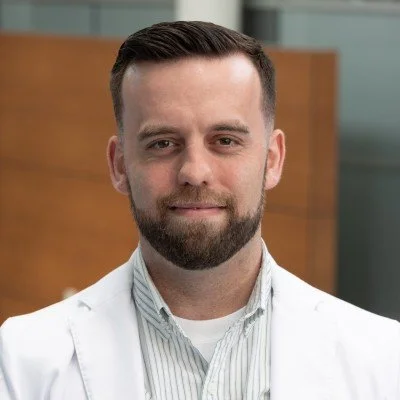
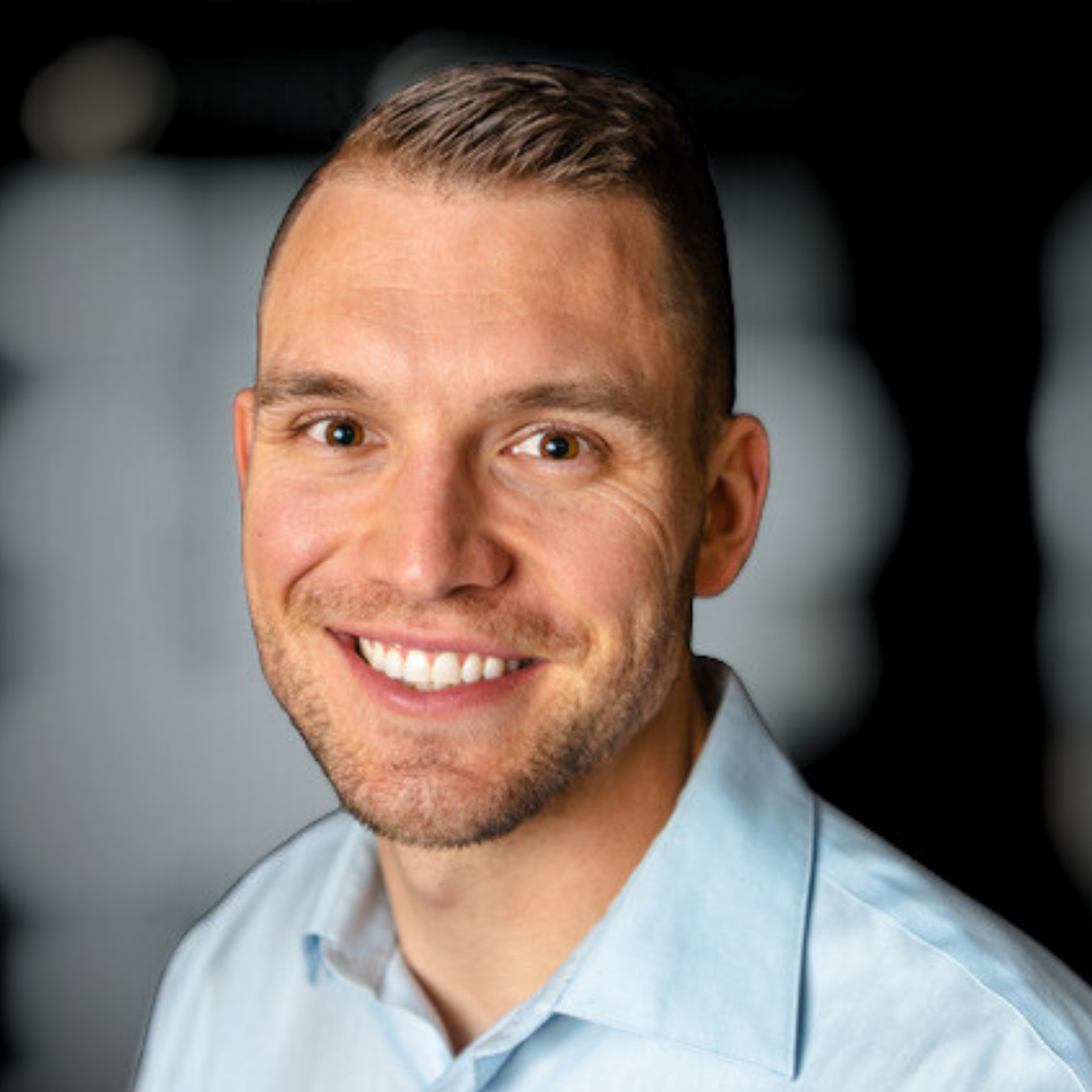
GUEST BIOAnthony Desloges, BScPA, CCPA, is a Canadian Certified Physician Assistant based in Ottawa, Ontario, with experience spanning cardiology, neurosurgery, and community-based primary care and addictions medicine. He has worked across hospital systems and outpatient settings, contributing to both clinical care and operational improvements in patient flow, service delivery, and interdisciplinary collaboration.
Anthony began his academic journey at the University of Ottawa, completing an Honours Bachelor of Health Sciences before entering the University of Toronto PA program, graduating in 2018. His path to PA school included nearly six years of experience as a ward clerk at The Ottawa Hospital, where he gained early exposure to thoracic surgery, pulmonary medicine, and inpatient care, shaping his understanding of healthcare systems and team-based practice.
Following graduation, he started his career in cardiology before transitioning to neurosurgery at The Ottawa Hospital, where he supported complex cases including skull base surgery, neuro-oncology, and spine conditions. Alongside his clinical work, he took on leadership roles including Director of Operations at Recovery Care and served as Ontario Director for the Canadian Association of Physician Assistants, reflecting his commitment to advancing the PA profession and improving access to care for underserved populations.
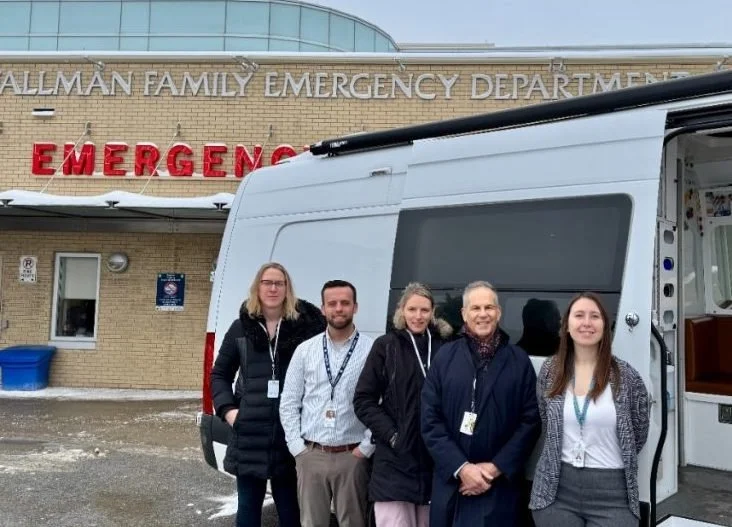
ON WORKING WITH VULNERABLE POPULATIONS“People aren’t difficult. They’re dealing with difficult situations. You can’t judge someone until you understand how they got there.”
— Anthony Desloges, CCPA, PA in Addictions, Mental Health & Primary Care
-
Introduction
Anne [0:05] Okay, so Anthony, can you introduce yourself?
Anthony [0:08] So I'm Anthony. I'm a physician assistant, a graduate of the Toronto program from 2018, and I currently work in the Ottawa area. That's my catch area for practice.
Anne [0:20] So Anthony, can you tell us a little bit about what you were doing before you encountered the PA profession? What was your academic journey?
Academic Background and Discovering the PA Profession
Anthony [0:56] My undergrad was actually in health sciences from the University of Ottawa. I originally started off in biology, but ended up really not liking the field. I was doing the ecology option and once I had to start walking through rivers at six o'clock in the morning collecting specimens, I was like, nope, not for me. So I reevaluated what I wanted to do and decided that healthcare was probably a great route. Once I started in health sciences, I got introduced to hospital work. It was just a fluke by chance — the neighbor I had in my dorm, her mother was one of the managers at one of the hospitals in the area, so she was able to kind of sneak me into being a clerk. I was a ward clerk on a combined medical-surgical unit for about six years prior to going into the PA program. And because I was working mostly casual status, I ended up meeting a military PA on one of the units I was floating to — a military-trained PA doing internal medicine at the hospital. I kind of saw this guy walking around with these little letters at the end of his coat and I was like, what the heck is that? You have a doctor's coat on, but you're not a doctor. What's going on here?
Anne [2:15] And then you kind of learned what a PA was, and the different areas they could be trained in. So you started looking into the profession. Can you tell us a little bit about what qualifications you needed to become a clerk and what the roles and duties are?
Ward Clerk Experience: Roles, Duties, and Advice for Pre-PAs
Anthony [2:33] To be a clerk, you don't need very much. It's an entry-level position. They do prefer people who are in some sort of healthcare field, whether you're a healthcare student or a student in life sciences. When I first started, it was pre our big EMR change, so a lot of it was still being done by paper. Our main goal as clerks was to collaborate with nurses and physicians for transcribing orders. I would work with the physicians to transcribe their medical orders into the medication records for the nurses, which they would use to administer medications on a specific schedule. We also did a whole bunch of unit coordination work — organizing patient transports, organizing discharge follow-ups, things like that.
Anne [3:50] What advice would you give to pre-PA students on how to find a job as a ward clerk?
Anthony [3:55] Keep looking. Honestly, just apply as much as you can. They're really hard jobs to get into because there's such a limited amount, and when people tend to get into these positions, they stay for a very long time. So if you apply to one of the big hospital systems and don't get in the first eight or ten tries, keep going, because eventually they'll come across your resume or need someone with your specific skillset. If there aren't any positions available, gaining hospital experience through volunteer work can also work in your favor. You can volunteer delivering food to wards, being a patient companion, working with the physiotherapy department — things like that. When hospitals see that on your resume, they'll know you're already familiar with how the hospital works.
Anne [4:14] Does it require any coursework to actually do that job?
Anthony [4:32] A lot of it's done in hospitals. When you apply, there are some basic skill sets they'll test you on — for example, typing speed. If you're in an area that requires more than one language, like in Ottawa where I worked, they prefer people who are bilingual. But otherwise, a lot of the training is on the job. Part of my clerk work was actually becoming the corporate trainer. We taught new incoming people medical terminology, how to transcribe medication orders, the elements of an order, patient rights for medication administration — things like that.
Choosing the PA Profession: Why PA Over Nursing?
Anthony [4:55] I was choosing between nursing and physician assistant. There were different aspects of each that I really liked. It really depends on your background and your interests. Physician assistants are trained in a different way than nurses, but if you already have a nursing background — like a four-year nursing undergraduate — you might consider the NP route more than the PA route. Not that it's the wrong choice, but for me, I liked the aspect that PAs can work in the surgical field. You don't primarily see NPs in the OR, but there are a lot of PAs who work there. That was a draw for me.
Anne [5:55] What were some other things that drew you to the PA profession?
Anthony [6:12] I liked the growth. You could definitely tell it was a profession that's needed in the healthcare system. Before PAs, there weren't many different levels of advanced practice providers working in clinics or hospital settings. There were nurse practitioners, advanced care physiotherapists, paramedics — but it was a growing field, and it needed a lot of work. I liked that the people entering the field at the time were the ones who were going to build the profession in the future. We were working from an area of no regulation, not a lot of rules, always working in a gray area. There was lots of room to build together and make the job what it is.
Applying to PA School: The Application Process and Getting In
Anthony [6:45] The first time I applied, I didn't get in at all. I applied again a second time and didn't really change very much in terms of work experience because I'd already been working as a clerk for a while. But I definitely decided to boost my volunteer work and started doing extra volunteering in the hospital to try and boost my presence everywhere. The application was stressful. You have to do the supplementary application online, plus the multiple mini interviews. Mine was a bit rushed — I'm from Ottawa and the interviews are in Toronto for the UofT PA program. I submitted my supplementary application the second time and was actually waitlisted. And then right before the interviews, you get an email saying you might be called if a position opens up or someone decides not to come. One of the big decisions was: what do you do if you're in Ottawa and they call you? You're not going to make it to Toronto in time. So what I actually did was send an email back to the program saying I was going to take this as an opportunity to make a trip to Toronto. I just took a trip for the four days the interviews were happening. Then about two hours before the interview started, I got a call from the program saying there was a position open. I rushed down to the interview center.
Anne [8:03] That's fantastic. What a whirlwind of getting into PA school. You didn't get in the first time, but you did get in the second time, and you were waitlisted for the interview. And all it takes is just one yes.
Anthony [8:18] Yeah. And all it takes is just one yes. In terms of hours, it was about six years of clerk work — roughly 4,200 hours of paid healthcare experience. Plus volunteer hours, which were fewer but helped boost the diversity of my application. That being said, not everyone who applies has paid healthcare experience hours. Don't be discouraged if you don't. You can still put together a strong application with lots of volunteer work.
Anne [9:00] And what about your GPA?
Anthony [9:20] I don't remember my actual number, but it was in the mid to low end range — nothing super crazy competitive. Based on my experience, I'm assuming my supplementary application and my interviews were where I really stood out. You don't need a 4.0 GPA to get into the school. It's more of a well-rounded consideration for the program. The review process at UofT looks at the whole picture.
Standing Out in the MMI: Personality, Preparation, and Authenticity
Anthony [9:40] I think personality-wise and being able to think on your feet made a difference. The multiple mini interview process is very stressful. They really do put you on the spot, and how you react to those questions — how you're able to formulate a response quickly — really shows how you can respond to multitasking or stressful situations.
Anne [10:00] Can you share how you practiced or prepared? Were there any books or resources you used?
Anthony [10:19] I want to say I used a bunch of resources, but I didn't really use a whole lot. I read up on how multiple mini interviews work. The book they recommended was, I think it was called Doing Right, by a physician whose name I forget. I read a little bit of that because I was uncertain about whether I'd even be in the interviews at all. I didn't prep as much as I probably should have, but that being said, it might have worked to my advantage. Being put on the spot and thinking right away what your answers are might be more truthful and more original to who you are. If you over-prepare, you might become more robotic and monotone, and that can change how the examiners see you. Not overthinking it and being authentic and honest — that's really the key. If you're right for the profession, everything will be right.
PA School Experience: First Year, Didactics, and Managing the Load
Anne [17:25] Can you tell me a little bit about your experience in PA school?
Anthony [17:46] There are three PA schools in Canada — the Manitoba program, the McMaster program, and the UofT program. I actually only applied to UofT. I put all my eggs in one basket. The reason was that I really liked the UofT program structure. With my previous work experience and networking within Ottawa, I didn't want to lose that by leaving Ottawa for a prolonged period of time. I wanted to do my rotations in Ottawa and build the profession there, because it wasn't a very big profession in the area despite how big of a city it was. The UofT program was great because you had one year of mostly home learning, but you went to the city every once in a while to learn physical skills. The other reason I liked UofT is that the area for clinical rotations was quite large. UofT is partnered with the Northern Ontario School of Medicine, so you have to do half of your rotations in Northern Ontario. Not only does it give you the opportunity to travel, but being in rural areas gives you a better hands-on experience. You might be the first assistant in surgery during your rotation in the north. In academic centers, you might not get that opportunity.
Anne [18:54] How hard is PA school in your opinion?
Anthony [19:20] It's extremely difficult. Not only the amount of material, but the complexity of the material was a lot to take in. They always describe PA school — especially the didactic year — as drinking out of a fire hose. And that's really how it is. They throw a lot of information at you all at once, and I don't think they make it completely manageable on purpose, because they want to see how you can prioritize different work. One of the downsides of the UofT program is that you are alone at home, so you don't feel like you have the camaraderie or support you'd have in a classroom setting. But those residential blocks where you go to the city and meet your classmates — you do form really close friendships. I was one of the people who went against the program guidelines and maintained my work throughout first year in didactic year. It was a very reduced schedule, but for financial reasons I couldn't afford the program if I stopped working. It increased the stress level, but in the end I found it made me more organized.
Anne [20:15] How did you make sure you stayed on top of all the material and managed your stress and work-life balance?
Anthony [20:36] They give you a program overview at the beginning of each course, so you know from the syllabus what you're going to be learning and at which points. You have the opportunity to get ahead when you can. I'd like to say I stayed ahead all the time, but I got behind frequently — that's just the nature of the program. Having friendships and classmates to get resources from and bounce questions back and forth really helped make up for lost time. Falling behind is inevitable. It's just how you manage it that matters. Even if it was the day before a test and I was really stressed and behind, I would always take time to do something I liked, even if just for an hour — working out, going for a walk — just to clear the air. And that really helped.
Study Strategies and Favourite Resources in First Year
Anne [21:32] What were your favourite resources in first year?
Anthony [21:51] We did go through Toronto Notes quite a bit — it was a really good compendium of basic information. Medicine is packed full of resources. Everyone's going to say one textbook is better than the rest, but I found that going through just the recommended textbooks for each course, writing down the important things, and making cue cards was my best resource. I made cue cards on my computer in Microsoft Word — nothing fancy. I'd just write down important things as I went. When I studied for big exams or even for the certification exam, I wouldn't go back to the textbooks and reread everything. I'd just look at my important notes, because it's impossible to review everything all at once again.
Second Year Clinical Rotations: The North and Choosing Strategically
Anne [22:31] Can you give us an overview of what second year of PA school entails?
Anthony [22:51] For the UofT program it's pretty interesting, partly because of the rotations you do up north. They do let you know it requires travel, and you have to have the ability to get to whatever placements you're going to. You're not guaranteed to go everywhere you apply to, which is quite stressful — not knowing whether you'll be in one city for all your rotations or whether you'll have to move five times in five months. You have to be quite minimalistic in what you pack. I actually bought a car prior to second year just so I could drive up north. I did my rotations in Thunder Bay — about a 15 and a half hour drive, which was pretty stressful in the middle of winter, starting rotations in January. Moving around on your own, not guaranteed to be with other classmates, is stressful. You're going to a remote area that doesn't have a lot of resources, and you're in charge of very important things as a student in terms of healthcare.
Anne [23:30] What clinical areas did you do rotations in? What's considered core and what did you choose for electives?
Anthony [23:47] For core rotations that I thought I needed more hands-on work in, I specifically chose to do those in the north. My emergency medicine rotation and my general surgery rotation are really hands-on things — in a large academic center, you might not get a lot of hands-on experience. The fewer learners, the more experience you get. So I did emergency medicine, general surgery, psychiatry, and one primary care rotation up north, which is a requirement. I was fortunate that all my northern rotations got put to one city — Thunder Bay — which worked well because you really get to learn the resources in the area. For electives, I did cardiology and thoracic surgery. Thoracic surgery was the inpatient ward I'd worked on prior to the program, so I had a lot of interest in the field. It was fun to work with doctors I'd known for six years, but in a completely different capacity as a student. For cardiology, it was more community work, and I found it really applicable no matter what specialty you go into — whether it's family medicine, emergency medicine, or something else. So I figured I'd do that rotation even if it wasn't specifically my thing, just to have that knowledge going forward. The thoracic surgery one was more of a fun one to do.
Job Hunting as a New Grad: The Career Start Grant and Building References
Anne [25:37] You finished PA school, graduated, wrote the PA certification exam. What was your experience like on the job hunt as a new PA grad?
Anthony [26:01] It wasn't too bad. There were lots of options available. PAs have the benefit of the Career Start Grant, which is offered by the Ministry of Health. The Ministry will actually provide funding to employers — whether a physician, a physician group, or a hospital — to be able to hire new grad PAs. The Career Start Grant is always a stressful experience for everyone because everyone's in a rush to get working. Most of the time the grant does come out late, but it hasn't failed to come out since it was first introduced. My advice would be: keep an open mind. You will essentially be guaranteed a job after graduation. You just might not be guaranteed to work in the specialty you want right away. Be flexible, work in different areas, and if something isn't something you see long term, take it as experience you can bring forward when you switch specialties later on.
Anne [26:41] When did you start preparing — putting together resumes and cover letters? Did you wait until job postings were out, or did you start earlier?
Anthony [26:59] In terms of references, I started from rotation number one. If I thought a rotation went well or was applicable to different areas, I'd always seek out references from that rotation, ongoing throughout the whole second year. The more references you can obtain in different specialties, the better it helps you later on in the application process. If you do two family medicine rotations and end up applying for a family medicine job from the Career Start Grant, it's really good to have those references saying physicians enjoyed having you there and you were a big help. Once we heard the grant was coming out, I didn't do very much until it was actually published. Once we got the PDF file of all the applications, that's when I started making cover letters. I made a generic one for each specialty and then fine-tuned it depending on where I was applying, but I had them prepped to go just in case there was a last-minute deadline.
First Position: Cardiology
Anne [28:05] What specialty did you end up working in as your first job as a PA?
Anthony [28:27] I ended up working in cardiology, which was actually my final rotation in PA school. They asked me to stay on after I finished, and I said yes. They hired me with the stipulation that I passed the national certification exam, because you can work from when you've graduated until the certification exam occurs. It ended up working out quite well because one of the physicians in the cardiology office had to go on medical leave, so I ended up taking over his patient load and results review while he was gone. It was a really enjoyable experience, and I was able to help advocate for hiring more PAs as well.
Moving to Neurosurgery at The Ottawa Hospital
Anthony [28:47] When the physician returned, I decided to start looking into other work. I had an itch — I really wanted to return to the surgical field, because that's where most of my experience was in thoracic surgery. There was a position posted at the Ottawa Hospital for neurosurgery, and with the application deadline coming up, it was either let the opportunity pass or apply and go for it. So I went for it.
Anne [29:30] What was that experience like working in neurosurgery?
Anthony [29:50] Neurosurgery was very, very busy. There were already two PAs working there — one from the 2017 class and one from my 2018 class. It was nice to go into an area where the position was already established, with medical directives in place. If you're applying somewhere that already has PAs and they're posting an additional position — not a replacement — that really shows a lot of good work on the part of the physicians in supporting the profession. We worked in the same department but in three different areas with different subspecialties. I worked for two surgeons doing skull-based surgery and pituitary disorders. One PA worked more in interventional neuroradiology — strokes, aneurysms. The other PA worked more in oncology. We overlapped in a lot of areas and it was really good to have people in different subspecialties to bounce questions off of. We essentially ran the outpatient clinic while the physicians were in surgery.
Transitioning to Addictions and Mental Health Services
Anne [30:47] I understand you're working in a new position now. Can you tell us about the transition you made and how you came across this job?
Anthony [31:09] I worked with a lot of minority groups up in Thunder Bay during my rotations, given the area. Thunder Bay is one of the larger cities up north, but there are a lot of individuals of lower socioeconomic status there. Part of the PA profession's goal is to increase access to care to areas where it's not already there. I really wanted to bring that to Ottawa. Ottawa is a big center with lots of resources, but there are still patient groups that don't have the same access to care, or who have been stigmatized and don't want to access care at all. I reached out to a physician colleague from my clerk days who works for an organization in downtown Ottawa that deals with increasing access to care. I said I was looking to get into this work — initially on a casual basis on top of my neurosurgery position. She introduced me to a nurse who runs a program for a bunch of clinics in downtown Ottawa for addictions and mental health services. I pitched the PA profession, explained what we can do, and how I thought it could work within that program. They fell in love with the position. They'd previously had another advanced practice provider, and found the PA profession was a better fit given the way we're trained. She took me on as a project, said she wanted me full-time to come and build the profession there. And I decided to make the switch.
The Work: Addictions, Mental Health, and Primary Care for Vulnerable Populations
Anne [32:30] For those that aren't familiar with what addictions and mental health involves, how would you describe that specialty?
Anthony [32:36] I do a bit of both. The main goal for me entering this clinic was to introduce primary care. They do a lot of needs assessments within different communities in Ottawa, and they found that one of the big gaps for individuals accessing mental health services was access to primary care. So the goal was to do primarily primary care and act as that resource, but also take overflow addictions work. You need to be comfortable in both areas, because the individuals I'm seeing for primary care are also being seen there for addictions. We see upwards of 60 to 70 patients a day — that was normally done by one physician. Now the physician and I split that work, in addition to me seeing primary care as well. You have to be very open-minded to this type of work. A lot of the individuals coming in are stigmatized, don't like accessing healthcare. They've been to emerge for an abscess or a drug-related problem, were mistreated or kicked out, and they don't want to go back. So you see a lot of people who are very down on their luck, sometimes very angry — and it's not that they're angry at you. They're angry at the overall situation they're in. You have to work with an open mind, be very supportive and very empathetic. The response from patients has been absolutely amazing. A lot of the people coming in are actually very happy that we're there, because we're a clinic specifically put there to help them through whatever they're going through.
Anthony [34:00] There are lots of different issues — addictions, but also helping people with housing. We have people whose healthcare is so poor partly because they're also living in a shelter. Getting them out of that environment would actually improve their health status altogether. We have housing workers on site. We have peer support workers who will help individuals who don't even have a health card — they'll walk them down to City Hall and get a health card printed out so they can access services later. It's a lot of work you don't experience in bigger settings, because people coming in for a gallbladder surgery might already have a health card somewhere to stay. It's not always the case, but we're able to really help them through the whole picture.
The Clinic Structure and a Typical Day
Anne [35:16] Is it a physical building? Who are the healthcare providers you're working with, and how does the patient flow generally work?
Anthony [35:39] Our company has four clinics in Ottawa. I work out of the one with the highest volume — in the ByWard Market area downtown, close to where all the shelters are. We don't have PAs at the other clinics yet. I have my own office that acts as a dual space with a desk and an exam bed. Patients come in for addictions-related services, register at the front, and if they want to be seen by the walk-in specialist, they come specifically to me. I can do their addictions appointment as well as their primary care at the same time, or they can come see me as a walk-in at any time. Usually we just take patients off the list one by one — the doctor and I share all our patients. I'm there Monday to Friday as the constant resource. I have two different physicians: one there Tuesday, Wednesday, Friday, and the other Monday and Thursday. It's nice to have that constant individual where patients can see the same familiar face all the time.
Anne [36:30] What's a typical day look like for you?
Anthony [36:47] Usually I get in by about 7:30 or 8:00 in the morning. I usually have some paperwork — helping someone register for housing, apply for a health card, or consult work. The clinic opens at nine. We see a large influx at nine because everyone likes to get their appointment done early. Essentially, patients know which day they have to come in to get their dosing renewed, but they can come at any point during that day — it's not specifically appointment-based at 2:00 or 3:00 PM. We do usually work through lunch because of all the patients, but we try to take breaks and cover each other when we can. The clinic closes around four o'clock.
Anne [37:21] How many patients are you typically seeing in a day?
Anthony [37:39] It depends on the day. If it's a day the physician is there physically, I'll probably see about 20 to 30 patients, and same with the physician. Physicians can sometimes go through appointments a bit quicker because they've already developed that rapport — I'm still meeting patients for the first time. I like to have a chat, see what's important to them, and see how I can help. We have had days since I started where the physician was unavailable — couldn't find childcare, had to stay home — and I've seen all of the patients: between 60 and 70 patients, just myself, with the physician available by telephone or Zoom if I had questions. So it can jump quite a bit between seeing 20 patients versus 60 or 70 in a day.
Medical Directives, Orientation, and Building the Primary Care Program
Anne [38:13] Are medical directives established for you to have that indirect supervision?
Anthony [38:34] Yes. They already had medical directives because there's a PA currently working at a different center within the organization. What I did was take those medical directives and modify them to fit addiction services and primary care for my new position. They still had to get approved, but we were able to build them quite quickly.
Anne [38:55] What kind of orientation do staff and patients have when working with a new provider — especially a PA that hasn't been used in this model before?
Anthony [39:00] I had a structured orientation scheduled by the owner of the company. I had days where I worked on establishing the primary care program — mostly paperwork, because that program hadn't existed at that clinic before. They wanted me to build it from the ground up. I also had shadow days with the physician and learned on the spot. At first I was actually sitting side by side with the physician to see the patients coming in. It worked really well for two reasons: one, I wasn't comfortable with addictions medicine when I started — I had absolutely never worked in the field before. So it was helpful to see how that physician treats patients, how they interact, what types of questions they ask during the patient interview. Eventually I moved into my own office and started taking patients one by one. My appointments would last a bit longer — partly for my own learning, asking questions of the physician here and there, and partly to develop rapport with the patients. The nursing staff have been really great as well. Many patients will come and see nursing prior to their appointment, and if the patient identifies any primary care issue, they'll actually walk the patient over to my office and introduce me so I can explain how we work and what services we have.
Common and Unusual Patient Presentations
Anne [40:12] What are examples of some common conditions that you see?
Anthony [40:28] We see absolutely everything. A lot of it's infection — cough and cold, because a lot of people are outdoors not living in sanitary conditions in the shelters. I see a lot of abscesses, cellulitis, uncontrolled hypertension. I do a lot of regular primary care too. I have people come in saying they've been homeless for two years, they used to have a family doctor, they know they have diabetes — and I'll actually manage their diabetes. The program I've built for these patients is that we don't roster anybody. But if someone comes in without a primary care provider, I'll ask if I can register them for Healthcare Connect — an online service that helps people find family doctors — and let them know I will follow them until they find one. So I follow them for their chronic health conditions ongoing.
Anne [41:22] Are there ever any uncommon or unusual things that walk through the door?
Anthony [41:40] I had one individual come in a couple of weeks ago who said he had an ear infection. I asked if he'd been seen for it. He said he went to an urgent care center, waited six or eight hours, and then someone walked out to the waiting room and said, we don't have time to see you, but here's an antibiotic for your ear, and sent him off. Unfortunately, that happens quite a bit — if people don't look very appealing, are very smelly, dirty, or intoxicated, they can get turned away in different healthcare settings. So I asked how his ear was now, and he said it still hurts. Part of our exam is to look in both ears. The infected ear looked okay, but when I looked in the other ear, he actually had a screw lodged in his ear — going in backwards, so all you could see was the head of the screw. He didn't even know it was there. I've had people come in with completely terrible wounds — feet that should be getting IV antibiotics, or individuals with mental health issues who have unintentionally harmed themselves trying to treat an abscess themselves, saying they refuse to go to the ER. So you have to think on your feet: how do I treat this person so they don't end up losing their foot or going septic, when they really should be receiving IV antibiotics? A lot of very complex situations like that.
Communicating with Patients from Adverse Circumstances
Anne [43:22] It sounds like there's a lot of stigma and barriers that the patients you see tend to face. Any advice for healthcare providers or aspiring PAs about how to approach or communicate with patients from very adverse circumstances?
Anthony [43:57] It's important to walk into every patient interview with an open mind. Someone might be sitting there hitting their head against the wall, talking to a TV that's not on, someone who doesn't seem quite all there — and you might feel like you don't know how to approach them. But you never know what their background was. I constantly see people who are addicted to fentanyl, which is a big one on the streets right now, and part of you in your head is thinking, why are you doing this? Why are you hurting yourself? And then once you listen, you hear: I've been homeless since I was 13. I had to partner with someone who was quite questionable just to survive, and they got me into drugs. A lot of people have different circumstances that brought them to where they are. It's important to not judge a book by its cover. Everyone has a story that could break your heart, and it's important that you provide a safe space where they can seek help.
What's Rewarding About This Work
Anne [44:47] What do you enjoy about working with this population?
Anthony [45:09] I really enjoy this patient population. They're absolutely fantastic. A lot of people have come from very terrible, rough situations, and looking at them you might think they're still in a terrible situation. But it's important to see how far they've come. I find it very fulfilling. A physician I work with told me a story recently about a patient who had been homeless for ten years. We run a program called the Emergency Safer Supply Program — a harm reduction program where we prescribe people a morphine substitute or a Dilaudid to substitute from what they're buying on the street, just to give them a safer supply, reduce their overdose risk, and reduce what they're spending. The program is still being evaluated. This physician told me a patient he'd been treating for a while came in and said: you know what I did for the first time today? I was able to walk into the grocery store and buy a sandwich. Previously, because he had been homeless so long and spending so much on illicit substances, he couldn't buy his own food. He was stealing from grocery stores to survive. For him, buying a tuna sandwich for the first time in ten years was a huge goal. It may seem like a small win, but it's a very big win for the patients. It's very fulfilling to hear that when you're in this type of work.
Challenges, Emotional Load, and Building Resilience
Anne [46:14] Any challenges you encounter — whether it's patient load or other aspects of the job?
Anthony [46:37] The patient load is quite heavy. That being said, we see most patients once or even twice a week, so you get to know them quite well and don't have to spend a lot of time re-documenting. But the load is still very stressful. You're supposed to separate yourself from the patient's situation and treat them objectively, but with this population it's very hard not to overinvest yourself. You get very invested in their success. Hearing ten heartbreaking stories a day can really get to you mentally. People who've been through such tough situations, who've had no help, but are somehow open to opening up to you — it's mentally rough to go through that.
Anne [47:20] What do you do to help build resilience and take care of yourself so you can take care of others?
Anthony [47:30] Finding ways to decompress after work really helps. Even if it's just for an hour or two before you start thinking about work again — separate yourself. Go read a book, do something you really enjoy. For me, I do tend to throw myself into my work. If I hear a heartbreaking story and someone doesn't have access to services, I'll spend time improving our program to initiate those services so it doesn't happen again. That really helps too. But spending time doing things you enjoy, especially after work, is really important — to give yourself time to recover mentally from hearing those hard stories every day.
Reflections: Career Satisfaction and the Growing PA Profession
Anne [48:22] Thinking about your journey so far — you've worked in three specialties, you're doing great work with vulnerable populations — are you happy with your decision to become a PA?
Anthony [48:52] Yeah, I'm very happy. I don't regret applying to the program or becoming a PA at all. I don't really see myself working in any other profession. People always ask why I didn't go to be a doctor, or why didn't I choose nursing. I think it all depends on what pathway you chose to begin with. I chose health sciences. I knew there was a need to increase access to care, and I met a fantastic PA who made me fall in love with the program. It's very fulfilling work. The fact that we're still a new profession is also really important to me — being able to help be the trailblazers that make the profession into something larger. The PA profession has grown quite quickly in the past few years, more so than a lot of other professions that tried to take the same route. We've only been around since about 2007 or 2008 when the programs were initiated with pilot projects, and in a short period of time we heard that regulation is coming — which is a very short timeframe for a new healthcare profession to achieve.
The Value of Adding a PA to Any Practice
Anne [49:59] What impact have you seen from being a PA and working with the patients and departments you have?
Anthony [50:23] I haven't been in a single position where adding a PA wasn't beneficial. The big part I like about being a PA is that we're a constant for the patients. We're someone who is generally available for them to talk to, even if the physician isn't available, or even if their specialist consultant hasn't seen them yet. We're always there as that first point of contact — someone with specialized training who can help improve care.
Advice for Physicians Thinking About Hiring a PA
Anne [51:03] Do you have any tips for physicians who are thinking about hiring a PA but aren't quite sure if it's the right decision?
Anthony [51:24] There are a lot of physicians and groups who are very on board for hiring a PA, but there are a lot of barriers — mostly funding. If you're a physician group who missed the application for the Career Start Grant, or you're not certain how you're going to pay for a PA, it's important to know what resources are out there. One is our association, which has a lot of good information online for physicians about what's entailed in hiring a PA, and a specific section for employers on what to consider. There are many different ways PAs can be funded. My current position is funded through the government — through Health Canada, through an application for a specific program. Another way is through fee-for-service or shadow billing. A lot of physicians are hesitant, wondering if they'll make enough to cover the costs. But it really depends on how well they utilize the PA. If you really utilize your PA and run a clinic more efficiently with more patients, I've found that the position essentially becomes cost neutral, or at least a little bit profitable. You might have to get creative — combining funding from a government program, fee-for-service, and a hospital foundation. PAs are funded through many different ways. Just don't be hesitant to reach out. Reach out to your association, reach out to a clinician you know who has hired a PA, or put out a posting and then ask the applicants how they see the position working within your practice.
Advice for Pre-PAs: Exploring the Profession and Finding Your Fit
Anne [53:38] For those thinking about becoming a PA but not sure if it's the right route — what advice would you have?
Anthony [53:56] Just make sure you look into the profession enough before you start applying. There are lots of resources for pre-PAs — Facebook groups like the Pre-PA Student Network where you can connect with PAs and other students to bounce off questions. There are Instagram accounts and Zoom meetings where you can do virtual shadowing sessions with PAs through the Education Council. There are a lot of different areas where you can access this information. And if you feel you need more specific answers, try reaching out to a PA online directly. PAs in those groups and on Instagram are more than happy to answer questions if you send them a message. Use your resources, and don't be afraid to jump in once you fall in love with it.
Anne [54:53] If people have questions for you, what's the best way to get in touch or to follow you online?
Anthony [55:11] People reach out through Instagram or Facebook Messenger. Physician employers and different groups tend to reach out by email through connections, and PAs or PA students reach out through social media. I do have an Instagram account where I do a little bit of PA work. I also answer questions through the Canadian Pre-PA Network.
Final Words
Anne [55:29] Well, thank you so much. That was so enlightening. I feel like I learned so much about the work that PAs can do to make an impact for vulnerable populations — specifically working with homelessness, addictions, mental health, and providing primary care. Any final words?
Anthony [55:47] Don't be hesitant to reach out or to put questions out there. The communities we've built online — especially on Facebook — are very supportive. No one's going to judge you for asking questions. So go ahead and post.