Episode #28: Kelsie & Rachel, Manitoba MPAS
“It’s intense and a lot, but it’s also a lot of fun. There’s so much support, and the experience is incredibly rewarding.”
Kelsie and Rachel walk through their non-linear paths into the PA profession, from backgrounds in forensic biology, psychology, and social services to acceptance into the University of Manitoba MPAS program. They clarify key differences between PA and MD roles in Canada, highlight the flexibility and team-based nature of PA practice, and explain why the generalist model and work-life balance were decisive factors in their choice.
They break down how to approach undergrad decisions, what actually matters for PA admissions, and how Manitoba’s program differs with its master’s structure, capstone research project, and extended clinical rotations in areas like emergency, internal medicine, and community health. The conversation closes with practical guidance on GPA strategy, references, interview preparation, and how to build a strong, self-aware application that reflects real patient-centered values.
WHAT YOU’LL LEARNHow to choose an undergraduate degree that keeps PA pathways open while maximizing GPA and flexibility
What makes the University of Manitoba MPAS program distinct from Ontario PA programs in structure and clinical exposure
How to strategically improve GPA using the last 60 credit hours and course selection
What strong PA applicants demonstrate through communication, advocacy, teamwork, and understanding of social determinants of health
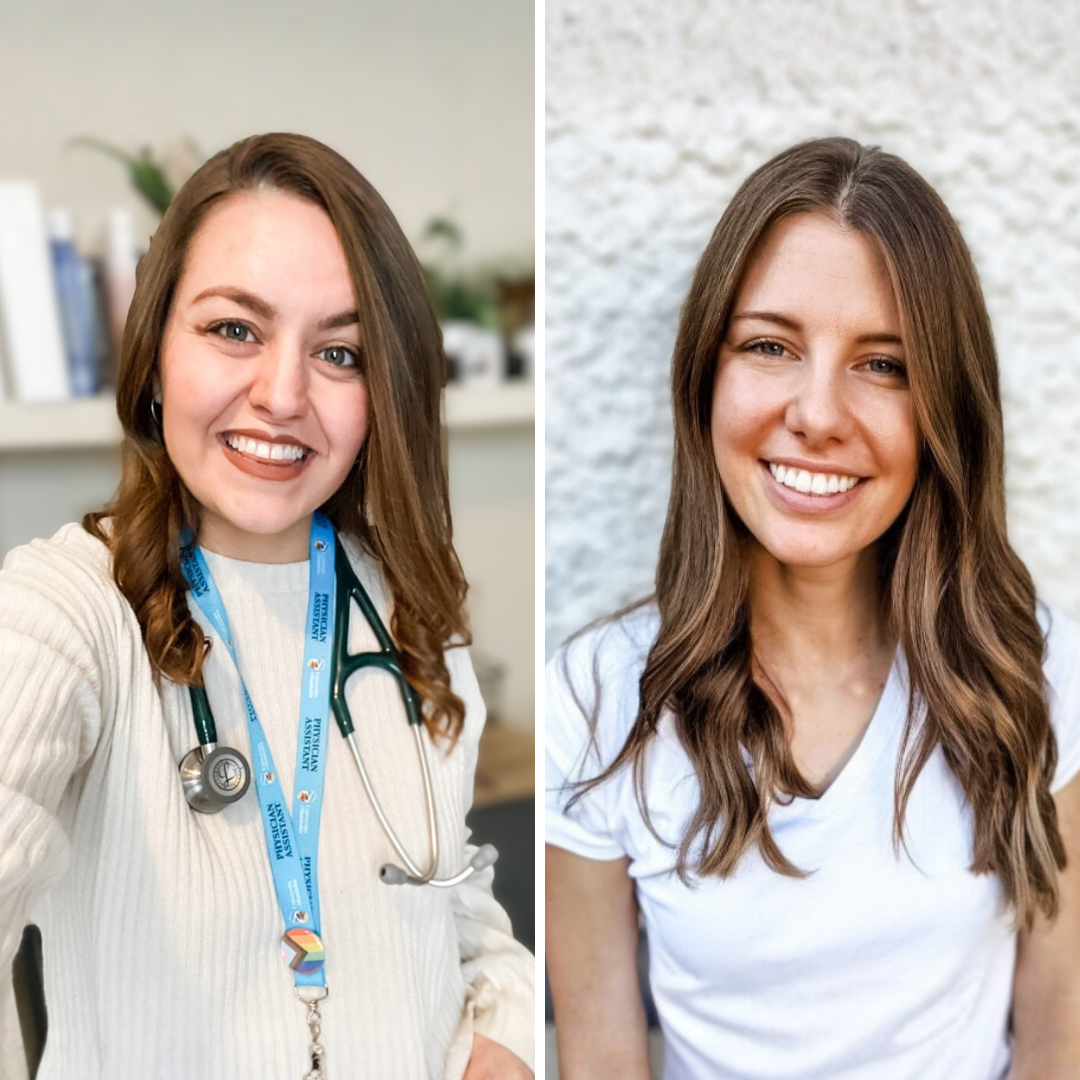
ABOUT KELSIEKelsie is a PA student at Manitoba MPAS, with a background in forensic biology from the University of Toronto and diverse experience as a pharmacy assistant, medical first responder, and through global travel before discovering the PA profession. She applied as a first-time applicant and was accepted in her first cycle by building a strong application grounded in real-world healthcare exposure, teamwork, and patient interaction rather than a traditional pre-med path, and now describes PA school as intense but rewarding with strong peer support and a growing interest in procedure-based and acute care specialties.
ABOUT RACHELRachel is a PA student at Manitoba MPAS, with a background in psychology and neuroscience and an honors degree aimed at clinical psychology before pivoting to PA after discovering the profession late in her training. She successfully gained admission without a traditional medical background by leaning on strengths in communication, counseling, and self-reflection, and now navigates the intensity of PA school through structured study systems and balance while remaining drawn to community-based care and open to exploring specialties through clinical rotations.
-
Introductions
Anne [0:00] Welcome everyone to the Canadian PA Student Live Q&A here in our Canadian Pre-PA Student Network Facebook group.
Kelsie [0:06] I'm from Ontario originally, by Niagara Falls, and I did my undergraduate degree in forensic biology at the University of Toronto. I graduated in 2014 and I didn't really know what I wanted to do right after university. I wasn't sure I wanted to stick with forensics. I was a little bit interested in medicine, a little bit interested in law, so I took time off and worked in different fields. I worked as a pharmacy assistant, I was an advanced medical first responder on a volunteer basis, I did an internship with NATO — quite a variety. Then I took a few years off to travel while working at a multicultural center, both in between trips and remotely. I decided to apply to PA school after learning about the profession from a friend who was a PA. I had never really wanted to be a doctor but I was super interested in medicine, and PA just fit everything that I loved about medicine — especially being on the front lines with patients. I applied, was a first-time applicant, and got in this cycle. That's how I got here. Rachel, can you tell us a little bit about yourself and your journey?
Rachel [1:27] Hi everybody. My name is Rachel. I grew up in southern Manitoba, about two hours south of Winnipeg in a small city. After high school I went to Minnesota for my first undergrad. I was pre-medicine at that point, mainly because I felt like I had to be, so for the first three years I was pre-med but then switched during that last year to do psych and neuroscience. I graduated with degrees in those and then moved back to Manitoba to pursue clinical psychology at the University of Manitoba, where I got my honors degree to help me apply for master's programs in clinical psych. It was during my final semester of that program that I learned about the PA profession and made the switch. I wasn't pre-PA for very long while applying. I worked as a crisis counselor on a volunteer basis and also in different social service fields, so I didn't have a lot of medical background coming in. That's a little bit about me.
Anne [2:29] So part one will focus on questions from the pre-PA journey with Kelsie and Rachel. Our first question: what is the difference between PA and MD, and why did you choose PA?
Why PA Over MD
Kelsie [2:46] I'm only approaching it from a PA perspective and I don't have a ton of knowledge on the full scope of what it is to be an MD, but I think of an MD as having four years of med school, then residency, then becoming very specialized — working in one field, moving to the top of that field, and then practicing autonomously. Whereas as a physician assistant, we graduate as generalists. We don't have a residency, at least here in Canada, and we're able to practice in any field under the supervision of a physician and in collaboration with those physicians. We're also able to switch specialties throughout our career. The biggest differences for me are that we work with a physician as opposed to autonomously, and we can switch fields throughout our career as opposed to specializing. For why I chose PA — I had never really wanted to go into medicine. Everything I liked about medicine was sort of what a resident does: very front line with patients, a lot of learning, a lot of working within a team environment. That fit better with a career as a PA than as a doctor. I liked being able to move around, I like the work-life balance, but really it's that front-line-with-patients-throughout-the-entire-career that sold it for me.
Rachel [4:31] I was considering medicine again during the first few years of my first undergrad but realized the MD route wasn't what I ended up wanting. I had kind of figured that was the only option if I wanted to pursue a career in medicine — until learning about the PA profession. What really appealed to me, and why I switched from the clinical psych route, was that it's a perfect combination of being able to practice medicine, a shorter amount of time for school, incredible flexibility to work in so many different specialties and switch without extra training, and also just the aspect of being a generalist really appealed to me.
Choosing Your Undergraduate Degree
Anne [5:05] How did you choose your undergrad degree, and any advice if someone's in grade 11 or 12 on how to approach this important decision?
Rachel [5:13] I started off as a biology major during my first undergrad and I actually wish I had gone in undecided and made the decision a little bit later. There's a lot of pressure to feel like you need to go in knowing your major, but it's okay if you go in without knowing. There's time to decide as you take your first year of courses and explore different things. In terms of what would be best for PA school — for the U of M program it can be a bachelor of arts or a bachelor of science, it just needs to be a four-year undergrad degree. When I was choosing mine I really chose based on what I found interesting but also something that would keep my options open after graduating.
Kelsie [6:01] Exactly the same as Rachel. When I finished high school I was like, do I like science, do I like the legal aspect? So I went into forensic biology. Looking back now, unless you're going into something really specific like business or nursing, your undergraduate degree doesn't dictate that much — it's more of a stepping stone. Shouldn't say it doesn't matter, it's more that it doesn't matter exactly what you pick because it's a stepping stone into whatever you do next. I would say pick something you're interested in, something you can do well in, and something that keeps your options open so you're able to get those prereqs once you have a better idea of where you want to go. Don't stress over knowing in grade 11 or 12 exactly what you want to do — I've been out of high school for 14 years and just figured it out!
Anne [6:55] Does it matter where you do your undergrad degree when applying to a PA program? Do they distinguish or prefer certain undergrads?
Rachel [7:02] My undergrad at U of M was only three years, so my American undergraduate degree was the one that applied to my PA school application. When you apply to the U of M PA program there's an option where you can put in which undergrad or which school you got it from and which country, and they will verify it for you. From what I understand, it doesn't matter as long as you meet the qualifications — whether you do something science-related or non-science-related, you still qualify to apply. That wouldn't exclude you for doing something a little non-traditional.
Anne [7:42] You're done your undergrad and now you're in PA school. If you were to look back, what advice would you give your younger self — specifically your first-year university self?
Rachel [7:57] I would tell myself to really just relax more. By that I don't mean do less — I just felt so much pressure in that first year, worried about every single grade, every extracurricular. Now I can look back and realize that the amount of pressure I was putting on myself wasn't necessary. If you're trying your best, making connections, going after opportunities — that's all you need to be doing. The extra added pressure just isn't necessary. Try to enjoy it because it's way more fun that way.
Kelsie [8:47] Same thing — relax. But I would also say it's okay to change your mind. If I had known that in first year I would have felt a lot better. The other thing I'd say is take advantage of the resources your university offers to help you learn the best way to study. Going from high school to undergrad can be a vast change. You're going to have to study a lot in university and in a different way. No matter what graduate program you go into, your GPA does matter. Use the resources available to help you do really well.
How and When They Decided to Apply
Anne [9:27] When and how did you decide to become a physician assistant?
Kelsie [9:36] For me it was actually when I had come back from traveling for a couple of years. I felt really sure about the things I wanted — a day that was diverse in the sense of seeing different people, working in a team environment, doing something that really helped people in a meaningful way. Having taken time off and worked in different fields was the biggest thing that made me realize everything I don't want and everything I do want. I decided to apply to PA school no more than maybe six months before the application started because I had figured out what I wanted and looked into the application process and was like, this is for me.
Rachel [10:16] I was in my final semester of my second undergrad working on applications for clinical psychology programs when I was in an honors seminar — a class that was supposed to be about what we can do with our psych honors degrees. I tuned it out because I thought I knew I was doing clinical psych. But on this list of slides was the physician assistant profession. My ears perked up. I literally Googled it right there, went to the website, and that was the first time I was really exposed to it. That moment I was like, this is it. From there I did my research, did some shadowing, and was reaffirmed over and over. It was kind of that really specific moment for me.
Anne [11:04] How would you describe your class?
Kelsie [11:08] We are all very much not the same — in a very good way. A very diverse class. We all have very different backgrounds. Some have science backgrounds, some have more non-science backgrounds. Some have families, some don't. Some have worked for years, some are right out of their undergrad. It's really fantastic because we each bring something different to the team, and we really do work together as a team.
Anne [11:37] What are some examples of non-science backgrounds that your classmates have come from?
Kelsie [11:45] For the most part people do have science, but we have a lot of different sciences. We have one classmate who was a psychologist before starting and was in a school psychology route, so her only real science background was the three prereqs she had to take for the course. Other than that it's just a big diversity in types of science backgrounds. I think there have been students with totally different backgrounds in previous classes as well.
Why Manitoba's PA Program
Anne [12:10] Now going into part two — questions about Manitoba's PA program. Why did you choose the U of M Manitoba PA program?
Kelsie [12:19] I applied to all three programs and U of M was definitely at the top of my list for a few reasons. It was a move out of province for me, which was the one challenging thing. But I really liked that U of M does their didactic year together all day, even virtually this year, and it was important to me to have that sense of community with my classmates. The other big draw was the length of some of our clinical experiences in second year — emerge, surgery, internal medicine, family medicine, community medicine — all areas of interest for me — and we get a bit more time in those fields. That was a big pull.
Rachel [13:05] This is actually the only program I applied to. Part of it was being from Manitoba and wanting to stay close to home. But another big piece was the master's program aspect — having had two undergrads, I was looking to get a master's degree. There's also a research project that is part of the program, which really enticed me given my research background. Then just after reading the mission statement on the MPAS website, it really resonated with me and I connected with a lot of what the program's goals were.
Manitoba PA vs. Ontario PA Programs
Anne [13:47] What makes Manitoba's PA program different from the other schools?
Kelsie [13:55] The Manitoba program is a master's program, and the two Ontario programs are professional undergraduate degrees. The main difference is the capstone project — there's a research element — and then being all together all day, which I think is different for our program. The length of clinical experiences in second term are also a little bit different. And one thing I really appreciate is there's a big focus on indigenous health in our program.
Anne [14:34] What is the difference between a bachelor's degree from Ontario and a master's degree from Manitoba in terms of getting a job afterwards?
Rachel [14:41] As far as I'm aware, there isn't really a big difference between whether you have a bachelor's or a master's. I think the big difference is what Kelsie already mentioned — the research aspect, the capstone project. Otherwise I really don't think there's that much difference in terms of getting a job. It's just having a research project and the potential to publish under your belt that comes along with the master's.
Anne [15:12] So from an employment perspective, regardless of whether you get a bachelor's or a master's for PA, you can still apply to the same jobs. The difference is that for Manitoba you're formally involved in research through the capstone project, and because it's a master's the entry requirements are a bit different — you need a four-year undergrad before applying.
Working During PA School and What First Year Is Really Like
Anne [15:29] Is it possible to work during PA school?
Kelsie [15:38] It is possible, as long as you know that some of your free time is going to be work time. I work remotely, which gives me a lot of freedom with my schedule, but I do work through my lunch break every day and usually a little bit on the weekends as well. Some of our classmates who were nurses before, or still are nurses, do work shifts as well. You absolutely can work while you're in PA school but know your limits and don't push yourself if it's too much. It does need to be something that offers a certain level of flexibility because our schedules are intense. Possible, but it definitely takes finessing of the schedule.
Anne [16:24] What is first-year PA school like at Manitoba's master's program?
Rachel [16:32] It has been probably the most intense thing I've done but also one of the most enjoyable and rewarding things so far. The workload is very heavy. Starting off first semester I was like, okay I got this, but then second term hits and it's just a lot. But it's doable, and that needs to be said always at the end of those sentences — it's still doable. Yes, you're studying a lot and exhausted the majority of the time, but there are so many supports within the program, including your classmates, and the faculty are fantastic and always make themselves available. It's intense and it's a lot but it's also a lot of fun. I've had incredibly enjoyable experiences in PA school so far.
Kelsie [17:21] It's nice that in first term you kind of learn how you're going to study and how you're going to take breaks before second term kicks off. From what we've heard, third term is not quite as intense as second term, so if you can just get through second term you'll be alright. And it's flying by — all things considered, it's flying by.
Second Year: Clinical Rotations
Anne [17:37] And what happens in second year of PA school?
Kelsie [17:44] Second year is all clinical, with the exception of once-a-month academic days where we come in and continue to learn new skills. We rotate in several different places — emerge, surgery, internal med, community med, family med, psychiatric med, pediatrics, OB-GYN. We get to rotate all over and we're able to be here in Winnipeg, go up north, or to other places as well. For me that's what I'm excited about — being on clinic every day. Right now we're shadowing for one half day every week and that's my favourite part of the week, so I'm just so excited to actually be there in clinic.
Scholarships and Funding
Anne [18:22] Are there any scholarships or funding available for students attending Manitoba's PA program?
Kelsie [18:29] There are. I found this part a little bit challenging — you have to sift through it. There are a lot of bursaries and things available. The Faculty of Graduate Studies at the University of Manitoba sends out a lot of emails and information regarding that, so it takes a bit of time to go through all the bursaries and funding opportunities to see if you're eligible. But there definitely are options. I've applied to three and I've gotten three scholarships this year. So there are definitely funding opportunities available if you take the time to find them and apply.
The Capstone Project
Anne [18:54] How do you pick a topic for your capstone project? Can you give us some details about how that works?
Kelsie [19:02] Your capstone project is completely open — you can decide to research whatever you want, being mindful of the fact that this isn't a research master's and it's not a thesis project. You need to be mindful of how much time you're actually going to be able to give to it, especially if you're doing something that involves research ethics approval or chart reviews. A lot of students pick things that are relevant to the actual practice of PAs and try to build on that body of research, but you can also pick anything that's of interest to you. For me, I've decided to research LGBTQIA issues in healthcare. It's completely open but you just need to be mindful of getting research approval and your time in second year.
Balancing School and Personal Life
Anne [19:54] How would you say you balance school and personal life? What does a typical day or schedule look like?
Rachel [20:00] This is a great question and it's something I'm still figuring out. I balance it by first communicating with those around me, making sure they know the stress I'm under and what's expected of me in PA school so that they're understanding. But I also block off an hour every day of no-school time, guilt-free — don't look at a book, don't look at anything PA-related for an hour whether it's broken up or together. That really helps keep my productivity going. I find having that little reset is huge. Also just prioritizing things like getting in exercise, getting fresh air, leaving the house — especially right now since we're inside all the time. The little things like that have been huge, especially in second term with it being so busy.
What Makes a Strong Candidate
Anne [20:42] What do you believe makes a strong candidate for Manitoba's PA program?
Rachel [20:50] One thing that makes a strong candidate is really being aware of the world around you and aware of what I'll call the social determinants of health — how different aspects of life influence one's experience in healthcare. Being able to understand that everyone in healthcare may have a different experience and wanting to advocate for patients is a huge thing. Being able to communicate effectively is huge. Being able to listen really well is huge. Being able to work well on a team and to collaborate — I could go on forever but those would be the big ones.
Kelsie [21:22] I think in our program it's really important to discuss what it is that you plan to do for your patients as a PA as opposed to what the PA profession is going to do for you. Advocacy for patients and being aware of the social determinants of health is such an important part of healthcare in general, and Manitoba's program really cares about that. Being really aware of what's going on is super important to be a strong candidate here. And just being able to work in a team — we are together all day every day, so it's important.
Anne [21:56] So it sounds like a lot of the attributes you discuss are tied specifically to CanMEDS — communicator, collaborator, leader — being able to hone in on and demonstrate those skills during admissions, and also being familiar with the healthcare issues in Manitoba since you're applying to a Manitoba program.
Prerequisites and Application Requirements
Anne [22:20] Now starting on part three — questions relating to applying to Manitoba's PA program. What are the prerequisites to get into Manitoba's PA program?
Kelsie [22:36] I was just looking at the website today to look at the requirements and I did notice that the wording on the website had changed a little bit in terms of what's expected in the personal statement. The questions they wanted you to respond to were different from my year, so definitely take a look at the website the year you're wanting to apply. You do have to have the four-year bachelor's degree — everybody applying into the Manitoba program has already completed their undergraduate degree. I know there are a lot of questions about whether a three-year degree counts, but as you can see on the website, you do require the four-year degree minimum.
Rachel [23:08] Minimum GPA of 3.0 in the most recent 60 credit hours — that equates to about the last two years of schooling. I took a bunch of courses afterwards and it is your most recent hours that count, so having taken recent courses knocked out some of my last two years. It is those most recent 60 credit hours. And then one semester course each of anatomy, physiology, and biochemistry. You can take those at any university — it doesn't have to be the university where you did your undergrad. Always check the website and if you're unsure you can email the program directly. They will get back to you and that's your best source of information.
Anne [23:58] Does Manitoba's PA program look at the overall GPA or the last 60 credit hours?
Rachel [24:00] As per the website, it is the last 60 credit hours.
Letters of Reference
Anne [24:06] Who did you use for your letters of reference and any tips?
Kelsie [24:10] It was three letters of reference when we applied. I used my current employer, which I think might be a requirement or at least it was, and I used a co-worker I had worked with on a large project over the course of many many months so we had worked closely together. Then I sought out someone who used to be my supervisor when I was a medical first responder. My strategy was: I wanted someone who had seen me in a medical role, seen me interact with patients, and also seen me train for a medical role. I wanted the person from the large project because I knew she could speak honestly to how I work as a member of a team — we had actually had disagreements and worked through them, so I felt she really reflected how I would be as a PA in a real-world environment. My boss was also a requirement and she had seen me work on several projects. Pick someone who can honestly speak to your work ethic and who isn't just going to list off qualities they think the program wants to hear — someone who can actually speak to who you are as a person.
Rachel [25:24] This actually brings up another difference I noticed on the website — it's only two recommended letters now, but when I applied it was also three. I approached this by using my academic advisor who was also someone I did research with for three years during my first undergrad. She was also my professor for a number of classes so she had really gotten to know me and my work ethic and personality. I also used my counseling supervisor — the person who supervised my shifts when I was doing counseling. She had seen me do a lot of counseling sessions and could speak to my ability to communicate. She also worked in the medical field herself. And then I used my supervisor for a non-profit I had volunteered for for three years. It really stresses the importance of building good, strong relationships with advisors and supervisors throughout your undergrad because that really does pay off when it comes to asking for letters.
Anne [26:37] What I'm hearing is that ideally your reference letters don't all come from the same category of experience. There's one potentially for academic, one that verifies an extracurricular or job, and one that verifies patient care or client-facing experience where they can speak to how you worked one-on-one with people. And they all knew you fairly well — it wasn't just a verification of your activities.
Out-of-Province Applicants
Anne [27:01] Does Manitoba's PA program accept out-of-province applicants — if you're from BC, Alberta, Ontario, Nova Scotia, etc., can you apply?
Kelsie [27:10] Yes, they sure do — they accepted me! I'm actually one of two out-of-province applicants that made it into this admission cycle. There are fewer spots that go to out-of-province students, but most years there are a couple of spots. Definitely don't be discouraged if you're out of province — just be a strong applicant, because they do let you in.
Managing Interview Nerves
Anne [27:44] Someone mentioned they struggle with nervousness and stress during interviews. Any tips on how to tackle that?
Kelsie [27:53] Just practice. I was very very nervous as well, but I've done a lot of interviews in my life with a lot of different jobs, and what I found is the more you do interviews, the easier it gets with every single one. I'm not saying go do a bunch of interviews, but practice. Find a group to practice with, practice in front of the mirror. As cliche as it is, just practice, practice, practice — it really does help you get more comfortable.
Rachel [28:24] It's important to remember that everyone is nervous and the panel knows that you're nervous. If you stumble over some words or have to take a minute to think, that's okay. Practice recording yourself, practice in a mirror. Know that it's okay and that everyone is a little bit nervous.
Shadowing a Physician Assistant
Anne [28:39] Now moving on to part four — other submitted questions. Have either of you actually shadowed a physician assistant and what was your experience like?
Rachel [28:55] Yes, I shadowed two PAs before or while I was applying. I shadowed one on the addictions unit at the Health Sciences Centre in Winnipeg and then one in urology. The University of Manitoba or actually the WRHA has a really neat PA shadowing program. If you google "University of Manitoba PA shadowing program" it'll definitely pop up. You have to apply — it's a short application, not too intensive — and then you get matched up. I don't know if you're supposed to do it more than once but I asked if I could shadow more than one and they let me. It was phenomenal. It definitely helped with my application and affirmed that PA was what I wanted to do. If you have the opportunity, I would absolutely recommend it.
Kelsie [29:43] I shadowed a PA working in outpatient cardiology. Same thing — it was fantastic. I was pretty sure I wanted to do PA before I shadowed, but within one day I was like, yes, I want to be a PA. You learn a lot. It's not an official requirement by any means but you certainly learn how a PA functions within the team and as a provider. For me it was also really eye-opening to see what a difference an extra few minutes with a provider makes for a patient who's unsure or feeling worried. That was what made it for me — wanting to apply. If you're able to shadow, I would absolutely recommend it.
Low GPA: Retaking Courses and Your Options
Anne [30:31] If I don't meet GPA requirements, what is the best option? Do I just retake courses?
Kelsie [30:40] I was a lower GPA applicant — I kind of just made the cutoff using all four of my years, and then for my last 60 credit hours was a bit above the cutoff, but I was definitely a lower GPA applicant. Yes, you can retake courses, but just be mindful of how much every course is going to improve your GPA and how many courses you'll need to take to get above the threshold where you're able to apply. I don't mean that to be discouraging at all, but just be aware of how many courses you'd have to take so you don't venture down a road and realize you need a full two years of university. Plan that in advance. Take courses that will boost your GPA and that are interesting to you.
Rachel Rachel [31:28] If it's an option to retake the courses, I did and they counted towards my GPA, so retake them or take new courses — it depends what your university does, whether it bumps out the old mark or just adds a new one. Do your research and plan in advance. One thing I do appreciate about Manitoba's PA program is that if you had a horrible first year, it's not taken into account because they only look at the 60 credit hours. So ideally, if you are going to take courses, make sure you get a good GPA. You also have to weigh the pros and cons of the cost and time that goes into taking more coursework and applying.
Anne [32:07] Does my background as a psychologist turn PA programs off as a potential candidate?
Rachel [32:13] Definitely not. Like Kelsie mentioned, we have a previous psychologist in our class. I have a psychology background. If anything, having that knowledge and that experience working with people will only help your application. I definitely don't think so at all.
Preparing for the MMI and Panel Interview
Anne [32:36] Do you have any specific tips for preparing for the MMI?
Rachel [32:42] I read Doing Right, which was helpful just for formatting my answers. But the most helpful thing I did preparing for my interview — whether panel or MMI — was I looked at what competencies they're looking for in a PA and what the values and mission statement were of the university, and then I looked at my own experiences and literally wrote out stories that I felt reflected those experiences. That way they were fresh in my mind, and if I got asked a question I could easily pull from those and be like, I've actually had an experience similar to this. It just helped a lot to relate things to my own experiences without having to dig into the depths of my memory. Going in really prepared allowed me to answer the questions without being rehearsed and to not feel as nervous.
Anne [33:38] In addition to Doing Right, do you have any other books or resources you used to prepare?
Kelsie [33:47] Google is really helpful — googling questions has some very helpful question lists. I watched a lot of YouTube videos of interviews that I found very helpful. Honestly, yeah, Googling and YouTube — there are a lot of free resources that can be very helpful. I know it's easy to go down a rabbit hole of different resources and sometimes they can get pricey, but I found a lot of success with the free, easily accessible resources from Google and YouTube.
Rachel [34:18] I also used websites that have big lists of questions, which was really helpful. Being aware of what's happening in the social and political sphere is probably good to know, especially with topics like vaccines and what's happening in the world — there's a lot of room to be invested in current events and to at least practice questions on those. And really, like Rachel was saying earlier about journaling in terms of why you should get into this program — you're kind of your best resource. Really spending time looking inward as opposed to just looking for resources online.
Anne [34:57] So it sounds like self-reflection and practice should really be the majority of your preparation rather than reading about the NLI.
Rachel [35:05] Yes, I did a lot of writing, a lot of journaling, a lot of self-reflection. That really helped me with having answers fresh in my mind. Questions like "tell us about you," "what are your strengths," "what are your weaknesses" — having those answers ready to go. And then also looking at the experiences you've had already and trying to tie them into why it would make you a really great PA. You can connect almost any experience to why it would make you a great PA, so spend time really making those parallels and that really helps too.
Anne [35:46] Was there any sort of preparation for the panel interview?
Kelsie [35:54] The questions I focused on the most for the panel interview were ones I found on Google — the types of questions that a lot of websites had stressed, like the interpersonal questions. I found those to be really challenging, so those were the ones I practiced the most. I would recommend Googling traditional PA school interview questions and those will probably be close to what panel interview questions would look like. I haven't interviewed at Manitoba so I can't speak to that specifically, but when you think about a traditional panel interview, those are usually the types of questions involved.
Specialties They're Excited About
Anne [36:25] A little fun — what specialties are you interested in working in or most excited to experience in clinical year?
Kelsie [36:33] It's hard to answer because I have all these ideas about what I love right now but I know how easily that could change. Personally I'm very interested in procedure-heavy specialties, so I'm really looking forward to my surgical rotations and I'm very excited for emerge and urgent care. I just like the diversity of cases you would see, getting to see a lot of patients, tons of patient interaction, the procedure element, and the potential surgical elements. That's kind of where my interests lie right now.
Rachel [37:10] I was not expecting to enjoy peds, but when I had my shadowing experience in peds I absolutely loved it. So I'm now considering peds. But I'm also very open-minded — community medicine and community health are very important to me and I could definitely see myself working in that primary care setting. I have no idea really — every rotation and every shadowing experience is just so wonderful, so we'll see.
Panel vs. MMI: What's the Difference?
Anne [37:41] For those that don't know, what's the difference between a panel interview and an MMI interview?
Rachel [37:49] Based on my understanding, a panel interview is yourself and then a number of panelists who ask you questions — it can range from three to five or however many — and the questions can be very varied. They can pretty much ask you anything. In an MMI, the questions are very scenario-based. They can be based on medical ethics and things like that, so you're given a scenario, you read the scenario, and then you have a certain time limit to respond to that given scenario. That's kind of it in a nutshell.
Kelsie [38:33] The only thing I would stress is that you don't need to have medical knowledge to answer the MMI questions. They are based on things that the average person would be able to answer — you're not going to be asked actual medical questions. So don't waste your time trying to learn medicine before the MMI.
Research, Extracurriculars, and Rounding Out Your Application
Anne [38:49] Would undergrad research be considered beneficial for the application process?
Rachel [38:57] For me, my undergrad research was extremely helpful, but not necessarily because of what I was researching. It was more so all the aspects involved in research — the discipline, the work ethic, the collaboration, the relationship I had with my advisor. Those aspects were really, really helpful. It wasn't the project itself that really mattered, it was all of the elements surrounding research. It's a great opportunity if you can get it, but it's definitely not required.
Anne [39:29] And another related question: are extracurriculars important in terms of obtaining an interview for PA school?
Kelsie [39:37] Anything that is going to make you a more well-rounded provider — I don't even want to say a more well-rounded applicant, but anything that's going to really round out who you are as a physician assistant is going to help your chances of getting into a PA program. By default, the more extracurriculars you're involved in, the more people you interact with, and the more that rounds you out as an applicant and helps inform your letter of intent and what you're able to talk about. In terms of actually listing them somewhere, I don't think that was ever part of the application process, but definitely get involved with as many things as you can.
Final Thoughts and Words of Encouragement
Anne [40:23] We're reaching the end of our live Q&A. I wanted to thank you Kelsie and Rachel for taking time out of your busy schedule to come on the call and answer questions for pre-PAs. Do you have any parting words or words of encouragement for people that are thinking about applying to Manitoba's PA program or currently in the process of applying?
Kelsie [40:46] Above all else, good luck with your application process. Just be aware that everybody in your position is nervous — you're not the only one. I know it feels so intimidating, and really throughout the application process, for those of you that have interviews coming up — be yourself, answer the questions honestly, make sure who you are really shines through, because anybody can give a rehearsed answer. They really want to know who you are.
Rachel [41:20] I would second what Kelsie said. I would also really stress: don't compare yourself to others. If you're in the middle of applying or have an interview coming up, focus on yourself. Focus on being the best applicant that you can be. They want to know who you are and to see you, so make that shine through. And don't hesitate to reach out and ask for help, ask for advice. My PA page on Instagram — I'm always open to connect, so please don't hesitate to ask questions.
Anne [41:59] Thank you everyone for coming and hope you enjoy the rest of your evening.