Episode #22: Carmen, Manitoba MPAS
“The students who do best are the ones who speak up, step forward, and ask for opportunities”
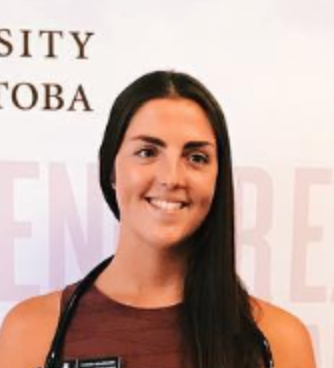
Carmen is a second-year PA student at the University of Manitoba, one of Canada's master's-level PA program, and she gives a candid look at what the program actually demands. From back-to-back 8-to-5 didactic days in first year to 90-hour ward weeks in Pediatrics, she doesn't sugarcoat the workload.
What sets this conversation apart is the shift Carmen describes in how learning actually happens. Concepts reviewed 100 times in a lecture hall click into place the first time you see them in clinic, and that shift changes everything about how you study and show up.
She also breaks down the structure of the Manitoba program, including the capstone research project, didactic year, and second year clinical clerkship rotations.
WHAT YOU’LL LEARNHow to survive the intensity of didactic year without burning out in first semester
What clinical rotations in the Manitoba PA program look like across rural and urban placements
How to advocate for yourself with preceptors who have never supervised a PA student before
What it means to think in a systems-based approach when managing complex ICU patients
GUEST BIOCarmen is a second-year Physician Assistant student completing her training in Manitoba’s master’s-level PA program, where she is currently immersed in clinical rotations across multiple specialties. She brings a strong academic foundation from her undergraduate studies and has adapted quickly to the shift from classroom-based learning to hands-on patient care.
Throughout her PA journey, Carmen has navigated the intensity of didactic training and the steep transition into clinical reasoning, learning to move beyond memorization toward systems-based thinking. She is actively involved in student advocacy as a CAPA student representative, contributing to national discussions on the future of the PA profession while continuing to build her clinical confidence in high-acuity environments like the pediatric ICU.

ON THE REAL CHALLENGE OF PA SCHOOL“PA school isn’t just hard because of the content. It’s hard because of the way you have to think.”
— Carmen, Manitoba MPAS PA-S2
ON TRANSITIONING INTO PA SCHOOL“First semester feels like undergrad. Then second semester hits and everything changes. That’s when you actually start learning how to think like a clinician.”
— Carmen, Manitoba MPAS PA-S2
ON SPEAKING UP “You don’t need to be right. You just need to be willing to try and say something. The students who do best are the ones who speak up, step forward, and ask for opportunities.”
— Carmen, Manitoba MPAS PA-S2
ON BALANCE IN PA SCHOOL“Balance isn’t about doing less. It’s about knowing when you need to step away so you can keep goin”
— Carmen, Manitoba MPAS PA-S2
ON DEVELOPING CLINICAL REASONING SKILLS“You can’t memorize your way through medicine. You have to connect concepts and work through problems you’ve never seen before. If you ask the right questions and do a thorough exam, you can figure out almost anything.”
— Carmen, Manitoba MPAS PA-S2
ON ADVOCATING FOR YOUR OWN LEARNING“It feels uncomfortable to advocate for yourself, but that’s exactly what makes you grow.”
— Carmen, Manitoba MPAS PA-S2
ON PERSPECTIVE“You look back and realize how hard you worked to get here and suddenly all the stress feels worth it.”
— Carmen, Manitoba MPAS PA-S2
-
First Year Overview
Anne [0:14] What was first year of PA school like for you?
Carmen [0:16] It was enjoyable. It was crazy. It was a whole whirlwind, but I really like classrooms so I overall enjoyed it. It was very intense. First semester was pretty similar to undergrad. The courses we were taking — biochem, anatomy, physiology, all studies — were very similar to what you'd take in undergrad.
Carmen [0:34] We weren't quite learning medicine yet and diagnosis. But then second semester came on real fast and it was very intense. That's when we started learning adult medicine, emergency medicine, and we had pharmacology — there was a lot.
Carmen [0:53] So that one was probably the most overwhelming semester. Semester 3, you're used to how things are working a bit more — what's expected of you, how to study. So while we were still taking the same course load and it was still very intense topics, you're just a little bit more used to it at that point.
Carmen [1:09] So it's not as overwhelming, I found.
Learning Medicine Mindset
Anne [1:11] And how is learning medicine different than learning in undergrad?
Carmen [1:15] It's not just memorization, which was hard to grasp for the first adult medicine exam we had. You really have to understand the concepts and be able to think about them in a different way. So it's not just here's the question and here's the answer.
Carmen [1:33] You have to go through a bunch of steps to get an answer that you may not have been taught in that exact course, but it correlates through other courses. It's very broad thinking.
Classroom Schedule
Anne [1:44] How much time are you spending in the classroom? Is it more 8 to 5 or a little bit more?
Carmen [1:48] Our classes were 8 to 5 pretty well every day. We had an hour lunch break, but we often went overtime in all of our classes, so our lunch was always cut short and we were always stretched at the end of the day as well. So it was a very heavy workload day.
Hands-On Labs
Carmen [2:05] First semester was pretty much all didactic except for anatomy labs. We had that once a week in the afternoons, which was a nice break from the classroom. We also had patient assessment, which was hands-on as well. Second semester our only hands-on learning was patient assessment.
Carmen [2:21] Third semester we got procedure labs, which were really fun — suturing and all that sort of fun stuff. So we got a lot more hands-on learning in third semester. We also had early exposures where we got to go out to sites one day a week for half a day and shadow a PA, which was a nice refresher from the classroom.
A Typical Day in First Year
Anne [2:41] How would you describe a typical day or week in the life of first year?
Carmen [2:45] Waking up early — I had about a half-hour drive to school and it took me a bit longer to get going in the morning. Classes were back-to-back all day, maybe 8 to noon, then an hour lunch break which for me was pretty much spent studying while trying to get some food in.
Carmen [3:04] Afternoon classes till five. I found I studied a lot better at school than at home. If I went home, it was very easy to get distracted. So I would try to stay at school later into the evenings. If I had stuff going on in the evenings like sports games, it helped because it would force me to stay downtown rather than go back home.
Carmen [3:23] So my days were quite long. I was often out of the house from 7:00 AM till 9:00 PM or so.
Weekend Study Balance
Anne [3:31] And the weekends — long as well?
Carmen [3:33] Weekends I would try to study at home, but that didn't really work too well, so I would try to come into campus, which I found helpful. But I would also try to take breaks for myself. So unless we had an exam on Monday, I would probably take Friday nights off and just hang out with family and friends.
Carmen [3:53] Saturday and Sunday — if I didn't have an exam coming up — were easy enough to break up. Maybe a bit of studying, but then take the afternoon or evening off as well. So I really tried to balance that.
The Capstone Project Explained
Anne [4:04] Manitoba is the only master's program for PAs, and what distinguishes it is four years of undergrad and then a capstone project. So what is a capstone?
Carmen [4:13] With a master's program, you're required to do some type of research. So our capstone projects — basically you get to choose an area you're interested in. It can be a literature review or original research, depending on what you think you have time for, and you pick an area.
Carmen [4:29] You find a supervisor for your research project and work together to basically write a paper. You make a poster presentation, and then there's a formal presentation at the end of the year where you present your research.
Anne [4:43] Now, is this at the end of first year or second?
Carmen [4:44] End of second year. You can start working on it whenever — a few people started in first year. I found it very overwhelming in first year, so I didn't really start thinking about and working on my project until summer break after our exams. I'm still in the process of putting things together. I have my ideas, it's just getting everything in a row.
Second Year: The Clinical Shift
Anne [5:06] How is second year PA school different from first year?
Carmen [5:08] I think it's a lot better in the sense that you can see what you're going to be doing. Rather than being buried under homework and studying, it's long days still and there is still studying involved, but it's a lot more clinical. Things you're seeing in person — it's easier to learn that way.
Carmen [5:27] I also found I learn a lot better by seeing something for the first time. I could have gone over a certain disease 100 times in didactic year, and then I see it in clinic once and it's completely solidified in my head. So that was a big difference in the learning.
Rotations Breakdown
Anne [5:46] How many clinical rotations do you do in second year?
Carmen [5:49] I think it's nine, give or take. There are core rotations that are required and then we get two electives to choose.
Anne [5:57] And what are those rotations?
Carmen [5:59] I'll go in order so I can remember them. Pediatrics, which is ward medicine. Community health — you usually go to a rural location and do a mix of different things. I was up in Thompson. I did a bit of clinic, some emergency med shifts, some internal shifts, and you can make it what you want.
Carmen [6:19] I also asked to go to the Addictions Foundation of Manitoba for a few days. Other people were up in Churchill and Norway House. And then we have emergency medicine, surgery, psychiatry, obstetrics and gynecology, family medicine, and internal medicine. I think that covers all of them.
Carmen [6:46] And then my electives this year — my first one, which I'm in right now, is the pediatric ICU, and my second one is cardiology.
Rotation Expectations
Anne [6:49] What are the expectations of a second year PA student out on rotation?
Carmen [6:54] Definitely to be more hands-on, to learn, to get a feel for what it's like to take on a patient load, to present patients, to come up with plans for them. Even if you're not right and you have no idea what the plan is, I think it's very important to still say something.
Carmen [7:11] If you're wrong, you'll learn from it. And I think it's important to make it clear to your preceptors what your expectations are for the rotation. In my first elective right now, they had never had a PA student before.
Carmen [7:29] When I first walked in, my preceptor was like, "From what I understand, this is a shadowing observer shift, right? You're not taking patients." And I was like, "No, I'm supposed to take patients. It's more hands-on than shadowing." So I had to make that pretty clear in the beginning, but it's fine now. I'm taking patients and coming up with plans, which is what's expected.
Long Hours Reality
Anne [7:45] And the hours are almost like a full-time job. What are you doing after a day in clinic or on the ward?
Carmen [7:50] The wards I've done so far in Pediatrics were very long days. Our first week there was about 90 hours. We had on-call shifts as well — a 24-hour on-call shift and an evening call shift. We would start at 7:00 AM and the evening call shift would go right till 10:00 PM.
Carmen [8:07] Then you'd go home, sleep for a couple hours, and come back the next morning at seven. The 24-hour on-call shift was 7 till 7 the next day. The wards don't leave a lot of time to do anything in the evenings. My community health was more 8 to 5 — I had time in the evenings and on weekends.
Carmen [8:23] So I was able to do a lot more studying and reading during that rotation. The rotation I'm on right now is also 7 to 5, so I have a bit more time in the evenings.
Pediatric ICU Highlights
Anne [8:34] You have a two-week elective right now in the pediatric ICU. What do you enjoy about that rotation?
Carmen [8:39] I've discovered about myself that I really enjoy Pediatrics. I also like the acuity of care that the ICU offers. It's a very big learning curve — very specific patients with very complex problems — but it's taught me how to think about them in a systems-based approach, which is what they use in the ICU to present and discuss patients.
Carmen [9:03] I really enjoy seeing myself be able to understand the complexity of these patients more and more each day.
How First Year Prepared You
Anne [9:13] How do you feel first year compared to second year — did it prepare you?
Carmen [9:15] The ability to take a proper history and do a full physical exam — first year really harped on how important that is, and now you can really see it in second year. By doing a thorough history and physical, you don't necessarily need to know what's going on right off the bat, but you're asking all the right questions and looking at all the right things on your exam so you can figure it out from what you've gathered.
Carmen [9:38] So I think that was huge in preparing us — and critical thinking skills as well, coming up with plans on how to treat patients. I think everything in first year has helped.
Procedures and Prescribing
Anne [9:50] What has been your approach to learning procedures or prescribing medications?
Carmen [9:54] In terms of procedures, I haven't done a whole lot. When I was in community health, I got the opportunity to do a few skin biopsies, excisional biopsies, and toenail removals, which were actually really satisfying. It's a lot different than what we practiced in procedure labs, obviously.
Carmen [10:13] Whenever somebody asks if you want to try something, I would never say no. Even if I'm a little hesitant, I'd say, "I've never done this before, but I'd be happy to try." And it's always worked out in my favor, so I'm pretty happy about that.
Avoiding Burnout
Anne [10:27] How do you maintain work-life balance or prevent yourself from burning out?
Carmen [10:31] It's a little different for me in first year versus second year. In first year, I did take a lot of time for myself — at times I thought I was almost taking too much — but I really needed that. In the evenings if I was feeling stressed, I would take time off and go outside, go for a walk, do something with family, and try not to feel guilty about that.
Carmen [10:52] Staying really involved with my sports always gave me something I had to do each week whether I wanted to or not. I would just go, and even if I had an exam the next day I'd probably still go to a game because it's a great way to unwind.
Carmen [11:07] In second year I find it's easier to have a work-life balance, and even the work part of it — right now everything is still so exciting and fun to learn. I could work a 24-hour shift and come home and not feel burnt out because it was such an exciting shift where you got to do so many cool things.
Carmen [11:26] So I haven't found that part to be too stressful yet, but that might come in a few years of working.
Decompressing After Long Shifts
Anne [11:33] How do you decompress after a very stimulating, exciting day where you worked long hours?
Carmen [11:38] My first few shifts in Pediatrics were in emerge in the minor treatment area and they would go till 11:00, and then I'd have to be up the next day at 7. When I came home right after a busy shift, I'd be trying to fall asleep but going through every single case I saw and rethinking it.
Carmen [11:54] It took me so long to fall asleep. So I haven't really figured out a solution to that part yet. The same with the rotation I'm on right now — if something really exciting or interesting or heavy happens at work, it does take me a bit to unwind. But I think coming home and doing something other than going straight to bed — whether it's reading or watching a show — definitely helps take your mind off it.
What Makes an Ideal PA Student
Anne [12:19] Now that you've gone through the rigor of first year PA school and you're in the midst of second year, what does an ideal PA student look like — someone who would do well in a program like this?
Carmen [12:30] Someone who isn't afraid to put themselves out there and advocate for themselves. It always feels a little weird promoting yourself — almost like you're bragging or being too forward. But I think the students who do the best are the outgoing ones who say, "Let me try this" and "I've done this before in procedure lab, let me try it on a real patient." Just stepping up, making your voice heard, advocating for yourself.
Carmen [12:57] I think those are the ones who do the best.
KAPPA Student Representative Role
Anne [13:00] Tell us about your role with KAPPA.
Carmen [13:02] So I'm the student rep. In first year, there are a few positions that need to be filled within the class — president, vice president, secretary. One of them was a student rep for KAPPA, and I took that position. I was really interested in it. I wanted to get more involved with KAPPA, get more involved with advocacy for the profession, and learn about it from the board's perspective.
Carmen [13:25] When I signed up, it was just as a student rep. Each year from each program has a student rep, so with three programs and two reps each, there are six of us. We have phone meetings every few months throughout the year where we discuss what's going on in our programs.
Carmen [13:40] We talk about National PA Day and what we're doing for it, student engagement sessions, and how we can get students to interact more across programs. On top of that, the board of directors has a student rep position that sits on the board — it has to be a first-year student. There were three options and I put my name forward and got that position.
Carmen [14:01] So I sit in on board meetings — teleconferences — and participate in those discussions. When I first started, a lot of the topics and issues were things I wasn't familiar with and didn't have a lot to add. But I learned a lot about the profession, where the issues are, and what we're working on, which was really interesting to hear from a student's side.
Carmen [14:19] And then the conference here — we had a full-day board meeting yesterday where we discussed strategies, planning, where the profession is going, and what we're working on. Really interesting.
No Regrets: Choosing the PA Path
Anne [14:38] Are you happy with your decision to pursue PA?
Carmen [14:41] 100%, yeah. In everyday life it can be stressful. But when you look back on it and think about how much you wanted this — personally, for me, how hard I worked for it — and now you're actually here. It's exciting. Yeah, I'm very happy.