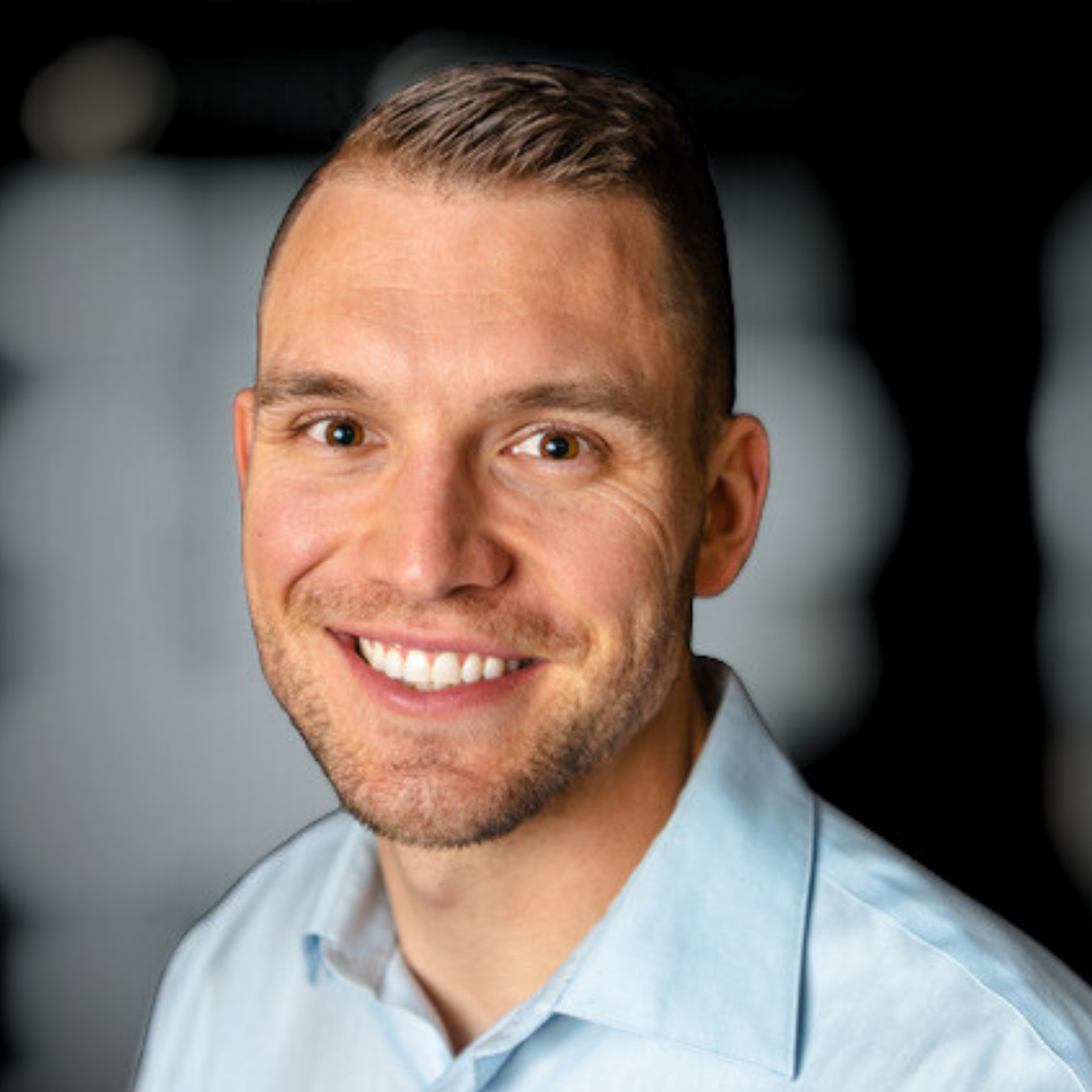
Episode #23: Adam Grycko, Manitoba PA in General Surgery
“What I love about being a PA is the variety. I can dedicate ten years to surgical oncology and then move into something completely different. You don’t get that as a physician, you’re locked in.”
Adam Grycko brings over two decades of clinical experience to this conversation, sharing what it actually looks like to build a PA career in surgical oncology at one of Canada's busiest tertiary care hospitals. From his roots as a licensed practical nurse in neurosurgery to first-assisting on Whipple procedures and HIPEC surgeries, Adam's path is a masterclass in leveraging prior experience, staying curious, and carving out a niche in a profession that's still being defined. He also speaks to PA regulation in Manitoba, the realities of PA autonomy, and why he pursued an MBA.
WHAT YOU’LL LEARNHow to navigate the transition from nursing into the PA profession using clinical experience as an asset
What a general surgery PA actually does day-to-day across ward management, the OR, clinics, and procedures
How to approach PA scope of practice, autonomy, and the supervising physician relationship in a regulated province
What regulation means for PA practice in Manitoba and why it matters for the profession's future across Canada
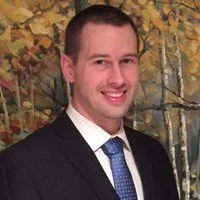
GUEST BIOAdam is a Canadian Certified Physician Assistant with over 20 years of clinical experience, currently practicing in general surgery and surgical oncology at the Health Sciences Centre in Winnipeg, Manitoba. He came to the PA profession through a rich nursing career spanning neurosurgery, critical care, and hemodialysis, before completing his Master's in Physician Assistant Studies at the University of Manitoba in 2013.
A recent graduate of the Asper MBA program with concentrations in sustainability and leadership, Adam is now turning his sights toward healthcare policy, PA advocacy, and building the research base the Canadian PA profession still needs.
ON CONFIDENCE & PROFESSIONALISM"I showed up on my first day, looked at my attending, and said: 'What do you envision my role being here?' She laughed and said, 'Well, what do you envision your role being here?' That's when I realized that this is a job I get to carve out myself."
— Adam Grycko, CCPA
ON 2ND YEAR PA SCHOOL CLINICAL ROTATIONS"Clinical year is your chance to fail. And by failing, I mean that's when you're trying things out, consolidating your knowledge, seeing what works and what doesn't. It's a safe environment, so use it."
— Adam Grycko, CCPA
ON LIFE LONG LEARNING AS A PA"The learning doesn't end when you're out of school. You go home, you pick up a book. Look at every step of a procedure and ask: what do I do if something goes wrong? That never ends."
— Adam Grycko, CCPA
ON LEARNING & GROWTH“Drinking from a fire hose is a good analogy. It's condensed medicine in one year and surprisingly, I learned so much more than I even expected.”
— Adam Grycko, CCPA
ON SCOPE OF PRACTICE & AUTONOMY"I sometimes joke that if my attending tells me to remove somebody's brain, I can remove somebody's brain. But the point is that those tasks are negotiated, they build over time, and that trust is everything."
— Adam Grycko, CCPA
ON PA ADVOCACY
"We advocate on a daily basis through our work. I try to advocate by demonstrating competence in the way I do my work on the ward, and in the way I interact with people - that's advocacy too."
— Adam Grycko, CCPA
-
Introduction & Background
Adam [0:00] Hi, I'm Adam, I'm a Manitoba PA working in general surgery at Health Sciences Centre. I've lived in Manitoba all my life. I grew up in a small town, St. François Xavier, west of Winnipeg, kind of towards Portage. My family wasn't really involved in healthcare whatsoever, but from an early age I was really interested in health sciences. And one day, like a lot of people who ended up in the PA profession long before there was a profession here, I wanted to be a doctor.
Adam's Experience Before PA School: Licensed Practical Nursing
Adam [0:37] I subsequently moved to the city during my university years, went to University of Manitoba, and had a pretty rough first year — a real reality check.
Adam [0:48] I took a year off university and went into a practical nursing program where I got my certificate in nursing. I became a licensed practical nurse. It was a great exposure to the healthcare system and it really reaffirmed why I was pursuing a career in health sciences.
Adam [1:07] I didn't complete my nursing degree at that point — I just had a hunger for working in the system. After a long career as a nurse, I wanted to do something different. I had worked within the nursing model for quite some time and had a great tour of the profession — dialysis and nephrology nursing, critical care nursing.
Adam [1:33] I felt I had achieved a lot of what I wanted to achieve. I'm somebody who is just addicted to going to school — always asking, what's next? I wanted to explore a different model, which is what led me toward the physician assistant curriculum.
Adam [1:49] The big draw was the medical model versus the nursing caring model. Just to keep things fresh and get a different perspective on the system.
How Adam Came Across the PA Profession
Adam [2:11] My first job as a licensed practical nurse was at the Health Sciences Centre in Winnipeg. I was introduced very early on to a neurosurgery PA — Ian Jones — who is the program director for the school. He was one of the first PAs I actually met, and I started getting really interested in what his role was in the neurosurgery population.
Adam [2:29] I thought, wow, this is a great model that kind of bridges medicine and nursing. I wanted to retain my bedside skill set, have more variety, and also more mobility. So I really started eyeballing PAs. The Health Sciences Centre was a great starting point to witness PAs firsthand and see what their roles are.
Adam [2:56] Most PAs at the Health Sciences Centre that I've interacted with are in surgical specialties, which was my background as a nurse. So I got to figure out what aspects I could pull toward a career there, rather than going into higher education through the NP stream, for example.
Adam [3:18] My first exposure was Ian Jones, who was a pioneer of the program.
Adam's Experience in 1st Year PA School at Manitoba
Anne [3:24] How was your experience in first year PA school?
Adam [3:27] First off, I was thrilled to have that opportunity.
Adam [3:31] I came in with a bit of an attitude — I had almost 10 years of nursing experience, and in my mind I thought, I've done two nursing programs, I'm going to use PA school to consolidate and really specialize.
Adam [3:48] Not to sound cliché, but the "drinking from a fire hose" thing was very evident very early on. It's a very fast-paced curriculum. And surprisingly, I learned so much more than I even expected. It was challenging because I thought I'd be able to work part time and fund some of my education — and that went away really quickly.
Adam [4:05] It was easy to relinquish work and just fully focus on the program because I had a great time on a personal level. I had a great batch of students that I worked with and learned with — we all really complemented each other. But the content is incredibly fast-paced. It's condensed medicine in one year of didactic experience, and then onto the clinical aspect. "Drinking from a fire hose" is a good analogy.
What's Involved in 2nd Year PA School at Manitoba
Anne [4:47] What's involved in second year PA school?
Adam [4:50] So in second year, you're turned loose on the world, so to speak. You get this condensed didactic medical curriculum slammed at you for one year, and you're also figuring out your capstone project. You're preparing for exams after first year and you're in clinical rotations in year two.
Adam [5:11] It's a lot of juggling. Now you're essentially working a job while you're still in school. There are obligations during different subspecialties in your clinical year. During rotations, you're expected to present and lecture to other medical learners — med students, PhD students, nursing students.
Adam [5:29] It all brings together the classroom aspect while you're learning how to function and develop your CanMEDS competencies — becoming a communicator, developing interpersonal relationships, learning how to function in the real medical world.
Adam [5:47] It's really challenging, but it's a lot of fun. After sitting in a classroom for that long, it's great to get out there and say, OK, let's see what I've learned, let's see what I can do.
Core Rotations in 2nd Year PA School
Anne [5:57] Where did you do your core rotations? What specialties?
Adam [6:00] The Manitoba program has a big push toward getting physician assistants involved in primary care, which is a huge need. So we did a lot of rotations — our main ones were in family medicine, internal medicine, obstetrics, and gynecology. As for electives, I'm biased toward surgery. It's what I grew up doing as a nurse.
Adam [6:25] So I chose a lot of surgical subspecialties as my electives. I had the opportunity to do rotations in cardiac sciences, general surgery — which is where I currently work — and infectious diseases, which was hugely useful.
Adam [6:42] When choosing your electives, I'd recommend not just focusing on what you want to do, but what will complement what you want to do. Because in clinical year, that's your chance to fail — and by failing, I mean that's when you're trying things out, consolidating your knowledge, figuring out what works and what doesn't. It's a safe environment to fail and try to become the clinician you want to be.
Locations of 2nd Year PA Clinical Rotations
Anne [7:16] Where were the geographic locations? Did you concentrate in Winnipeg, or were there opportunities for rural?
Adam [7:22] I can't speak for the program currently, but rural placements were available. I stayed mainly in Winnipeg. I did spend some time in Portage la Prairie, which is fairly large, but it is considered rural.
Adam [7:45] I went out there almost as an extracurricular activity. I'd drive out on Fridays after my clinical rotations. A family doc friend of mine would be the only doc in the ER, so he was thrilled to have me there. I'd tag along and get a taste of rural medicine — there's a stark difference between rural emergency medicine and a tertiary care facility like in Winnipeg.
Adam [8:21] Other students went as far as Churchill for placements. Myself, I stuck close to home. But there's a lot of opportunity, and you may have to make those opportunities for yourself and be very proactive — which is exactly what you should do. It's actually a great advocacy point, getting exposure and letting people throughout the province and across Canada see what PAs can do.
Finding Work After Graduating from Manitoba's PA Program (Class of 2013)
Anne [9:09] You graduated a few years ago. At the time, how did your class find jobs?
Adam [9:14] Great question. I believe — and Ian Jones may disagree with me — that at the time it was the last year where we were loosely guaranteed jobs upon graduation. There was a list of positions protected for newer graduates once we completed the program.
Adam [9:32] But it wasn't limited to that. A lot of students went out and developed their own positions, which is absolutely amazing to see. You know, if you want to work in pediatric neurology but there's no position — you track down the opportunity, you create awareness about what PAs are, you do clinical rotations, you volunteer, you demonstrate your abilities. I've never seen it in any other profession, but the jobs will materialize with enough push.
Adam [10:17] For myself, I was fortunate. There were a lot of surgery positions, which is where the big need is. The PA model tends to be more robust and better demonstrated in surgical subspecialties, where PAs can fill in when surgeons are in the OR. There were a lot of opportunities at the Health Sciences Centre in surgery, so I had a pretty good list of positions to interview for.
Adam [10:47] The job scene is a bit different now — there are funding model issues, regulation varies by province. But the take-home message is: if you have an interest in a certain area, go for it. Push forward, advocate for yourself and the profession, and try to carve out a niche for yourself and for the future of PA practice.
Working as a General Surgery PA in Manitoba
Anne [11:17] That's exactly what we tell students in Ontario — glad that's a Canada-wide mindset. Where do you work now as a PA?
Adam [11:25] I work at the Health Sciences Centre — that's home for me. It's a tertiary care facility in Winnipeg that services most of Canada, including the north. It provides specialty services across multiple fields, from neurological surgery to surgical subspecialties to specialized medicine.
Adam [11:41] I work in the Department of Surgery, specifically general surgery, and I split my time between two subspecialties. One is surgical oncology, which focuses predominantly on GI malignancies — a lot of gastric cancer, colon cancer, breast health clinics for breast cancer, and Melanoma clinics where we follow patients in a small dermatology-focused section.
Adam [12:25] My other appointment is HPB — hepatopancreaticobiliary surgery — so liver, pancreas, and bile duct surgery. It's also surgical oncology based, with a lot of pancreatic cancers. Another PA and I switch between the two services every three months to keep our skill sets sharp in both. We're all stationed on the same wards but just rotate to keep things fresh.
Getting Oriented as a New PA Hire in General Surgery
Anne [13:13] When you were first hired as a fresh new grad, how did they orient you to the service?
Adam [13:19] Before my arrival, there was no experience with PAs in the general surgery program. They had a clinical assistant who had been working there for some time, but the role wasn't as broad as what the attendings envisioned for a PA. So we were breaking new ground, and there was a lot of learning on both sides.
Adam [13:46] How I got oriented was: I showed up on my first day at 7:00 in the morning to the ward. My attending was there, we had our introductions — we had last seen each other at the interview — and there was an awkward silence. I said, "What do you envision my role being here?" She laughed and said, "Well, what do you envision your role being here?" At that moment I realized this was a job where I could carve out my own niche and offer services that would improve patient care efficiency.
Adam [14:30] It was an odd way to start a new job. But in retrospect — this is a new profession, they didn't have experience with it, and it was a great opportunity to build the job around what I wanted to do. It just evolved over time. Demonstrating competencies, building your skill set — it branches out in amazing ways.
Hitting the Ground Running as a New PA
Anne [15:10] Was there any shadowing involved, or did you hit the ground running seeing patients right away?
Adam [15:15] Hit the ground running. Shortly after meeting with my attending on my first day — I was very familiar with the clinical systems, having worked at the Health Sciences Centre for many years — my attending said, "I'm going to let you read up on the patients. I'm going to go to the OR." I really relied on the multidisciplinary team to piece things together and learn from them. I made inroads with the nursing crew easily, since I could relate to their background. I also touched base with social workers and physiotherapists, trying to create awareness about PAs and see how I could complement their work and make things better.
How the PA Role Evolved — From Medical Student to Senior Resident Level
Anne [16:49] Would you say that initially your role was very similar to that of a resident or fellow?
Adam [16:55] When I started, the goal was to get PAs helping in a few main areas. The biggest need was the ward, because at a tertiary care hospital with medical and surgical residents, you're also trying to facilitate their learning and allow them a better experience in the OR where they're learning to be surgeons. So the initial phase was covering the ward — management of patients in the perioperative period, basic assessments, lab interpretation.
Adam [17:53] Once my core skill set was solidified and my attendings were happy, I started branching into other roles — and that's when I started to feel more like a resident. A former director once said, "You're a resident who never leaves." I feel that way now. As the team's confidence in my skills grew, I branched into seeing consults, doing procedures unsupervised, working in clinics, going to the OR, and gaining more autonomy with less direct supervision.
Adam [18:47] Initially I felt like a medical student. Then pretty quickly I became a junior resident. And now I feel like I'm at a senior resident level in terms of the tasks I carry. We're all running around the hospital pinching in and trying to help out.
Day in the Life of a General Surgery PA
Anne [19:07] Can you describe a typical day — or week — in your life?
Adam [19:10] It's difficult, and I always tell people it's heterogeneous — no two days are the same. When I talk to students, I always say: don't think what I do on a given week is the same across the whole profession. Depending on the service, I usually come in and we round as a team on the patients. We have anywhere from 3 patients on the ward in a surgical subspecialty to as many as 20, with the average around 12.
Adam [19:46] After rounds, we sit down and come up with a plan — where to allocate human resources: PA students, med students, residents. We decide who's going to the OR based on experience and the cases going on. If there's a big resident team, they take priority in the OR to get their index cases. A lot of my day, if I'm on the ward, involves a second set of rounds in the afternoon, arranging diagnostics, small procedures, opening wounds, assessing patients, and dealing with the daily unpredictable things — and hopefully not running codes.
Adam [20:40] Consults are another part of the job. Most pages come to me. I'm territorial — when I'm on the ward, I like to know what's going on around the facility. We'll get calls from the ER to see patients who may have bounced back with a wound infection. I'll assess them, call my attending, review the plan, and send them on or bring them in. Clinic days are also part of it — you can be juggling ward management while running to a 40-patient Melanoma or breast health clinic, which is really involved.
Adam [21:29] Sometimes the attending gets called in for their expertise in another room, and then my pager goes off — "Can you come to the OR and help out?" It's a bit of a jack of all trades. But that's something I really enjoy in surgery. You get your hands dirty and you also get to be very academic on the wards. It's a great mix.
Common Conditions Seen in General Surgery
Anne [22:03] What are some common conditions you see?
Adam [22:05] It's subspecialty specific. We see a lot of GI malignancies — bowel tumours are very common. Most of our clientele are non-acute, elective surgery cases, usually cancer-based. We do a lot of gastric cancer workups, planning chemotherapy and radiation in conjunction with medical oncology and radiation oncology, then eventually moving to a surgical plan.
Adam [22:48] The more exciting part of the job — and it doesn't get as much attention as cardiology — is the liver surgeries. Some of the procedures we do are absolutely fascinating, very large, requiring a level of expertise that is mind-blowing. We do Whipple procedures for pancreatic cancer. We recently started doing HIPEC — hyperthermic intraperitoneal chemotherapy — a large surgery where we infuse chemo directly into the abdomen for GI malignancies, with fairly extensive cytoreductions and resections. The bulk of my practice is GI malignancies as elective cases.
Adam's Role as a PA in the Operating Room — Surgical First Assist
Anne [23:48] In the OR, are you first assist, or is there a second assist role too?
Adam [23:54] People who are interested in surgery ask that a lot. It's not a lot of fun to just stand there and hold a retractor, which a lot of us end up doing in early clinical rotations. But most definitely, when I come into a case, I'm in as first assist. You're working directly across from your attending, you're more involved, and as confidence builds in your abilities, the surgeons ask for your legitimate opinions during the procedure — "What is this? What do you think we should do?" It's a great learning opportunity.
Adam [25:02] If I don't have much going on in the ward, I'll go into the OR and just spectate — you don't get an anatomy lesson anywhere like you do in an open abdomen. But yeah, working as first assist in the operating room is definitely one of the more exciting parts of the job.
Opening, Closing, and Surgical Skills in the OR
Anne [25:26] Do you open and close, stitch — things like that?
Adam [25:29] Yes, and it really depends on the complexity of the case. This will also vary by practice. We have a huge number of PAs working in plastics whose surgical skills are absolutely exceptional. As for my own contributions in the OR — absolutely, opening and closing a lot of cases, especially the less complicated ones. As you develop your reputation and the surgeons get more confident in you, they can leave the room at the end of a case, move on to see the next patient or help in another suite. We also have utility in teaching — showing a med student how to close and freeing up the physician's time is a key role of a PA: increasing system efficiency. So yes — opening, closing, putting in drains, taking the patient out of the OR.
Procedures Done by a General Surgery PA Outside the OR
Anne [26:39] Outside of the OR, what are some procedures that you do?
Adam [26:41] Typical procedures depend on which service I'm on at the time. In the procedure room at the cancer care area, we do wide local excisions of various lesions — sometimes with a physician nearby, sometimes with a junior learner and I go through it together. On the wards, we do paracentesis, NG insertions, IV insertions, central line insertions — though at Health Sciences we have specialty teams for some of those. And then opening of infected wounds, irrigating, debriding — really everything perioperative that you can think of.
Learning Procedures as a General Surgery PA
Anne [27:55] Did you come into the position with those skill sets, or how did they get incorporated?
Adam [27:55] A lot of skills — like NG tube and IV insertion — I brought from nursing. But I remember the first time I opened up a wound. That was the coolest thing. How I learned? It's an outdated mentality, stemming from old school medicine — see one, do one, teach one. I don't think it's sufficient anymore, but admittedly a lot of my skills were picked up that way. I worked with a lot of senior residents and had great opportunities to go in there with them, talk through procedural skills, see one, do one later that afternoon, and now I teach them.
Adam [28:47] But we always have to be careful when learning new skills. It's not just about being confident you can do the procedure — you have to be confident you know what to do if something goes wrong. That's part of our professional responsibility.
Building Competency as a PA
Adam [29:14] When you're starting off learning anything, you want to know the steps — the how. But very soon you have to start asking: what happens if this goes wrong? It's very hard to train for that. That's where exposure comes in — you have to get your numbers. When you see an opportunity to do a procedure, do it. You're not hoping something goes wrong, but the only way you'll learn how to handle complications is by actually getting your reps in.
Adam [30:05] There always has to be a connection between ongoing professional development, CME, and reading. We have a responsibility to know how to handle the complications of any procedure we do. The learning doesn't end when you're out of school. You go home, you pick up a book. Look at every step of a procedure and ask: what do I do if something goes wrong between each transition point? That's the bridging of the academic back to the clinical, and it never ends.
Adam [30:41] Anytime I'm sent to do something new, the first thing I'm thinking is: what if something goes wrong? And you have to be comfortable asking those questions. If you don't know, you don't know.
What Patients Can Expect from a PA
Anne [30:54] What can patients expect from you, and how do you interact with them?
Adam [30:58] Not many people love the scut work on the ward — I love it. If a patient has an issue, I can walk into the room. I try to be seen by patients as much as possible. I do my own rounds every afternoon, and we all round as a team in the morning. In the afternoon I come around for a spot check — what's going on, how are things moving.
Adam [31:32] The main point isn't so much checking for missed items — we have a great nursing staff and support services for that. I love doing rounds to talk to patients, to let them know they're being cared for, that there are people who legitimately care about their well-being and recovery. I allocate about an hour depending on how many patients we have on the ward, and I often end up rounding for multiple hours.
Adam [32:08] It sounds cliché or fluffy, but just talking to people is really rewarding. It gives you a better grasp of what they're experiencing, and you can pull that into your practice and adjust your approach to clinic-based medicine.
How Adam Interacts with Nursing and Allied Health on the Ward
Anne [32:32] And how do you interact with nursing and allied health?
Adam [32:35] Allied health is omnipresent at the Health Sciences Centre and you become very reliant on them. It really behooves you to develop good relationships. I lean on our pharmacists like a crutch — I love having their expertise and input. That's a luxury compared to a PA working in a mine or rural setting where you have to use your resources very wisely.
Adam [33:13] Developing relationships is huge. With nursing, it's always been easy. When you're the new person on the block, everyone is scrutinizing you. My easy way in was being upfront about my background as a nurse — I advocate for transparency and not being afraid to contact the team with questions. We're all learning together. Most of the nurses have my number. If something comes up, they'll text rather than page me — it's more efficient. You have to have that relationship with the multidisciplinary team. You don't have to like everyone you work with, but it's not about us, it's about the patients.
The PA-MD Relationship: Interacting with a Supervising Physician
Anne [34:07] And how do you interact with physicians? What is the PA-MD relationship?
Adam [34:11] It's highly varied. I keep things pretty professional. I never have any issues approaching my attendings — they're very easy to reach. Whether I'm throwing on a scrub cap and going into the OR to look over the drape, they know when I show up there's usually something going on. I'm either delivering bad news or asking for advice. But they're great — we can have a quick conversation in the OR about what's going on, questions get addressed, plans get determined. They're also easily available by phone.
Adam [34:50] I keep our relationship fairly professional. I work with multiple physicians — I have contracts signed with about 12 of them.
Level of Autonomy as an Experienced Practicing PA
Anne [35:09] Is your role more autonomous, or is the MD seeing every patient you round on?
Adam [35:19] The level of autonomy actually amazed me when I started as a PA. I believe one of the biggest ways to get into trouble — and potentially harm patients — is not asking when you have questions. I now autonomously initiate diagnostics and conduct procedures without necessarily consulting in advance with my attending. But that evolves over time. When you're comfortable with your skill set and know what the expectation is, that comes naturally.
Adam [35:58] At the same time, I always make it a point to disclose things at the end of the day. We have a good structure — I round in the morning, again in the afternoon, and then the attending rounds after the operations are done in the evening. I always mention what has come up with their patients. Even if something minor came up in clinic, I mention it — it closes a loop, facilitates discussion, and sometimes there are great learning opportunities that come out of it.
Adam [36:50] Working autonomously is great — but always ask questions, try to stimulate conversation with the attendings, take advantage of the learning opportunities. I do have a high degree of autonomy in the clinical setting.
Defining PA Scope of Practice
Anne [36:55] You mentioned initiating procedures and diagnostic interventions. Is that within the scope of practice of a PA?
Adam [37:05] We have to be careful that any interventions or procedures we initiate are within the scope of practice of our attending physician. I would never make an autonomous decision to start a patient on chemotherapy — that's not within my knowledge base, nor is it within the scope of practice of my attending. Any procedure I do, I make sure it's something I'm well versed in and authorized to do. That usually develops as your relationship with the attendings grows over time — you figure out what they want to delegate and what they're comfortable with you doing. But it must remain within their scope of practice.
Adam [37:54] Generally speaking, whatever my attending physician is able to do and is comfortable delegating, I'm able to do. I sometimes joke that if my attending tells me to remove somebody's brain, I can remove somebody's brain — joking, obviously. But the tasks are negotiated. They build over time. It's a great mix of skills and procedures.
What Adam Enjoys About Being a PA
Anne [38:22] What do you enjoy about being a PA?
Adam [38:24] Being a PA — best job I've ever had. When I was at that crossroads of deciding what to pursue — NP stream, formal medicine, or the PA route — I wasn't forfeiting previous skills I had developed. I wanted the patient interaction aspect and I wanted portability.
Adam [39:00] I wanted the ability to move around within specialties and gain a broader understanding of the system. What I love about being a PA is the variety — the ability to dedicate 5 or 10 years of my life in a surgical subspecialty and then move on to something else. Going into dermatology, for example. You don't get that as a physician. You're kind of locked in unless you do another residency. So it's the ability to move around, get variety, get exposure. It's enriching.
How Regulation Affects PA Practice in Manitoba
Anne [39:43] I'm an Ontario PA and you work in Manitoba, where PAs are regulated. So what is regulation and how does it impact PA practice?
Adam [39:52] There are a lot of terms thrown around in this conversation — registration, regulation, law. In Manitoba, PAs are regulated through the College of Physicians and Surgeons of Manitoba. The primary purpose of regulation is to protect the public. Regulation focuses on tasks and job scope — what is appropriate for different members within a field, whether that's lawyers or medical personnel.
Adam [40:38] It's important to me. It's a level of accountability and transparency, which is very important when you're dealing with the public — and the potential to do harm in healthcare is high. Regulation is a measure to protect the public from harm in medical practice. There are nuances to it, but at its core, that's what it's there for.
The Impact of Having a PA in a General Surgery Service
Anne [41:16] What impact do patients, staff, and the department notice or benefit from having PAs working with them?
Adam [41:23] The feedback — and I'm always cautious because it's anecdotal — is positive. One of the biggest challenges we have as PAs is tracking the contributions we make to the system. We should be increasing efficiency, but it's hard to parse out our contributions from physicians, especially in Canada where we don't have our own billing number.
Adam [41:43] Anecdotally, I get great feedback. I wish someone were tracking the numbers. Nursing staff say time-to-discharge has been shortened because they're not waiting for residents or physicians to come out of the OR at the end of the day. One of our patient advocates mentioned that complaints from wards where PAs are working are actually down — though I haven't seen that data myself.
Adam [42:51] The biggest piece of feedback I get from the multidisciplinary team is that it's just such an asset to have a clinician who is available much of the time on the ward — managing patients perioperatively, facilitating transitions home, getting procedures done, handling paperwork. I would really like to see this studied and scrutinized more, and get real data on it — especially in a time when there are healthcare cuts and reshaping of the system, particularly in Manitoba.
Opportunities for Growth After Becoming a PA
Anne [43:09] Some people think that once you become a PA, that's it — that's where the growth stops. But you've pursued higher education, leadership in healthcare, and an MBA. What inspired you to pursue that?
Adam [43:20] I get antsy sitting still. I don't like to not be in school. I had been a clinician for so long across a few different health sciences fields, and I was asking myself — what can I do that's going to enrich my knowledge base? What do I want in the future? I have to be realistic. One day I may not want to, or maybe not be able to, run around operating for hours.
Adam [43:59] The natural next step for me — whether you're a plumber, a doctor, a PA, a nurse — is making a contribution from the top down. System transformation. That requires a knowledge of administration. I love clinical work, I can't imagine leaving it right now. But one of the big reasons for the MBA is to gain a different perspective — to see what's happening with the numbers from a financial perspective of the healthcare system. How sustainable is this system?
Adam [44:44] We're a profession that was brought in because of system inefficiencies. I wanted to better understand that aspect of healthcare, and one day maybe be the person who writes the policies that everybody complains about. I look at it as almost a capstone on my career — understanding that dimension and being able to make change at a policy level.
Adam's Current Research Interests
Anne [45:20] What are you working toward — whether it's research or advocacy related?
Adam [45:24] I'm not done my MBA yet — I expect to complete it in August 2026. I've taken my time while working full time. My research interests are focused around sustainability as well as leadership and organization, which are my two concentrations in the MBA curriculum.
Adam [45:46] After completing it, I would love to start looking at research focused on quantitative metrics for different healthcare practitioners and how they contribute — something I touched on earlier. That's really lacking in the Canadian PA profession. We extrapolate a lot of our data from the US. I also want to look at sustainability — trying to find ways to make our healthcare system more robust, seeing where PAs can contribute and where health human resources can be moved to achieve those goals.
Adam [46:54] On advocacy — I look at it as something every PA should be doing, even outside of formal advocacy boards. We advocate daily through our work. I try to advocate by demonstrating a level of competence in how I do my work on the ward, in how I interact with people. I'd love to tie my research on sustainability into advocacy for PAs and show some numbers one day — objective data on what we're actually providing to the system.