Episode #24: Andrew Lim, Orthopaedic Trauma PA
“A bone is sticking out of the skin, you put it back, the pain improves, the patient feels better. It’s that instant gratification that you really can’t get anywhere else.”
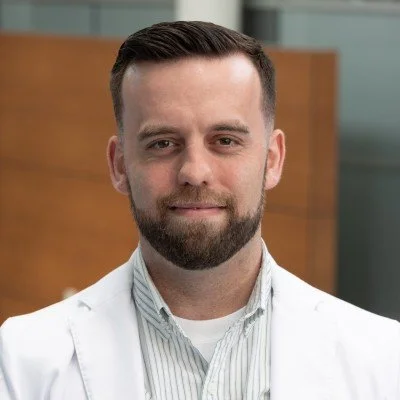
Andrew Lim is a physician assistant in the Division of Orthopedic Surgery at Sunnybrook Health Sciences Centre in Toronto, where he works as part of the orthopedic trauma team. He graduated from the McMaster University PA Program in 2016 and secured his position through the Career Start Program after completing a clinical rotation at Sunnybrook.
Andrew's day spans two inpatient units, the emergency department, and fracture clinic, managing consults, post-operative care, reductions, and discharge planning for a team of 16 orthopedic and four spine surgeons. Over time, his role has expanded to include teaching residents, leading round sessions, contributing to quality improvement initiatives, and instructing the Stop the Bleed program at the CAPA conference.
He speaks candidly about the challenges of role clarity when working alongside resident physicians who have never worked with a PA, and about the communication habits that make or break the PA-MD relationship. Andrew also breaks down what medical directives are, how prescribing works in practice, and what orthopedic surgeons should realistically expect when adding a PA to their service.
WHAT YOU’LL LEARNHow to approach every clinical rotation as an extended job interview and convert it into a job offer
What the daily responsibilities of an inpatient orthopedic PA actually look like at a major Canadian trauma centre
How to build trust with nursing staff and supervising physicians when you are the first PA on a unit
What medical directives are, how they evolve over time, and how they define your scope as a practicing PA
GUEST BIOAndrew Lim is a Canadian Certified Physician Assistant who works in Orthopaedic Surgery at Sunnybrook Hospital alongside their department of 16 Orthopaedic Surgeons.
Prior to pursuing PA, Andrew studied Kinesiology of Guelph-Humber where he discovered his passion for Anatomy and Physiology. He gained admission to McMaster’s PA program in 2014, and secured his first and current position through Health Force Ontario’s Career Start Program.
ON PIONEERING THE PA PROFESSION IN CANADA“Being part of something new, something innovative, something that is definitely growing. Every time I go to work I'm thinking about what I can do to make the lives of my patients better.”
— Andrew Lim, CCPA, Orthopaedic Trauma PA
ON CONFIDENCE & PROFESSIONALISM
“Once you make other people feel confident in your abilities, that opens up a lot more opportunities for education. Confidence will personify both professionalism and competence.”
— Andrew Lim, CCPA, Orthopaedic Trauma PA
FOR PHYSICIANS WORKING WITH PAs“Knowing how to fully utilize a PA is genuinely a skill that needs to be developed.”
— Andrew Lim, CCPA, Orthopaedic Trauma PA
NOT TAKING THE PA CAREER FOR GRANTED“There's a certain level of satisfaction in seeing how much your patients have improved that you just can't get from any other profession. I've never taken it for granted.”
— Andrew Lim, CCPA, Orthopaedic Trauma PA
HOW CLERKSHIP HELPS WITH JOB NETWORK“I always approached every clinical rotation as almost like an extended job interview. You never really know who's the right person, but every single person you meet could have a great impact on your career.”
— Andrew Lim, CCPA, Orthopaedic Trauma PA
HOW PAs FILL GAPS AT BUSY ACADEMIC HOSPITAL SETTINGS“Resident physicians have duties to many patients. That frees up the opportunity for me to step in, take a little more time, and give the patient confidence that someone is truly looking out for them.”
— Andrew Lim, CCPA, Orthopaedic Trauma PA
-
Introduction
Andrew [0:00] Hi, I'm Andrew and I'm an orthopedic surgery PA here in Toronto.
Andrew [0:12] My name is Andrew Lim. I'm the physician assistant for the Division of Orthopedic Surgery here at Sunnybrook Health Sciences Centre. It's located in Toronto, and I work as part of the orthopedic trauma team.
Before Becoming a Physician Assistant
Anne [0:24] Can you tell us a little bit about what you did before you became a PA?
Andrew [0:31] Prior to PA school, I studied kinesiology at the University of Guelph-Humber. That's where I found my passion for anatomy and physiology, and I wanted to apply that more in a clinical practice setting.
Andrew [0:42] I was previously looking into becoming an exercise physiologist, and along the way I kind of fell in love with orthopedics as a whole and started looking around for other opportunities to continue that passion.
Andrew [0:55] I found the physician assistant program through word-of-mouth from a family member who suggested the PA role because she was a nurse working in the United States, where it's very well established. I started looking more into it and ever since then it just fell into place.
Anne [1:12] Were there other careers you were considering apart from exercise physiology?
Andrew [1:19] Yes, I was looking into both occupational therapy and physiotherapy. In kinesiology, a lot of my colleagues found it was a fairly smooth transition over to one of those two fields. I was looking into it, but I wasn't sure whether it would hold my interest for a long period of time. I wanted something a little bit broader in scope with more opportunities for development in the future.
Anne [1:47] Did you ever consider the MD route?
Andrew [1:54] I did previously. It was definitely an option at the time, but the more I thought about it, the more I wanted to start working as soon as possible. Going through medical school, residency, fellowship, and applying for a full-time position didn't seem as appealing to me. I found that the physician assistant route was just a bit more specific to what I wanted at the time, and going forward I think I made the right choice.
Anne [2:28] And just for a general overview, what are some things you enjoy about being a PA?
Andrew [2:34] The PA profession is really interesting because it is a very new and exciting position. A lot of people I speak with, including PA colleagues in the United States, find it's still quite new even there. Here in Canada it's definitely something I really enjoy, being part of something new, something innovative, and something that is definitely growing.
Andrew [2:58] Here at the CAPA conference I can definitely see just how much our profession has changed. It's opened a lot of opportunities for me, not just in a clinical setting but also in other settings in the hospital, as well as in teaching.
My Experience in PA School
Anne [3:12] And where did you go to PA school, and when did you graduate?
Andrew [3:19] I went to the McMaster University Physician Assistant Program, enrolled in 2014 and graduated in 2016. I looked into the different schools and found that McMaster's program had a very different style of teaching with PBL, which was a little bit more appealing to me. In my undergrad I had already kind of fostered that problem-based, case-based approach on my own.
Anne [3:51] Did you know where you wanted to work after finishing PA school?
Andrew [3:57] I did, actually. I was fortunate enough to meet the right people during my clerkship years. I always approached a clerkship or any clinical rotation as almost like an extended job interview. I started asking around and figuring out whether the physicians I was working with were interested in hiring a PA.
Andrew [4:14] That led to opportunities, including meeting someone from the Sunnybrook orthopedic surgery unit who was actively looking for a physician assistant. Everything fell into place once I applied for an internship there. I was able to apply for the position later that year after graduation, and it all worked out.
Anne [4:38] We personally had you as a student, and I can tell you that you were excellent. So what were some key attitudes, behaviours, or approaches you had to clerkship that helped you make a good impression?
Andrew [4:50] A lot of what I did, not just in the clinical rotation itself but in my overall approach to getting into PA school and succeeding, had to do with exuding confidence. Whether or not you truly have that confidence innate, I think it will personify professionalism as well as competence. Once you make other people feel confident in your abilities, they think, "Hey, this person seems like he knows what he's doing, or at the very least he's trying and putting in the effort." That makes everyone a bit more comfortable working with you and opens up a lot more opportunities for education.
Anne [5:29] And how do you feel PA school prepared you for your work as a PA?
Andrew [5:36] I can only speak on behalf of the McMaster University Physician Assistant Program, but I found there was a very strong emphasis on collaborative effort with small group-based learning. A lot of that had to do with presenting cases to your colleagues and really talking through them as if they were real-life patients, working through what you would do in that scenario. The back-and-forth definitely helped foster both the communication piece and leadership, showing that you're able to direct as well as follow.
Securing Employment After Graduation
Anne [6:16] Once you graduated, what was your process for finding a job?
Andrew [6:22] I was fortunate enough to secure my position through the Career Start Program, which was set up for a lot of the new grads in my year. Like most of my colleagues, we started looking at the different opportunities that opened up when that time came and applied for the things that really interested us most.
Andrew [6:47] I was fortunate in that I had done a clinical rotation with the orthopedic surgery group at Sunnybrook, so they were very familiar with me. I tried to exude that same confidence in my application and resume, making sure it really resonated with them. I also went through multiple different applications, because you never want to limit yourself to just one, especially when there are so many different opportunities available. It turns out the one place I really fell in love with felt the same way about me.
What Is the Specialty of Orthopaedic Surgery?
Anne [7:25] For those that aren't familiar, how would you describe or define the specialty of orthopedic surgery?
Andrew [7:31] Orthopedic surgery is in many ways one of those specialties that gets a bad rap. A lot of different fields have this notion that orthopedic surgery is just about fixing bones, when it's actually a lot more complex than that.
Andrew [7:50] Living it, I've really come to appreciate just how complex different things are. There is a lot of medicine involved, especially in my role, because I work with a lot of inpatients looking after their acute issues as well as post-operative complications. There's also the more technical side, making sure you're able to help out in the OR setting or in the inpatient trauma setting, admitting consults, making sure patients have all their medications ordered and everything they need prior to surgery. There are a lot of intricacies I never got to appreciate until I started working and living it.
Anne [8:36] Do you work in one sub-specialty or with one physician, or how does it work?
Andrew [8:42] My group is a little bit different. In many ways it's similar to other hospital groups, in that there are going to be multiple surgeons. At my institution we have 16 orthopedic surgeons and four spine surgeons. I work to varying degrees with all these surgeons and help out with their patients. They each have different specialties. I work with specialists in soft tissue injuries, the knee, and the shoulder, and we also have surgeons exclusive to foot and ankle, so it's a little bit of everything.
How the PA Role Fills the Gaps in Care
Anne [9:21] Do you have a role in the OR?
Andrew [9:27] I don't currently. Early on during my clerkship and my first few months in my position, it was very important for me to get that OR exposure, because when you're following patients post-operatively it really helps to know exactly what was done so you can explain it to the patient and their family.
Andrew [9:49] As with all roles in the PA profession, things will transition. You'll have opportunities to improve care in other areas where there may be more of a need. In the case of a teaching hospital and a large downtown Toronto facility, it was very important to focus on the inpatient care aspect. In many ways that frees up opportunities for trainee physicians, both residents and fellows, to focus on the surgical side of things.
Anne [10:08] Can you describe what you do in inpatient and ward management?
Andrew [10:25] Generally speaking, my day starts with touching base with the team leaders or charge nurses in each unit I work with. I'll chat with them to see if there are any concerns overnight or anything I can do to help facilitate patient care and eventual discharge. A lot of times I'll speak with the nursing staff directly. More often than not, they'll come to me and say a patient has a medication order they'd like clarified, or ask me to update a family. So a lot of my days are spent chatting with nursing staff, patients, families, or members of the allied health team.
Anne [11:06] So what impact does having a PA on the inpatient ward have on staff, on patients, on nursing?
Andrew [11:12] From the staff perspective, it really makes a huge difference in terms of improving patient care, both in patient flow and in making sure we're able to meet patients' needs and facilitate timely discharge. From the patient perspective, I've had a lot of great feedback. It's tough for resident physicians to spend as much time as they'd like, because they have duties and responsibilities to many patients. That frees up the opportunity for me to step in, take a little more time to go over what happened with the patient and their surgery, and give the patient confidence that someone is looking out for them.
Anne [12:07] Can you describe what you do for a call or consult?
Andrew [12:13] I take consults for the emergency department, both through the outpatient emergency setting and for traumas that come into our hospital. Both approaches are a little bit different. With traumas it's a higher acuity setting. We'll have patients coming in through EMS with multiply injured presentations, and we facilitate the ATLS protocol. As part of the orthopedic surgery group, I help assess the patient, identify orthopedic issues as soon as possible, and temporize or treat them right away.
Andrew [13:02] In the outpatient emergency department consult side, it's more about navigating with the emergency physicians to figure out whether this is something that needs to be addressed as an inpatient, admitted, or referred out. We work closely with the emergency physicians to help them, and we have the expertise of other services to collaborate on the best disposition plan for the patient. We also have anesthesiologists who help facilitate care by providing anesthetics for reductions of shoulders, wrists, and elbows, things that might need a little more expertise.
Common Conditions and Procedures
Anne [13:45] So what are some common conditions you get called down for, and what procedures do you do in those instances?
Andrew [13:50] With any aging population, we have a lot of consultations essentially for direct admissions, including the hip fracture population as well as insufficiency and pelvic fractures. Those patients we try to mobilize and get home, but often we will admit them. Also fairly common are the more complex wrist or ankle fractures that need extra help with reduction. And then you get the weird and wonderful ones. Sometimes you come in expecting a straightforward dislocated shoulder, and all of a sudden you have both a fracture and a dislocation, or an inferior dislocation. It's very interesting because there are so many different orthopedic issues that arise, and the weird and wonderful suddenly becomes routine. The things you read about in textbooks are actually right there in front of you, which is very satisfying.
Anne [15:02] Apart from the fracture-dislocation of the shoulder, what are some other interesting reductions you've done?
Andrew [15:07] This occurred fairly recently. We had a patient who unfortunately had his entire foot rolled over by an 18-wheeler, and what seemed like a fairly innocent injury on initial clinical examination turned out to be significant on x-ray. The proximal interphalangeal joints from D1 to D5 on his right foot were all dislocated one position over, so they looked like they were in the right place but were each shifted by one. So D1 was where D2 is, and so on. It was interesting because I'd never had to pop each and every single one back into position. It wasn't very challenging, but I found it a fascinating presentation.
Anne [16:00] You do these reductions yourself?
Andrew [16:07] I do, with the assistance of the anesthesiologist or trauma team leader who helps facilitate the anesthetic. Oftentimes I won't be the only one there from the orthopedic group. I'll often be playing backup for the first- or second-year residents, but over the years as I've grown into this position and felt more confident in my abilities, I do a lot more teaching. The first and second years will come to me and say they've never done a particular reduction and ask me to show them or do it with them. It's always been a great experience for both of us.
My Role in the Fracture Clinic
Anne [16:44] Are you involved in fracture clinic or other outpatient settings?
Andrew [16:50] My role has been defined more as a kind of triage setting, where my priority is always addressing acute patient care concerns and traumas. As I work down the algorithm to less acute things, once everyone is settled and has a plan and nothing is pending, I'll make my way down to the fracture clinic to see if there's anything I can help with.
Andrew [17:27] I'll often be asked to come in to the fracture clinic when we're short on residents, and so long as it doesn't interfere with my other duties in clinical practice, I'm happy to see patients both in the fracture clinic and in our consultation clinic next door.
Anne [17:44] What are some of the procedures you do in fracture clinic?
Andrew [17:51] A lot of it has to do with helping with reductions and re-reductions. We often have patients coming in from emergency or another facility with reductions that may need to be revised, especially because part of our assessment involves taking everything down to make sure nothing is missing. Even if the original reduction looked good, we sometimes need to redo it, and I'd be assisting the orthopedic technicians with setting and applying casts and splints.
Anne [18:38] Can you talk a bit more about your role with teaching some of the residents or fellows?
Andrew [18:43] Initially I was more on the outskirts, taking in as much as I could as I transitioned from school to the job. I wasn't doing a whole lot of teaching at first. But once you build a routine and start to develop pattern recognition, you identify injuries a lot quicker. That's when you can start contributing more to round sessions, taking cases and working through them with the residents. Over time I've been taking the opportunity to lead some of those sessions and provide teaching as a way of giving back to what I received initially.
Anne [19:22] You work in a lot of different areas. Is it one area one day a week, or just depending on need? What does a typical week look like for you?
Andrew [19:37] Generally every day is about the same in the sense that I float around. I touch base with the nursing staff for the two main units I work primarily in, the orthopedic unit on D5 and the trauma unit on C5. Depending on what we discussed in handover that morning, I might head over to the emergency department to address something or to the critical care unit. But most often I'll be in those two areas, making sure all the patients I'm responsible for have their blood work updated, have been seen by myself or one of the orthopedic residents, and have a plan in place. As part of a large hospital, you want to facilitate discharge as soon as safely possible for bed space reasons as well.
Anne [20:28] You were the first PA to work in orthopedic surgery at Sunnybrook. So how did they know how to use you, or where you were supposed to spend your time?
Andrew [20:41] I was lucky in that I had some mentors and physicians who already had a vision of what they wanted. They identified a need for a physician assistant or mid-level care provider to extend the role of the physician, particularly in areas of inpatient management and continuity of care, someone who could carry over from block to block for the residents and get everyone up to speed.
Andrew [21:12] It seemed like something was already in the works. I just helped foster and develop it over time, because they found that maybe there wasn't as much emphasis placed on certain areas of their unit as there should have been. I took it upon myself to fill in all those gaps.
Measuring the PA's Impact on the Service
Anne [21:30] PAs are all about filling the need. Is there any formal way that you track the impact PAs are having on the service?
Andrew [21:42] Initially, especially during my year-end performance review, I took it upon myself to gather some quantitative data to show the impact of having a PA on board. Unfortunately, the data was very hard to pin down to that one factor because everything is variable.
Andrew [22:00] What I initially wanted to do was collect data from the past three years on the percentage of patients discharged below their expected length of stay, and compare that to my year to see how it differed. While there was a bit of a difference, the sample was very limited and the study was quite underpowered, so while it looked good on paper, it wasn't as useful as I would have liked.
Andrew [22:40] What we did instead was a lot of user feedback and surveys, collecting as much information as possible from other people about their thoughts on my role and how much I was contributing to the division as a whole.
Anne [22:57] How were you oriented to the service when you first started, or were you just seeing patients and hitting the ground running?
Andrew [23:03] In a hospital setting, one of the major areas of focus was to develop my medical directives as soon as possible. I had more of what was considered a probationary period where I was trying to learn as much as I could. Knowing that my scope was very limited because I wasn't yet able to order medications or tests, I found the best way to develop my skills early on was to attend lots of clinics and make myself more of a presence.
Andrew [23:41] Initially the nursing staff on my units weren't really familiar with the PA. I was the first one on that unit. So I started working with them more, chatting with them and getting a sense of where they felt the need was for a mid-level care provider. I was able to build that trust over time, and once I got my medical directives in place, it was very seamless from there.
What Are Medical Directives?
Anne [23:55] For those that don't know, what are medical directives and how do they enable you to practice?
Andrew [24:07] Medical directives are essentially advance directives set in place through the agreement of both the person implementing the order, as well as the physician themselves. It's essentially a document that outlines what I can and cannot do with or without supervision. It's agreed upon by myself and the supervising physician. I found that this is something that will definitely evolve over time. While you may have one set of directives early on, they'll often either expand significantly or narrow down a little, just to fill in the specific need for the role.
Anne [24:49] Do you prescribe medications?
Andrew [24:53] I do. The exceptions would be scheduled substances like opioid narcotics and benzodiazepines. Generally speaking, I have quite a bit of leeway in my prescribing power, but I always keep in mind that these are prescriptions meant to help the patient and that fall within the same scope of practice as my supervising physician.
Anne [25:18] What can an orthopedic surgeon or service expect if they're going to be adding a PA to the service?
Andrew [25:24] It kind of depends on where they feel the best place for a physician assistant to practice would be, whether it's more of an outpatient or inpatient setting, because that will dictate the different roles, expectations, and how much value can be delivered. In an inpatient setting, it's not so much about generating revenue. A PA can be expensive when you factor in development and training, so they need to have the mindset that they're hiring an inpatient PA solely to provide patients with better access to care or to fill a need in that area. In an outpatient setting, they'll still have that mindset of wanting more access to patients and more people seen, but there's also an incentive because they're able to bill for those consultations and assessments.
Anne [26:37] Now, you've met a lot of PAs across the United States and a few here in Canada. Do they all have the same scope of practice or job responsibilities that you do?
Andrew [26:47] In chatting with some of the orthopedic physician assistants in the United States, they actually do have a very broad scope of practice, more so than myself at times. But I find myself very fortunate in my role here in Canada because, to my knowledge, it is quite unique. The ability to float around and help out not just in the inpatient units but also in the outpatient setting has been excellent for me, though I have worked with another PA in Ottawa who has a very similar role.
What Gets You Excited About Ortho?
Anne [27:23] What do you enjoy about ortho? What gets you excited in the morning, what makes you passionate about it?
Andrew [27:31] It has to be the traumas. I do enjoy the multi-system trauma cases that come in because of the added complexity. Being able to see a patient arrive with all these injuries and then problem-solve to figure out how to help them as quickly as possible and get the best possible outcome is really meaningful to me. Orthopedics in general is also very satisfying in the sense that you get that instant gratification. A bone is sticking out of the skin, you put it back, the pain improves, the patient feels better. Even though they're still headed for the OR, they're in a better position than when they arrived. That's a feeling you really can't get anywhere else.
Challenges of Working as an Ortho PA
Anne [28:16] What are some of the challenges of working in orthopedic surgery?
Andrew [28:23] The challenges mainly lie in scope of practice and role clarity. You also want to work collaboratively with your physicians and resident physicians, and sometimes it gets a little tough when they've never worked with a physician assistant before and aren't sure what your scope is or how you're able to help them. In many ways they are so unsure that they either take everything upon themselves, which makes their life harder, or they delegate anything and everything to me, which makes my life harder and also takes away from their learning. They don't know how to fully utilize a PA, and I think that is genuinely a skill that needs to be developed.
Anne [29:31] Would you say working with a PA is very similar to working with a resident, or are there certain differences?
Andrew [29:36] There are a lot of similarities, especially because both are trained in the medical model. The mindset is very similar, as is the approach to patient care. Once you start to develop a better sense of what a physician assistant does, you'll be able to appreciate the differences, not necessarily as limitations, but as things that set the two apart. The surgeons I work with have been very good at identifying what a resident physician should be managing versus what the physician assistant should be managing.
Attributes of a Great Physician Partner for a PA
Anne [30:18] The PA-MD relationship is something very unique, and I think you've been fortunate to have great mentors. So what are the attributes of a good position that would work well with a PA?
Andrew [30:29] Communication has always been the number one thing to keep in mind. You should be in a position where you treat each other like colleagues. Even though there is a hierarchy with the supervising role, the physicians I work with have fortunately been very open in communicating with me. They want my opinion on things and they really want to engage me as much as they can. I think that's been a great way to grow that level of comfort and to have real clarity. Going forward, that is very important to foster, because once you lose that communication piece, things start to go awry, things get missed, and patient care becomes affected.
Staying Current: Continuing Education and Conferences
Anne [31:20] And how do you stay on top of current topics or emerging treatments in ortho?
Andrew [31:27] Luckily the physician group I work with is very supportive of continuing education. They're huge proponents of it, having been facilitators and teachers in courses themselves. They really advocate for me to enrol in conferences and pursue my own personal education, and they introduce me to conferences I've never even heard about because they think it would be a great way to expand my skills or to meet others in a similar position.
Anne [31:57] What conferences have you attended?
Andrew [32:03] Recently I attended the Orthopedic Trauma Association conference, which was just over a year ago now. I found it was a phenomenal conference to attend, especially for expanding networks. There was a specific portion of it dedicated to PAs and NPs, which I found very helpful. Another one would be the DAO Basic Fracture Course, where I work alongside resident physicians and other PAs in a sort of boot camp-style setting, reviewing current knowledge and approaches to patient care in orthopedics.
Anne [32:49] Any advice for PA students interested in pursuing a career or an elective in ortho?
Andrew [32:54] Drawing from my own experiences, definitely try to network as much as you can and meet the right people. You never really know who the right person is, but always come into a rotation with the mindset that every single person you meet could potentially have a great impact on your career. When you have that mindset, that every person matters, you want to exude that same confidence both in meeting them and in working with them in whatever capacity you may have as a student. That mindset will make a really good and lasting impression that could potentially open up a lot of gateways in the future.
Future Plans: Teaching, Research, and Quality Improvement
Anne [33:38] How do you see your practice or your role changing? Are you going to stay in ortho, or do you see yourself taking on more admin, more teaching, more research?
Andrew [33:51] My role in orthopedics here at Sunnybrook has been a little unique in that there are always quality improvement programs and groups looking to improve the current standard of care. I've been invited and have been working with a lot of these groups to help improve our protocols and guidelines, and it's been a great experience so far.
Andrew [34:16] I'd like to continue pursuing that in the future. Right now, as I learn more and more about orthopedics and develop a certain level of clinical gestalt, I'm very happy with the teaching roles I've been offered so far and will continue to do so in the future.
Reflecting on My Decision to Become a PA
Anne [34:34] Are you happy with your decision to become a PA?
Andrew [34:39] Oh, absolutely. I've never taken it for granted. I'm always grateful for it. Every time I go to work I'm always thinking about what I can do to make the lives of my patients better. In many ways it's really humbling to see so many people who come through the fracture clinic, patients I've seen multiple times as an outpatient and as an inpatient, and to see how much they've improved. There's a certain level of satisfaction that you just can't get from any other profession.
Anne [35:14] The PA role is still new here in Canada. How often do you get asked what a PA is, and what do you usually say in response?
Andrew [35:20] Oddly enough, I haven't had a lot of people ask me that. Often when I introduce myself as a physician assistant, there's a certain level of familiarity, partly because I work in a facility that employs well over a dozen PAs currently, so there is a level of exposure there.
Andrew [35:46] But for the few I do run into who aren't sure what a PA is, I try to simplify it as best I can. I really advocate for myself as being a part of the patient care team and the surgical team, but I emphasize that I am a physician assistant, this is what I do, and I'm here to help. Most people are just happy to have someone there who's keen on helping them and expediting their care, because these are patients who have unfortunately suffered through long wait times and not had the timely access to care that we're trying to address.
At the CAPA Conference: Stop the Bleed and First Impressions
Anne [36:23] Those were all my questions, but I wanted to ask you a few questions about the conference. Did you attend the workshops on the first day?
Andrew [36:30] I did not attend the workshops because I actually taught one. I'm part of the Stop the Bleed group here at Sunnybrook Health Sciences Centre. For those who don't know, it's an advocacy effort that came about partly in response to the San Diego shootings in 2012. It's a way to better prepare the general public with the ability to stop bleeding, because it is a life-saving measure not entirely unlike CPR. We want to make it as accessible as possible.
Andrew [37:12] I was invited along with a few others to teach this course, and it's been phenomenal, both for teaching other healthcare providers to become instructors themselves and for meeting healthcare providers with a lot of expertise. They were actually able to show me a couple of things about Stop the Bleed that I didn't know, so it's been a great experience.
Anne [37:36] And this is your first PA conference, right? What's the experience like meeting other practicing PAs in Canada?
Andrew [37:42] It's been great, actually. I didn't really know what to expect because this is still such a small profession by all comparisons. To see well over 200 people here in the same building who are in a very similar position as myself with their profession, and who are just looking for ways to meet other PAs and to learn more about the different aspects of medicine, it's really been a great experience overall.