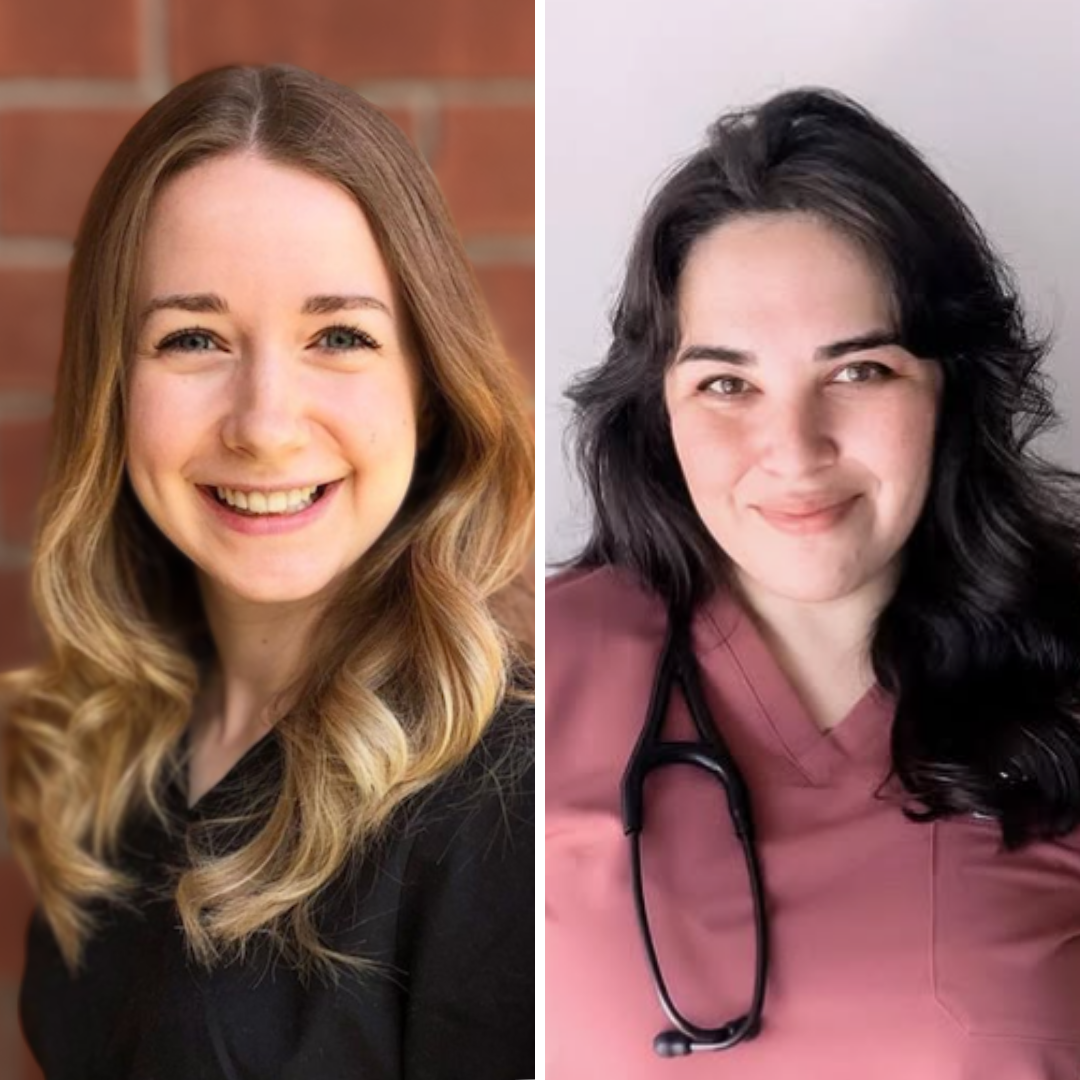
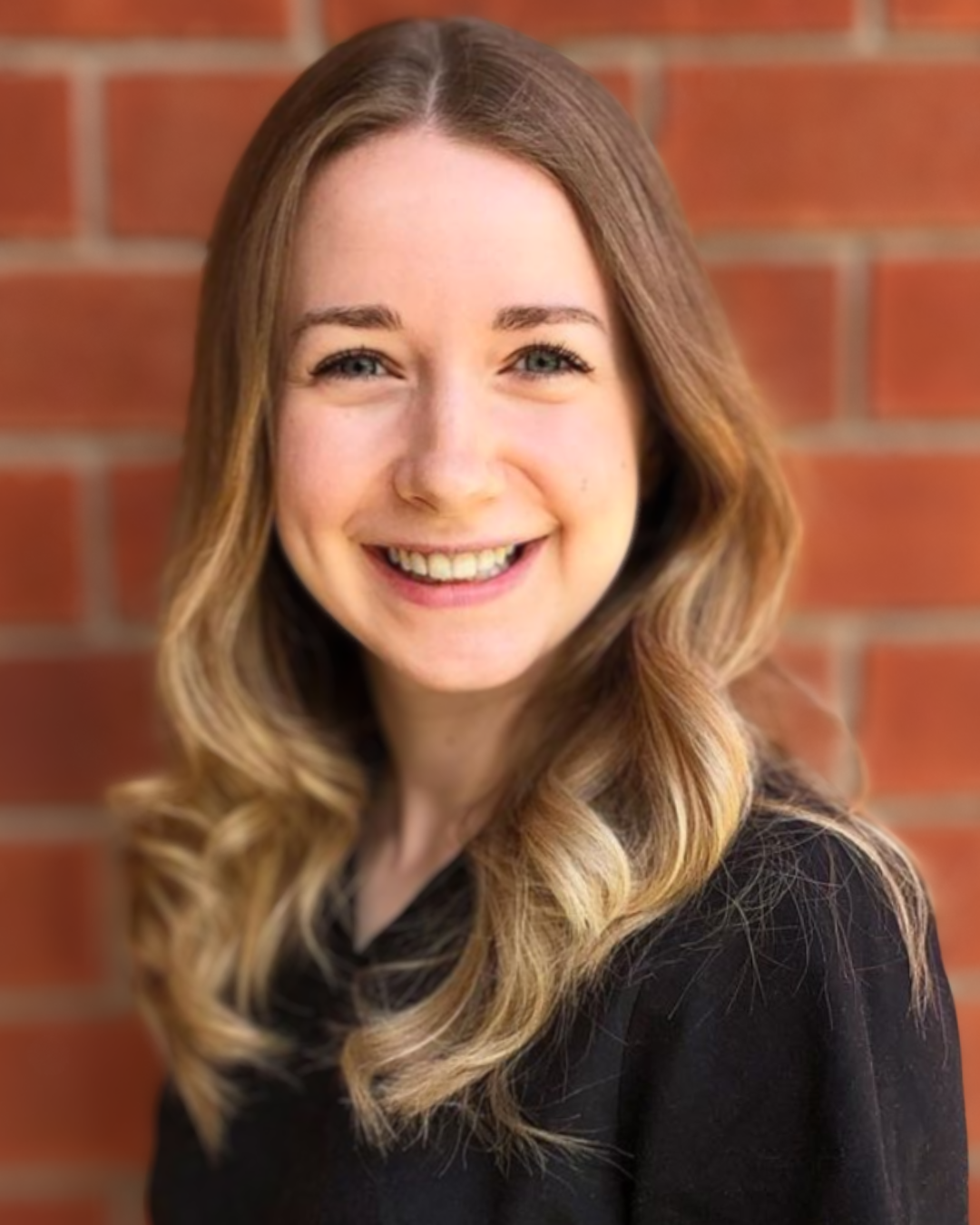
Episode #25: Hannah Keith, UofT BScPA Student
“Going through that self-reflection process would make me a stronger candidate because I took the time to think about why I was more passionate about one career over the other.”
Hannah is a first-year PA student at the University of Toronto who spent years on the medical school track before making a deliberate pivot to the PA profession. Her decision came from two years working as a medical receptionist, attending information sessions at McMaster and UofT, and a structured self-reflection process that included journaling, pros/cons lists, and real conversations with practicing PAs and physicians.
Hannah was very intentional about her PA application story. She built an Excel sheet mapping every experience (e.g. jobs, volunteer roles, extracurriculars) directly to the CanMEDS competencies, then used that foundation to prepare her Kira Talent interview and written supplemental without scrambling under pressure. Her clinical hours came from two years at a family practice and three weeks observing healthcare delivery at a clinic in Malawi, and she was accepted to both McMaster and UofT before choosing UofT for its rural rotation structure and asynchronous learning model.
WHAT YOU’LL LEARNHow to use a CanMEDS mapping exercise to build a more specific and competitive PA application
What made Hannah choose UofT over McMaster
How to approach healthcare experience hours strategically, including what counts as direct patient care and how to find those roles
What the self-reflection process looks like when deciding between medicine and the PA profession, and why it strengthens your candidacy either way
GUEST BIOHannah completed her undergraduate degree in biology at Trinity Western University in British Columbia before pursuing a Master's in Aging and Health at Queen's University. During and after her master's, she worked as a medical receptionist at a family practice for two years, supplemented by three weeks observing clinical care at a facility in Malawi, experiences that shaped both her patient communication skills and her decision to pursue the PA profession over medicine.
She applied to both McMaster and UofT, received acceptances from both programs, and chose UofT for its rural rotation structure and asynchronous learning model.
Now in her first semester, Hannah documents her PA school journey on Instagram, where she mentors pre-PA students navigating the same questions she once had. Her clinical interests include primary care, the older adult population, and international medicine.
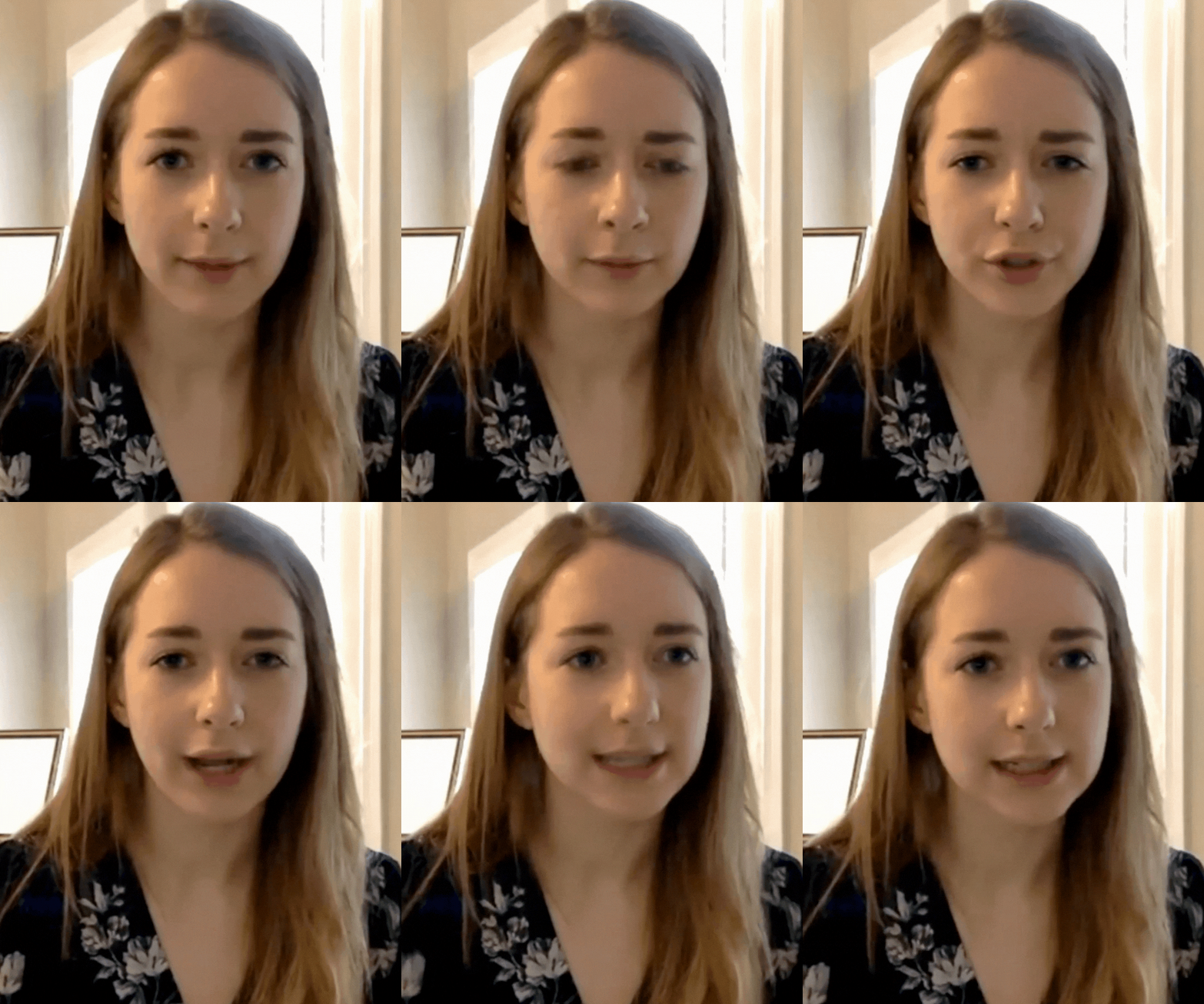
ON SHIFTING PATHS FROM PRE-MED TO PRE-PA“The moment I stopped aiming for medical school and started choosing what actually aligned with my values, everything became clearer and I got in.”
— Hannah, 1st year UofT PA Program
-
Hannah's Journey: From Medical School to PA Profession
Hannah [0:00] I am a first-year PhD student at the University of Toronto. I did my undergraduate studies in biology at Trinity Western University in British Columbia, and then directly after finishing that degree I went to Queen's University to complete a one-year Master's in Aging and Health. After that I worked for a year and collected my healthcare experience hours working as a medical receptionist. During that year I applied to PA school — both the McMaster and UofT programs — was accepted at both, and then accepted my invitation to the University of Toronto. I am now just wrapping up my first semester.
Discovering the PA Profession
Anne [0:41] Can you tell us how you came across the PA profession?
Hannah [0:44] For me, it happened a couple of times — and the decision to pursue PA school wasn't one single big moment. I've heard from some students that they hear about the profession and immediately think, "I'm definitely going in." For me, I first read about it in my fourth year of undergrad. A family member knew someone who had graduated and gone into the profession, so I did a little research. It definitely intrigued me, but at the time I was very focused on the path I had set out since about grade 12 — I was going to medical school, full stop. So I thought, "That's a really interesting profession," and then went back to my med school focus.
Hannah [1:35] I finished my undergrad and went into my master's, and during that whole process I was also preparing to retake the MCAT. That's when I really came to realize that if I was going to continue down that path, I needed to know why I specifically wanted to be a medical doctor as opposed to a different profession. So I started doing more research, came across the PA profession again, and thought, "This is really cool." I wrote out a list of everything I wanted in a career and felt the profession could give me that. There were a few things about the medical school path that were drawbacks for me — things that just didn't sit as well as pursuing the PA profession did.
Hannah [2:14] Through that research I came across your page and saw all the different students in the program. I also attended a couple of informational sessions that the schools put on. That helped me further understand, from the eyes of practicing PAs, what it actually looks like to be a PA. Those different experiences really guided my decision.
Anne [3:01] What were the specific things that drew you to the PA profession?
Hannah [3:04] I would say the biggest draw was the collaborative role that PAs play. Working as a medical receptionist, I had a great opportunity to chat with the physicians I was working with and hear what it looks like to be a family doctor — one of them had also been an emergency physician, so I got that perspective too. I heard about the responsibility that comes with it, the time commitment, and the length of schooling. There's a lot of flexibility in a physician's career, but from what I understood, you really have to develop and become established first before that flexibility opens up.
Hannah [3:39] As a physician assistant, the opportunity for lateral mobility — being able to move between different areas of practice — really appealed to me. I also really liked the shared decision-making process that PAs have with their supervising physicians. I think it's great for patients. And the larger goal of the PA profession — improving access to patient care — is something I genuinely wanted to be a part of. All of those things aligned with my personal career goals.
Crafting a Strong PA School Application Strategy
Anne [4:55] Can you describe what that self-reflection process involved? Was it conversations you were having? What kinds of questions were you asking yourself to really figure out whether you wanted to pursue this?
Hannah [5:06] I would say it was about two and a half to three weeks of very intentional reflection while I was working. I knew I wanted to make a decision I was truly comfortable with. A couple of family members were telling me, "Why don't you just apply for both? If you're still unsure, apply and see what happens." But I knew I wanted a strong decision — one I had arrived at through real self-reflection on both paths. I also believed that going through that process would make me a stronger candidate for whichever program I chose, because I had taken the time to think carefully about why I was best suited for one career over the other.
Hannah [5:54] I took time to journal. I wrote down all my career goals — everything I wanted to pursue, challenge myself in, and grow toward. Then I wrote out the pros and cons of medical school versus PA school. I also reflected on past jobs and positions I'd held, what I enjoyed most, and where I excelled. That all came together alongside conversations with family and friends who know me well, as well as with practicing PAs and the physicians at the clinic.
Anne [6:37] Can you remind us what stage of your academic career you were in during this self-reflection?
Hannah [6:42] I was finishing my master's. I actually started seriously considering the PA program after that year's application season had already closed — I think it was around February or March of my master's year. Then it wasn't until probably September that I had a really firm decision. I had my MCAT date booked and was planning to study that summer, but once I made my decision I cancelled it. Some of my family members said, "You could still apply to both," but once they saw how passionate I was about the decision, they fully supported it.
Anne [7:30] What kinds of conversations were you having with your family? Did a lot of them wonder what a PA was? How did you explain the role to them?
Hannah [7:38] Definitely. The profession is still quite new, and apart from one family member who knew a PA, nobody else in my family had any idea what it was. So there was a lot of explaining — and I really tried to bring them along in the process. I'd say, "Hey, let's watch this video together of a PA explaining what they do." Sometimes I would just verbalize what I was thinking through out loud with them. They could see how passionate I was and how it aligned with my goals. Bringing them into the process made it feel like a shared transition rather than a sudden announcement they didn't understand. That really helped reduce any resistance.
Anne [8:41] Were there any particular students or PAs — any videos — that really resonated with you during that research phase?
Hannah [8:49] One that really stands out is when I attended the McMaster in-person information session. I went with my mom and we heard from different PAs who were practicing in all kinds of specialties. One individual mentioned that she had gone on an overseas trip to do global medical work. That was of particular interest to me because my two areas of interest in medicine are working with the older adult population and international medicine. I had the opportunity to speak with her afterwards, and my mom heard the conversation too — and that's when my mom really saw, "OK, this is a genuinely great path for you, Hannah." That was a pivotal moment. I also looked at several featured practicing PAs on different websites and was really struck by the diversity of fields PAs were working in and how their roles differed depending on the specialty.
Anne [10:24] The PA that Hannah is referring to is Maggie Hitchin, who works in physical medicine and rehabilitation in Hamilton — we've also interviewed her. There are many Canadian PAs who have gone on international mission trips. Even though we can only technically practice in Canada on a long-term basis, there are many global opportunities — a few weeks or months working in places like Haiti, the Himalayas, or South America. We've also had students do international placements where they're exposed to rural and global medicine. Can you tell me what you think made you stand out in the PA admissions process?
Hannah [11:08] Going through the process of deciding why I wanted to be a PA really helped me develop a deep understanding of what PAs do and how they fit within the healthcare team. I also had the opportunity to shadow an SLP, and my sister is a dietitian — she brought me to the hospital and let me spend time with some of her colleagues, including a pharmacist, an OT, and a PT. Really understanding the roles of all the different allied health professions and members of the healthcare team is important in the application process, because it shows why you specifically want to be a PA rather than anything else. There are overarching goals that are shared across professions, so to make your application specific, you have to zero in on what makes a PA unique and why you are the right fit for that role.
Hannah [11:57] Specifically, I made an Excel sheet with the CanMEDS roles listed out and mapped every major volunteer position, job, and extracurricular I'd had onto those roles. By doing that, I built a foundation that showed how my experiences had developed those specific competencies — and why they made me a good fit for the PA profession.
Anne [13:01] Can you speak to some of the soft skills or qualities that you think make an ideal PA candidate — or a really strong practicing PA?
Hannah [13:09] The ability to work well in a team is really important, and to do that well you need strong communication skills. Every team you work with is different, so I think the more opportunities you have in team settings — and the more you reflect on what worked and what didn't when you encounter conflict or resistance — the more you grow. Taking that time to self-reflect and then bringing those lessons into your next experience is how you develop those skills. Putting yourself in uncomfortable positions is also key. Those are often the moments where we grow the most. If you struggle with teamwork, maybe you join a weekly group discussion forum. If you want to develop leadership, you take on a new leadership role in a student club or volunteer setting. Identify what you're strong at, what you're weak at, and build from there.
Anne [14:47] Can you tell us a little about your extracurricular experiences in undergrad? What stood out to you as helping you develop those CanMEDS competencies — leadership, professionalism, collaboration, teamwork?
Hannah [15:05] I really like being involved in a lot of things — though you do have to find the right balance. I was involved in quite a few activities in undergrad, and the ones that stuck with me most were the ones where I could progress over the four years. For example, with the biology club: my first couple of years I was a volunteer, helping with blood drives and social events. In third year I moved onto the leadership team, and in fourth year I became VP of the club. That progression let me see different parts of the organization and take on increasing responsibility.
Hannah [16:01] Another thing I valued was the running club in first and second year — it helped me maintain balance. After an injury I couldn't continue, but in my final year I became a fitness instructor on campus, which paired something I loved with a leadership role. I also had opportunities to be a tutorial instructor for calculus and a prep instructor for first-year chemistry, and I even taught a first-year chem class. Those experiences really fueled my passion for leading and teaching — and they gave me balance from the demanding coursework.
Anne [17:01] It sounds like you were really well-rounded. And something I noticed is that not once did you mention having a competitive GPA as the absolute necessity. You focused on soft skills, experiences, and self-reflection. How did you come across those opportunities in the first place?
Hannah [17:23] Talking with classmates is really helpful — they often have connections you don't. Even if you're not comfortable approaching someone high up in a club directly, a fellow classmate can sometimes bridge that gap. I also think attending workshops and campus events that showcase everything you can get involved in is worth doing, because sometimes you don't know you're passionate about something until you see it. Keeping an eye on those platforms and events means you might discover something that clicks far more than a group you're less excited about.
Resilience, Grades, and Healthcare Experience
Anne [18:21] Do you mind sharing whether you had a competitive GPA, and what your approach was to maintaining good grades throughout undergrad and your master's?
Hannah [18:28] I'll be completely honest — when I first started undergrad, my first set of midterms were rough. I was probably getting 70s, and I had never received marks like that before. I remember being on the phone with my mom saying, "I don't think I'm cut out for university. I'm drowning." That was actually a pivotal moment in terms of pursuing a high GPA — because I had to confront the fact that one poor mark did not mean I couldn't move forward. Resilience is probably the most important factor in achieving a high GPA, because a high GPA doesn't mean you have a high mark on every single test. It means that when you get a low mark, you put in the extra work, you seek help, and you reflect on what worked and what didn't in your studying. And then you move forward.
Hannah [19:25] Figuring out how you study best for each subject, spending extra time talking with instructors, and going to study groups allows you to bounce back from lower marks. You need long-term perseverance to sustain high grades — it really is a long haul.
Anne [20:01] What were your healthcare experience hours that qualified you to apply to UofT?
Hannah [20:05] The majority of my hours came from working as a medical receptionist at a family practice. I worked there part-time throughout my master's and then continued during the year I was applying to schools — I had missed the application deadline during my master's year, so I had an extra year in between, which meant two years of experience total. I also had the opportunity to travel overseas with a family friend who is a registered nurse to observe healthcare in Malawi. I was at a clinic every day for three weeks, which added some hours too. But the clinic was the main source. It was really valuable — I got exposure to medical terminology, learned how to interact with patients, understood how referrals work, and got a real sense of the processes within a clinical setting.
Anne [21:19] This was direct patient care experience. How did you come across that job? Did it require certifications, a special connection, or prior volunteering?
Hannah [21:33] I connected through my mom — she knew the family physician, and they were hiring at the time. I was coming home from out west and having a hard time applying for jobs from another province, so it all fell into place. I wanted to work part-time during my master's and just didn't know where. The position didn't require a medical terminology certificate, though I've since seen similar postings that do — so having that certificate would certainly be helpful if it's required where you're applying.
Anne [22:27] Any tips for pre-PA students on how to approach getting healthcare experience hours that would make them stand out in the admissions process?
Hannah [22:35] Direct patient care is really valuable — it gives you more exposure to the field and genuine opportunities to practice communicating with patients. That's a skill you'll need to develop right from the start of PA school when you begin taking medical histories. Learning how to build rapport, stay composed in situations outside your comfort zone, and handle unexpected moments — those things can come from direct patient experience. That said, our incoming class had a really diverse range of settings where people collected their hours. I genuinely don't think one area is necessarily better than another. It can depend a lot on the individual and what other volunteer or work experiences are supplementing those skills.
Anne [23:33] During COVID-19 it's been more challenging to acquire experience hours. Any suggestions for what students can do during this time?
Hannah [23:42] It's definitely challenging. UofT has thankfully adjusted the admissions criteria so you don't need the same number of hours, which is great. You need to get creative with where the opportunities are. COVID screening has been one option that likely counts as direct patient care — though I'd always recommend emailing the admissions office directly if you're unsure whether something qualifies. There are also still openings for medical assistant positions because those roles are still needed, so if you see those, apply — those count toward direct hours.
Anne [24:31] Can you walk us through the timeline — when you made the decision to apply, when you actually submitted, and what your preparation steps looked like?
Hannah [24:42] I first heard about the profession in my last year of undergrad and didn't think much more about it. Then in the spring of my master's year I did a lot of research, attended informational sessions, and decided I wasn't going to pursue the MD path anymore. Come September, I started looking at the PA school application process in earnest and submitted my application in January. During that time I picked up a couple of books to prepare for the interview — I had heard through your YouTube channel that the Kira Talent interview should be prepared for like an MMI. So I got the "Doing Right" book on medical ethics — which is excellent but very dense — and the PA School Interview Guide by Savannah Period. I started practicing interview responses and also built that Excel sheet I mentioned — listing every volunteer position, job, and club, along with key pivotal experiences that developed specific skills. When I had my interviews and found out they were virtual, I did lots of video recordings of myself answering questions, sat down with family members for mock interviews, and even set up a mock MMI with a friend where we recorded responses and shared them in a Dropbox to review together.
Anne [27:53] You mentioned journaling as a way of developing your ideas. Can you tell us more about that — this idea of writing goals intentionally and how it helps?
Hannah [28:08] When I made the decision to pursue PA school, it was actually uncomfortable for me — because I had been thinking about medical school for so long that switching mentally was really hard. Even though other people were encouraging me, I just felt stuck in the old mindset. So I decided to write it down in an action phrase: "In May 2020, I am going to get accepted to PA school." I wrote it with intention, as if it were already happening. I took a couple of minutes most mornings and just wrote it out. It felt a bit silly at first, but it was actually really powerful. It helped me make that mental switch from the MD path to the PA path, and it made me more confident when people asked what I was pursuing. Because it was what I wanted, and I was pursuing it — intentionally.
Anne [29:38] With regards to your approach to the written supplementary application for UofT — the questions are confidential, of course — but any tips on how to approach writing effectively for admissions in general?
Hannah [29:54] For me, it was a lot of writing and rewriting. I had a general sense of what I wanted to include in each answer, but I had to figure out how to communicate it clearly and fit everything within the word count. More than anything, I wanted to show as much of myself as possible. The application process is set up to let you do that — the supplemental gives you multiple questions, and the interview gives you even more chances. With so many students applying, you want to give the clearest snapshot of who you are in a very short amount of time. So writing down the key things you want to communicate is the most important step. How you phrase them comes through editing and sharing with a couple of trusted people — though I'd caution against over-editing. Too much feedback can actually become unhelpful.
Choosing Between Programs and Navigating PA School
Anne [31:17] After you applied, you received acceptances from both universities. Why did you choose UofT over McMaster, and what were you considering?
Hannah [31:29] It's a great question and honestly, if you had asked me at different points during admissions I might have given you a different answer — it really wasn't straightforward because both programs are so strong. What drew me to UofT was their focus on improving access to healthcare, particularly in rural areas. The opportunity to go up north and expand access to care in underserved communities was really appealing to me. The online format also suited my learning style — I had done my master's online and felt comfortable with asynchronous learning.
Hannah [32:28] What drew me to McMaster was their PBL learning model. I was a little hesitant about it at first because it was new territory for me, but I thought it was a genuinely great skill to develop. They also recently added a mandatory geriatrics rotation, which aligned with my interest in the older adult population — though I later learned both schools offer electives in that area. Ultimately, UofT's online platform and the opportunity to do half of my rotations up north is what swayed me. Both programs are excellent, but UofT felt like a better fit for what I wanted out of the experience.
Anne [33:30] So it sounds like reflecting on your learning style and really understanding each program's philosophy and curriculum is an important step. At the end of the day, both schools graduate PAs who apply for the same positions. What were your expectations of how hard PA school would be — and did reality match?
Hannah [34:05] The "drinking from a fire hydrant" description is pretty accurate. I think it feels especially intense because PA students tend to hold very high expectations for themselves. Being thrown into a style of learning where you very quickly realize how little you know is humbling — and a little intimidating — when you're someone who wants to excel. You see all the information and think, "How am I supposed to know all of this?" You follow rabbit holes trying to understand one concept and then discover ten more things you don't know yet.
Hannah [35:30] What I've come to realize is that I'm not expected to know everything right now. I try to celebrate how far I've come — comparing where I was a few months ago to what I can answer now without looking anything up. That's something worth celebrating. The intensity did live up to my expectation, but what I didn't anticipate was how much I would enjoy it. In undergrad, when a course is intense you're sometimes just grinding through it for a prerequisite. In PA school, I'm genuinely passionate about what I'm learning, and that changes your entire outlook on studying.
Anne [36:44] Do you have any idea what area or specialty you might want to work in when you graduate?
Hannah [36:48] I'm keeping an open mind — and I want to be that way. My understanding of what different specialties actually look like may change once I'm doing clinical rotations. I want to go into every rotation thinking, "This is a potential workplace for me," not just getting through it. That said, my areas of real passion are primary care and working with the older adult population. I did my master's in aging and health, and I love the idea of building long-term relationships with patients, supporting chronic disease management, and being part of someone's health journey over time. International medicine is also an interest, though more as a side pursuit rather than the main focus of my practice. What I love most about the PA profession is that I don't have to choose everything right now — I can remain open and let the rotations guide me.
Documenting the PA Journey and Building Community
Anne [38:36] What inspired you to document your journey on Instagram? You started when you got your acceptance, right?
Hannah [38:47] Yes — and I had actually planned it before then, so there was a lot of anticipation. During the application process I had followed a couple of PA student Instagram accounts and found it really valuable to see what PA school looked like from the inside. There were accounts from students at each of the three Canadian programs — Reese at UofT, staff at McMaster, and Carmen from Manitoba — and I really appreciated getting a glimpse into what each program was like. That inspired me to think maybe I could contribute something similar.
Hannah [39:59] Since the UofT program was online, I figured this could be an extracurricular that allowed me to do some advocacy for the profession while also offering mentorship and leadership — things I'm really passionate about. Being in communication with students who are interested in the profession and being able to share my experience, encourage them, and celebrate with them has been really wonderful. It's a relatively small, new profession, and having this kind of online community — especially during COVID when in-person connection was limited — has been really meaningful.
Anne [40:50] What kinds of ideas do you usually decide to share, and do you plan ahead?
Hannah [40:56] I try to be intentional and plan ahead, but honestly I often get too excited about something and just post it. I'd like to be more organized — it would help during busy weeks when I just need to step back from it for a bit. I try to take at least one day a week completely off from it. For ideas, they often come when I'm just going about my day and I think, "I wonder if a pre-PA student would find this interesting." I jot it down in my phone notes. A big source of content is also direct messages from students — someone asks a great question and I think, "I'll just post my response so everyone can benefit." And then there's just being transparent about my personal experience in PA school. A couple of weeks ago I was feeling really burnt out — it was just a lot, between school and everything going on — so I posted about it. I talked about how I was coping. I think being honest about the hard parts matters just as much as sharing the exciting ones.
Anne [42:41] Any final words before we wrap up?
Hannah [42:46] Best of luck to everyone in the application process — I know it's extremely stressful. Don't be too hard on yourself, and don't try to do it all at once. Take breaks, and reach out if you have questions. And I just want to say a huge thank you for having me. I've used so many of your resources throughout this process, and what you're doing for this community — the advocacy, the content, the space you've created — it's truly amazing. Thank you for watching or listening.