Episode #30: Hannah & Marie-Christine, UofT PAS1
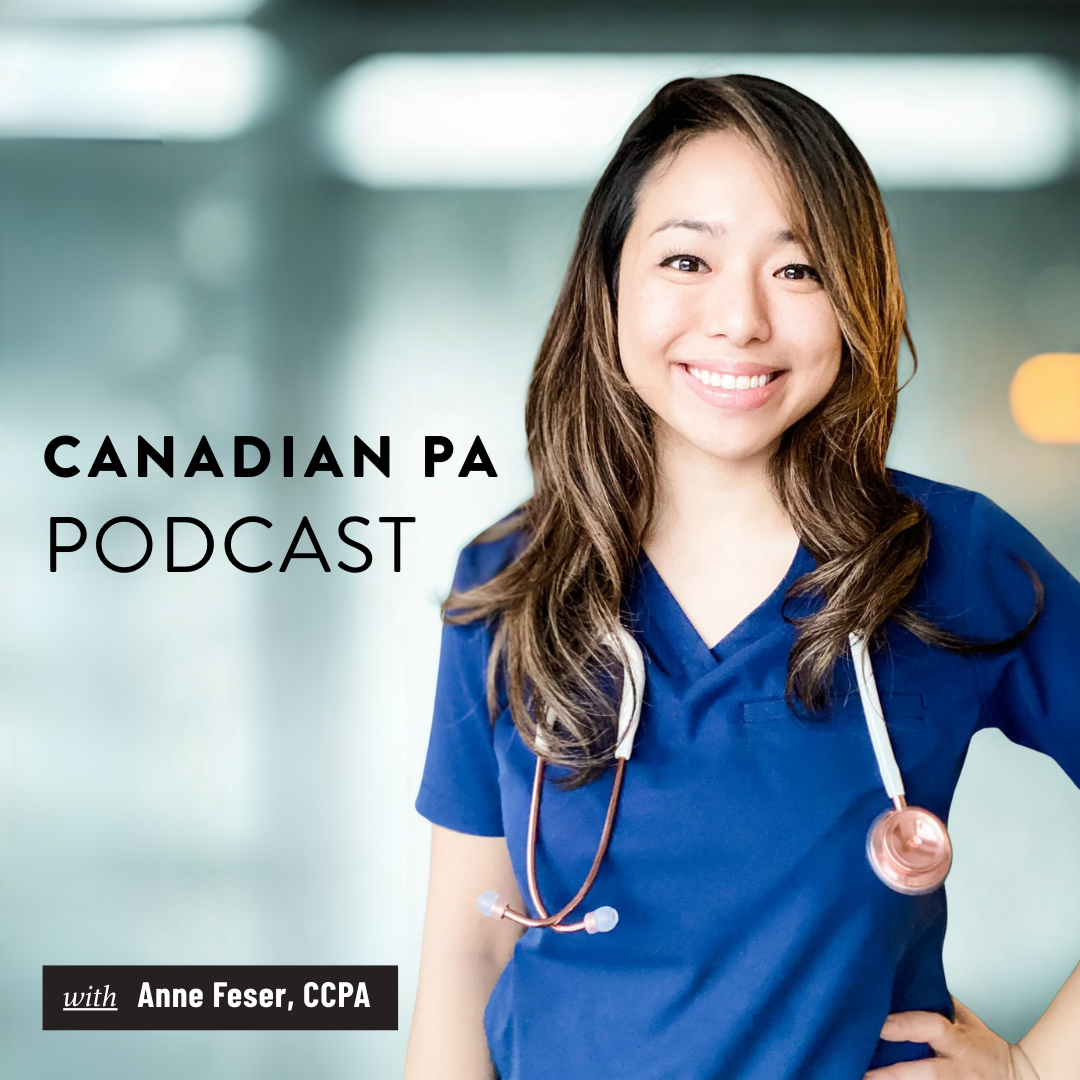
In this live Q&A, first-year University of Toronto PA students Hannah and Marie-Christine share high-yield strategies for navigating the PA program curriculum and the transition into professional medical studies. We discuss details around the shift from pre-medical backgrounds to the collaborative PA role.
WHAT YOU’LL LEARNHow to leverage professional backgrounds in biology, aging, and clinical research to meet admission standards
Specific UofT BScPA GPA and HCE admission requirements
How to navigate 1st year of PA School at University of Toronto
Tips on work-life balance in PA school
About Hannah
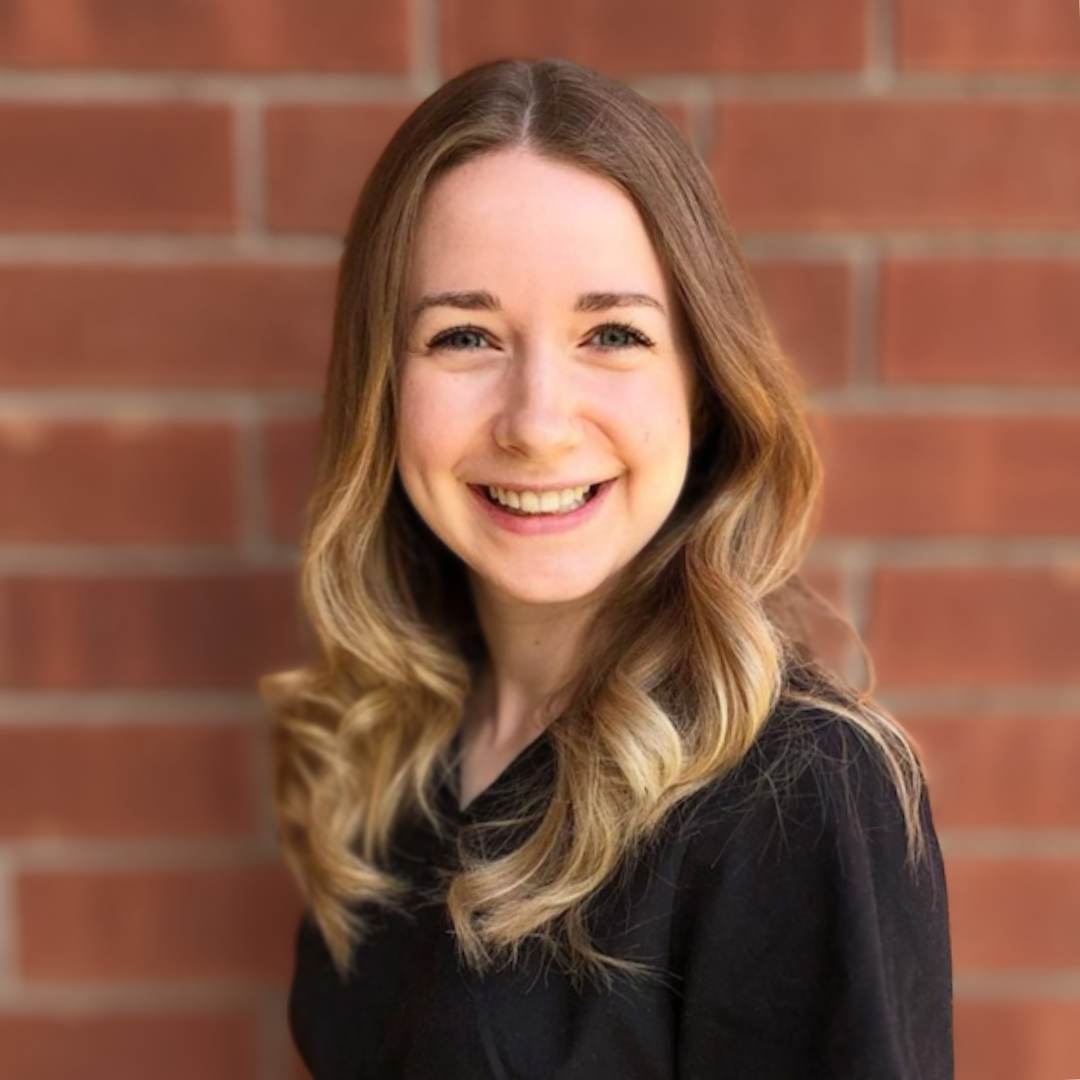
Hannah is a Physician Assistant student in the University of Toronto’s incoming class, with an academic background in Biology and a Master’s in Aging and Health. She built over 900 hours of clinical experience as a medical receptionist while completing her graduate studies, giving her early exposure to patient care and the Canadian healthcare system.
Her path to PA wasn’t linear. Initially preparing to reapply to medical school, Hannah paused and asked a harder question about fit, leading her to explore the PA role through shadowing, conversations, and formal program panels before making a decisive pivot. That clarity translated into a focused application and a successful first cycle acceptance.
Now in PA training, Hannah brings a strong sense of purpose to the profession, grounded in collaboration, flexibility, and improving access to care. She’s committed to sharing her journey transparently to help future applicants move beyond stats and make decisions rooted in alignment.
About Marie-Christine
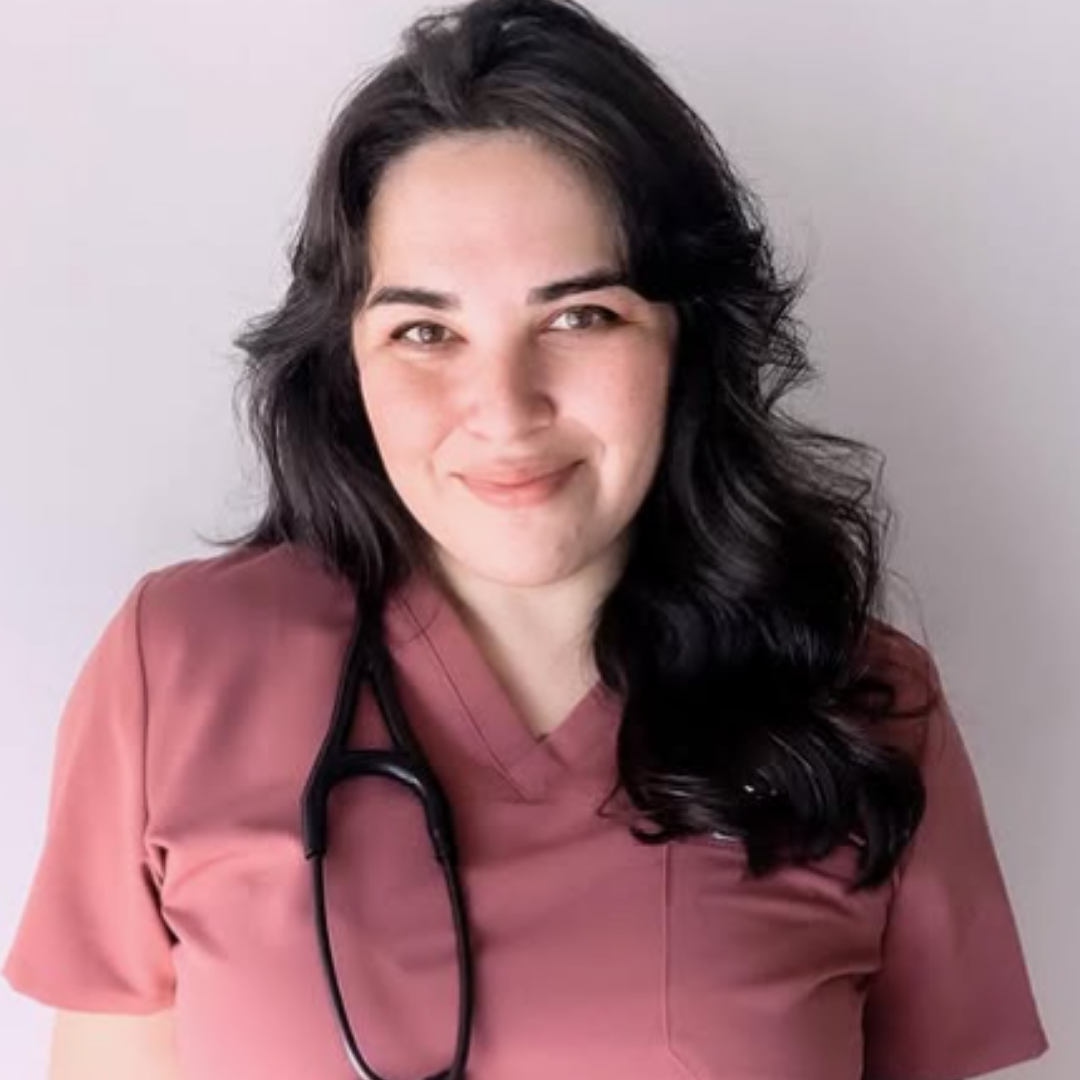
Marie-Christine is a Physician Assistant student at the University of Toronto with a diverse clinical background as an electrophysiology technologist and over a decade of experience across cardiology, neurology, and physiatry. Based in Montréal, she has also built a parallel career as a professional photographer while completing her undergraduate degree at Queen’s University, bringing both clinical depth and creativity into her work.
Her path to PA school was shaped by persistence and lived experience. After an initial rejection, she returned as a stronger re-applicant, drawing on over 10,000 hours of direct patient care and her own journey as a patient navigating complex hip surgery to build a more grounded, compelling application.
Now in PA training, Marie-Christine is driven by a commitment to empathetic, patient-centred care and advancing the PA profession in Canada, particularly in underserved and francophone communities. She brings a clear sense of purpose to her role, grounded in collaboration, advocacy, and a desire to be fully present in each patient’s care journey.
-
Meet Hannah & MC: Why Choose PA?
Anne [0:00] Thank you everyone for joining today for our PA student live Q&A with University of Toronto PA students Hannah and Marie-Christine. I'm Anne, a Canadian certified PA working in orthopedic surgery in Toronto, and I'll be moderating today's Q&A.
Hannah [0:18] My name is Hannah and you can follow me on Instagram at Hannah the PA. I'm a first-year UT student. I did my undergrad at Trinity Western University in British Columbia in biology, then my master's at Queen's in Aging and Health, and now I'm in first year at UT. We just finished our second semester and we're on our first week break between semesters, which is so nice.
Anne [0:46] And next we have MC, or Marie-Christine.
MC [0:50] My name is Marie-Christine, or MC, and I'm also a first-year student at UT. My background is a bit diverse — I have a degree in electrophysiology, which involves performing exams related to the body's electrical system. I did my undergrad in Health Sciences at Queen's and I'm also a professional photographer. My handle is Frenchy the PA because I'm francophone.
Anne [1:17] Everything you'll be hearing today will be available for replay. You can find all official, up-to-date information on University of Toronto's website and at kiaconsortium.ca. You can also find information about UT PA resources there. We're going to cover four parts today: the pre-PA journey, the experience of PA school, applying to PA school, and reapplying to PA school. So let's dive in.
Anne [1:51] Part 1 — questions on your pre-PA journey. Why did you choose to become a PA?
Hannah [1:55] I chose to become a PA for a few different reasons. Primarily, I always had an interest in medicine, and initially I thought the only route was an MD. I wrote the MCAT, applied to medical school in my third year of undergrad, and was not accepted. While I was preparing to reapply, a family friend introduced me to the PA profession. I was drawn to it because of the flexibility of the career — the ability to practice across multiple specialties, which is known as the lateral mobility of the profession.
Hannah [2:44] I was also really interested in the collaborative nature of the role — working alongside a supervising physician and as part of a team. That was a strong distinction from the MD path, where you're more often the sole provider on a case. And the overarching mission of the PA profession — extending healthcare services, filling gaps in the system, whether through patient education, longer visits, different types of pre- and post-op care, or rural and northern care — those three things really drew me in.
MC [3:48] I was already in healthcare as a technologist and I really loved working with patients — talking with them, reassuring them. I also have my own personal journey as a patient. I actually got treated by a PA, and when she walked in and told me about her role, I thought, wow, this is the dream profession. I immediately started researching. That was in the US, and when I came home I found out we had the profession in Canada too. I was blown away.
MC [4:21] I didn't even have an undergrad at that point — just a college degree — so I enrolled in university to get the process started. Like Hannah said, the lateral mobility appealed to me a lot. I also love that PAs can really spend time with patients and advocate for them. And personally, I was excited by the fact that the profession is fairly new in Canada. There's a real opportunity to help pave the way and advocate for its growth. That was genuinely intriguing and exciting to me.
How to Stand Out: Pre-PA Stats & Experience
Anne [5:24] What do you think helped you stand out on your PA application?
Hannah [5:30] One of the key things was that I took a lot of time to self-reflect before pursuing the PA profession. Because I had been working toward medical school for so long, it took a real mental shift to commit to this path — even though I knew it aligned with my goals. Going through that process of reflection helped me articulate clearly why I wanted to be a PA versus a physician, and what strengths I had that would make me a good candidate.
Hannah [6:42] Being able to draw on specific experiences — moments where I found real joy in my work — helped solidify my reasoning. I also had clear career goals: continued involvement in research, potential teaching, and a strong vision for what I wanted to achieve as a practicing PA. That confidence and clarity about what I wanted and how this program could help me get there — I think that made me a stronger candidate.
MC [7:32] For me, it was really a combination of things. People often reach out and ask what one thing they should do, but it's not one thing — you have to bring several elements together. A big one for me was healthcare experience. I had been working as a technologist for over ten years, so I had about 15,000 hours of direct patient care across cardiology, neurology, and physiatry. I really focused on that range of experience in my application.
MC [8:24] I also talked about my personal patient experience. I've had multiple hip surgeries, and I mentioned that in my application — the struggle, what it meant to have a good provider, and how being on that side of the exam table shaped who I am. I understand what patients feel. So those were my two biggest focus areas: my experience as a healthcare provider and my experience as a patient.
Anne [9:16] What were your pre-PA stats — your background before you applied to PA school?
Hannah [9:24] I was 23 when I applied and started PA school at 24. I applied once to both Ontario programs — McMaster and UT — was interviewed at both, and accepted to both. My undergraduate GPA was 3.78. I also completed a master's in Aging and Health at Queen's directly after undergrad. I had 910 hours of healthcare experience, which at the time was the UT requirement. I got those hours working as a medical receptionist at a family practice while completing my master's and during the year I applied to PA school. My undergrad was in biology.
MC [10:20] My first degree was in electrophysiology technology — that's a college diploma, so it doesn't count toward PA admissions. I was able to transfer some credits from it as electives when I started university, which helped. I also have a degree in photography, though those credits didn't transfer into healthcare. I then completed my undergrad in Health Sciences at Queen's, with an approximate GPA of 3.7 — it's hard to calculate precisely since Queen's uses a 4.3 scale. And I had approximately 10,000 to 15,000 healthcare hours.
Anne [11:19] From the infographic, there's a huge variety of backgrounds in terms of healthcare experience. Can you tell us a bit about your classmates' backgrounds?
MC [11:33] Yes, we have a really wide range. Kinesiologists, athletic therapists, someone from psychology, radiation technology, and more. It's quite diverse.
Hannah [12:04] Medical assistants, pharmacy assistants — more administrative clinical roles — and also people who completed clinical research through their undergrad or master's programs.
MC [12:20] And it's really cool because everyone brings strength at different times. We just finished a unit on ECG and I was able to help since I worked in cardiology. When we get to psych, another classmate will step up. When we hit geriatrics, Hannah will probably carry us. Having that diversity across the cohort makes us stronger as a group.
Hannah [12:51] MC has been a lifesaver holding tutorials for the rest of us.
Why Hannah & MC Chose UofT PA
Anne [12:59] Why did you choose to attend the University of Toronto's PA program?
Hannah [13:08] Three main reasons. First, the program is largely delivered online. I had done my master's online and knew I could be self-disciplined in that format. Being able to work from home also meant not having to relocate, which was a practical advantage. Second, UT has a real focus on providing care to rural and underserved populations — you can complete half your core rotations in Northern Ontario. That speaks to a genuine passion of mine. And third, rotating through those different areas would really develop me as a care provider by exposing me to diverse patient demographics.
MC [14:44] I'm a second-time applicant. My first time, I applied only to UT mid-second year, didn't get an interview. The second time I applied to both UT and Mac, got interviews at both, and was accepted to UT — which was actually my first choice. Being in Quebec, the online first year was huge for me. I didn't have to relocate or leave my family.
MC [15:38] I also liked the more traditional structure of the UT curriculum — anatomy, physiology, pathology, real structured course-based learning — which suits how my brain works. We do have a problem-based learning component as well, so it's a nice mix. And really, the mission of the program spoke to me deeply. When people ask what they should do before an interview, I always say: know why you're applying to this specific school. For me, the commitment to underserved and francophone communities in Northern Ontario was the answer. That's exactly where I want to work.
Navigating UofT's First Year Online PA School
Anne [16:58] Can you briefly describe how first year of PA school is delivered at UT?
Hannah [17:02] First year is a mix of intensive online learning and campus blocks where everyone comes together for a couple of weeks at a time. During those campus blocks, we practice hands-on clinical skills — physical exams, procedures, patient history taking — things that need to be observed and evaluated in person. Between those blocks, the rest of the program is distributed online. Each semester brings different courses; some continue across semesters, some don't. Each week, new material is released to work through independently, with some scheduled class time and group work as well.
Hannah [18:09] We also have e-PBL — electronic problem-based learning — once a week in a small group. We receive a new virtual patient case every two weeks and work through it together, asking questions, gathering information, and building learning objectives for the second week: epidemiology, pathophysiology, management, pharmacotherapy. A lot of the learning happens independently, so you have to be self-disciplined. But the pace is so fast that you're motivated to stay on top of it.
MC [19:09] It's also worth noting that a lot of our courses are designed to cross over. If pathology is covering genetics, then our e-PBL patient might be a baby with Down syndrome. Everything reinforces everything else. It really solidifies the learning.
Anne [19:35] What's the best way to stay on track and avoid falling behind in an online program?
MC [19:45] Flexibility is key — what worked in undergrad probably won't work here. You have to be willing to adapt your study methods course by course. For me, organization is everything. I use a to-do list, a paper agenda, and a digital calendar. Every Sunday evening I'd open the course materials, map out what was due that week, set daily targets, and check things off. It's satisfying and it keeps you from falling behind without realizing it. I also have a wall calendar showing all exams for the month — because they come up fast.
Hannah [21:20] Organization really is so important. The program does release material incrementally, so you always have a benchmark for where you should be. The students in this program are generally strong, high-achieving people, which can create a bit of pressure. The balance is wanting to stay on top of everything while also being gracious with yourself given the volume of material. Our classmates also help keep each other accountable, which is something I'm really grateful for.
MC [22:00] And just quickly on the pandemic context — normally first year includes several in-person campus blocks throughout the year, but COVID changed that. Our program adapted well, condensing the blocks. We had a two-week intensive — 8 AM to 6 PM nonstop — and then studying until we went to bed. Less in-person time overall, but the program did everything they could to minimize the impact. I don't think we'll be penalized for it.
PA School: Second Year, Grading, and Challenges
MC [23:07] The good news is that second year is not affected by the pandemic for us. The second years are currently completing their placements — I believe there are eight rotations of roughly four weeks each, covering family medicine, internal medicine, surgery, emergency, pediatrics, psychiatry, and others. Like Hannah mentioned, you can split your placements between your home city and the north.
Hannah [24:17] You also get two elective rotations toward the end of second year, which you choose yourself. The order of rotations isn't fully fixed from what I understand. Second year is exciting because you finally get to apply what you've been learning to real patient settings — I think it'll make everything feel much more tangible.
Anne [24:39] How are you graded in PA school — percentages or pass/fail?
Hannah [24:45] We're graded by percentage in most courses. Some assignments are more of a completion check, but the majority are percentage-graded and you're expected to achieve around 70% or above, otherwise you need to do additional work to demonstrate you've learned the material. The program genuinely wants students to succeed — they know how hard it was to get here and how strong we are academically. Academic supports are available, and the class culture is collaborative, not competitive. People share notes, run study sessions, organize online Jeopardy nights. It's a real change from the competitive pre-professional undergrad environment.
MC [25:55] In undergrad I always wanted 90s and above because of the GPA pressure. Once you're in PA school though, grades matter less than actually absorbing the material — because you're going to use this with real patients. That mindset shift is really nice. You move from chasing a number to asking, do I understand this well enough to use it?
Anne [26:45] How hard is PA school? What's been the most difficult part so far?
Hannah [26:52] PA school is hard, but in a different way than undergrad. In undergrad, classes were hard because you weren't always interested in the material. Here, it's hard because of the sheer volume of information you have to absorb in a very short time. Anatomy in first semester was a big challenge for me — I had never taken it before, so there was a steep learning curve. Our instructor mentioned we were covering a year's worth of physiology in a few months. But because the environment is so supportive and the learning feels meaningful, it doesn't feel the same as undergrad difficulty. You want to know the material because it's going to help your patients.
MC [28:06] It's intense in a way you can't fully appreciate until you're in it. First semester was especially hard because everything is new — the delivery, the volume, and you can't use your undergrad study methods anymore. For me, Hannah introduced me to Anki, but even then you're learning the tool while the content keeps coming. I stopped working out, I stopped being mindful about what I was eating. But by the end of first semester, I had found my groove. Second semester I was able to bring back exercise and self-care, even though the content got harder. The difficulty just shifts form. Keeping an open mind and not forgetting to take care of yourself — that's the most important thing.
Hannah [29:37] Flexibility as a learner is so important. Being able to adapt to different learning environments really helps your success as a student.
Working in PA School & Becoming a Strong Candidate
Anne [29:47] Is it possible to work during PA school, given the workload?
Hannah [29:55] I didn't work in PA school. I had thought I might continue a few hours at the clinic, but when the program itself advised against it, I took that seriously. I wanted to focus on my studies. I'm happy with that decision — it has allowed me space for some extracurricular activities, which I wouldn't have been able to manage alongside both school and work.
MC [30:34] The program does recommend not working. I tried working one short day a week in first semester and became overwhelmed quickly. The content is just too heavy. I ended up stopping completely by the end of first semester. In the winter semester, I really missed being with patients — being online so much was weighing on me as a social person. So I went back, but very minimally — two half-days per month. That's enough to keep a little income, stay connected with patients, and not impact my schoolwork or personal time.
MC [31:57] We do have classmates who work two or three weekends a month. I genuinely don't know how they do it. Kudos to them, but I wouldn't recommend it.
Anne [32:12] What makes a strong candidate for the UT PA program?
Hannah [32:17] Two key things: a strong understanding of yourself and why you want to be a PA, and a clear sense of why you're a good fit for this specific program. Those two things show the admissions committee that you're genuinely invested — in the profession and in the program. It's also worth noting that once you're a PA, you'll spend a significant amount of your career explaining your role to others. Having a confident, clear answer to "what is a PA?" should come naturally before you even start. And because there are so few spots, programs want to see real investment — not PA as a stepping stone, but as the destination.
MC [33:41] I'd add that it's never just one thing. Looking at our class, everyone has such a diverse background — academic and extracurricular. Someone in our class served as a medic in the Army. Someone else volunteered in Haiti. People often say, I'm only 21, I haven't done much. But I guarantee you have. Did you play sports? What did that teach you about discipline, teamwork, balancing school and commitments? Sit down and really think about who you are and what you uniquely bring. The program is looking for someone special to fill that spot — not just someone qualified, but someone who will be a great PA and a great classmate.
UofT PA: Admission Requirements & Healthcare Hours
Anne [35:10] Can one of you summarize the prerequisites to get into the UT PA program?
MC [35:16] You must be a Canadian citizen or permanent resident. You need a minimum of two years of undergraduate studies — that's 10 full-year credits, or 20 half-year credits. Minimum GPA of 2.7. Healthcare experience was previously 900 hours, but due to COVID it was reduced to 100 hours for the most recent cycle and likely the next one as well. Those are the hard requirements — if you don't meet them, your application won't be reviewed. Beyond that, recommended criteria include courses in anatomy, physiology, and chemistry — ideally two semesters of each. Direct patient care is also recommended over indirect. These aren't required, but they strengthen your application and set you up better for the program itself. Having that anatomy or physiology background going in makes a real difference once the material starts coming fast.
Anne [37:03] How does UT calculate GPA for PA admission?
Hannah [37:07] From my understanding, it's the cumulative GPA from your undergraduate degree — regardless of when you completed it. A master's GPA is generally not factored in as a separate metric; completing a master's is noted on your application, but the GPA from it isn't included in the calculation.
Anne [37:34] What are examples of qualifying healthcare experience hours, and are some types considered more competitive than others?
Hannah [37:44] I got my hours as a medical assistant in a family practice office that also operated as a walk-in clinic. It was a great option for someone without a prior clinical certification. I was exposed to primary care and to specialties through referral coordination, which taught me a lot about how the healthcare system works in Canada — something really valuable going into an accelerated program. Direct patient interaction is gold, but indirect experience like clinical research, where you may still interact with patients, is also valuable. If you're unsure whether something counts, just contact the admissions committee directly. They're very responsive and will give you a definitive answer.
MC [39:09] Like Hannah said, a more direct patient care role carries more weight per se — but it's never just about one element. If you have an indirect role, talk about everything else you bring. What else have you done in your life? That's what can separate you from other applicants. It's not only about the position title you hold.
Mastering the Supplemental Application & Interview Format
Anne [39:38] Can you summarize what the PA supplemental application is, and offer tips for writing it effectively?
Hannah [39:47] The supplemental is the first written component of the UT application — a series of questions you respond to in writing. Previous years' questions are often available online, so you can get a sense of what's being asked. The key is preparation through self-reflection: thinking about extracurriculars, jobs, volunteer work, and personal experiences that can inform your answers. Give yourself lots of time. Write it, let it sit, come back to it. The best writing is rewritten multiple times. Have different people review it — ideally from different professional backgrounds — to get varied perspectives. And always respect the word count guidelines. Going over signals you can't follow instructions, which is not the first impression you want to make.
MC [42:04] Step one is introspection — genuinely knowing who you are as a person. You can't sell yourself if you haven't done that work. And then dive deep. Statements like "I love helping people" or "I love medicine" mean nothing because every other applicant says the same thing. Think about the person reading it — they've seen a hundred generic answers. What makes you different? A technique I've shared on Instagram is the "What, How, So What" approach — basically like writing a thesis statement. You name something, you give an example, and then you explain why it matters in the context of being a PA student and practicing PA in Canada. That closing connection is what most people miss. They make a statement, give an example, and stop. The reader is left thinking, OK, cool — but so what? Bridge it.
Anne [44:00] What is the format of UT PA school interviews this year?
Hannah [44:04] We both signed non-disclosure agreements so we can't share details about the questions or process specifically. In general, ours was online due to the pandemic, and I'd assume this year's will be as well. One advantage of an online format is that you can anticipate and control your environment in advance. Make sure your internet connection is solid — not one hour before, but days before. Make sure your space looks appropriate for a professional interview. Dress as you would in person. And get comfortable talking into a camera — practice with your device so it feels natural, because looking at a screen rather than a face takes some adjustment.
MC [45:52] There are real advantages to the online format. I was in my own space, I could follow my morning routine, I wasn't stressing about navigating transit in an unfamiliar city. I felt more confident. The one thing I always tell people is: record yourself practicing. In a live interview, the interviewer might nod or react — when you're recording yourself, it's just you. You have to get comfortable with that. Watch your posture, your distance from the camera, your pace. And honestly, this is a skill that'll serve you as a PA too — telehealth is a big part of care now. You're learning something you'll use throughout your career.
Practicing for MMI & Understanding the Waitlist
Anne [47:00] How did you practice for the MMI, knowing it was online?
Hannah [47:03] The big thing about MMI prep is that it's something you can actually prepare for — you don't have to just show up and hope for the best. Start by understanding what the MMI is: its format, and the different varieties of questions you could be asked. You don't need to have practiced every question in existence — that's not realistic. But being familiar with the range of question types means you're not caught off guard. Have a structured way of working through a response, not robotic or formulaic, but organized. Show that you can think critically under pressure. That comes through practice.
Hannah [48:27] There are books, websites, and both free and paid resources available. Find the ones that address your specific weak spots. If ethical-based questions trip you up, dig into those. Then do the introspection work — think through what you want the interviewers to know about you. I created an Excel spreadsheet of key experiences and activities I wanted to draw on during the MMI, which I've made available through the link in my Instagram bio. Practice on camera, review your recordings with family members, note what you want to improve. That iterative feedback loop is really valuable.
MC [51:37] It is super stressful — I'm so glad I'm past that phase. One thing I'd emphasize is identifying your personal habits that might work against you. For me, as a francophone, I naturally speak very fast. I knew I had to slow down significantly for the interview. Recording myself was essential — I'd watch it back and still think, that's too fast. It trained me to find the right pace. Also, stay current with healthcare news. I followed journalists like André Picard from the Globe and Mail — he covers health policy constantly, and reading that kept me grounded in current events and issues. And one of the most valuable things I did: I found two other applicants through the Facebook group and we practiced together almost every night for the last two to three weeks before the interview. We took turns answering questions, gave each other feedback, used the BeMo 200-question list. All three of us got accepted. Practicing with other people — even strangers — creates a kind of productive stress that mirrors the actual interview. Don't be afraid to do that.
Anne [53:57] What does it mean to be waitlisted, and should those candidates still be preparing for the interview?
Hannah [54:05] Being waitlisted means if someone gives up their interview spot, you could be called up. Prepare exactly as you would if you had a confirmed interview — because you might. The skills you build through MMI prep don't happen overnight, and if you're called in with a day's notice and you haven't prepared, you're doing yourself a real disservice. Even if it doesn't happen this cycle, that preparation carries into the next year or any future interview. There's no downside to being ready.
MC [55:30] I saw a quote recently — something like, you don't start from scratch, you start from experience. That really applies here. Even if you don't use the MMI prep right now, the skills you're building — how you present yourself, how you speak, how you handle pressure — those apply in your everyday professional life too. Nothing is wasted.
Strengthening Your Application After Rejection
Anne [55:59] Part 4: reapplying to PA school. For candidates who didn't get an interview invite or a waitlist spot — how can they strengthen their application for the next cycle?
Hannah [56:10] Think through the different components of the application: GPA, the supplemental, and — if you reached the interview stage — your performance there. For each one, ask honestly: what did I do well, and what could be stronger? Then identify what's achievable within one year. You can't fix everything at once, so be strategic. Pick two or three meaningful areas to focus on. If you got to the interview, consider reaching out for feedback if possible. You won't always get it, but it's worth asking. And if you didn't, look at your application with fresh eyes and think critically about where the gaps are.
MC [57:17] First, let yourself feel it. I know how hard it is. You've invested hours and hours in your application, you've pictured yourself as a PA student, and then the refusal comes. It's crushing. For me personally, I actually had to step back from everything PA-related for a few months. It was just too emotional. That's okay. You don't have to make any decisions about your life right now. Give yourself the space to process it.
MC [58:24] When you're ready, go back to your application and look at it with distance. The first time I applied I thought my supplemental was really strong. Reading it a year later, I realized it wasn't. I ended up scrapping almost the entire thing and starting from scratch. That distance matters. Ask a healthcare colleague, a family member, someone with a different lens — get their input. And then look globally at your profile: GPA, healthcare experience, volunteer activities, indirect versus direct patient care. There are so many variables. Don't get tunnel vision on one thing. If GPA is the issue, speak to your university's academic advisor — they can map out exactly what grades and course load you'd need to move the needle. If experience is the gap, be proactive. Post on Facebook, message your network, reach out to clinics directly. It takes effort, but it's how you get there.
Anne [1:00:19] How much time did you take to process the result? And what advice would you have for someone who's completely devastated right now?
MC [1:00:31] I took a lot of time. I still remember exactly where I was when I found out — I was at the gym, came home, and just started crying. I removed my PA Instagram from my phone. I wasn't sure I even wanted to reapply, even though it was the thing I wanted most. It hurt so much that I wasn't sure I could go through that again. I needed several months before I could say, OK, I'm ready. I'm not going to focus on the fear of being rejected again — I'm going to focus on how I can rock this and become a better applicant.
MC [1:01:44] Take the time you need. Do things that make you feel better — spend time with people you love, move your body, disconnect from the negative feelings. And once you're past that hump and you're ready, sit down and look at your application piece by piece. What's your GPA — is it competitive enough? Healthcare experience — is it direct or indirect? Supplemental — does it truly represent who you are? Keep in mind that improving GPA takes time. It's not one class and done. But there are always ways to strengthen other parts of your application while that builds. You're not starting from scratch. You're starting from experience.
Anne [1:03:02] Just to clarify — when you applied the first time, you only applied to one school?
MC [1:03:05] Yes, just UT the first time. The second time, I took your advice and applied to both UT and McMaster. In Canada we only have three programs — we don't have the option of applying to 20 schools like in the US. My heart was set on UT, but I was willing to go to McMaster if that's what it took to become a PA. And applying to both paid off. I got my interview invite from Mac first, and just having that — after not getting any interview the first time — was a huge confidence boost. Then the UT invite came. Having both experiences, and going through two slightly different interview formats, was genuinely valuable. And I ended up where I wanted to be.
Successful Reapplication & Final Words of Wisdom
Anne [1:04:05] What was so different about your application the second time — what earned you interviews at both schools?
MC [1:04:13] A few things. I went from two years of undergrad to three years, which I think was a significant factor. I remember attending an admissions information session where they mentioned it's rare to be accepted with an ongoing degree — in our class I think there were five or six people who were still completing their degree. Most applicants have already finished. So knowing that, I took as many courses as I could and worked hard to keep my GPA up. I also looked hard at my supplemental. I re-read it and realized I thought it was strong at the time, but it really wasn't. I essentially scrapped it and rewrote from scratch — kept maybe two or three sentences. I even wrote about the experience of being rejected the first time and what it taught me, because it genuinely changed me as a person. And finally, I prepped for the interview — something I hadn't had the chance to do the first time around because I didn't get that far.
Hannah [1:05:29] Self-reflection really is the foundation. It doesn't just strengthen your application — it helps you clarify what you want and how you want to build your career. And be gracious with yourself through the whole process. The emotions that come with applications — the hope, the waiting, the disappointment — are real and they're valid. You've been working toward something for a long time. Acknowledge that.
Anne [1:06:07] Any parting words or advice for students pursuing the PA profession?
Hannah [1:06:12] I wish you all the best. The whole application process is taxing — it spans almost a year. In one sense you have to treat it as your main priority and give it everything. But in real life, you also have to put it down sometimes. Take care of yourself. Stay invested in your current work and your relationships. Being well-rounded is what keeps you grounded, manages your stress, and helps you continue growing as a person and as a future professional. Strike that balance. Not getting in the first time does not mean you wouldn't make an excellent PA. There are so few seats and so many strong applicants — for every person admitted, there are others who are equally qualified. Know your worth. Don't compare your journey to anyone else's. And if you have questions, feel free to reach out.
MC [1:08:29] Really understand what the PA profession means — especially in Canada, where it's still relatively new. Think about how PAs can impact healthcare and patient care, particularly now coming out of a pandemic. PA is not a stepping stone to medical school for us. It's the end game. Everyone in our class is passionate about this profession and excited about the different paths it opens up. Be proud of where you come from. Show that you know who you are and what you bring — because one day you're going to be a colleague. In terms of rejection, I know how much it hurts. I felt like the biggest failure when I got turned down, even though acceptance rates are around 3%. You are not alone. It happens, and it doesn't mean you're not qualified. It just means the timing wasn't right that particular cycle. One year goes by faster than you think. If you're sure this is what you want, make the effort to improve and don't give up. And I'm always happy to answer questions on Instagram — don't hesitate to reach out.
Anne [1:10:50] Thank you so much, MC and Hannah. So many words of wisdom and genuinely helpful advice from people who have actually lived through the application process and are now thriving in PA school.