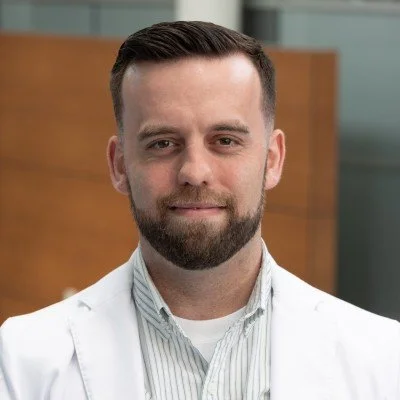
Episode #21: Jordan L, Paediatric Emergency Medicine PA
“When people hear that we’re part of the healthcare team, they’re usually really reassured. I’ve never had a patient refuse to see a PA.”
Jordan, a University of Toronto PA graduate, shares how early hands-on experience through patient transfers and Saint John Ambulance led him to a career in paediatric emergency medicine at SickKids in Toronto. He walks through his decision to choose the PA path over paramedicine, emphasizing long-term career sustainability, clinical autonomy, and team-based care.
PA training, including northern clinical rotations, ICU electives, and how those experiences shaped his clinical judgment and confidence. His transition into practice highlights how strategic electives and timing with the Career Start Grant directly influenced landing a role at SickKids before even writing his licensing exam.
The conversation offers a detailed look at paediatric emergency medicine, from managing high patient volumes to treating everything from viral illnesses to complex genetic conditions. Jordan explains how PAs improve department flow, standardize care, and support physicians by managing lower acuity cases while maintaining flexibility for urgent presentations.
WHAT YOU’LL LEARNHow to build early clinical experience that strengthens your PA application
What paediatric emergency medicine looks like in a tertiary care centre like SickKids
How to use clinical rotations strategically to secure a job after graduation
What skills matter most for succeeding as a PA in a high-acuity environment
GUEST BIOJordan is a University of Toronto Physician Assistant graduate working in the paediatric emergency department at SickKids in Toronto, where he manages a wide range of acute and complex cases. His early experience as a first responder with Saint John Ambulance and in patient transfer services shaped his clinical foundation and interest in high-acuity care.
He entered PA school directly after undergrad in medical sciences at Western University and leveraged strong clinical exposure to secure admission. During training, he completed diverse rotations including ICU and paediatric emergency medicine, with northern placements that strengthened his adaptability and clinical judgment.
Jordan plays an active role in patient care, teaching, and research, with a focus on point-of-care ultrasound and medical education. He is currently pursuing a Master of Public Health at the University of Toronto with the goal of contributing to PA education and advancing clinical training in emergency medicine.

ON WORKING IN PAEDIATRICS
“The kids are so resilient and brave, especially the ones with chronic medical needs who are familiar with the healthcare system from such a young age. You see that determination in them”
— Jordan L, CCPA, PA in Paediatric Emergency Medicine
ON THE PA ROLE & PATIENT CARE
“When people hear that we're part of the healthcare team, they're usually really reassured. I've never had a patient refuse to see a PA.”
— Jordan L, CCPA, PA in Paediatric Emergency Medicine
On CHOOSING PA OVER OTHER HEALTH CAREERS“I wanted something I could continue to grow in and something with [lateral] mobility so that when I was ready to settle down, I could move into something within that field.”
— Jordan L, CCPA, PA in Paediatric Emergency Medicine
ON THE PA ROLE“Residents and fellows come and go but the PAs are a constant.”
— Jordan L, CCPA, PA in Paediatric Emergency Medicine
ON KNOWLEDGE VS. SOFT SKILLS“I can teach anybody pediatric medicine, it's memorization, it's algorithms. But interacting with a child who's panicked? That's something totally different.”
— Jordan L, CCPA, PA in Paediatric Emergency Medicine
ON ADVOCATING FOR THE PA ROLE“A lot of people don't know PA is even an option. That's why public education matters not just for the profession, but for the people trying to figure out their path”
— Jordan L, CCPA, PA in Paediatric Emergency Medicine
-
From Early Career to Becoming a Paediatric ER PA
Jordan [0:00] Hi, I'm Jordan, I'm a U of T PA grad. I'm one of the PAs at Sick Kids in Toronto, so I work in the pediatric emergency room.
Jordan [0:17] I graduated from U of T in 2015, so still pretty new at the job, but loving every minute of it. Prior to being a PA, I did patient transfers and I attended Western University in London doing my bachelor's. In undergrad I focused in General Medical Sciences and had a special interest in public health and immunology.
Jordan [0:39] For my experience prior to PA school, I did patient transfers through non-urgent transfer companies as well as first responder work. So a lot of sporting events, a lot of concerts. Actually, one of the companies I worked at specialized in equine sports.
Jordan [0:54] So a lot of horseback riding injuries and things like that.
Anne [0:57] And how did you get the qualifications to be able to do that?
Jordan [1:00] I started as a volunteer at Saint John Ambulance. They're great — they give you the training for free as a volunteer. They have lots of instructors who are also in healthcare, like nurses and doctors, who give you that first responder training.
Jordan [1:16] After the first responder training, they set you loose and you're able to get some hands-on experience with patients in a very autonomous position considering what you're actually doing. They still have lots of supports available.
Anne [1:32] How did you decide on becoming a PA?
Jordan [1:33] I actually learned about PAs in one of my public health classes — a health management systems course where we were learning about the problems with the healthcare system and potential solutions. PAs actually came up as one of the potential solutions for prolonged wait times, the expense, and dealing with the aging population.
Jordan [1:56] I found it super interesting. When I looked into it further, my family doctor had a PA at the time and I was able to shadow that PA in the office and I loved what he did. The more I looked into it, I took the chance, applied to U of T right out of undergrad, and got in because of some of that experience working as a first responder.
Jordan [2:16] Everything kind of just aligned really well for me to end up in the PA profession. I've loved every minute of it since.
Anne [2:25] Were there other careers you were contemplating at the time?
Jordan [2:28] I was really thinking about paramedicine. My dad's a paramedic and coming from that first responder background, I really loved that pre-hospital setting. I loved the adrenaline rush and the acuity of what I was seeing. But I also saw how hard that profession was on my dad — how it had taken a toll on his body, how he kind of reached a peak at 50 where he wasn't advancing any further.
Jordan [2:54] I wanted something where I could continue to grow, and something that had some mobility so that when I was looking to settle down or retire, I could move into something within that field.
Anne [3:06] What was PA school like?
Jordan [3:06] It's a whirlwind, for sure. It's as intense as everybody thinks it is. Two years, a six-semester program with very little break. At U of T it's one year of didactic learning and then one year of rotations.
Jordan [3:24] We rotated through two family medicine placements, emergency, pediatrics, general surgery, psychiatry, women's health, internal medicine, and then two electives. We also do half of those rotations up north.
Jordan [3:40] That northern placement really changed how I practice and how I see patients, especially from lower socioeconomic backgrounds — you see a lot of that up north. I met some of my best friends in PA school and we've remained close even though we're in different fields. PA school was fantastic. It was everything I hoped for.
Anne [4:06] And where did you choose to do your elective rotations?
Jordan [4:08] I did my first elective in the ICU at Brampton. Really cool experience. Brampton isn't a big teaching hospital, so I got a lot of hands-on time with patients and did a lot of procedures I otherwise wouldn't have had at a major teaching hospital.
Jordan [4:25] The doctors there are really eager to teach. A lot of the intensivists had actually trained partially in the States, so they were used to PAs and really missed that role when they moved to Canada.
Jordan [4:41] The fact that they had a student was amazing to them and they really took me on. My second elective was actually in the emergency department at Sick Kids — where I ended up working. Obviously I'm a little biased, but it was different because it's a big academic teaching hospital. The docs have so much experience in teaching and again, many came from the States and missed the PA role.
Jordan [4:58] I fell in love with pediatrics. I knew I wanted to work with kids, but I didn't realize I could make a career out of it until that point in my training.
Anne [5:18] How did you go about finding your position after graduation?
Jordan [5:21] I was lucky — my final elective rotation was right before the Career Start Grant came out. When the grant was announced, Sick Kids was listed. I sent in my application and got an interview. I guess they liked what they saw during clerkship.
Jordan [5:38] It was actually the only place I interviewed. They put the process out really early — one of the first through the Career Start Grant — and I knew I had a job before I even wrote my exam. The stars just kept aligning for me.
Understanding the Scope of Paediatric Emergency Medicine
Anne [6:01] How would you describe or define pediatric emergency medicine?
Jordan [6:06] In peds emerg, we see anybody under the age of 18 — right from birth, including difficult labours at home, all the way up to their 17th year and 364th day on the planet. We will see everybody for any complaint.
Jordan [6:23] We're very much the safety net — everything from the sniffles to abdominal pain to kids who have been hit by a car. Because we are a tertiary care centre, we're considered the expert location. We get a lot of parents and families who are frustrated and come to us for answers because they've had a hard time accessing resources elsewhere.
Jordan [6:59] Sometimes they just need reassurance, but often they do need a lot of interventions — IV fluids and antibiotics, setting a broken bone, or advanced imaging like CT scans and ultrasounds. Everything and anything under the age of 18 is fair game for us.
Anne [7:18] What makes treating the pediatric population different from treating adults?
Jordan [7:21] Generally, kids are healthier. The more you age, the more comorbidities you accumulate. That said, we do see a fair number of complex children — kids with genetic or metabolic disorders, sometimes kids who don't make it to adulthood.
Jordan [7:41] There are also different pathologies. If a child falls, they're going to break their elbow — a supracondylar fracture. That's not the same for an adult. They get hurt differently, get different conditions, and they present differently too. A classic example is appendicitis. Everybody knows the textbook presentation — abdominal pain, fever, vomiting — but that just might not be true in a three-year-old. They can sometimes just have very vague complaints.
A Look at the PA's Role in a Paediatric ER Setting
Anne [8:26] Can you describe the practice in your department — are there different areas, and how many PAs are there?
Jordan [8:32] There are four areas in the emergency department. We have East and West — those are our higher acuity areas. East is intended for more complex chronic patients and West for the ultra-high acuity patients. That doesn't always hold, and sometimes we have to follow patients from one to the other.
Jordan [8:50] We also have a trauma resuscitation area that houses up to four patients — hopefully we never reach capacity, but it's happened with big accidents, bus rollovers, and the like. And then we have an urgent care area for lower acuity patients. That said, with the sheer volume we see, one out of every so many patients in that low acuity area will actually have something sinister and sneaky that's very urgent.
Jordan [9:27] In emerg we have six PAs. I was actually the second cohort to be hired. I was really fortunate to have Julie and Claire who came in just before me and really helped establish the PA role in the department and set up directives for us. Then there was my cohort — Emma and myself — and then we hired two more PAs in the last year: Brayden and Elise.
Jordan [9:43] We work mostly during the peak hours — mornings and after-school evenings — and we cover weekends, evenings, and holidays because the emergency room never quits. We average about one or two overnight shifts per month.
Anne [10:11] Are you more focused on one area than the other?
Jordan [10:14] We spend about 75% of our time on the urgent care side and about 25% on the more emergent side — it's just a matter of where the patient volumes are. Part of our role as PAs is to be flexible and keep an eye on where wait times are building. Sometimes because physicians have to see the most acute patients first, higher acuity patients who've been waiting several hours get moved over to us as well.
Managing Conditions and Performing Procedures as a PA
Anne [10:49] Can you give us a sample of the common conditions you see in the ER?
Jordan [10:54] Tons of upper respiratory tract infections — and please get your flu shot, my free plug. Abdominal pain and constipation, appendicitis, common fractures like supracondylar and clavicular fractures. Those are really our bread and butter, along with stomach flu and every other type of viral illness you can think of.
Anne [11:16] What are some of the rare conditions you've seen?
Jordan [11:19] Because we're a tertiary care centre, we see a lot of rare conditions — things like cystic fibrosis, which is still an ultra-rare disease by true population incidence. But also conditions like Moyamoya disease and genetic disorders that aren't even listed on UpToDate yet. We see a ton of different presentations across a wide range of prevalence.
Anne [11:42] What are some procedures you perform autonomously as a PA?
Jordan [11:45] Autonomously we perform laceration repairs — we do a lot of those. We also do foreign body retrievals. Kids love sticking things in their nose and ears, and we're the ones who help get those out. We do nursemaid elbows and other simple relocations, though a lot of our kids need anxiolysis for procedures. Because of the PA scope, we're not able to order medications like midazolam and fentanyl, which we use routinely for procedures, so when those are indicated a physician needs to be involved as well.
Jordan [12:28] We also do casting and splinting. Our nurses do a lot of the slabs, but we'll do circumferential casts when needed, as well as cast removals.
Anne [12:38] Are you prescribing medications or initiating management in the ER?
Jordan [12:41] Yes. We got medical directives about a year and a half ago and they're quite broad — fluids, antibiotics, blood work, X-rays, ultrasounds. All of that's within our scope. We'll start management, especially for things we're very familiar with, somewhat autonomously, and then review with the physician in more detail once results start coming back.
Integrating PAs and Their Impact on Emergency Room Care
Anne [13:09] What does orientation look like for a brand new PA hire in peds emerg?
Jordan [13:20] Orientation lasts about a month. They get the standard HR onboarding first — fire safety, how to find your pay stub, that sort of thing. Then we pair the new PA with a senior PA. They shadow for about the first week and then the senior PA starts acting as a preceptor, reviewing patients together and talking through the learning points.
Jordan [13:42] We also have tons of resources the hospital provides — written materials like textbooks and Canadian Pediatric Society guidelines, as well as hands-on didactic sessions. They get their Advanced Pediatric Life Support certification taken care of, hands-on ultrasound teaching with our POCUS fellows, and lots of support from both the physician side and the senior PAs.
Anne [14:15] What can a patient expect when being seen by a PA?
Jordan [14:19] When a patient sees me, they can expect a history and physical exam to start. I introduce myself and my role as a PA, take the history, perform the physical, and then depending on the complaint, I usually start some kind of investigation. I'll explain what I'm ordering and the rationale behind it.
Jordan [14:54] If there's anything to treat right away — like a laceration — I'll start management. Depending on the complaint, they can expect me to get pretty far before involving my supervising physician. If the child looks unwell or it's a complex complaint or something I haven't encountered before, I'll get the physician involved early and we'll work together through management. If it's something I'm comfortable with, the supervising physician might only see the patient at the end before discharge to ensure I didn't miss anything and to answer any remaining questions the parents have.
Jordan [15:40] We very much work as a team and hand off closely — but it depends on what the patient is presenting with as to what that looks like.
Anne [15:55] Can you talk about the broader impact of having PAs working in peds emerg?
Jordan [16:02] One of the biggest impacts is standardization of practice. It's a large department — close to 50 supervising physicians are signed onto my directives. Some work frequently, some once a month. With that variation, having PAs there to standardize how we diagnose UTIs, interpret ECGs, call X-rays, and follow up on positive blood cultures has really helped patient flow.
Jordan [16:39] We've also allowed our doctors to shift their focus to the more acutely ill patients. They still come in for all patients, but having that cognitive space freed up for the complex and critical cases — that's been a big benefit to them and to the patients themselves.
Anne [17:00] Would you say your role is fairly similar to a resident or a fellow, or are there differences?
Jordan [17:07] There are definitely some differences. We're lifelong learners, but we're not there to actively learn — we're there to work. In a lot of ways we function similarly, but I'm also happy to take a resident alongside me and show them the technique we use for hair approximation in a laceration repair. So the way we go about our work is different, even if the end outcome is often the same.
The Rewards and Difficulties of Working in Paediatric ER
Anne [17:37] What do you enjoy about working in peds emerg?
Jordan [17:39] I love the kids. I don't think I could go back to adult medicine. The kids are amazing — so resilient and brave, especially the ones with chronic medical needs who are familiar with the healthcare system from such a young age. You see that determination in them.
Jordan [17:57] And the staff culture is great. I love the culture of emergency medicine and the culture of pediatrics — and peds emerg combines the best of both. Going through specialties in school, every one had parts I loved and parts I didn't. I found that the willingness to learn, the compassion of the pediatricians, and the eagerness of emerg all combined really well for me here.
Jordan [18:31] It keeps things fresh and interesting. I have a different day every time I go in for a shift, and I absolutely love that.
Anne [18:37] What are some of the challenges of working with a pediatric population?
Jordan [18:42] Some of the challenges are actually the same things I love. Sometimes it's emotionally exhausting — whether it's the two-year-old who won't stop crying because he's sick, or a difficult conversation with parents about their child's new diabetes diagnosis or leukemia. We have a really great support system at work for when we're feeling that weight, and that helps.
Jordan [19:18] On a day-to-day basis, the shift work can also be exhausting. Nights, evenings, weekends, holidays. We have a big enough group of PAs that we trade shifts, but it's not a nine-to-five. I knew that coming in — it was a compromise I was willing to make because I fell in love with emergency medicine. But I can see myself moving into something more regular at some point in the distant future.
Inside a PA's Shift and Collaborating with ER Staff
Anne [19:44] Can you describe a typical shift? How many patients would you see? Where do you float?
Jordan [19:49] We do eight-hour shifts and try to stay in one section of the department as best we can, though we'll flow to another area if needed. I aim to see around three patients per hour. It varies a lot — on days when everybody has cough and there's a stomach flu going through the daycare, I can move through more patients quickly. Some days it's a lot slower when you have complex patients, like a sickle cell patient with chest pain or neurologic symptoms where you're worried about a stroke. On average I'm seeing around 15 to 16 patients per eight-hour shift.
Anne [21:03] How many shifts are you doing a week?
Jordan [21:07] On average about four shifts a week. With shift work it'll vary — some weeks three, some weeks five — but it evens out to around four.
Anne [21:16] For those that aren't familiar, what can a supervising MD expect from working with a PA in peds emerg?
Jordan [21:23] A supervising MD should hopefully expect that the PA eases their cognitive load, helps clear some patients, and really improves the flow of the department. Can I manage some of the lower acuity patients so the physician can shift their focus to the acutely ill ones? That's the idea.
Jordan [21:49] I would also hope they trust me to contribute to teaching — helping with residents, clerks, and fellows, not necessarily reviewing their patients, but taking on procedural teaching. Residents and fellows come and go, but the PAs are a constant. I'd love to be part of passing on procedural and experiential knowledge to the learners coming through.
Anne [22:22] And how do you interact with the nursing staff in the department?
Jordan [22:25] I love our nursing staff. We have the best nurses — I'm biased, but they're always on the ball. If one of our nurses says they're worried about a patient, I'm worried about that patient too. We have a great back-and-forth teaching relationship. There's always something new to learn from them, and I hope they take things away from working with me as well. I've never had an issue or conflict with our nurses.
Explaining the PA Role and Mentoring Future Healthcare Professionals
Anne [22:56] The PA role is still quite new here in Canada. Do you often get asked what a PA is, and what do you usually say?
Jordan [23:05] All the time. I get asked so often that in our electronic medical record I have a little saved shorthand I paste into the end of charts. I usually tell people that PAs are healthcare professionals who train under a medical model and work as part of a team with a supervising physician. We see patients, start investigations, do blood work, perform procedures, and prescribe medications when needed — all working in collaboration with a doctor.
Jordan [23:41] When people hear that we're part of the healthcare team, they're usually really reassured. I've never actually had a negative experience or had a patient refuse to see a PA. For the most part, they're happy to be seen more quickly than they might have been otherwise.
Anne [24:07] What tips or advice would you give to a PA student interested in pursuing a career or elective in peds emerg?
Jordan [24:12] We love clerk students, so keep Sick Kids in mind for clerkship. The most important thing in peds emerg is the ability to interact with kids. I can teach anybody pediatric medicine — it's memorization, algorithms, learning the art — but interacting with a panicked child is something totally different. Getting into a role where you're comfortable and used to working with kids is incredibly important.
Anne [24:53] Are you involved in teaching or precepting PA or medical students?
Jordan [24:58] Whenever a PA student comes into the department, I try to introduce myself and get hands-on with them. If I see something interesting, I pull them aside and get them involved. I also do a bit of facilitating at U of T's PA program. I check in on my students when I see them, make sure they're getting the best out of their experience, and pull them aside when there's something unique or hands-on that they can only learn at Sick Kids.
Anne [25:39] What draws you to mentoring and teaching?
Jordan [25:43] I just really enjoy it. I think it's so cool that I learned this skill and that I'm helping people — and I want to help other people learn the skills so that they can help people too. I don't know if there's one specific thing that draws me to it. My parents are both in healthcare and both have taken on education roles. Maybe I got it from them. I just find it very rewarding.
Anne [26:19] Can you speak to some of the sessions or workshops you've facilitated?
Jordan [26:25] We just did a point-of-care ultrasound workshop at the CAPA 2019 conference. It was an amazing team effort — I had PAs from Sick Kids, PA students, ultrasound fellows, and ultrasound staff all get involved. My brother, who was a nursing student at the time, even came on board. The workshop went really well.
Jordan [26:59] I'm happy I was able to teach a hands-on skill that I use every single day — one that I think changes how I manage probably half of my patients and is ultimately better for patients than some of the more traditional modalities.
Revolutionizing Paediatric Emergency Care with Point-of-Care Ultrasound
Anne [27:17] Can you speak to POCUS — what it is and why it's making such a big impact on your practice?
Jordan [27:22] POCUS is point-of-care ultrasound — ultrasound performed at the bedside by a non-radiologist. We use it a lot in peds emerg, partly because we want to save kids from radiation. If I can save them a chest X-ray, that's fantastic.
Jordan [27:38] It also helps with cognitive offloading. If I put the probe on a child and I see pneumonia, I don't need to keep wondering why they're short of breath — I see the issue and I can focus my attention on treating instead of solving a mystery. And it helps patient flow. Getting a patient to imaging outside the department is either unsafe if they're unstable, or it takes a long time. Sometimes they're in the X-ray or ultrasound department for 30 to 45 minutes on a bad day. Being able to help that patient faster — and by extension the patients in the waiting room too — is really beneficial.
Anne [28:37] Where can PAs go to get competent in POCUS?
Jordan [28:45] A few different ways. I'm really fortunate because the hospital I work at has an ultrasound fellowship. I'm not an official fellow, but they've let me tag along on rounds and teaching lectures and through bedside instruction — they've been fantastic. We also have formal modules in place to ensure competence, and all of our scans are reviewed by an expert to ensure they're meeting standard.
Jordan [29:26] Scarborough General Hospital has an EM POCUS team with an ultrasound fellowship available for PAs who are practicing. There are also lots of external courses — USTAR, courses at Sunnybrook Hospital, and some through the Canadian Association of Emergency Physicians that PAs are eligible to take. It really depends on where you're working and what you want to do with the skill.
Professional Development and Research in PA Practice
Anne [30:05] How do you stay on top of current treatment and management of pediatric issues in the ER?
Jordan [30:12] I love podcasts — I'm a podcast addict. I have at least a dozen on my phone. I walk to work, so during my half-hour walk I'm listening to one. I also get relevant journal articles delivered to my inbox. At the hospital, we have both journal rounds and teaching rounds — a fellow or staff will teach a topic, and PAs are welcome to attend. Journal rounds involve an important article sent out by a supervising physician, and then we'll discuss the strengths and weaknesses of that article as a group and how it applies to our practice.
Anne [31:00] Are you involved in any research or other professional development outside of clinical practice?
Jordan [31:10] I am. Most of the PAs at Sick Kids are involved in research since we're also a major research hospital. One project I'm involved in is looking at whether having a PA call patients back after an emerg visit — to check in and provide further education — can help prevent return emergency visits by giving families reassurance and at-home management skills.
Jordan [31:37] I'm also involved in research on ultrasound in kids and how we can best use it to assess for increased intracranial pressure — I'm on call as a research assistant and go in when a child is eligible for the study. And I'm doing my Master of Public Health at U of T right now, through the Dalla Lana School of Public Health, focusing on PA education and how to teach PAs in a way that helps them retain knowledge and apply it easily in practice.
Anne [32:11] So a Masters of Public Health with a focus on medical education?
Jordan [32:15] The official title is Masters of Public Health, Family and Community Medicine with a Co-Specialization in Resuscitation and Trauma. What that really means is I'm focusing on medical education through the lens of an emergency medicine perspective.
Envisioning Career Growth and the Ideal PA Candidate
Anne [32:32] What are you hoping to do with your MPH?
Jordan [32:34] I'm hoping to teach — to get into the universities and be able to help students become the best PAs they can be.
Anne [32:45] How do you see your practice changing over the years?
Jordan [32:48] I'm hoping to see a continuation of the trust I've developed with my supervising physicians — whether that means an increasing scope of practice or seeing a wider breadth of patients. I'd also love to be more involved in the teaching and research side. Since I'm doing my masters in medical education, that's obviously a passion of mine and it's the direction I'm hoping to take my career.
Anne [33:24] If you were involved in hiring another PA for peds emerg, what attributes would you look for in a candidate?
Jordan [33:38] First and foremost, their ability to interact with kids. I can teach the medicine — that's fine — but it's really hard to teach that interactive skill with children. I'd also look for someone ambitious and eager to learn, because pediatric emergency medicine is on the front line. Things are always evolving and you need someone willing to keep up with the research.
Jordan [34:04] I look for someone eager to push the limits of being a PA — willing to get involved in research, willing to teach. That shows real drive and ambition, not just for clinical practice, but for what it means to be a PA.
Anne [34:30] What do you love most about being a PA?
Jordan [34:32] I never had a doubt after my first day of PA school. I love being hands-on with patients and on the front lines. I love working in this amazing team with my supervising physicians and the nurses. And I love that I get to work with kids all day. I think that's just amazing.
The Growing Physician Assistant Profession and Final Reflections
Jordan [34:50] I've never regretted my decision to become a PA.
Anne [34:52] What would you say to people who are unsure or struggling between choosing PA and MD?
Jordan [34:59] If possible, shadow a PA. It really helps cement that decision. I know sometimes we're a little hard to find or not always able to take students, but if you can shadow a PA to really understand the role, that's invaluable. Same with a physician — get out there, live a day in the life, see what it's like, understand the responsibilities that come with it, and take your time with the decision. It's a big one, so make sure you know what you're choosing.
Jordan [35:24] I've done a lot of talks for high school and undergraduate students and I'm active on social media answering questions about the role. Public education is important — not just for the PA profession, but to help individuals learn that PA is even an option. A lot of people don't know it exists, even though PAs in Canada have now been around for over a decade.
Anne [35:51] Would you say it's a growing profession?
Jordan [35:55] Definitely a growing profession. U of T graduates close to 30 PAs every year, McMaster graduates just under that, and the military also contributes PAs transitioning from active duty into the civilian side.
Jordan [36:12] As more residents are starting to do their education alongside PAs in Canada, the need and demand for PAs is going to grow with that. Even in pediatrics — because everyone comes through Sick Kids — we've seen increasing interest in PAs out in the community outside of the hospital setting.
Anne [36:33] Those are all my questions. Any final thoughts?
Jordan [36:35] Being a PA is awesome. I love every minute. Kids are amazing. And people should get their flu shot.