Episode #36: Allie Penrose, Dalhousie MPAS
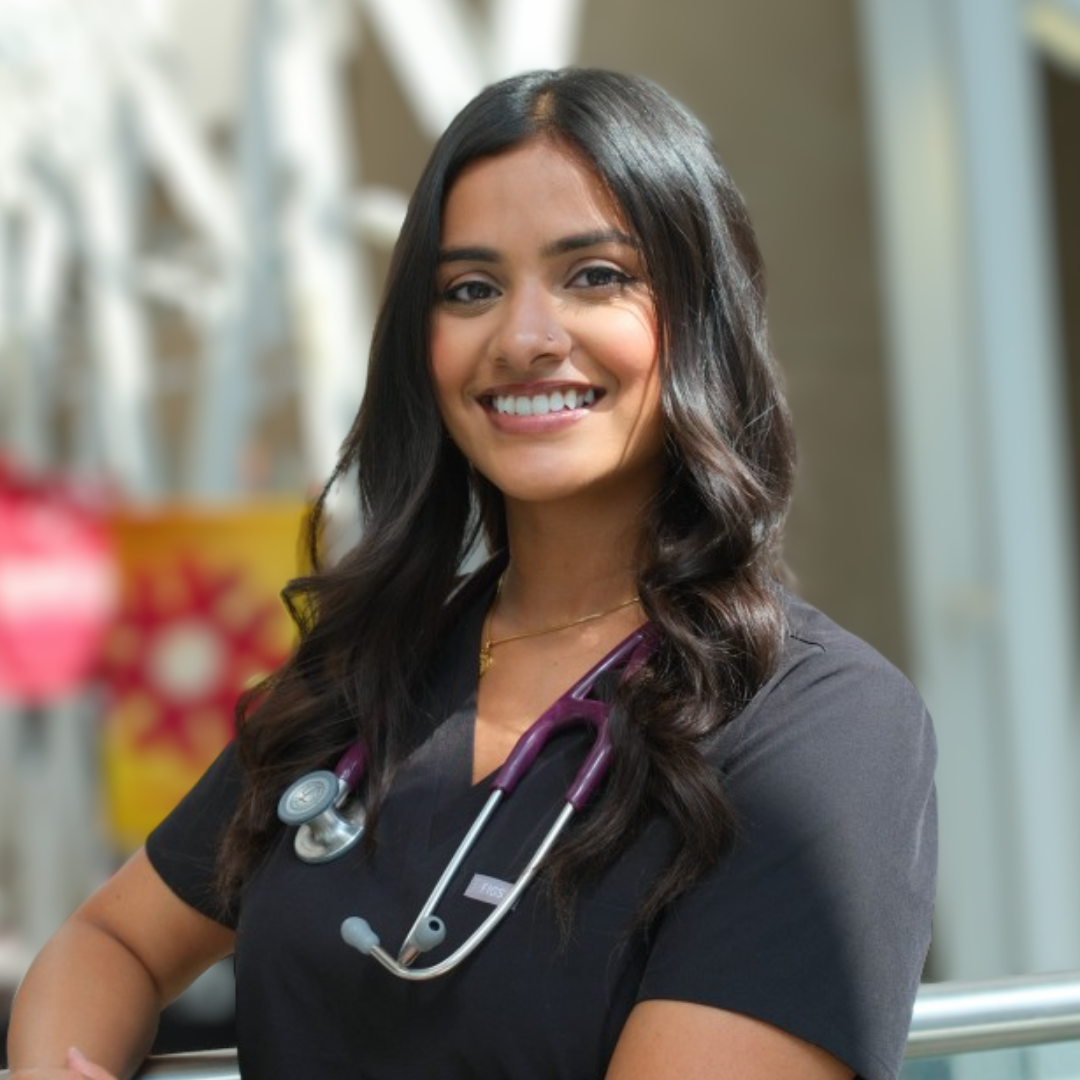
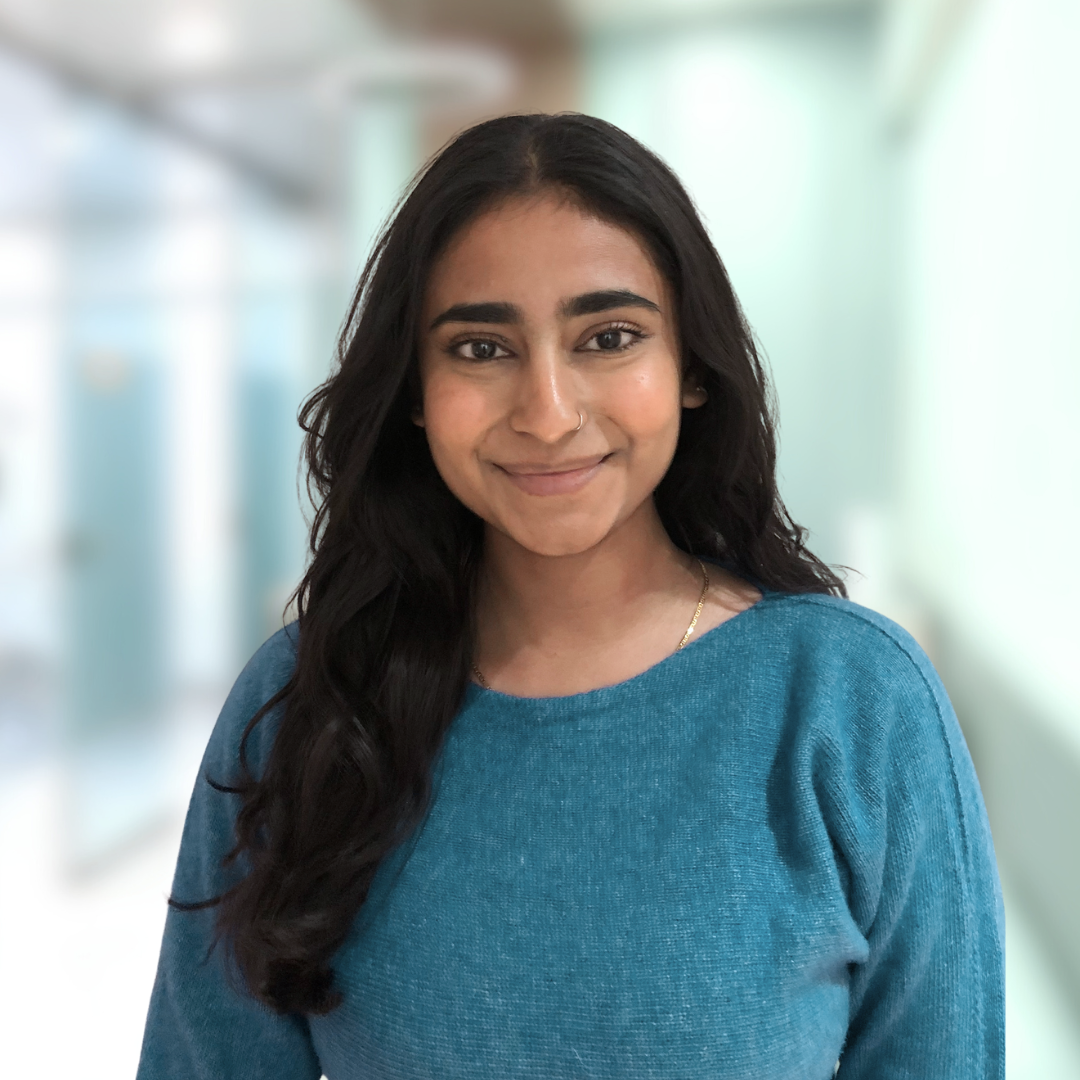
Allie Penrose is a graduate of the inaugural Master of Physician Assistant Studies (MPAS) cohort at Dalhousie University and part of the first group of Physician Assistants practicing in Nova Scotia. Prior to PA school, she spent six years in specialized clinical roles at the QEII Health Sciences Centre, working in organ and tissue donation and stem cell transplantation. This experience provided direct exposure to high-acuity care, surgical environments, and longitudinal patient interaction, reinforcing her decision to pursue clinical medicine through a non-physician pathway.
Before committing to the PA profession, she evaluated multiple healthcare roles including respiratory therapy, occupational therapy, anesthesia assisting, and physiotherapy. In this episode, she outlines her approach to the Dalhousie MPAS application process, including managing a compressed timeline and preparing for the MMI with limited lead time.
She also discusses first-year workload and burnout, second-year clinical training, and the realities of entering practice in a province where the PA role is still emerging.
WHAT YOU’LL LEARNHow to assess whether PA is the right fit before committing to the path
Inside the Dalhousie MPAS admissions process
How to manage the volume and pace of PA school without burning out
What it means to step into a role that is still being defined in your province
GUEST BIOAllie is a graduate of Dalhousie's inaugural MPAS class and one of the first physician assistants practicing in Nova Scotia. Prior to PA school, she spent six years at the QEII Health Sciences Centre in roles spanning organ and tissue donation and stem cell transplant, building both clinical depth and a strong foundation in patient communication. She now practices as a PA in family medicine in Halifax.
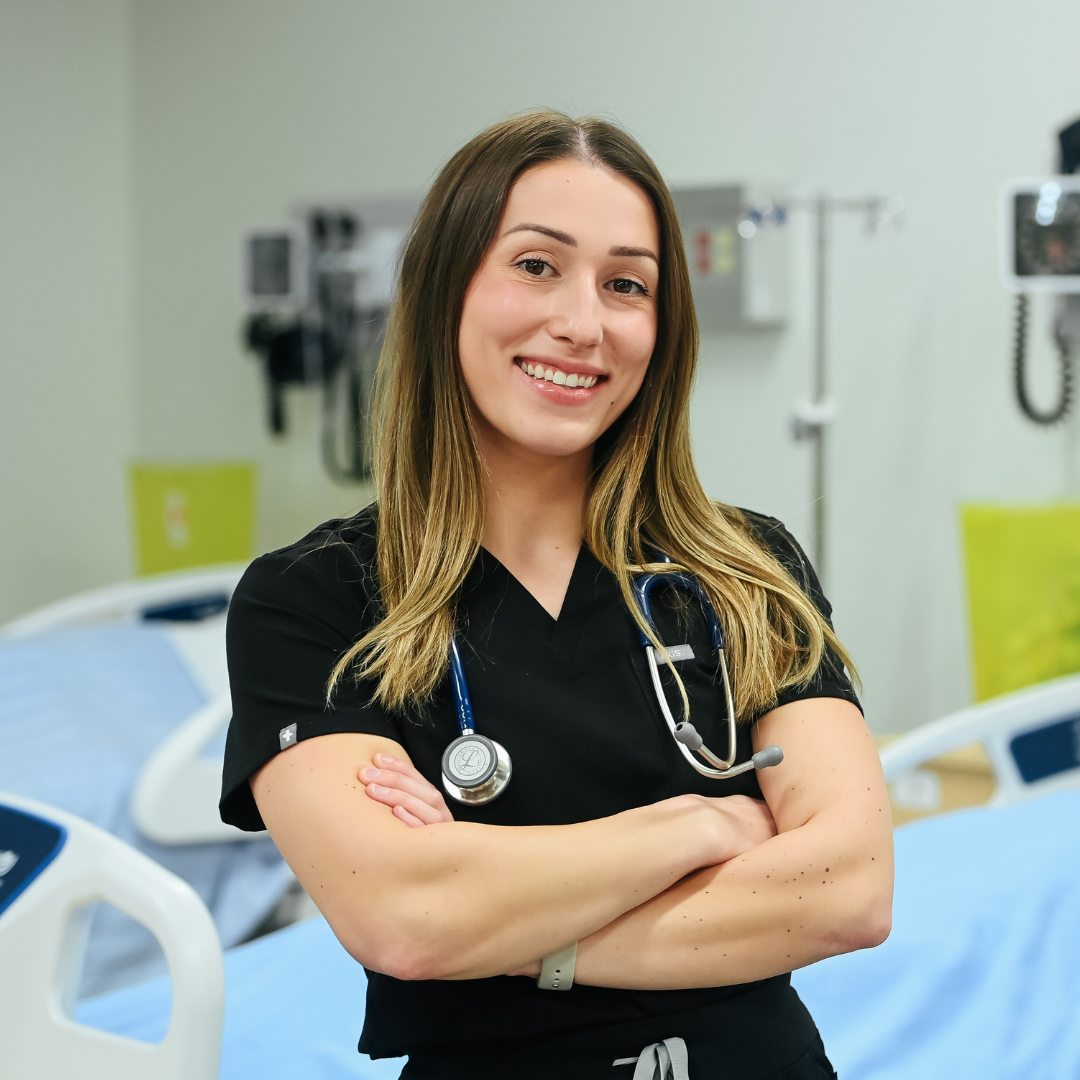
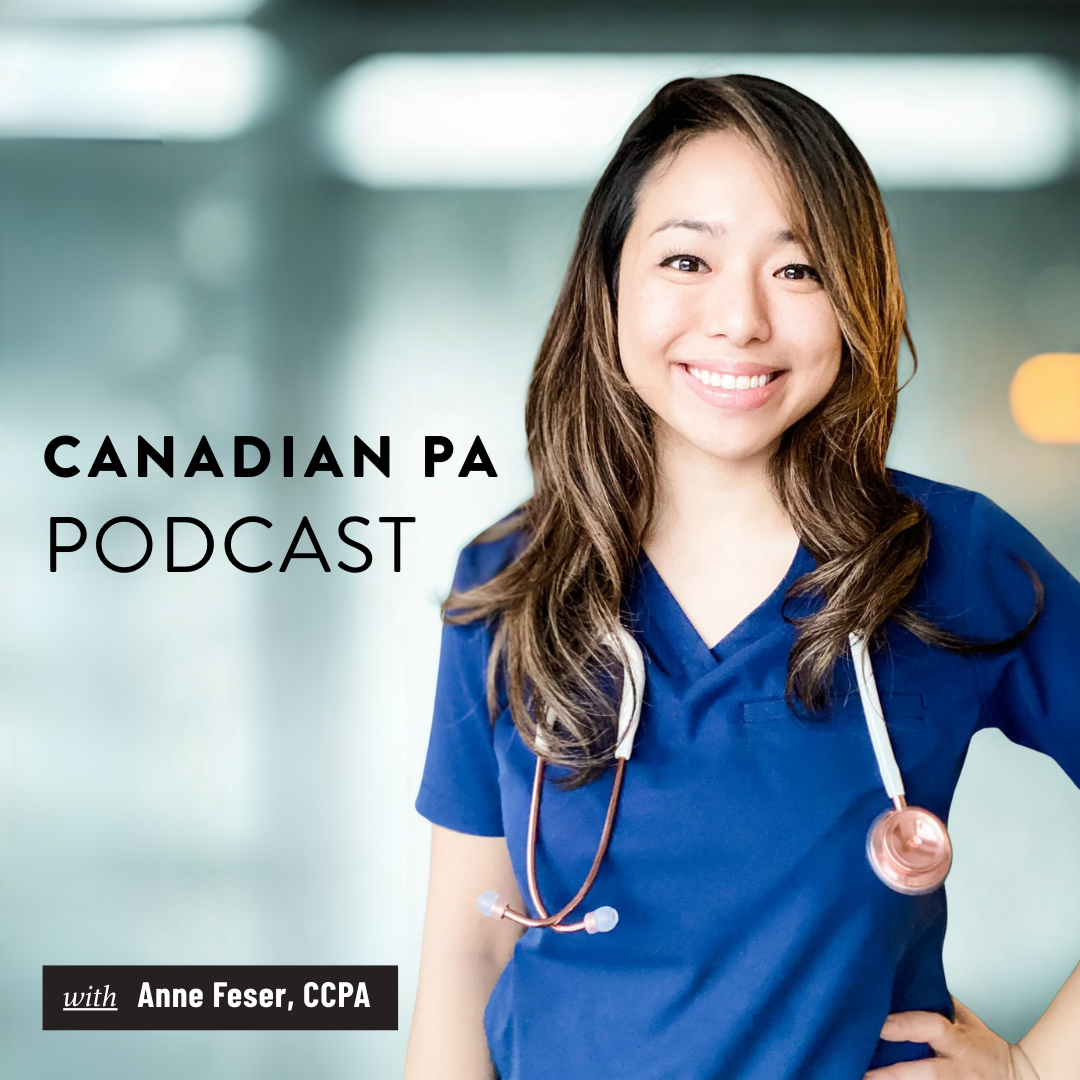
-
Allie's Pre-PA Experience
Allie[00:00:22] My name's Allie Penrose. I'm from Halifax, Nova Scotia, born and raised. I actually am finished the Dalhousie PA program. It's a two-year program and it starts, I think it's the only one that starts in January. So I did my undergrad at Acadia University in biology and psychology, the neuroscience stream. And I knew I really wanted to be in healthcare in some capacity, but I wasn't really sure what. So I decided to work at the QEII for a couple years in a few niche roles in healthcare, which I'm sure we'll chat about later as well. And then Dal announced the program and it felt like the perfect timing for me to switch it up and start my career as a PA.
Anne[00:01:02] So for those of us that aren't familiar with QEII, what is that?
Allie[00:01:05] Yeah, that's the hospital here, like the main hospital here in Halifax, Nova Scotia.
Anne[00:01:09] And you're originally a Halifax native?
Allie[00:01:12] I am, yep.
Anne[00:01:12] What's it like growing up there?
Allie[00:01:14] I love Halifax so much. The people are amazing. It's like a small-town vibe. I just find the culture here is so incredible and I knew that I wanted to stay here. So when Dal announced the program, it just felt like it was all falling together.
Discovering the PA Path
Anne[00:01:28] How did you first come across the PA profession?
Allie[00:01:30] I knew I wanted to be in healthcare in some capacity. But I just did what I think a lot of us did: research pretty much every single career that there could be, not really feeling like I needed to do medical school, but something along those lines. So I looked up RT, anesthesia assistant, OT, psychologist—really did a deep dive in all the careers. So this would've been back in 2017 when I was wrapping up my undergrad and the PA profession at the time, I just kept coming back to it. It felt like it checked all the boxes. It was my chance to practice medicine, but also get a variety of different things, because I'm so interested in so many different facets of medicine. So during my research then in 2017, it just really clicked. But there were no PAs practicing in Nova Scotia at that time. The trial here of the ortho PAs hadn't even happened, so I was worried to go to a school in Ontario or somewhere else and start that path and then never be able to come home. So I just kept a pin in it and then kept thinking about it while I was doing other things.
Anne[00:02:33] You mentioned that there were a lot of check boxes that PA fit for you. What specifically about it drew you to the profession?
Allie[00:02:41] I've always had this desire to work in healthcare, wellness, and healthy lifestyle. It's always been such a big part of who I am. So I knew that that was the path for me. But then with the PA profession itself, I knew it was my chance to practice medicine and challenge myself intellectually. Also, a huge part for me was the lateral mobility that everyone talks about. It's like the keywords we use when we think of the PA profession. The flexibility, because I was so scared to commit to one specific area of medicine; I wanted to be able to switch up specialties if I wanted to, or maybe do a couple specialties at once. So that was the big thing for me. And I knew I wanted to be patient-facing. Any interactions I had with people were what really resonated with me during my undergrad and during some of my other careers. It was the patient-facing that was the most rewarding part of my prior experiences. Those things were the main things and it all felt like the PA profession was lining up with all of that.
Anne[00:03:39] Can you give us a little bit of background on how you were able to determine that it was the best for you?
Allie[00:03:44] I took the time to actually really reflect, because when you're in undergrad, I think a lot of us feel overwhelmed with the options, especially when you do a science degree but you're not really going to go to medicine. You're in your head about all of the different ways you could go. So I did a lot of journaling. I had to really sit down and think: what are the things that are important to me? And that being variety in the things I could practice with the lateral mobility and the patient-facing aspect of it. And then from there, I also did reach out to people within the different disciplines. If anyone I knew was an OT or an RT, a PT, and what their day-to-day was like. I did a lot of research. I did a deep dive and then I would go in one direction and then almost commit, but then be like, it just doesn't feel quite right. So I think the biggest thing for me was actually really taking the time to sit down, reflect, journal, and keep those values in my mind as I was going through each profession.
Networking and Gaining Exposure
Anne[00:04:42] And when reaching out to those different disciplines, a lot of PAs are not connected directly with healthcare providers. How did you get those opportunities? Was it an informational interview or was it more shadowing that you had gotten?
Allie[00:04:55] Before I started my job in the hospital, it was really just research online. If I knew a friend of a friend, it was pretty informal that way, reaching out to people trying to connect me or any resources I had through my university. But then I thought: what if I got a job in healthcare? That way I can see firsthand how these professions work and what the day-to-day is, make a lot of connections that way, and then really start to figure out my path. So really shortly after I graduated Acadia, I got a very niche role in the hospital and it allowed me to meet a lot of people that way.
Anne[00:05:38] Fantastic. So it was through networking and building relationships through jobs and placements that you had?
Allie[00:05:43] Yeah.
Anne[00:05:44] And how important would you say that understanding different roles and understanding the PA role is prior to applying to the PA program?
Allie[00:05:52] Yeah, that's really huge. I think that it was such an important part for me and I think it is one of the things that I'm hoping showed in my interviews and in the whole application process because I was so thoroughly researched and tried to reach out to anyone I possibly could. I think the PA profession is still so misunderstood in some ways, and I think it's so important to know exactly what you're signing up for and make sure it is what you want. Because I think the last thing you want is just to choose PA because "why not," or choose PA because you think medicine's too long. Those kind of things are not really the right reasons. It's more like making sure the ins and outs of exactly what it is that the profession will be. So I think that's such an important part of it.
Anne[00:06:41] It sounded like you had a very self-reflective journey and you were very insightful on the reasons why you wanted to apply. I'm sure it was able to shine during your interviews.
PA Awareness in Nova Scotia
Anne[00:06:51] The reason why I ask that question is often when I'm speaking to pre-PA students, they don't actually have an understanding of what a PA is. I know that speaking with most patients, most people know what a nurse and a doctor is, but for providers that aren't as well known—midwives, physician assistants, nurse practitioners—the awareness is getting better over time. But was it ever a deterrent for you that PA wasn't as well known or not as well established within Nova Scotia?
Allie[00:07:21] I don't think so. Which is interesting because in second year especially, when you're the first PA in Nova Scotia, you're really the first interaction that anyone has had with a PA. So you really have to be ready to advocate, ready to educate and stand up for the profession. It never really was a deterrent for me. It was more like, okay, let's put on the advocacy hat and let's show everyone how amazing we can be as part of the team.
Anne[00:07:52] So it sounds like you're almost drawn to that aspect of helping to pioneer the profession.
Allie[00:07:56] Yes, definitely.
Anne[00:07:58] Okay, wonderful. I think we're really lucky that we have someone like you pursuing the profession and being an advocate on our behalf.
Allie[00:08:05] Thank you.
Dalhousie MPAS Admissions Breakdown
Anne[00:08:06] So I wanted to pivot to your experience as a pre-PA because I know a lot of people are very curious about this. Can you just break down some of your pre-PA stats in terms of your undergrad healthcare experience and any other admission requirements that you think might be helpful to know?
Allie[00:08:25] Every PA program you need an undergrad. It's helpful if you have some science background. Prerequisites for Dalhousie specifically were anatomy and physiology and biochemistry. So I had those as part of my undergrad. And then as far as stats, I was just actually reviewing the Dalhousie application website because it does change every year. For me it was at least a 3.0 GPA with 3.7 being the more competitive. My GPA was 3.8 on a 4.0 scale. And then there were no healthcare hour requirements as part of Dalhousie to get in. But I felt like I myself started in 2017 and then the program didn't start until 2024, so I had six years of experience. I felt like that was a huge help in my application process. I think it really taught me a lot and I was able to call on that experience and really show that I had that experience as part of the interview. But healthcare hours are not required; everyone brings their own strengths. And then we had to write a personal statement and some short answer supplemental questions on how you handle certain patient interactions. And then Dal has 24 seats, mostly saved for Nova Scotians, but three for New Brunswick and one for PEI.
Anne[00:10:06] Okay, so I know one of the requirements is you have to be a resident of the Atlantic to even be considered for applying, which is interesting. Why do you think they have that requirement?
Allie[00:10:15] I think they have that requirement as a way to retain people. They wouldn't want a lot of people going from outside and then going back to Ontario or Calgary and leaving Nova Scotia.
Anne[00:10:31] Yeah, I guess admitting locals or people that have lived there, they're more likely to go back to the communities they grew up in.
Pre-PA Healthcare Experience
Anne[00:10:36] You had mentioned that you had six years. Can you describe some of the jobs that you had and how you found those opportunities?
Allie[00:10:52] I graduated in 2017 and at that point in time I was just like, "get me in the healthcare field in some way." From there, I'll make a lot of connections and I'll be able to see how people practice day to day. I started in a very niche role in organ and tissue donation at the regional tissue bank at the local hospital here in Halifax. In that role, we were responsible for screening donors after they had passed away for eligibility. So going through their medical chart, talking to the medical team, speaking with loved ones about their medical history. And then along with that, we would fly out in the Atlantic provinces for organ donation, which is perfusion support for that team. That role specifically was very niche. A lot of emotional intelligence and resilience because it was very tough to speak with families so soon after they had lost their loved one. But it was a beautiful thing to be able to offer them that gift of donation. Along with that was surgical experience; we would go in the OR and actually surgically retrieve the tissues and assist in the organ ORs as well. So I picked all the things I loved the most of that job: the hands-on surgical skills and the connection with families. I also had a role connected to that laboratory in cell therapy and stem cell transplant. I would process human stem cells and cell therapy products like CAR T products for transplant for people with blood cancers. And then I would be able to go to the patient room and be part of the transplant process.
Anne[00:12:46] Yeah, that sounds like amazing experience. Was there a lot of prior experience required in order to apply for and get those jobs?
Allie[00:12:54] Yes and no. They definitely wanted the undergrad, but then straight from my undergrad I got into the tissue bank. And because it's such a niche role, there's not really a program you can do in advance. It's an eight-month on-the-job training, so I feel like for that one, I just got really lucky. I had some good references from my school to get in. Usually they do want some healthcare experience, but I got lucky with that one. And then otherwise, I was able to make those connections with the hospital and move into that cell therapy role as well.
Anne[00:13:27] Excellent. And what are some of the previous healthcare experiences or undergrads of your classmates?
Allie[00:13:31] We had a very wide variety. A good amount came straight out of undergrad. Like I said, everyone has their own strengths, so don't feel like just coming right out of undergrad is not enough. They brought so much of their own strength with really great study skills and a lot of that science is very fresh in their minds. But anyway, yeah, a lot of people came right out of university. We had a couple paramedics, we had a respiratory therapist, a physio, and someone who worked in the pharmacy. So a lot of different paths.
Anne[00:14:11] Anybody with just an undergrad background that didn't necessarily have paid healthcare experience?
Allie[00:14:16] Yes, definitely. Almost half of our class, maybe eight people of the 24, came right from their undergrad. I think they had a lot of volunteering or had some part-time gigs on the weekend to get their foot in the door. But again, healthcare experience is not required to get into the Dal program, so I don't think that should deter you from trying to apply if you're right out of undergrad.
Finding Healthcare Experience
Anne[00:14:44] And do you have any suggestions for students that may not have strong healthcare experience on how they can find those types of experiences?
Allie[00:14:52] Yeah, I can speak for Halifax. For me, networking is actually quite easy in Halifax because it's so small. I find people are really open to shadowing. So I was lucky in that I did get my foot in the door in a healthcare position, but then from there I did so much shadowing. This is me just going out of my way to find people to say, "would you mind if I come observe?" Because it would help me. People are so open to having learners or even just people trying to get a sense for what the day-to-day is. Because it's so hard to really know what a job is really like until you see it. Even if it's not a paid job or official volunteering, if you can try to reach out to someone and just say, "can I come in and shadow you?" I think that would really help.
Allie[00:15:00] I find people are really open to shadowing. So I was lucky in that I did get my foot in the door in a healthcare position, but then from there I did so much shadowing that kind of was to help me get better at the job I was doing, but also not required at all. With the donation program, I would go to the OR to see a lot of the ortho surgery so that I could better understand. And this is me just going out of my way to find people to say, "would you mind if I come observe?" Because it would help me a lot. Also part of the tissue donation is corneas, so I would go to see some ocular surgeries as well. Again, not required, but really people are so open to having you just come and observe. So if you can find someone within the hospital that can connect you with maybe a certain specialty that you're interested in, people are so open to having learners or even just people that are just trying to get a sense for what the day-to-day is. Because it's so hard to really know what a job is really like until you see it. If anyone in Halifax is interested, I can share my email and people can reach out to me because I have a lot of connections within the hospital. But even if it's not a paid job or official volunteering, if you can try to reach out to someone and just say, "can I come in and shadow you?" I think that would really help.
Anne[00:16:36] Yeah. And coming from a place of genuine interest, I think a lot of pre-PA students sometimes fixate on trying to obtain shadowing from a PA, but shadowing anybody within the healthcare system is important. Understanding the scope of practice of different providers that you may potentially work with as a future PA is so invaluable.
Allie[00:16:54] Exactly.
Staying Organized through PA Admissions
Anne[00:16:55] Now going back to the application process, I like to compare applying to PA school a lot to having a part-time job. There's a lot of different moving parts and deadlines. How did you stay organized and on top of everything without getting overwhelmed?
Allie[00:17:13] It's funny because it was such a blur for me. It was so hectic just because of the fast-paced nature of it. I think it was a little specific to our class because Dal had announced the program in August of 2023, and it came out of nowhere. I had a job at that point and I hadn't really been thinking about PA that much anymore, so I was like, "oh my gosh, this is my opportunity, I gotta do it." They announced the program in August, applications went out the next month, and then part two of the applications, which was the short answer, was a couple weeks later. They immediately told us about interviews in October, and then final decisions were all in November. It was such a short amount of time, and I think it's a little bit more spread out now, but I just didn't have time to overthink it. I just made sure to really schedule in time to prepare for each part. A lot of the personal statement was more so just getting out all of the reasons why I wanted to be a PA. I made it very clear that I was from Nova Scotia and that I wanted to stay here and help the healthcare system. As far as staying organized, I scheduled things in my calendar every single day. I would leave my job and work on perfecting parts of my application. Hoping that I would get an MMI interview, I started researching that and practicing MMI questions as much as I could.
Anne[00:18:44] Fast and furious, just like PA school.
Allie[00:18:46] Exactly. It was my first taste of what it was going to be like.
Anne[00:18:50] Sometimes I think that if the deadlines are really dragged out, it's almost a bit more torturous because of the uncertainty. Are they still doing a January start for Dalhousie?
Allie[00:19:02] It's still a January start. I do believe they plan to change it to a September start eventually because every other program at Dalhousie and most other PA programs in Canada are a September start. We're a little strange in our timeline there, so the plan is to initially shift to that, but they're still January for now.
Anne[00:19:28] There was a point in time where U of T graduated their students in January and McMaster was in September. There was a bit of a disconnect with regards to the career start and when people were able to apply for jobs. It's good that they were able to match it up.
MMI Interview Prep: Practice Strategies
Anne[00:19:57] You had mentioned that you were practicing MMI questions. Without divulging conflict of interest issues, what was the MMI like and how did you prepare?
Allie[00:20:09] That was by far the most daunting part for me. I find interviews very challenging. Because I knew they were challenging, I tried to do as many as I could, even for jobs I didn't think I would get, just to get better at them. Putting myself in those uncomfortable situations—being comfortable with the uncomfortable—is like the whole motto of PA school. For prep, I just tried to find as many practice questions as I possibly could, specifically making sure there were Canadian resources. It's about getting in the habit of being comfortable with those types of questions, knowing that you can't come rehearsed with an exact answer, which is what they don't want anyway. You're never going to know every single thing they're going to ask, which is uncomfortable, but that's just the way it is. Practicing and watching YouTube videos of different MMI attempts was really helpful.
Anne[00:21:43] When you say practice, were you recording yourself or practicing with a friend?
Allie[00:21:49] I was doing both. I would practice with my partner and give him the list of MMI questions I found online to get used to saying them out loud. I did record myself a few times to pick up on parts I wanted to fix. I also got a book that had a lot of practice questions and tips and tricks.
Anne[00:22:20] Was the day of a whole day affair? Meeting your potential future classmates must have been intimidating.
Allie[00:22:30] The whole thing was so intimidating. We had a two or three-hour chunk in different groups. There was a little intro session on what PAs are and how the MMI works. That was painful because we were sitting there for almost an hour just shaking in anticipation. I got to briefly say hi to people, but you're in your head. There were 12 stations in person, though I think they're now online through Dal. It all went by so quickly. I just left thinking I did the best I could.
Anne[00:23:26] Would you say that you managed your stress well?
Allie[00:23:31] Yes and no. Public speaking and interviews really make me uncomfortable. Going in, I had to tell myself that every room is a new start. If you have a room where you didn't feel like you hit the nail on the head, you have to just take a deep breath. I did some breathing exercises in the hallway to start fresh. Leading up to it, I just told myself that I've done everything I can to prepare, and at that point, what's going to happen is going to happen.
GPA vs. The "Whole Picture"
Anne[00:24:13] There are a lot of students that may not have a higher GPA. You mentioned you had a 3.8, but I know the range is a bit wider. How important is GPA versus other factors?
Allie[00:24:34] Definitely other factors. The Dal website says a 3.7 makes you more competitive, but 3.0 on a 4.0 scale gets you in to be considered. The most important part is focusing on what makes you unique. Everyone's going to have a pretty good GPA and volunteer experience. But if you can really focus in on your "why"—your real reason for wanting the profession—that makes a difference. It should be clear that you understand the profession and this is the route you want to take. That unique part doesn't even have to be healthcare-related; it could be that you're a competitive athlete. That brings different values. Don't worry, definitely apply no matter what, and don't focus only on the GPA because that's just one part of a big background.
Inside Dalhousie's PA Program
Anne[00:25:46] Can you give us a quick overview of what's involved in the education at Dalhousie?
Allie[00:26:15] It's a January to January program, 24 students every year. Similar to other programs, the first year is all didactic learning. The key course is Medical Foundations, which at Dalhousie is very case-based. For example, a cardiology case would involve questions on clinical presentation, pathophysiology, anatomy, management, and complications. You work in small groups, which is a key part of the program. We also had Skilled Clinician for hands-on skills like history taking, physicals, and OSCEs. Then there was Professional Competencies, which was an ethics and communications class. We also have a research component done in groups where you're helped to find a mentor for a project. Anatomy and physiology labs involved both classroom lectures and cadaver labs. Second year is all clerkship from January to December.
Anne[00:27:30] What were some of the rotations or specialties that you did?
Allie[00:27:34] The rotations varied in length. We spent eight weeks each on Family Medicine, Pediatrics, Psychiatry, Obstetrics and Gynecology, Internal Medicine, Surgery, and Emergency. Those were the core rotations. Then you got two electives that were each four weeks. I did Hematology, because I had connections from my previous cell therapy position and knew the team there was very collaborative. I also did four weeks in Dermatology.
Anne[00:28:05] Before you did clerkship, what specialties were you drawn to?
Allie[00:28:09] I was someone who was interested in so many different fields that it was hard to decide. I thought I would want to do Surgery because of my background, and I thought I would like Psychiatry. I was excited for Hematology because I knew the team. But I loved every single rotation so much. I would be in the middle of a rotation and text my friends saying, "Okay, I'm doing this," and then the next week I'd be in something else and say, "No, I'm doing Pediatrics." I just liked everything, which makes it hard to decide in the end where you want to go.
Anne[00:28:56] What's nice is that you don't have to decide exactly yet. Being a student is very different from actually practicing. For first year, what would you say was the most challenging part?
Allie[00:29:12] First year was just really getting used to the pace. Everything is so fast and it's easy to become overwhelmed. Also, I'm a perfectionist; I wanted to understand every concept in such depth that time simply didn't allow for. I would leave class and just go home and study because I wanted to know everything. I burned myself out really quickly in the first semester because there was no one telling me to stop. I felt like I couldn't do social things because I needed to cram information. I got a lot better as the semesters went on at time managing and realizing that burning myself out wasn't helping anyone.
Anne[00:30:54] Subsequent applicants will get the benefit of feedback from previous students, so I'm sure they have a more solid handle on the curriculum now. You mentioned you were studying so excessively, and medicine is an enormous amount of information. How did you go about getting more efficient or managing your time differently?
Allie[00:31:23] There were a few things I did. With the cases, it was hard because you could go on for two pages answering a single question about symptoms if you wanted to. At the start, I was using about 12 different resources—UpToDate, Merck Manual, Toronto Notes, and more. The best thing for me was to condense those. I found the ones that provided accurate, up-to-date information in a way that made sense to me. I also had to realize that a two-page answer isn't actually applicable for medicine; I had to ask myself what would be applicable in practice and how to condense it so I’d actually remember it. Finally, I started putting time limits on myself. I’d allocate three hours for a case, and whatever I got done in that time was what I got done.
Clerkship Reality Check: Unpredictable Schedules & Being the First PA Face
Anne[00:32:42] First year and second year are completely different. What was challenging about clerkship?
Allie[00:32:49] For me, it was a breath of fresh air to apply what I learned, but the biggest challenge was the lifestyle change. We didn't know our schedules at all. I would be waiting by my phone not knowing if I was going in at 4:00 AM or even working the next day. I couldn't plan anything. We also had to do rural rotations, so I never knew if I'd be at home or living in the Valley for a few months. As far as being in Nova Scotia, being the first face of a PA that anyone had seen brought a lot of pressure. I felt I had to show a good face and prove myself constantly. Explaining the role over and over to tired staff and patients got exhausting.
Anne[00:34:16] Perfecting that PA elevator pitch can be challenging. I found that some placements treated me like a med clerk, which was easiest, but others weren't certain. The name "Assistant" is a bit of a misnomer; people sometimes think you’re administrative when it’s all clinical work.
Can You Work During PA School?
Anne[00:34:44] Is it possible to work part-time during the PA program?
Allie[00:34:49] For me, it was not an option. I was on leave from my previous position, but it wasn't feasible. I was using all my brainpower and wanted to make sure I still got sleep and exercise. Some people in first year picked up the odd shift, but in second year it's definitely not possible because of the extra hours and weekends. I would find it to be too much.
City vs. Rural Rotations: Nova Scotia Placements
Anne[00:35:30] Where did you do your placements? Were they big hospitals or smaller clinics?
Allie[00:35:40] At Dalhousie, you have to do at least two rural rotations. Most of mine were in the city at the QEII or in Dartmouth. My Pediatrics and OB/GYN rotations had to be in the city because that's where the core services are. However, I did my Surgery, Internal Medicine, and Emergency rotations rurally. I was at the Valley Regional Hospital in Kentville for surgery and loved it. I was often the only learner, so I was scrubbing into every single surgery and was very hands-on. I actually asked to stay there for Internal Medicine as well because the team was so welcoming. I can now agree that rural rotations are excellent for learning.
After Graduation: Licensing & Starting Family Medicine
Anne[00:37:22] What are your plans now that you’ve completed the program?
Allie[00:37:34] We finished in December 2025. In Nova Scotia, you can get a provisional license to practice while waiting to write the PAC certification exam. I spent January and February figuring out the paperwork, and I actually start my position at a family medicine clinic this coming Monday.
Did PA School Prepare You?
Anne[00:37:57] Do you feel the program provided a solid foundation for practice?
Allie[00:38:03] I do. It taught me to be comfortable being uncomfortable. It clicked in second year that I actually did retain the information. I feel confident in physical exams, history taking, and differential diagnosis. I also know my limits and which resources to lean on. I feel supported by the team I’m starting with, and I know I’ll never be expected to work in a situation where I’m not comfortable.
How to Explain What a PA Does: The Elevator Pitch
Anne[00:39:16] If you were explaining to a potential employer what a PA offers, what is your usual spiel?
Allie[00:39:31] I try to avoid comparing it to other professions like NPs. I explain that we are a collaborative part of the team. We see patients, take histories, perform physicals, diagnose, and prescribe medications, all while maintaining a relationship with the physician for consultation. We help provide access to care and reduce physician burnout, which is crucial in places like Nova Scotia where access is difficult.
Anne[00:40:44] When speaking to employers, you often have to talk about the business model—how it increases practice size and reduces wait times. In my surgery practice, adding a PA allowed the surgeon to triple the number of patients seen.
Advice for Pre-PAs
Anne[00:41:44] Do you have any final advice or encouragement for those applying now?
Allie[00:41:57] Make sure you choose this profession because you are passionate about it, not just because it’s "shorter med school." You need to understand the role before committing to two very hard years. Time management is the most important skill—schedule your self-care and social time so you don't burn out. Also, imposter syndrome is real for everyone. Don't be afraid to reach out for help; future classes are lucky because they will have previous cohorts to ask for advice.
Study Tools & Apps
Anne[00:43:33] What tools or apps are you and your classmates using to study?
Allie[00:43:48] I still like handwritten notes with colored pens, but most of my class used iPads and laptops. For resources, I narrowed it down to UpToDate, Toronto Notes, and Merck Manual. For apps, everyone uses MDCalc. In Nova Scotia, we also have an app called Firstline that tells us the first-line medications for our specific area. I didn't really use physical textbooks; I was an online girl.
Anne[00:45:25] I’m so glad I got to learn about the Dalhousie program. There are so many parallels between being in your first class and my experience as part of the second class at McMaster. It’s certainly evolved; I don't have to explain my role nearly as often now.
Allie[00:46:06] I’m excited for it to expand. Even as the first class, the patients and professionals I met were so welcoming and excited to have a PA. It validated everything.
Anne[00:46:31] Thank you so much for your time, Allie.
Allie[00:46:33] Thank you! It was nice to meet you.