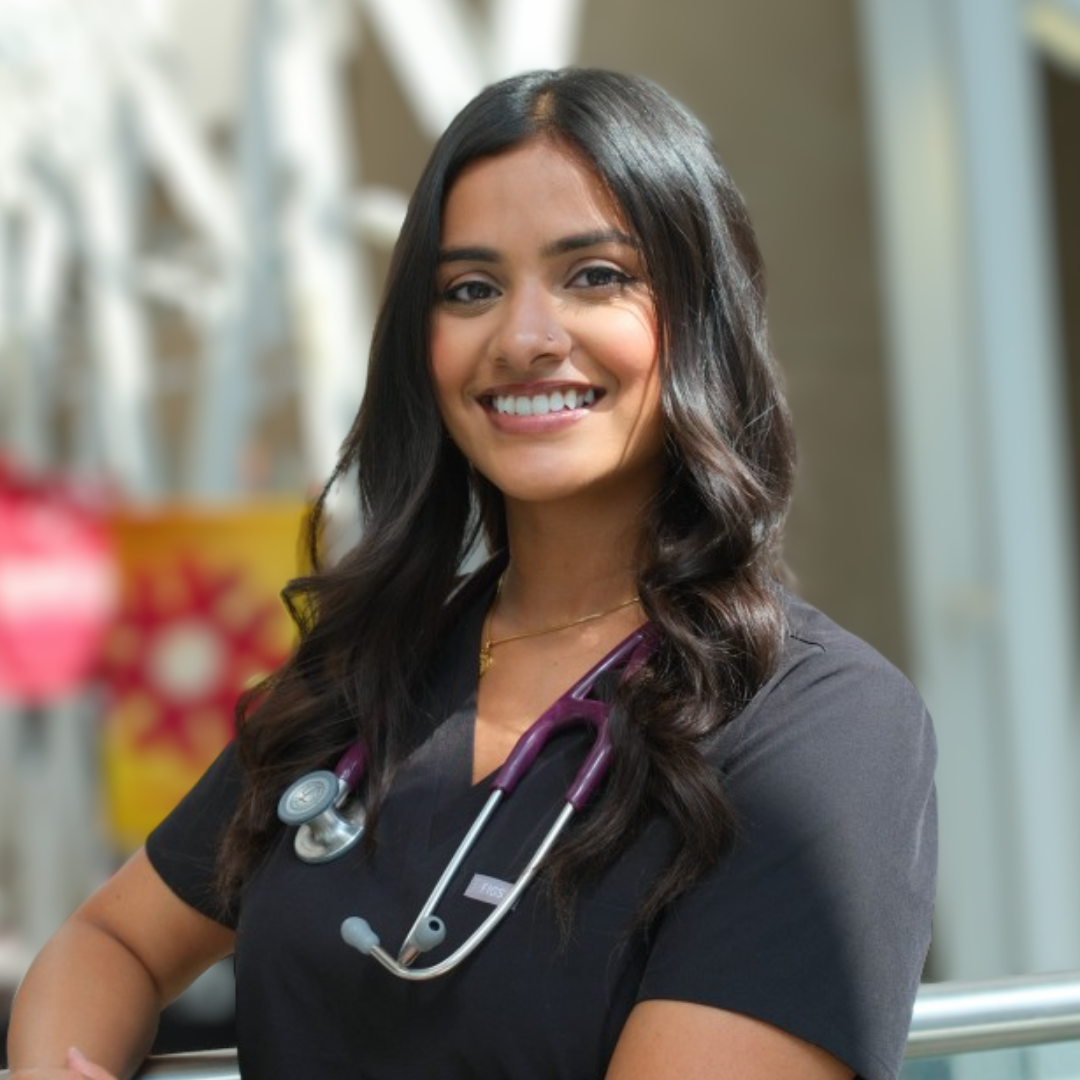
Episode #34: Nawal Arshi, Calgary PA-S1
Nawal's Journey as a 1st Generation PA School Applicant
In this episode, we sit down with Nawal Arshi, a member of the inaugural MPAS class at the University of Calgary. Her desire to pursue PA was influenced by her lived experience as an immigrant helping her parents navigate the Canadian healthcare system.
Nawal shares how she built a competitive application through networking, patient care experience, and academic persistence. This includes tips for Pre-PAs, and how she manages some of the realities and challenges of relocating to anew province for the MPAS progam.
WHAT YOU’LL LEARNHow to build patient care experience from scratch using networking, cold outreach, and strategic volunteering
What admissions committees look for beyond GPA, including reflection, communication skills, and community involvement
How to manage a multi-school PA application timeline
How to prepare effectively for Casper test and PA School interviews
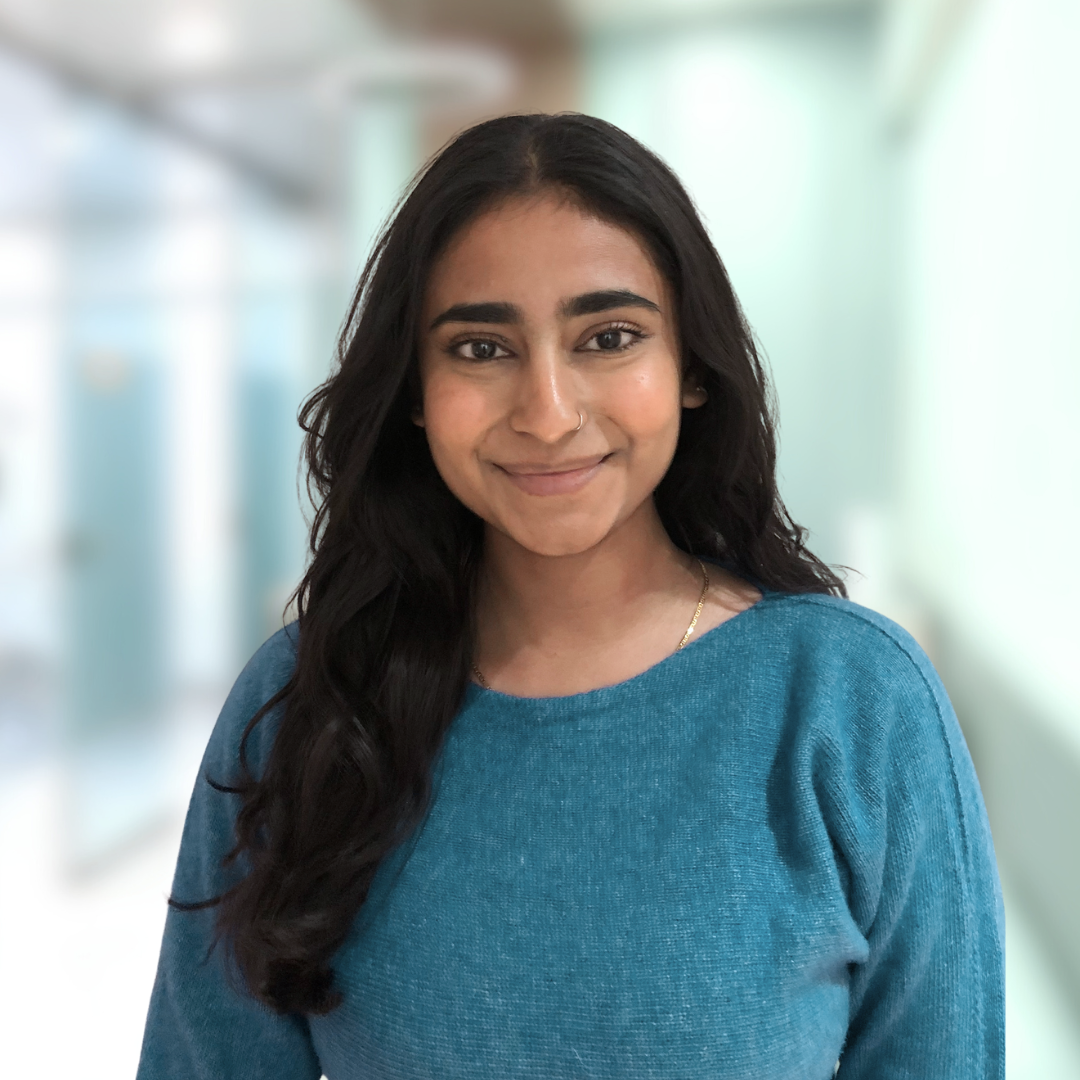
GUEST BIONawal Arshi is a first-year PA student at the University of Calgary's MPAS program and a proud member of the inaugural Calgary cohort. Originally from Toronto, she completed her undergraduate degree at Western University in Health Sciences with a minor in Disability Studies -- a combination that shaped her deep commitment to equitable, patient-centred care for marginalized populations. Before applying to PA school, she built her clinical experience from the ground up, working as a physiotherapy receptionist and occupational therapy assistant, largely through connections she built by putting herself out there on LinkedIn and Instagram.
CONNECT WITH NAWALEmail: nawal.arshi@ucalgary.ca
Instagram: @nawal_arshi

HOW TO SELF-REFLECT ON HCE“A key tip: keep a journal. After each shift, I’d write down the date, the patients I worked with, what I learned, and how it might connect to the PA role.
That reflection helped when it came time to write applications and prepare for interviews”
— NAWAL, PA-S1, Calgary MPAS
-
From Undergrad to Accepted PA Student
Anne[00:00:00] Nawal, it's nice to meet you. Can you tell us a little bit about yourself?
Nawal[00:00:04] My name is Nawal. I am originally from Ontario, Canada, and I grew up in Toronto for most of my life. For undergrad, I went to Western University where I studied health sciences and disability studies. After graduating, I explored different areas within healthcare. In terms of hobbies, I enjoy knitting and Lego. I am currently working on a sweater for the winter in Calgary, and I have small Lego sets around my room.
Anne[00:00:53] Can you tell us where you are now?
Nawal[00:01:01] I recently moved to Calgary for PA school at the end of August. I have been here for about two and a half months. I really love Calgary. It has a great balance of city life and nature.
Anne[00:01:23] What drew you to the PA profession? How did you first hear about it?
Nawal[00:01:31] I discovered the PA profession later in my healthcare journey. My interest in healthcare came from both my lived experience as an immigrant and my educational background. Navigating the healthcare system with my mom, who has a chronic illness, showed me how difficult access to care can be. I saw how language barriers and system limitations impact patient experiences. I also noticed how much of a difference it makes when a provider has time to support a patient. My background in health sciences and disability studies helped me understand how social identities intersect and impact healthcare access, especially for marginalized populations. When I found the PA profession, it aligned perfectly with my goals. I wanted to improve access to care, support underserved populations, and provide patients with more dedicated time. I first came across it on Instagram, explored further, shadowed a PA, and knew it was the right fit for me.
Exploring Career Paths: Why PA Made Sense
Anne[00:04:23] Were there any other healthcare careers you were considering?
Nawal[00:04:32] I explored a few different fields. Initially, I was interested in medical school because that was the main path I knew. I worked in a primary care office and also as a physiotherapy receptionist, which exposed me to different areas. My most recent role was as an occupational therapy assistant, which I seriously considered for about a year and a half. I really liked the creativity involved in OT. However, once I learned about the PA profession, I knew it was the best fit for me.
Gaining Health Care Experiences from Scratch
Anne[00:05:16] Was it challenging to find healthcare experience hours, and how did you make the most of them?
Nawal[00:05:27] Healthcare experience is extremely important for PA programs. At the time, I saw it as something to check off, but now I understand why it matters. We transition quickly into the curriculum, so having patient interaction and interprofessional experience is essential. I was nervous about finding these opportunities and unsure what counted as patient care experience. What helped most was building connections. I spoke to people in environments I was already part of. For example, I connected with my physiotherapist, shared my interests, and she referred me to a clinic where I became a receptionist. For my occupational therapy assistant role, I reached out to clinics on LinkedIn. It can feel uncomfortable, but the worst outcome is no response. The best outcome is a great opportunity. I initially started as a volunteer, which helped me build trust and relationships. When I transitioned into a paid role, I was given more responsibility because they already knew me. To make the most of my experiences, I kept a daily reflection journal. I documented patient interactions, what I learned, and how each experience related to the PA role. This made it much easier when preparing applications and interviews because I had a clear record of my experiences.
Securing Strong References with Limited Connections
Anne[00:09:58] Can you tell us about your process for securing references?
Nawal[00:10:02] Asking for references can feel intimidating, but maintaining strong relationships makes it easier. From my occupational therapy assistant role, I built a close relationship with my manager. She saw my patient interactions, planning, and daily work, so she could provide a strong reference. I also wanted an academic reference, so I focused on building relationships with professors during undergrad. I had one professor from my disability studies course who I later worked with in research. She was able to speak to both my academic performance and my character, which made her an ideal referee.
Leveraging Extracurriculars in Your PA Application
Anne[00:12:00] What role did extracurriculars and community involvement play in your application?
Nawal[00:12:10] PA programs look for strong communication, time management, and community-oriented individuals. Extracurriculars help develop these skills. In undergrad, I was involved in student council and food support services. These experiences helped me understand community needs and how to support others. This directly relates to the PA role, where understanding patient needs and addressing gaps in care is essential. Extracurriculars also provided balance and supported my overall well-being, which is important during demanding academic periods.
Pre-PA Snapshot: My Application Stats
Anne[00:14:51] Can you tell us a little bit about your undergrad stats when you applied? Was this your first application cycle? What was your GPA, and roughly how many healthcare experience hours did you have?
Nawal[00:14:59] This was my first application cycle. My GPA was not strong in my early years, but I improved significantly in my final years after understanding my learning style. My cumulative GPA was around 3.7, and my last two years were closer to 3.9. Grades are important, but they are only one part of the application. Lived experiences and extracurriculars also matter.
In terms of patient care hours, I was on the lower end for some programs. I had around 350 hours by the time I applied. While more experience is helpful, quality and reflection are just as important.
Anne[17:34] Which PA schools did you apply to, and what was the outcome?
Nawal[17:41] I applied to all PA programs in Canada at the time -- McMaster, U of T, Manitoba, and then Calgary, which opened up in February as a very last-minute application. I'm so glad it worked out the way it did. I received acceptance into McMaster and then Calgary.
Choosing the Right Program: Why I Picked Calgary
Anne[18:09] How did you end up choosing between programs?
Nawal[18:15] It was genuinely challenging. McMaster was the school I originally thought I would attend. But a few factors shifted my thinking. I'm someone who believes it's not only important what you're doing, but where you're doing it. I had already experienced post-secondary education in an Ontario setting and I was ready for an adventure -- the West was somewhere I had always wanted to live. Beyond location, I looked carefully at curriculum structure. Both schools offered in-person learning, which matters to me because that's where I thrive. What drew me specifically to Calgary was the combination of large-group didactic learning and mandatory small-group case sessions. That's where things solidify for me. I also knew that as the first Calgary PA class, we were paving the way for future students. The specialists who come in to teach us are visibly excited about our cohort, saying they can't wait for us to graduate and join them. That energy felt unique and I really wanted to be part of it. Class size was also a deciding factor. McMaster had increased their class size significantly -- I believe to around 50 students. My Calgary cohort has only 20 people. That smaller environment means more one-on-one access to professors, a stronger sense of community, and relationships with every single one of my classmates. All of that together made Calgary the clear choice for me.
Managing Multiple PA School Application Timelines
Anne[22:13] Can you tell us how you prepared for the PA application process, beyond journaling and accumulating hours? What tips do you have for balancing all the moving parts?
Nawal[22:22] The application process can be exhausting and overwhelming, especially when you're applying to multiple schools. You're not writing one application -- you're tailoring each one to the school, making sure you're showing that you know what they're looking for and using the experiences that best match their values. That takes time and effort, but it is worth it.
The most important thing I did was start early. If you're working on something for even five minutes a day over a few months, it's so much more manageable than doing it the night before. Starting early also gives you space to experiment with what you want to say, what you like and don't like, and to revise multiple versions. I also made sure to get support from people who had already gone through the process -- mentors online, including Ann, and others who helped me work through the brainstorming of what I wanted to communicate as an applicant. That reflection piece alone was incredibly valuable.
I kept a checklist for each school -- everything that was required, plus reminders to give my referees adequate heads up before deadlines. Some schools like U of T also had surveys where you had to document and explain each healthcare experience separately, so accounting for those added components in your timeline is important. For U of T and Manitoba, I aimed to have my written application finalized at least a few days before the deadline so I could review it with fresh eyes. Calgary's application opened in February with a very tight turnaround, so that required a completely different pace -- more focused daily work. Having the content from my other applications to draw from helped, but tailoring it to Calgary's specific questions was still its own challenge. Creating a structured weekly schedule and working with people experienced in the Canadian PA application process made a real difference.
Anne[27:20] How soon did you hear back about interview invites?
Nawal[27:25] For McMaster, there's a Kira interview rather than a traditional interview format. They give you a written prompt on screen and you record your response within a set time. I believe I heard back about that in February. For Calgary, we heard back at the end of March, with interviews landing on Mother's Day. Generally you find out just a few weeks before your interview, which does give you some prep time. That said, I had already started preparing well before receiving any invites because I wanted to be ahead of the game. Interviewing is a difficult skill, especially with time constraints and different formats across schools, so early preparation matters.
Casper Test Prep
Anne[28:47] Did you also have to complete the CASPer test for any of the schools?
Nawal[28:52] Yes, I did the CASPer at the end of the previous year -- either November or December. I prepped extensively for it. I'll be honest: I don't think I did well on CASPer, and when I first saw my score I was really discouraged. Calgary and Manitoba both weight it heavily. But I'm here in school now, so one component of your application does not determine your outcome. That's an important thing to hold onto.
In terms of preparation, I focused on a few things. First, I read up on medical ethics -- the main book I used was Doing Good, which I found genuinely helpful for working through ethical dilemmas in healthcare. It teaches you to sit in the gray zones rather than look for a single right answer. Second, my friend and I practiced CASPer questions back and forth together -- she was also applying, so we would both respond to prompts and discuss our reasoning. Beimo has a large bank of practice questions and sample answers, which is a great resource. My main caution there is not to model your answers too closely to the sample responses. They often include more than you can realistically cover in the time given. Focus on hitting the key points, providing your reasoning, and -- if you have time -- connecting your answer to a lived experience.
On typing speed: I was worried about this too. I tried the online typing games to improve, but as someone who types more slowly, I wasn't going to make meaningful gains in one or two months. I pivoted to focusing on being more concise -- communicating the essential information efficiently rather than trying to type faster. The real time-saver is having your reflections already organized in your head so you're not using your typing time to also figure out what you want to say.
Preparing for MMI Interviews: Strategies and Insights
Anne[36:18] Can you walk us through how you prepared for the PA school interviews?
Nawal[36:28] Knowing my CASPer results before interview season was actually useful because it told me I needed to change my approach. Moving away from the cookie-cutter, formulaic method of answering questions and building my own strategy was the real shift. CASPer had been helpful for working through medical ethical scenarios, but for the MMI and Kira I leaned much more into my personal experiences and how they connected to the specific school I was interviewing for.
For McMaster's Kira interview, I used a more structured response format -- identify the question, give a direct answer, then link it back to myself as a candidate. That anchor to your own experience is important. I also tailored my answers to what McMaster specifically offers. For example, I spoke about how my exposure to both online and in-person learning helped me identify that I learn best in-person, and how I had experience with problem-based learning in undergrad, which aligns with McMaster's model.
Calgary's MMI was a different format entirely -- you have more time per question and there's a live interviewer on the other side of the screen. That changes the dynamic significantly. To prepare, I mimicked that environment as closely as possible, practicing on Zoom and Teams with different people so I was comfortable looking into a camera while still engaging naturally. I also shifted my response style -- instead of compact, concise answers, I learned to develop my reasoning more fully, walking through different perspectives and explaining my thinking. I practiced every other day with a different person, which was intentional. You want to be understood by someone with healthcare experience and by someone with none, because your reviewers in an MMI can come from anywhere. Watching videos of others working through MMI questions for timing and argument structure also helped me build that framework.
Developing Professional Communication Skills
Anne [40:44] You seem very comfortable speaking -- your eye contact, your flow of words, your overall presence. How did you develop that skill and what advice would you have for people who want to communicate more effectively?
Nawal [40:56] Communication is one of the most important skills you can have -- not just for interviews, but as a student working with peers and professors, and eventually as a clinician. For me, it developed early because of my involvement in extracurriculars. I got involved in student council as far back as middle school, and presenting to people was actually something that terrified me as a kid. But putting myself in situations where I had to do it repeatedly is what changed that. By university I was actively seeking those opportunities -- I participated in healthcare case competitions where we would develop solutions to emerging healthcare problems and present them to panels, sometimes competing for scholarships or project funding. Those experiences did the most to make me comfortable speaking in front of others.
Translating that comfort to an online setting is its own challenge. For interview prep, I practiced consistently on Zoom and Teams with different people -- PAs, PA students, and family members -- so that I became comfortable looking into the camera, stopping myself from staring at my own image on screen, and staying engaged even through a screen. That specific kind of practice matters more than people realize.
Relocating and Starting PA School in Calgary
Anne [43:51] Can you speak to what that transition looked like -- moving provinces and starting PA school at the same time?
Nawal [43:58] It was a huge transition with a lot of layers. Moving was an intentional choice for me -- I know I grow most when I'm out of my comfort zone, and I had already experienced post-secondary education in Ontario. I was ready for something new. That said, it is still a big adjustment. The weather alone in Calgary is a completely different experience. I had my first Chinook just recently, which was exciting -- for anyone who doesn't know, it's this warm air that passes through on an otherwise cold day, which was a genuinely cool experience.
But in terms of the bigger transition, what has helped me most is my cohort. My classmates are exceptional people. Everyone is going through some version of a major life change, and that shared experience builds bonds very quickly. For those of us who moved from Ontario, there's a particular connection -- we all know what we left behind and what it took to get here. Leaning on each other has been the most important thing.
Beyond that, I would say: stay connected with the people who know you best. I talk to my parents every day. I have friends I call weekly. I even hop on Zoom to knit with my old knitting group from Milton when I can. Those connections ground you. And give yourself real permission to settle in. For the first month and a half I could not maintain my regular hobbies or routines -- the curriculum moves fast, independent living takes energy, and it all adds up. That is normal. By about six weeks in, things started to fall into place. I was back at the gym, back to hobbies, back to feeling like myself. Be kind to yourself in that window. It comes together.
One more thing worth saying: in the PA program, your entire cohort is together for only one year before second year placements begin. So I am very intentional about making time with my classmates -- after our Friday quizzes, on weekends, wherever the opportunity arises. That time is finite and worth protecting.
A Day in the Life: Calgary MPAS Year 1
Anne [49:07] Can you share what a typical day or week looks like as a first-year PA student at Calgary?
Nawal [49:14] Calgary's curriculum runs on a two-day rotation structure. Mondays, Wednesdays, and Fridays are our fundamentals courses -- physiology, diagnosis, and management of conditions -- followed by afternoon foundations sessions covering things like ethical principles in healthcare and social determinants of health. Tuesdays and Thursdays are medical skills and small group sessions.
My classes run from 10:00 a.m. to 5:00 p.m. I wake up around 6:30 or 7:00 to review material before class so I feel more engaged and can participate in discussions. On Monday, Wednesday, and Friday mornings I try to get to the gym first -- I find it genuinely helps my concentration in class. After the school day, I give myself a real break: cook, eat, watch something if I can, then go into studying. Jumping straight from a full day of class back into material is unsustainable. I study for a few focused hours in the evening and try to be in bed by 11:30 or midnight.
Because we have a quiz every Friday, I use Mondays or Tuesdays for something enjoyable after school to break the rhythm. Last week I went to an anatomy art workshop and made a little pottery skull with classmates, which was a great way to decompress.
The medical skills sessions deserve a specific mention because they're different from anything in undergrad. Each week we work on a different physical examination with a simulated patient. On Monday evenings I meet with a small study group to walk through that week's exam step by step, compare notes on red flags, and get comfortable with the process before Tuesday's session. Going in prepared means you actually get the learning out of it rather than just trying to keep up.
Study Tools That Help Me Stay Organized and Focused
Anne [54:10] What study tools, apps, or resources are you using to stay on top of everything?
Nawal [54:10] Most people in the program use laptops or iPads. Tablets are popular because you can annotate directly on lecture slides, but there are still people who hand-write everything -- it really comes down to personal preference. For me, I take notes on my laptop because I can capture information faster in lecture than I can by hand. I organize everything in Google Drive, broken into courses with clear labels for each week and session so I can always find what I need.
One thing I strongly recommend: if you have access to the presentation beforehand, transfer that material into your own document format the night before class. In lecture, you're then only adding the supplemental points your professor communicates, rather than trying to transcribe everything from scratch. That system keeps me much more engaged and leaves me with organized notes I can actually use when I study.
When I go home and work through the material for real retention, I write things out by hand. Anything that requires memorization -- lab ranges, statistics, specific values -- I write out manually. For quick rote memorization I use Anki. I don't use it for every course because creating all the decks takes time, but for material that requires rapid recall it works well. So my overall system is a combination: typed notes in class, handwritten review at home, whiteboard diagrams, and Anki for targeted memorization.
How I Study: Adapting to the Demands of PA School
Anne [57:54] How would you say studying in PA school is different from undergrad?
Nawal [58:02] There are so many differences. In undergrad, the learning felt broad and big picture. In PA school, I'm finally deep in the material I've always been most passionate about, which brings a different kind of energy and excitement to learning. But the volume is significant -- the metaphor of drinking from a fire hose is accurate.
The biggest shift for me is how I approach the material. In PA school, I'm not just trying to learn information -- I'm asking myself: if this patient came in, what do I need to know? What do I need to rule out? What are the red flags and how do I differentiate between them? That clinical frame changes everything. It's not about memorizing facts; it's about understanding the reasoning behind why you're doing something. When I'm working through an OSCE, I want to know why I'm performing a specific test, what a negative result means, and why it would occur. Once you understand the why, connections form naturally. You start grouping tests together because you understand they point toward the same outcome. That kind of reasoning-based learning is much more efficient than rote memorization alone.
PA school also requires you to demonstrate your skills, not just write about them. Weekly quizzes are part of it, but a significant portion of your learning happens through performance -- in small groups, in simulated patient encounters, in case discussions. For anyone coming out of undergrad, that adjustment takes time, but you find your rhythm.
Making Group Study Effective in PA School
Anne [1:01:16] Is group learning formalized or are students organizing that independently?
Nawal [1:01:24] It's actually both, which works really well. Calgary builds formalized small groups into the curriculum -- for medical skills, we're placed into assigned groups each semester. The first hour of every med skills session is used to go through that week's examination together: what were the red flags, how do different sources describe performing certain maneuvers, what are the nuances. There are often multiple correct approaches, and learning from each other in that setting is incredibly valuable. Classmates who are paramedics, nurses, or have years of clinical experience bring a level of practical knowledge that you simply can't get from a textbook, and watching them perform a maneuver teaches you something different than reading about it.
We also have formalized afternoon small groups for case-based learning. We're given a patient presentation and work through it together -- what do we need to know, what labs and tests would we order, how would we approach treatment and management? That's the problem-based learning format, and it's where classroom theory meets real clinical thinking. What makes it especially meaningful is that people bring their lived experiences into those cases. A classmate might flag that we need to account for language barriers or limited resources for a patient who is a recent immigrant -- and that kind of contextual thinking is exactly what good patient care requires.
Outside of class, informal group study is just as important. For the OSCE and med skills, my friends and I practice together every day or every other day. Getting the physical examination maneuvers into muscle memory requires repetition with another person. We also share mnemonics, tips, and tricks. And there's something worth noting about the act of explaining -- when you take the time to walk a concept through for someone else, you learn it more deeply yourself. The social side of it matters too. You're all going through the same intensity together, and that shared experience builds real connection.
What to Expect from Clinical Placements
Anne [1:04:59] Can you tell us a little bit about your exposure to clinical placements as a PA student?
Nawal [1:05:06] We just had our first shadowing days, which was really exciting. Mine was in an orthopaedic specialty. The program is still working out how to structure these early shadowing opportunities, so my experience will likely look different from future classes. Right now it works through a designated shadowing week where we're given a list of specialties to sign up for -- PAs, physiotherapists, physicians, surgeons. You sign up and show up for your shadowing day. We also have the option to arrange our own independently.
For someone like me coming from Ontario without deep connections in Calgary, that's where leaning on classmates who have lived and worked here for years becomes useful. Our visiting specialist professors are also often open to having students shadow them. I'm already working on arranging my next shadowing week coming up.
For second year clinical placements, I don't have full details yet as the program is still developing that component. What I do know is that we'll go through the standard rotation structure that other PA programs follow, and there's an elective opportunity at the end to get focused experience in the area you're most interested in before entering practice.
Advice I'd Give Every Pre-PA Student
Anne [1:07:18] What overall advice would you give to someone thinking of applying to PA school or currently in the process?
Nawal [1:07:26] My main advice is to learn as much as you can about the profession before you apply. Reach out to people on Instagram or LinkedIn, shadow a PA if you can. I know it can be hard to find those opportunities, but the worst outcome is that someone doesn't respond. The best outcome is that you gain a real understanding of what the role looks like day-to-day, in different settings, and whether it's truly the right fit for you. You are making a significant investment of time, money, and energy -- you owe it to yourself to be sure.
Beyond that, build and protect your support system. The application process is a long journey with real highs and real lows. Having people around you who ground you is not optional -- it's essential. That support matters just as much once you're in school, especially if you've moved away from home. I'm a student, but I'm also a daughter, a best friend, a cousin. Keeping those relationships alive is what keeps things in perspective. Don't neglect homesickness or emotional exhaustion. Stay connected to the people who know you best and make you feel most like yourself.
Final Thoughts and Staying Connected
Anne [1:10:12] If students wanted to get in touch with you or with the Calgary Student PA Association, what's the best way to reach you?
Nawal [1:10:20] You can email me directly at nawal.arshi@ucalgary.ca or find me on Instagram. I'm genuinely happy to answer questions about the application process or what life is like at U of C -- reach out anytime. We also have a great social media team through our student association. You can message the Calgary MPAS student account on Instagram -- they can connect you with a student who's happy to share their experience or walk through application tips with you. The account is Calgary EMPASS -- follow us there to see what we're up to day-to-day. There's even a post about our curriculum schedule if you're curious about the program structure. Between direct messages, email, and the student association, there are plenty of ways to connect with someone who's been through it and wants to help.