Episode #35: Sonya P, Calgary MPAS
Sonya's Success after 3 PA Admissions Cycles
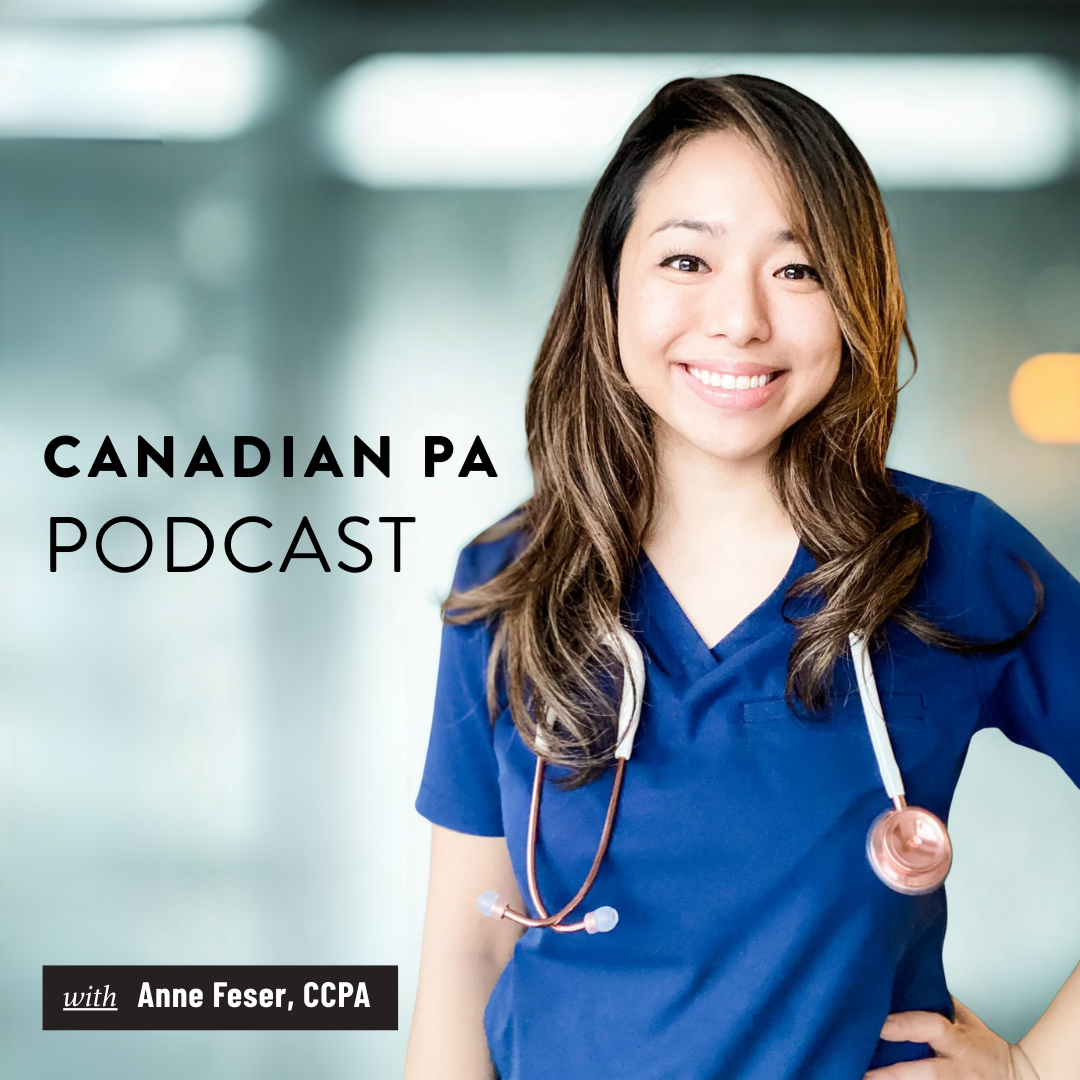
Sonya is a 1st year PA student at the University of Calgary MPAS and shares her journey into the PA profession. Originally from Stouffville, Ontario, her path to PA school was shaped by her family's struggles to access medical care when they first immigrated to Canada. Her experience navigating the healthcare system highlighted healthcare disparities, and motivated her to pursue a career where she could directly impact patients’ lives.
Many applicants hope that one strong admissions cycle is enough, but in reality as the PA profession gains more awareness in Canada, getting into PA school has become more competitive. Sonya applied 3 times and she reflects on how each PA admissions cycle forced her to refine something different, whether it was her GPA, experience and clarity.
During this conversation, Sonya breaks down what has helped her to move an application forward, what resilience looks like for re-applicants, and how to adapt when things don’t go your way the first time. s, emphasizing the importance of preparation and resilience in standing out among a competitive applicant pool.
She also shares what life is like inside of Calgary’s MPAS program, including how she adapted her study strategies. She shares her favourite study tools and the importance of of striving for work-life balance.
WHAT YOU’LL LEARNEffective strategies for navigating the competitive PA admissions process.
How to build an application that reflects a clear and credible “why”
Helpful strategies that have helped during first year of PA school
Maintaining consistency without burning out
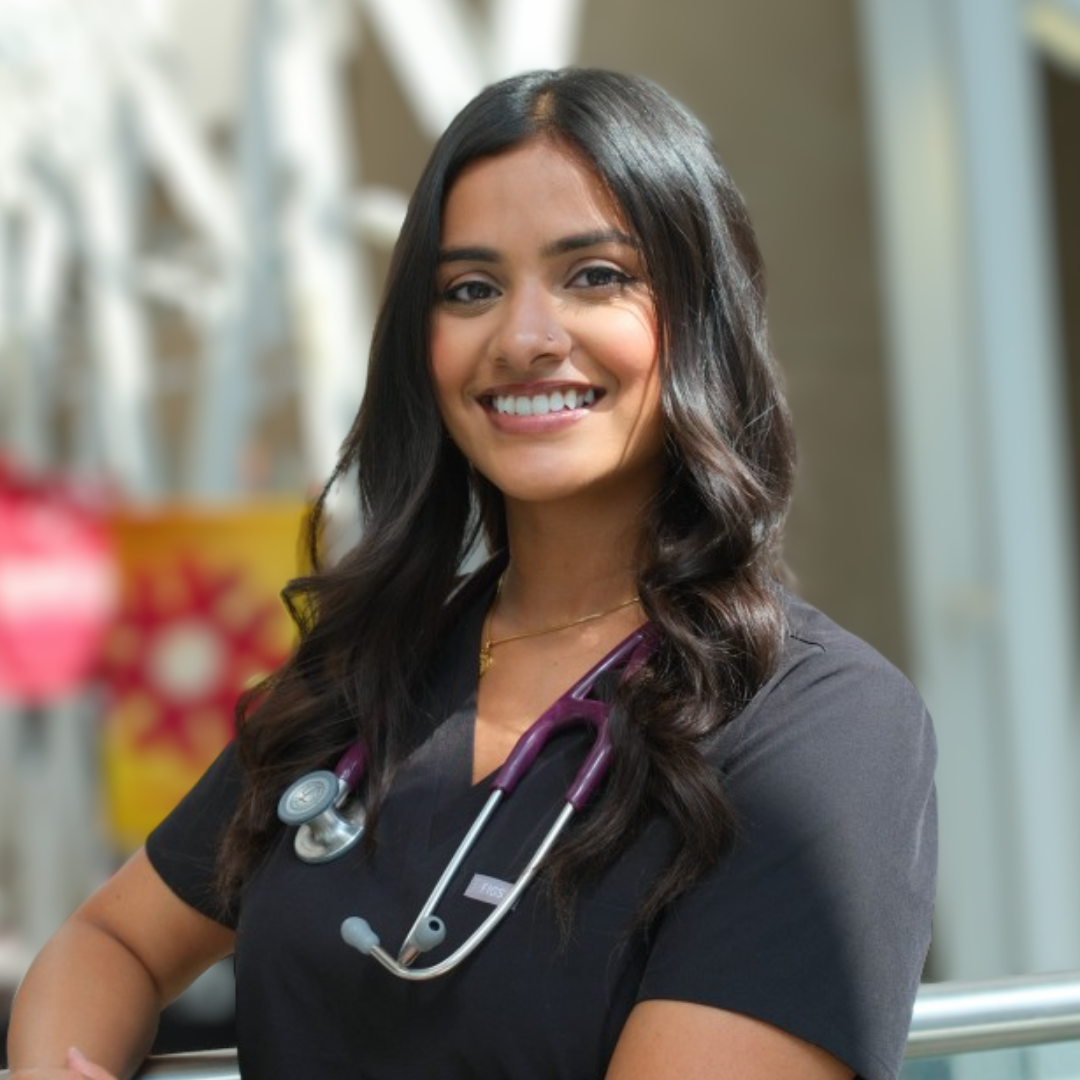
GUEST BIOSonya is a passionate Physician Assistant student at the University of Calgary, hailing from Stouffville, Ontario. She holds a degree in biology and psychology from Wilfred Laurier University, which has laid a strong foundation for her healthcare journey.
She has gained valuable experience in diverse clinical environments, including family medicine and optometry, where she developed her skills in patient care and communication.
Having navigated the challenges of multiple application cycles, she has emerged not only successful but also deeply committed to mentoring and supporting future PA applicants, sharing her insights and experiences to help others on their paths to becoming healthcare professionals.
PA PROGRAM SPOTLIGHTCalgary Master of PA Studies
Calgary, Alberta
Duration: 2 years
Class Size: 20 students
Term Start: September
Established 2023
-
Meet Sonya
Anne[00:00:00] Can you tell us a little bit about who you are and about you?
Sonya[00:00:06] My name is Sonya. I'm a physician assistant student at the University of Calgary. I'm from Ontario, from a small town called Stouffville. I moved to Calgary to start the Master of Physician Assistant program.
For my medical experience, I've worked in a variety of healthcare settings including family medicine, optometry, and internal medicine. I also have volunteer experience at a hospital where I completed my undergraduate degree. I studied biology and psychology at Wilfred Laurier University.
Anne[00:00:38] How did you first hear about the PA profession?
Part 2: The Pre-PA Journey
Sonya[00:00:43] I heard about the PA profession in 2018 while completing a course at Wilfred Laurier University called Health Issues, where we learned about different healthcare professions in Canada. That’s when I first heard about it and became interested.
I started looking into programs like U of T and McMaster, and I also came across your page. From there, it was just a matter of finishing my undergrad and applying.
Anne[00:01:08] Were you considering other careers or professions apart from PA?
Sonya[00:01:13] In my first year of undergrad, I wasn’t considering anything specific. I went in with an open mind and wanted to explore my options.
Once I heard about the PA profession, I decided that was what I wanted to pursue. Everything I did moving forward was focused on meeting the requirements for PA school, whether that was healthcare experience or specific courses.
Anne[00:01:51] That’s really interesting because most people don’t find out about PA until later in undergrad. What specifically drew you to the profession?
Sonya[00:02:10] For me, it was personal experience. When my family immigrated to Canada, we struggled to find a family doctor. We were on multiple waiting lists and had difficulty accessing care.
I saw how those barriers affected my family. Even something as simple as getting vaccinations for school created stress. That experience made me want to be part of a profession that helps reduce those barriers.
I saw the PA role as a way to bridge gaps in the healthcare system by reducing wait times and improving access for patients.
Standing Out as a Competitive PA ApplicantAnne[00:03:21] Did you have an opportunity to shadow or speak to PAs before applying?
Sonya[00:03:29] Yes. I completed two virtual shadowing experiences during COVID with PAs trained at U of T and McMaster.
I also learned a lot through online content, including videos and social media, which helped me understand what PAs do in Canada.
Anne[00:04:02] Can you remind us what you studied in undergrad and share more about your experiences and extracurriculars?
Sonya[00:04:11] I completed my undergraduate degree at Wilfred Laurier University. I double majored in biology and psychology and minored in chemistry.
In my final year, I completed a thesis research project, which gave me hands-on experience working under a professor.
I was also very involved in extracurriculars. I joined the Laurier Biology Association and Laurier Against Childhood Cancer. I also attended the Canadian Undergraduate Conference on Healthcare.
These experiences allowed me to develop leadership, communication, and collaboration skills.
Anne[00:05:00] What were your stats?
Sonya[00:05:00] The University of Calgary looks at your last two years of undergrad. My GPA for those years was 3.7.
They take a holistic approach, so GPA is just one part of the application.
Anne[00:05:28] How did your extracurriculars help you become a competitive applicant?
Sonya[00:05:39] I joined clubs early in my undergrad to meet people and build connections. Through those experiences, I developed skills like leadership, communication, and teamwork.
These were valuable not only for my application but also for building meaningful relationships with peers who were pursuing similar paths.
Navigating the PA Admissions Process
Anne[00:06:50] Which PA programs did you apply to and how many times did you apply?
Sonya[00:07:02] This was my third application cycle.
In my first cycle, I applied to the University of Toronto, McMaster, and the University of Manitoba. In the following cycles, I applied to U of T and Manitoba again, and in my final cycle, I applied to Calgary as well as a few schools in the United States.
I’m really happy everything worked out the way it did.
Reapplying to PA School – Tips
Anne[00:07:38] What advice would you give to applicants who don’t get in on their first try?
Sonya[00:07:55] Not getting accepted the first time was very difficult for me. I assumed I would finish undergrad and get into a program right away.
What helped me was connecting with other pre-PA students. I realized that many people go through multiple application cycles. That helped normalize the experience.
Now that I’m in PA school, I can see the value of that time. I gained more healthcare experience, improved my GPA, and matured personally.
Everything worked out the way it was supposed to. Whether you get in on your first try or not, you can continue to strengthen your application.
Interview Preparation & Acceptance
Anne[00:10:04] How did you work on your soft skills like communication and interviewing?
Sonya[00:10:19] The University of Calgary was my first interview, so I didn’t have prior experience.
I developed my communication skills through my undergraduate experiences, including presenting my thesis and leading events as president of the Biology Association.
Before the interview, I practiced daily with mentors, other students, and on camera. That repetition helped me feel more prepared.
Anne[00:11:39] How did you feel when you got accepted?
Sonya[00:11:42] I was extremely excited. I received the email earlier than expected and had to pull over while driving to read it.
It was one of the happiest moments of my life. I went home and surprised my parents to celebrate.
Applying as an Out-of-Province Applicant
Anne[00:13:06]
What was your experience applying and moving to Calgary?Sonya[00:13:14]
I wasn’t sure how many seats were available for out-of-province students, but I applied anyway.Moving to Calgary was a big transition. I had to find housing, plan travel, and move across the country. Being far from my family has been challenging, but overall the experience has been very positive.
Calgary MPAS Admissions Overview
Anne[00:14:43]
Can you walk us through the admissions process at Calgary?Sonya[00:14:49]
The process is a bit different from other schools. They focus on your last two years of GPA, and you need to calculate and submit it yourself.They also require the CASPer test, patient care experience, and two reference letters.
After acceptance, I completed an Indigenous course before starting the program.
Casper Test
Anne[00:16:44] Can you explain what CASPer is?
Sonya[00:16:49] CASPer is an assessment tool used by some PA schools in Canada and the United States. It’s designed to evaluate your morals, values, and how you approach different situations.
It includes both written and video responses completed online, usually over about an hour and a half, across multiple scenarios. It’s an important requirement for programs like Calgary.
Anne[00:18:02] Did you prepare for CASPer the same way you prepared for interviews?
Sonya[00:18:06] I wrote CASPer three times since this was my third application cycle. The first time, I prepared for about a month, practicing daily with written and video responses.
For my second and third attempts, I only prepared for a few days because I was already familiar with the format. That experience made a big difference.
Obtaining Strong References
Anne[00:19:07] Do you have advice on how applicants can secure strong references?
Sonya[00:19:15] Getting involved early is key. Through my extracurriculars and healthcare work, I built relationships with professors and physicians over time.
When it came time to ask for references, I had multiple options, which was helpful. I also made sure to ask well in advance. I approached my referees months before deadlines so they had enough time.
It’s important to choose people who truly know you and can speak to your abilities, not just confirm that you worked somewhere.
Anne[00:21:26] Did you provide them with any supporting materials?
Sonya[00:21:34] Yes. I provided my transcript and CV to my professor so he could speak to both my academics and experiences.
For my supervising physician, I shared my CV. Providing that context helps them write a stronger, more detailed letter.
Life Inside Calgary’s PA Program
Anne[00:22:38] You’re now a first-year student. When did your program start, and what has the experience been like?
Sonya[00:22:45] We started on August 26, 2024. The experience has been amazing.
Every day still feels surreal. My classmates and I often talk about how we’ve worked toward this for years, and it’s incredibly rewarding to finally be here.
The faculty, preceptors, and overall learning environment have all been excellent.
Calgary MPAS Structure
Anne[00:23:50] Can you walk us through the structure of the program?
Sonya[00:23:58] The program follows a spiral curriculum, meaning each week focuses on a specific theme or system, and concepts are revisited over time.
For example, one week might focus on care for the elderly, covering topics like osteoporosis, falls, and frailty.
Our schedule includes large group lectures on Mondays, Wednesdays, and Fridays from 10:00 a.m. to 12:00 p.m. In the afternoons, we have a course called Foundations, which covers professional aspects like ethics and the PA role.
Tuesdays and Thursdays are dedicated to small group learning, clinical skills, and simulation labs. We work in small groups of about five students, which allows for hands-on practice and application of knowledge.
Approaching Studying for PA School
Anne[00:27:28] How do you study within this type of curriculum?
Sonya[00:27:47] My study approach has changed significantly from undergrad. The volume of content is much higher.
I use different tools depending on the topic. Early on, I used Anki for memorization-heavy content. Later, I shifted to Quizlet, flowcharts, and summary maps.
I adapt my methods based on the weekly theme. That flexibility has been important for keeping up with the material.
Study Tools for PA School
Anne[00:31:04] Do you use an iPad or prefer other tools?
Sonya[00:31:10] I use an iPad, but many of my classmates use laptops or pen and paper. There’s no single right way.
I find my iPad helpful for clinical skills and note-taking, while I use my laptop during lectures for faster typing.
Anne[00:31:55] What apps do you use for note-taking?
Sonya[00:32:02] I use GoodNotes. I organize everything by course and by week, which makes it easy to revisit previous material and integrate it with new topics.
PA Exam Preparation Strategy
Anne[00:32:29] How do you prepare for exams?
Sonya[00:32:42] We have weekly quizzes every Friday, which helps keep us on track.
I review material the same day I learn it. Then on Thursdays, I consolidate everything and test myself.
For testing, I use tools like Quizlet, practice questions, and sometimes create my own questions. I also make sure to verify any information I use from external resources.
Organizing Her Week
Anne[00:33:59] Can you walk us through how you manage your time during the week?
Sonya[00:34:47] I structure my week around staying consistent with daily review. Instead of cramming, I focus on reinforcing material each day so that by the end of the week, I’m reviewing rather than relearning.
That approach helps reduce stress and keeps me on top of the workload.
Day in the Life
Anne[00:34:47] Can you walk us through a typical day and how you manage your time?
Sonya[00:34:57] I’ll go through Mondays because I really enjoy how I’ve structured them. I wake up around 8:00 a.m. since classes start at 10:00 a.m. Breakfast is very important to me, so I always make sure I eat before class.
I walk to school, which takes about 10 minutes. We have lectures from 10:00 to 12:00, then a one-hour break. My friends and I use that time to fully disconnect and recharge.
From 1:00 to 4:00 or 5:00 p.m., we have our Foundations session or sometimes shadowing. After school, I go to Pilates on certain days as a mental and physical reset.
In the evening, I review the material from that day. I also meet with classmates to practice clinical skills for the next day. Then I have dinner and aim to be in bed by 11:00 p.m.
Work Life Balance in PA School
Anne[00:37:52] How do you maintain work-life balance with such a demanding schedule?
Sonya[00:38:07] Before starting PA school, I learned to prioritize what matters to me. For example, having a good meal in the morning makes a big difference in how I function throughout the day.
I also make time for exercise, meal prepping, and activities I enjoy, like Pilates. Maintaining those routines has been important.
The biggest challenge has been being far from my family. Since I’m in Calgary, I can’t see them regularly, so I stay connected through FaceTime and visit when I can.
Overall, it’s about continuing the habits that grounded me before starting PA school.
What to Expect 2nd Year of PA School
Anne[00:40:02] What happens in second year?
Sonya[00:40:05] Second year is primarily clerkship, similar to other PA programs. We rotate through different specialties for four to six weeks at a time, followed by electives.
I’m really looking forward to that because I enjoy applying what we learn in real clinical settings. Shadowing has already been one of my favorite parts of the program.
Exploring Specialties
Anne[00:41:11] Have you thought about what specialties interest you?
Sonya[00:41:15] Yes. Before starting, I had some ideas based on my previous experience. I’m very interested in women’s health and fertility.
I’ve also developed an interest in family medicine and endocrinology through shadowing. I know this could change during clerkship, but those are my current interests.
Looking Forward to PA Practice
Anne[00:42:28] Are you excited to start working as a PA?
Sonya[00:42:32] I’m very excited. It still feels far away, but I know it will come sooner than I expect. It’s something my classmates and I talk about often.
Educating Others About the PA Role
Anne[00:42:52] How did your family react when you told them about becoming a PA?
Sonya[00:43:00] At first, they didn’t fully understand the role. But since I went through multiple application cycles, they became more familiar with it over time.
Now they’re very supportive and even explain the profession to others. It’s about educating the people around you.
Advice for Pre-PA Applicants
Anne[00:44:07] What advice would you give to applicants?
Sonya[00:44:16] This is a very individual journey. It’s easy to compare yourself to others, especially if you don’t get in on your first try.
Focus on your own path and make decisions that align with who you are. Build experiences because they matter to you, not because you think they will make you a stronger applicant on paper.
Addressing Gaps in Your Application
Anne[00:45:18] What would you say to someone concerned about a lower GPA or limited healthcare experience?
Sonya[00:45:30] For GPA, there are always options. Some people take additional courses or pursue a master’s degree. I personally retook courses to improve mine.
For healthcare experience, start somewhere. I began by volunteering at a hospital and later applied to jobs through platforms like Indeed. Once you get your foot in the door, more opportunities follow.
Managing Deadlines for PA Admissions
Anne[00:47:15] How do you manage all the moving parts of applying?
Sonya[00:47:32] Organization is key. During my applications, I created an Excel sheet listing each school’s requirements and deadlines.
I set personal deadlines ahead of the actual ones to stay on track. Submitting early reduces stress and helps you stay in control of the process.
Closing
Anne[00:48:54] Thank you so much for sharing your experience.
Sonya[00:49:10] Thank you for having me. I’m always happy to connect with students who have questions. I found these conversations helpful during my journey, so I’m glad to give back.
I’m excited to see future applicants succeed and hopefully become colleagues one day.