Episode #33: Anithra & Jayden, Calgary PA-S1
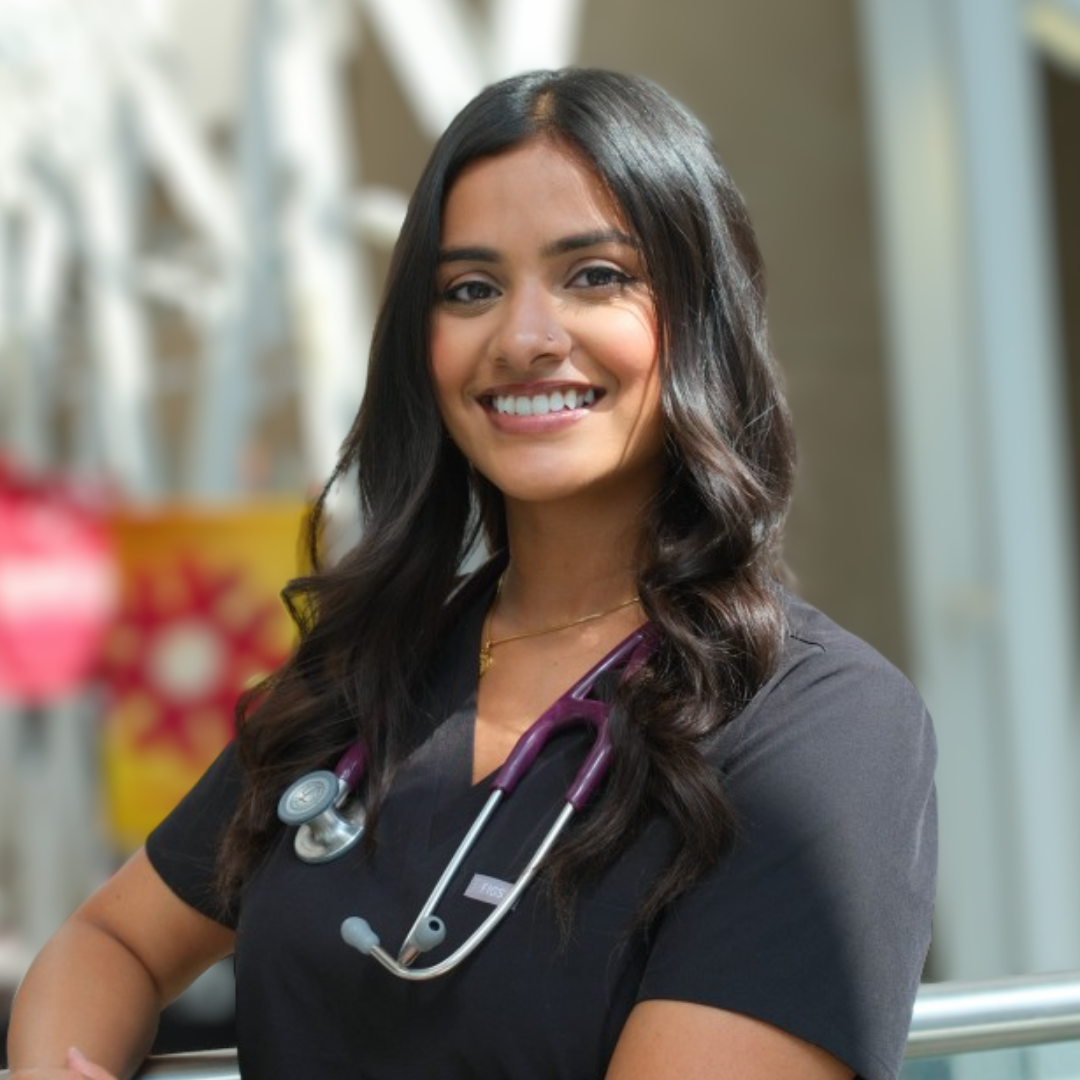
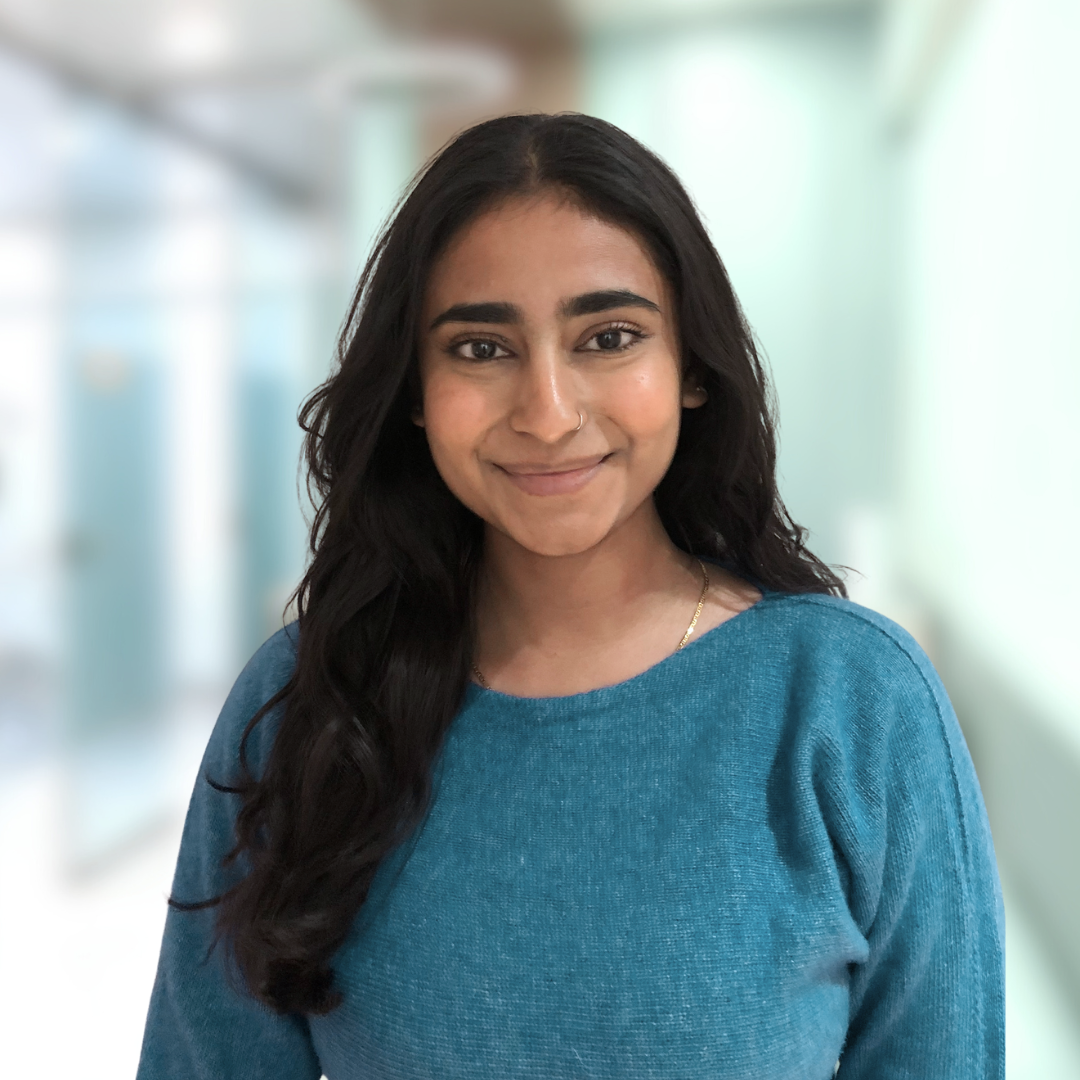
Anithra and Jayden are first-year students in the Master of Physician Assistant Studies (MPAS) program at the University of Calgary. In this episode, they walk through what it actually looks like to be a first-year PA student at UCalgary, from the structure of the two-year program to the texture of a typical week. They also break down each of the four core course components, including PA Fundamentals, Foundations of Practice, Simulation Lab, and Small Group Learning, and explain how the spiral curriculum is designed to reinforce and deepen clinical reasoning over time. They also cover the full Calgary MPAS admissions process, including GPA requirements, CASPer, the personal statement, parallel admissions pathways, and the MMI interview format.
WHAT YOU’LL LEARNHow the UCalgary MPAS program is structured across two years
What each core course component covers, how simulation labs and small group learning helps students build clinical reasoning skills
How to navigate the Calgary MPAS admissions process
What kind of clinical experience counts toward your application, and how to think about workload, study strategies, and sustainable habits once you are inside the program
GUEST BIOSBoth Anithra and Jayden are now in their first year of the MPAS program at the University of Calgary, navigating a demanding spiral curriculum that spans PA Fundamentals, Foundations of Practice, Simulation Lab, and Small Group Learning. They are among a small cohort of 20 students selected through a competitive admissions process that includes GPA screening, CASPer, an MMI interview, and a personal statement review. In this episode, they offer one of the most candid and detailed inside looks at the UCalgary program available to pre-PA students today.
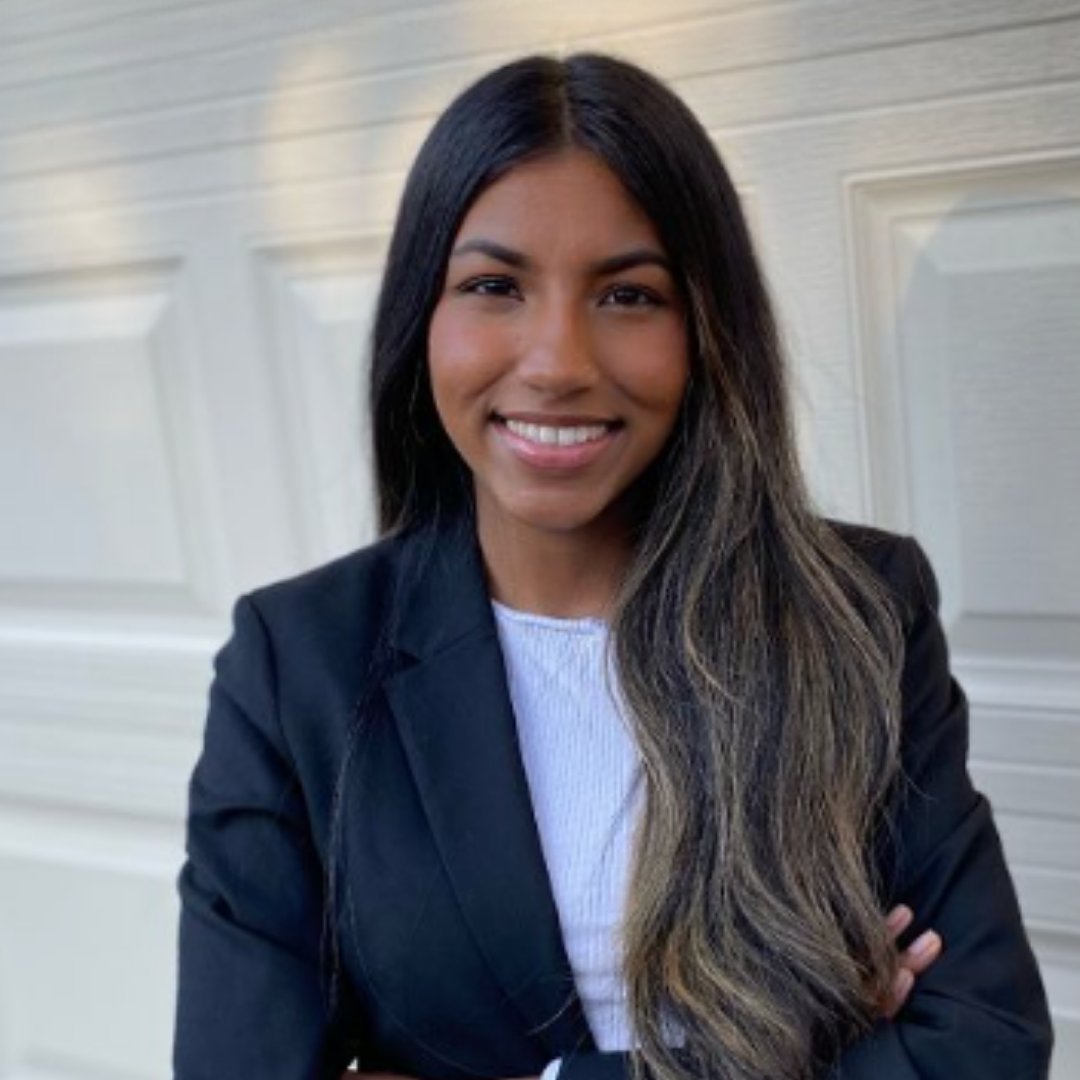
ANITHRAAnithra completed her undergraduate degree in Biomedical Sciences at the University of Waterloo before earning a Master's in Health Science at Western University. Her patient-facing experience spans a COVID-19 vaccine clinic and several years as a medical office assistant in a Rheumatology clinic, where long specialist wait times and gaps in primary care access became her motivation to pursue the PA profession. She came to University of Calgary with a clear sense of purpose: to help fill the healthcare gaps she had watched her own family navigate firsthand.

ABOUT JAYDENJayden studied Genetics at the University of Manitoba and built her clinical foundation entirely through volunteer work, including roles at Cancer Care Manitoba, Ronald MacDonald House, and as a child life specialist supporting children with disabilities. Her path to PA school was shaped by a deeply personal experience watching her younger sister receive exceptional care alongside a PA, a moment that made the profession's impact tangible rather than theoretical. That experience drove her to seek out shadowing opportunities and confirm that PA was the right career for her.
-
Meet Anithra & Jayden
Anithra[0:01] My name is Anithra and I am a first year student here at the University of Calgary in the MPAS program. Jayden and I are going to do some quick introductions before we hop into it, so I'll talk a little bit about our backgrounds, what we did before we started PA school, and also why we decided to be a PA.
For my undergrad I went to the University of Waterloo in Biomedical Sciences. I then went on to do a Master's in Health Science at Western University. My two main healthcare experiences were working at a COVID-19 vaccine clinic and then working as a medical office assistant at a Rheumatology clinic for a couple of years before I came here.
In terms of why I wanted to become a PA, I really like the fact that PAs are able to help fill a gap in the healthcare system. I haven't had a family doctor for a couple of years and that's a really big barrier to healthcare, and I know that's a big problem many people face across Canada. When I worked in the Rheumatology clinic I really got a sense of just how difficult it is when patients have to wait a really long time to see both specialists and generalists. I think that had a really big impact on me and how I see healthcare. I really like the fact that PAs are able to fill in the gaps, help reduce those wait times, and help doctors out by increasing the number of patients that are seen. That was my main motivation for wanting to become a PA. I'll hand it over to Jayden.
Jayden[2:04] My name is Jayden and I'm a first year student at the University of Calgary in the MPAS program. I'm from Manitoba. I did my undergraduate degree at the University of Manitoba with a major in Genetics and a minor in Chemistry.
All of my healthcare experience was mainly volunteer. I worked with Learning Disabilities Manitoba, a swimming program to help children with disabilities, Cancer Care Manitoba, and as a child life specialist. I also did a lot of volunteer work with community programs teaching children dance and cheerleading.
The reason I wanted to become a PA was actually a personal family experience. I became inspired when my younger sister ended up being quite ill with a lifelong condition, and the care she received alongside a PA was incredible. That's where I saw firsthand what a PA does, how they increase access to care, and how they have more of a voice to help patients feel heard and advocate for their health. That really changed the care she received. From then on I wanted to get involved in this profession, so I volunteered and gained some shadowing experience with other PAs in the city, fell in love with the career, and I'm excited to pursue it moving forwards.
Calgary MPAS Program Overview
Program Overview
Anithra[4:12] I'll start with a quick program overview. If you Google University of Calgary MPAS Program, the website has a lot of really good resources including important dates if there's anything you want to follow up on later.
The mission of the program is to empower students with essential knowledge and skills, fostering an inclusive community of collaborative and compassionate physician assistants, with a focus on lifelong learning, ethical practice, structural competence, and diversity in healthcare, ultimately preparing graduates for transformative roles in the evolving healthcare landscape of Alberta and beyond.
In terms of the program structure, our first year is the didactic year where we are in school building a solid foundation, and our second year is all rotations. In first year we have three courses: Fundamentals, Foundations, and Clinical Skills, which run throughout the first 12 months. Jayden will go into more detail on that shortly.
In second year we complete mandatory rotations including Urban Family Medicine, Rural Family Medicine, Internal Medicine, Pediatrics, Obstetrics, Emergency Medicine, General Surgery, and Psychiatry. We also have two four-week elective rotations at the end. After that we graduate and are eligible to challenge the national PA certification exam, which qualifies us for registration with the College of Physicians and Surgeons of Alberta.
A Day in the Life of a Calgary MPAS Student
Jayden[7:15] I'll run through a day in my life as a PA student. I'll start with the weekend because it's easier to discuss in terms of how it sets up the week.
Saturday I take a day off from school if possible, unless there are heavy readings to get done. I also work a part-time job on Saturdays, get my errands done, and do my cooking for the week since I don't have much time for that during a busy week. Sunday is a heavy day of reading to prepare for classes on Monday and clinical skills on Tuesday.
For a typical weekday, I'm a morning person so I'm up around 5:00 AM, have my morning coffee, head to the gym, and try to get to the library by about 8:30 to study and prepare for the morning session. Around 10:00 we have either Foundations on Monday, Wednesday, Friday or Clinical Skills on Tuesday. We get a lunch break and then our afternoon consists of Foundations on Monday, Wednesday, Friday, or Small Group Learning on Tuesday and Thursday. After the school day I'm either at the library or at home studying about four to five hours at night and preparing for the next day.
Jayden[9:53] Our Monday, Wednesday, Friday schedule has PA Fundamentals in the morning and Foundations of Practice in the afternoon. Tuesday and Thursday are more hands-on and interactive, with Clinical Skills or Sim Lab in the morning and Small Group Learning in the afternoon.
Fundamentals is our overarching class where we learn anatomy, physiology, treatments, and diagnostics from a variety of professors, doctors, PAs, and other allied health professionals. Every week we're introduced to new people who are experts in their field. There's also a large focus on the social factors and challenges that patients and healthcare practitioners face within the healthcare system.
Foundations focuses on what it means to be a PA. We learn about the history of the profession, what it currently looks like, what we can and can't do as a PA, and the current standards of practice. There's also a large focus on ethics, social and structural determinants of health, and how to navigate ethical challenges that arise in a healthcare setting. On certain weeks we get class time to shadow PAs, allied health professionals, or MDs, which is something really unique to our curriculum. We get to do this right from the start, which helps us find a field we may be interested in and make connections while applying the skills we've been learning.
Our Simulation Lab is part of Clinical Skills. Whatever we're learning that week, we come in and work through a simulated case as a team. Someone takes a history, someone does a physical exam, and our professors facilitate the case by playing the patient. Some simulations are high fidelity and acute, requiring quick decision-making, while others are more chronic care and discussion based. When we're not running a full simulation, we use that time to practice specific skills. Last week our Thursday morning session focused on suturing, injections, and abscess drains.
Clinical Skills runs every Tuesday. We start with a group discussion about our weekend readings, reviewing red flags and key findings for a given disease presentation. Then within our group of five, roles are assigned: someone takes a history, someone takes vitals, someone does a physical exam, someone writes a SOAP note, and someone documents. We work with a standardized patient and then debrief with them afterward on how we did and how they felt during the exam. This allows us to learn and adjust our approach every single week.
Small Group Learning runs Tuesday and Thursday afternoons. We're given a case ahead of time with limited information. As a group we read through it together and work through how we would take a history, identify complications, order labs, and build a differential diagnosis. These cases are complex and draw on everyone's different backgrounds, which really solidifies the learning from our Fundamentals classes.
Calgary MPAS Admissions Breakdown
Anithra[17:03] I'll do a quick overview of admissions. The website has a lot of really good information so I'd encourage you to check it out. I'll just go through the key points here.
The first requirement is a four-year undergraduate degree from a recognized university. It doesn't have to be in a science-related field, though most applicants do come from a science background. What matters more is that you've met the course prerequisites and have a competitive GPA.
Speaking of GPA, the minimum is 3.0 on a 4.0 scale. That said, a 3.0 is the floor, not the target. The admissions process is competitive so you want to aim higher than the minimum if possible. They look at your cumulative GPA across your entire undergraduate degree.
The next requirement is two references. These should be from people who can speak to your clinical abilities, your character, and your potential as a healthcare provider. At least one should be from a healthcare professional who has worked with you directly. Make sure you're giving your referees enough time and context to write a strong letter on your behalf.
Anithra[19:30] The personal statement is a 500-word essay and this is your opportunity to tell the admissions committee who you are beyond your GPA and your resume. You want to speak to why you want to be a PA specifically, not just why you want to work in healthcare. Think about what experiences shaped your perspective and what you're going to bring to the profession.
Clinical experience is also a required component of the application. This can include volunteer work, paid positions, clinical placements from your undergraduate program, or shadowing. The key is that it needs to be patient-facing. You don't necessarily have to be the one providing direct medical care, but you do need to have had meaningful interaction with patients. There is no minimum hour requirement at UCalgary, but the quality and variety of your experiences matter.
Anithra[21:45] There are also a few additional requirements to be aware of. The first is proof of current CPR certification. Make sure yours is up to date before you submit your application. The second is a criminal record check. You'll need to provide this before starting the program if you're offered admission.
The indigenous education requirement is something you only need to complete after receiving an offer of admission, so you don't need to worry about it during the initial application process. It's a free self-paced online course through Coursera that takes roughly 10 to 20 hours. Most of our classmates completed it over the summer before the program started.
CASPer is an online situational judgement test that assesses non-cognitive skills and interpersonal characteristics. It's an important part of the application and the deadline falls around late January, so you want to get onto the CASPer website early and register for a test date as soon as the cycle opens. Missing the CASPer deadline means your application cannot be reviewed.
Calgary MPAS’ Parallel Admissions Pathway Explained
Admissions Breakdown
Anithra[17:03] I'll do a quick overview of admissions. The website has a lot of really good information so I'd encourage you to check it out. I'll just go through the key points here.
The first requirement is a four-year undergraduate degree from a recognized university. It doesn't have to be in a science-related field, though most applicants do come from a science background. What matters more is that you've met the course prerequisites and have a competitive GPA.
Speaking of GPA, the minimum is 3.0 on a 4.0 scale. That said, a 3.0 is the floor, not the target. The admissions process is competitive so you want to aim higher than the minimum if possible. They look at your cumulative GPA across your entire undergraduate degree.
The next requirement is two references. These should be from people who can speak to your clinical abilities, your character, and your potential as a healthcare provider. At least one should be from a healthcare professional who has worked with you directly. Make sure you're giving your referees enough time and context to write a strong letter on your behalf.
Anithra[19:30] The personal statement is a 500-word essay and this is your opportunity to tell the admissions committee who you are beyond your GPA and your resume. You want to speak to why you want to be a PA specifically, not just why you want to work in healthcare. Think about what experiences shaped your perspective and what you're going to bring to the profession.
Clinical experience is also a required component of the application. This can include volunteer work, paid positions, clinical placements from your undergraduate program, or shadowing. The key is that it needs to be patient-facing. You don't necessarily have to be the one providing direct medical care, but you do need to have had meaningful interaction with patients. There is no minimum hour requirement at UCalgary, but the quality and variety of your experiences matter.
Anithra[21:45] There are also a few additional requirements to be aware of. The first is proof of current CPR certification. Make sure yours is up to date before you submit your application. The second is a criminal record check. You'll need to provide this before starting the program if you're offered admission.
The indigenous education requirement is something you only need to complete after receiving an offer of admission, so you don't need to worry about it during the initial application process. It's a free self-paced online course through Coursera that takes roughly 10 to 20 hours. Most of our classmates completed it over the summer before the program started.
CASPer is an online situational judgement test that assesses non-cognitive skills and interpersonal characteristics. It's an important part of the application and the deadline falls around late January, so you want to get onto the CASPer website early and register for a test date as soon as the cycle opens. Missing the CASPer deadline means your application cannot be reviewed.
Parallel Admissions Pathways
Anithra[24:59] UCalgary also offers two parallel admissions pathways. The first is the Equity Admissions Pathway, which is designed for applicants from historically underrepresented communities. This includes visible and racialized minorities, individuals with disabilities, LGBTQ+ individuals, those from rural and remote communities, and those facing socioeconomic challenges. The second is the Indigenous Admissions Pathway, which is for applicants who self-identify as First Nations, Métis, or Inuit.
If you're applying through either of these pathways you'll write a 500-word essay describing your identity, your connections and affiliations with the identified community, and your reasons for wanting to become a PA. This essay replaces the standard personal statement, so you only write one essay regardless of which pathway you apply through. It's just tailored differently depending on your pathway.
One important thing to note is that applying through a parallel pathway does not exempt you from the other requirements. You still need the same GPA, the same references, and you still need to complete CASPer. These pathways are an additional way to contextualize your application, not a different standard.
Calgary MPAS Admissions Review Process
The Application Review Process
Anithra[27:05] The review process happens in stages. The first is administrative screening, where the admissions team confirms that your application is complete. This means your GPA meets the 3.0 minimum, your CASPer was submitted on time, your references have been received, and all required documents are in order. Think of this as making sure all your ducks are in a row before anyone actually reads your file.
If your application passes the administrative review it moves to comprehensive evaluation. At this stage everyone being reviewed has met the basic requirements, so the admissions team is now taking a deeper look. They're reading your personal statement more carefully, looking at your GPA more competitively relative to the rest of the pool, and assessing the quality of your clinical experiences and references to identify applicants who have the qualities they're looking for.
From there, selected applicants are invited to interview. This year the interviews were conducted online in an MMI format, which is a Multiple Mini Interview. You move through a series of stations with different questions and different evaluators at each one. This is consistent with how other Canadian PA programs conduct their interviews as well.
After interviews the admissions team combines the interview data with the application review to complete a final assessment. From the interview pool they select the top 20 applicants, offer them admission, and maintain a waitlist for any spots that open up. That's the full process from application to acceptance.
Q&A: Real Questions from Pre-PAs
Sonya[29:18] Hi everyone, my name is Sonia and I'm also a first year PA student at the University of Calgary. I'll be monitoring both the Facebook and the Zoom chat so you can start sending in your questions and we'll answer them to the best of our ability.
Sonya[29:51]First question from Facebook: if you apply through the parallel admissions pathway, are you writing two 500-word essays?
Anithra[29:56] No, it's just one essay. If you're applying through the parallel admissions pathway your essay is tailored toward the specific questions for that pathway, whereas if you're applying through the regular stream it's a more general personal statement. Either way it's just one essay.
Sonya[30:22] Next question: how much does the PA program cost per year?
Jayden[30:30] Currently tuition is about $20,000 per year. That's tuition alone. Second year is also around $20,000, so roughly $40,000 Canadian in total for the full program.
Sonya[30:51] If you graduate in Alberta, can you practice in other provinces?
Sonya[30:58] Both Anithra and I are from Ontario and Jayden is from Manitoba. If you graduate from the University of Calgary you can practice in any Canadian province or territory, you just have to confirm that PAs are able to practice there. PA regulation and recognition is increasing across Canada, which is really encouraging.
Sonya[31:19] What sorts of experiences did each of you feel helped prepare you most for this program?
Jayden[31:32] For me what I found most beneficial was gaining as much experience as I could across different fields. I volunteered with Ronald MacDonald House where I worked with a lot of families from rural areas in Manitoba who faced significant barriers to healthcare access when their children were sick. That gave me a lot of insight into the social factors that affect healthcare. I also found it really valuable to gain experience across different patient populations. At Cancer Care Manitoba I got patient-facing experience with parents and families navigating a really difficult time, and my work as a child life specialist taught me how to communicate with and support patients who couldn't always advocate for themselves.
Anithra[32:45] For me the most valuable experience was my time at the Rheumatology clinic because it was so directly relevant to what PAs do. I was working alongside a physician and seeing firsthand how a clinic operates, how patients are managed over time, and what the gaps in the system actually look like from the inside. That experience gave me a lot of material to draw on for my personal statement and for my interview, because I wasn't just describing healthcare in general terms, I had specific situations and specific patients I could speak to.
Sonya[33:50] Someone is asking about the MMI. Can you walk us through what that looked like for you?
Anithra[34:00] The MMI this year was online. You go through a series of stations and at each station you're given a prompt and a set amount of time to respond. Some stations are scenario-based where you're given a situation and asked how you would handle it. Others are more reflective or values-based. Each station has a different evaluator so you're being assessed by multiple people across the interview, not just one. The key is that they're not necessarily looking for a perfect answer, they're looking at how you think through a problem, how you communicate, and whether you demonstrate the qualities they're looking for in a PA student.
Jayden[34:58] I'd add that going in with a clear sense of why you want to be a PA specifically, not just why you want to work in healthcare, makes a big difference. A lot of candidates can speak to a passion for medicine but the MMI is where you need to show that you understand the PA role and that you've thought seriously about what it means to practice in that capacity.
Sonia[35:40] Someone is asking how competitive the program is and what the average GPA of accepted students looks like.
Anithra[35:50] We don't have the exact numbers for our cohort but I can say that a 3.0 is really the minimum and the competitive range is higher than that. The program only accepts 20 students so by nature it's quite selective. Your GPA is one piece of the puzzle but your clinical experiences, your personal statement, and your interview performance all factor in. Someone with a very high GPA but limited clinical experience and a weak personal statement is not necessarily more competitive than someone with a solid GPA and a really compelling application overall.
Sonya[36:45] Next question: is there anything you wish you had known before starting the program?
Jayden[36:52] I wish I had known just how important it is to find your study method before you arrive. The first few weeks are a real adjustment because the volume of material is unlike anything most of us had experienced before. I spent some of those early weeks trying different approaches and it took time to figure out what actually worked for me. If you can experiment with different study strategies while you're still in your undergrad, do it. Anki works really well for some people. For me it doesn't click at all. I learn best by drawing out concept maps and writing things out by hand. Knowing that before day one would have saved me a lot of time and stress early on.
Anithra[37:55] I'd say the same. I also wish I had been more intentional about building community before starting. We were thrown into a very intense program with 19 other people and the relationships you build in those first few weeks matter a lot. The people in your cohort become your study partners, your support system, and your sounding board when things get hard. Investing in those relationships early makes the whole experience more sustainable.
Sonya[38:50] Someone is asking whether it's possible to work part-time while in the program.
Jayden[38:57] I do work part-time. I work on Saturdays and it's manageable, but I want to be honest that it requires a lot of discipline and planning. I'm very protective of my Sunday study time because that's what sets up my whole week. If I let that slip it affects everything downstream. I wouldn't recommend working more than one day a week and even then you have to be really organized. It's doable but it's not easy and there will be weeks where the program has to come first.
Sonya[39:55] Next question: what does the cohort look like in terms of academic and professional backgrounds?
Anithra[40:05] We have a really wide variety. There are people who came straight from undergrad, people with master's degrees, at least one person with a PhD, and people from regulated healthcare professions like respiratory therapy and paramedicine who had to complete additional education on top of their undergraduate degree to enter those fields. The diversity of backgrounds actually makes the program richer because everyone brings different clinical knowledge and different perspectives to the small group sessions and simulations.
Sonya[40:48] Someone is asking what the supervised clinical experience looks like in second year and how placements are assigned.
Jayden[41:00] We haven't started rotations yet so I can speak to this only from what we've been told. The mandatory rotations cover Urban Family Medicine, Rural Family Medicine, Internal Medicine, Pediatrics, Obstetrics, Emergency Medicine, General Surgery, and Psychiatry. We also have two four-week elective rotations at the end of the year. In terms of how placements are assigned, I believe there is some element of preference involved but the program coordinates the placements. The rural Family Medicine rotation is one that a lot of students are really looking forward to because it gives you a very different kind of clinical exposure than you'd get in an urban setting.
Anithra [41:55] I'll just add that the elective rotations are a really exciting part of second year because that's where you get to explore a specialty you're genuinely interested in. Whether you already know what area you want to practice in or you're still figuring it out, those four-week blocks give you real clinical exposure in a field of your choosing, which can be really valuable for shaping your career direction after graduation.
Sonya [42:30] Someone is asking about the rural Family Medicine rotation specifically. Is it mandatory and where do students typically go?
Jayden [42:40] Yes, Rural Family Medicine is a mandatory rotation. In terms of where students go, I believe placements can be anywhere in Alberta and potentially other provinces depending on availability. The program coordinates those placements. It's one of the rotations people talk about a lot because the scope of what you see and do in a rural setting is often broader than in an urban clinic. You're seeing patients who have fewer specialists available to them and the PA or physician you're working with is often managing a much wider range of presentations.
Anithra [41:55] I'll just add that the elective rotations are a really exciting part of second year because that's where you get to explore a specialty you're genuinely interested in. Whether you already know what area you want to practice in or you're still figuring it out, those four-week blocks give you real clinical exposure in a field of your choosing, which can be really valuable for shaping your career direction after graduation.
Sonya [42:30] Someone is asking about the rural Family Medicine rotation specifically. Is it mandatory and where do students typically go?
Jayden [42:40] Yes, Rural Family Medicine is a mandatory rotation. In terms of where students go, I believe placements can be anywhere in Alberta and potentially other provinces depending on availability. The program coordinates those placements. It's one of the rotations people talk about a lot because the scope of what you see and do in a rural setting is often broader than in an urban clinic. You're seeing patients who have fewer specialists available to them and the PA or physician you're working with is often managing a much wider range of presentations.
Sonya [43:30] Next question: after graduation, what does the licensing process look like for a UCalgary grad?
Anithra [43:40] After we finish the two-year program we're eligible to challenge the Physician Assistant Certification Council of Canada exam, which is the national PA certification exam. Passing that exam is what qualifies you for registration with the regulatory college in the province where you want to practice. In Alberta that's the College of Physicians and Surgeons of Alberta. Each province has its own regulatory body so if you want to practice in Ontario or Manitoba for example, you'd register with the relevant college there. The key thing to know is that the certification exam is national, so the credential you earn is recognized across the country.
Sonya [44:45] Someone is asking whether UCalgary accepts international students or whether the program is only open to Canadian citizens and permanent residents.
Anithra [44:55] I honestly don't know the exact answer to that off the top of my head. I'd recommend going directly to the UCalgary MPAS website because the admissions requirements section will have the most accurate and up to date information on eligibility. That's always going to be more reliable than what any of us say in a session like this because policies can change between cycles.
Sonya [45:30] Next question: for the references, does one of them have to be academic or can both be from healthcare professionals?
Anithra [45:40] The program asks for two references and the guidance we received was that at least one should be from a healthcare professional who has worked with you directly in a clinical or patient-facing context. Beyond that there's some flexibility. An academic reference can be valuable if you have a strong relationship with a professor or supervisor who can speak meaningfully to your abilities, but a second strong healthcare reference is probably more impactful for this particular application. What matters most is that your referees actually know you well enough to write something specific and credible, not just a generic letter that could apply to anyone.
Sonya [46:35] Someone wants to know if you can apply to UCalgary while you're still completing your undergraduate degree.
Jayden [46:45] Yes, you can apply while you're still in your undergrad as long as you'll have completed your degree before the program starts. Your GPA at the time of application will be based on the coursework you've completed up to that point. Just make sure you're on track to finish your degree and that your GPA reflects your best work because that's what the admissions team will be evaluating.
Sonya [47:25] Next question: how did each of you manage the application process across multiple cycles? Were there things you changed significantly between attempts?
Anithra [47:38] I applied three times before getting in. Each cycle I tried to be really honest with myself about what wasn't working. After my first cycle I realized my personal statement was too generic. I was writing about wanting to help people and fill gaps in healthcare but I wasn't being specific enough about my own experiences and what made me different from every other applicant who wanted to help people. After my second cycle I focused on strengthening my clinical experience because I felt my application was thin in that area. By the third cycle I also applied to a handful of American schools alongside UCalgary just to broaden my options. In the end it was about consistently improving the application rather than just resubmitting the same one and hoping for a different result.
Jayden [48:55] For me this was my first successful cycle so I can't speak to multiple attempts the same way Anithra can. What I will say is that I was very intentional about my application from the start. I spent a lot of time on my personal statement and had multiple people read it and give me honest feedback before I submitted it. I also made sure my clinical experiences were documented clearly and that I could speak to what I learned from each one, not just list them. I think going into the MMI with a very clear sense of why PA specifically, not just why healthcare, made a real difference.
Sonya [50:00] Someone is asking what the difference is between the UCalgary program and the other Canadian PA programs. Is there anything that makes UCalgary distinct?
Anithra [50:12] All four Canadian PA programs follow a similar two-year structure with a didactic first year and a clinical second year, and they all prepare graduates to challenge the same national certification exam. What feels distinct about UCalgary from where I sit is the shadowing component built into the Foundations course. Getting structured time to shadow PAs and other healthcare professionals right from the start of first year is not something every program does, and it's been really valuable for contextualizing everything we're learning in the classroom. The spiral curriculum design also feels very intentional in terms of how material is revisited and reinforced over time rather than being taught once and moved on from.
Jayden [51:10] I'd also say the cohort size matters. Twenty students means you get to know your classmates and your faculty really well. There's no anonymity. Your professors know who you are, they know how you're doing, and there's a level of support and accountability that I think would be harder to replicate in a larger program. For some people that might feel intense but for me it's been one of the best parts of the experience.
Sonya [52:00] Next question: is there a specific prerequisite course list for UCalgary or is it more flexible than other programs?
Anithra [52:10] UCalgary doesn't have a rigid list of required prerequisite courses the way some programs do. The expectation is that you have a strong undergraduate foundation in the sciences, but the program is more interested in your overall academic performance, your clinical experience, and your fit for the profession than in whether you've checked off a specific list of courses. That said, having courses in anatomy, physiology, and pathophysiology will put you in a much better position for the didactic year because that material forms the foundation of almost everything you learn in first year. Going in without that background would make an already demanding curriculum significantly harder.
Sonya [53:05] Someone is asking about mental health support available to students within the program.
Jayden [53:15] The University of Calgary has student wellness services available to all students, so that's one resource that exists regardless of your program. Within the MPAS program itself I think the culture of the cohort plays a big role. Because we're a small group going through the same experience together there's a lot of peer support that happens organically. People check in on each other. If someone is struggling it tends to be visible and the cohort rallies around them. I don't want to overstate it because PA school is genuinely hard and there are weeks where everyone is stretched thin, but the community aspect of a small cohort does provide a real buffer against feeling completely isolated when things get tough.
Anithra [54:10] I'd add that being proactive about your mental health before you're in crisis is something I'd strongly encourage anyone going into PA school to think about. Whether that means establishing a relationship with a counselor, maintaining physical activity, or just being really intentional about protecting time for things outside of school, building those habits before you arrive is a lot easier than trying to build them when you're already overwhelmed.
Sonya [54:55] Someone asked specifically for me: what made you decide to go to a Canadian school instead of a U.S. school knowing the limitations?
Anithra [55:05] I applied to PA school for three cycles and in my third cycle I decided to also apply to about five American schools. There are actually some great resources on Instagram from Canadian citizens who are currently studying in U.S. programs if you want to explore that route. For me personally I had to weigh a lot of factors. Moving away from home was one consideration, though I did end up moving anyway since I'm in Calgary now instead of Ontario. The major factor for me was tuition. Here at UCalgary it's around $20,000 per year. A lot of the U.S. schools I was looking at had tuition around $100,000. That's a significant difference and at the end of the day it was the deciding factor for me. If you're comfortable with the tuition cost and you want the option to practice in both the U.S. and Canada, applying to American schools is absolutely worth exploring. There are a lot of great resources on Instagram from Canadians who are currently doing exactly that.
Sonya [56:30] Someone is asking how you find the workload and how you manage it.
Jayden [56:38] The workload is really heavy. I want to be straightforward about that. With any PA school you're essentially learning all of medicine in two years, and really in one year when you account for the fact that second year is mostly clinical rotations. It is a lot. That said, the spiral curriculum helps because you're always coming back to certain topics, which reinforces your learning over time rather than asking you to retain everything from a single exposure. In terms of managing it, everyone is going to study differently. Some of my classmates swear by Anki. That doesn't work for me at all. I learn by drawing out concept maps and writing things out by hand. The first few weeks you really figure out what works for you but there is a learning curve at the start and it's important to be patient with yourself while you find your rhythm.
Sonya [57:45] Last question before we wrap up: how do you avoid burnout and make sure you're getting enough rest?
Anithra [57:53] Because we know PA school is a rigorous program it's important to look ahead and make sure you're prioritizing self-care and doing things that bring you joy outside of studying. For all three of us going to the gym is something that's really important and it also keeps us healthy, so it serves a dual purpose. Making sure you're maintaining those healthy habits while you're in PA school matters because even when you're practicing as a PA your life is still going to be just as busy. This is a lifelong learning career so it's something you have to be prepared for. The habits you build now will set you up for the long term.
Keeping in contact with friends and family has also been really important, especially for those of us who moved away from home to come here. Making sure you're maintaining those connections and not letting them slip when things get busy makes a real difference in how sustainable the whole experience feels.
Sonya [59:00] We're getting a lot of thank yous coming in so on behalf of all three of us, thank you so much for joining us tonight. We really do appreciate it. Just to plug our Instagram and Facebook one more time, we'll probably host more of these sessions in the future so give us a follow if you want to keep up with what we're doing and learn more about the program and our day-to-day lives. If you have any more questions after tonight you can also reach out through our Student Association email and we'll do our best to get back to you.
Sonya [59:55] One more question just came in: do you have a variety of academic backgrounds in your cohort and is clinical experience mandatory for the application?
Anithra [1:00:05] Yes to both. We have people from a really wide variety of academic backgrounds. I have a master's degree, there's one other student in our class with a master's, someone with a PhD, and people from regulated healthcare professions like respiratory therapy and paramedicine who completed additional training beyond their undergraduate degree to enter those fields. It's a genuinely diverse cohort academically.
Clinical experience is mandatory. As I mentioned earlier it can be volunteer work, clinical placements from school, or paid work experience, but it does need to be patient-facing. You don't have to be the one directly delivering medical care but you do need to have had meaningful interaction with patients in some capacity.
Sonya [1:01:10] Someone is asking: do PAs still need to go to medical school if they actually want to become a doctor, or is there a different route from PA to doctor?
Jayden [1:01:20] Being a PA and being a doctor are two very different things and I think that's where some people get confused. When you're a physician assistant you are a physician assistant. That is your role and your career. You're not a doctor in training and there's no progression from PA to doctor built into the profession. If you want to become a doctor you go to medical school, the same path as everyone else. Your PA degree doesn't change or shortcut that process in any way.
Anithra [1:01:55] Just to reinforce that point, PA school is not a stepping stone to medicine. It's a destination in itself. If your goal is to become a physician, PA school is not the right path. If your goal is to become a PA and practice in that role, then it absolutely is.
Sonya [1:02:20] Someone is asking about the indigenous education course. Do you need to complete it before applying or before starting the program?
Anithra [1:02:30] You only need to complete it after you've been offered admission. You don't need to worry about it during the application process at all. It's a free online course through Coursera, self-paced, and it takes roughly 10 to 20 hours. Most of our classmates did it over the summer before the program started. It's manageable, it's just another thing to remember to put on your list once you've been accepted.
Sonya [1:03:10] Final question: is there a minimum number of clinical hours required for the UCalgary application?
Jayden [1:03:18] No. There is no minimum hour requirement. What matters is that you have patient-facing experience and that you can speak meaningfully to what you learned from it. Quality and variety matter more than hitting a specific number.
Sonya [1:03:40] That's all the questions we have time for tonight. Thank you again everyone for joining us and thank you to Anithra and Jayden for sharing so openly. Follow us on Instagram and Facebook for more updates and feel free to reach out through our Student Association email if any more questions come up after tonight. We hope to see you at a future session.