Episode #11: Cole Moro, PA in Transplant Medicine
Cole Colbourne, a University of Toronto PA graduate, shares his journey from Coast Guard search and rescue to becoming a PA in the multi-organ transplant program at University Health Network in Toronto. His work focuses on managing complex, immunosuppressed patients before and after liver transplantation, where he witnesses dramatic patient transformations while navigating the demanding realities of transplant medicine.
The role demands mastery of multiple organ systems since Cole covers all transplant services during night and weekend calls, managing complications like renal dysfunction, infections, and metabolic disorders. His experience reveals how PAs integrate into high-acuity teams, working autonomously with fellows while maintaining close collaboration with nurses and allied health professionals to deliver comprehensive patient care.
WHAT YOU’LL LEARNHow to build a foundation in complex medicine through ICU rotations and internal medicine experience before specializing in transplant
What qualifies transplant patients for surgery, from pre-transplant assessment through post-transplant complication management and discharge
How PAs establish autonomy and leadership on inpatient services by managing their own patient rosters while collaborating closely with supervising physicians and fellows
What resources and study strategies translate classroom knowledge to bedside practice, including Toronto Notes and UpToDate for case-based learning during clinical rotations
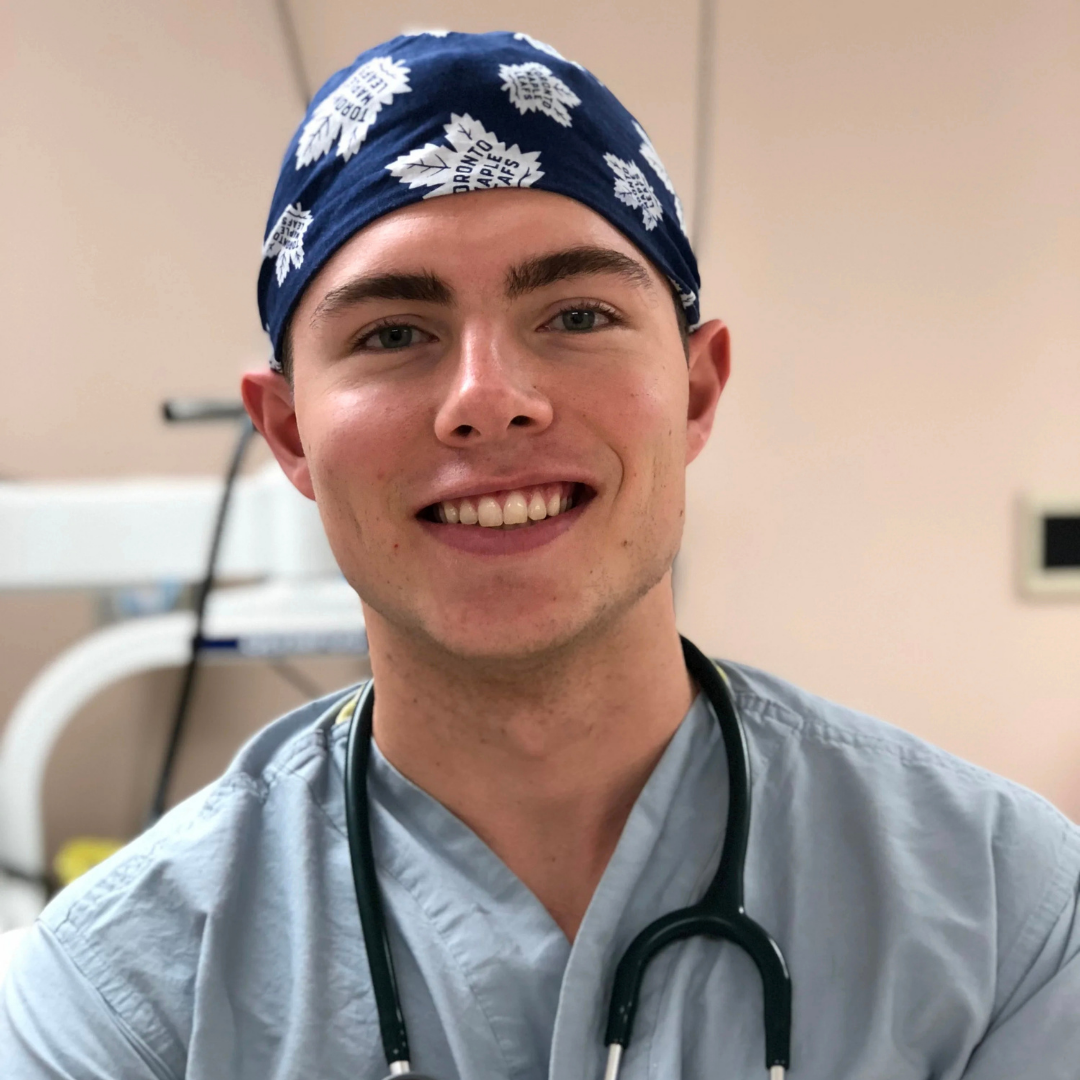
GUEST BIOCole built his foundation in emergency medicine and search and rescue before discovering the PA profession through a conversation with an obstetrician family friend. At Western University, he worked as an emergency medical responder with the campus paramedic team and later joined the Canadian Coast Guard doing search and rescue on Georgian Bay, experiences that sharpened his clinical instincts and deepened his commitment to patient care in high-stakes environments.His ICU rotation in Thunder Bay proved transformative, exposing him to fulminant liver failures and world-class critical care that directly prepared him for his current role. Cole deliberately chose the University of Toronto program for its community-based clinical model and was drawn to the northern rotations (the "North Swap"), where fewer healthcare providers meant more hands-on responsibility and autonomy than typical urban settings could offer.
Today, Cole works as a PA in the multi-organ transplant program at University Health Network in Toronto, primarily with the liver transplant team. He manages complex, immunosuppressed patients across all transplant services during night and weekend calls, witnessing the profound transformations that drive his passion for the specialty.
ON PATIENTS BEFORE & AFTER TRANSPLANT“They're bleeding, they're swollen, they're jaundiced, their stomach is distended. And if we're able to get them a liver transplant, all of these things change. You get to see this amazing transformation. It's pretty amazing to witness this change and help facilitate it.”
— Cole, PA in Transplant Medicine
ON DISCOVERING THE PA PROFESSION“I had never heard of the physician assistant profession until a family friend who's an obstetrician told me: if she could do it all over again, she'd want to be a PA. That lit the lightbulb in my head.”
— Cole, PA in Transplant Medicine
ON BUILDING A STRONG CLINICAL FOUNDATION FOR TRANSPLANT MEDICINE“The ICU rotation was instrumental in providing the groundwork to build knowledge on complex medicine. As a recent graduate, in transplant medicine the biggest challenge has been making sure I'm managing the patient as a whole and not missing anything.”
— Cole, PA in Transplant Medicine
ON ICU ROTATION IN 2nd YEAR CLERKSHIP“The northern rotations gave me the most clinical experience. In the ICU at night, it was me and the residents essentially running the unit. You don't get that opportunity in Toronto where there are so many students and learners around.”
— Cole, PA in Transplant Medicine
-
From Emergency Responder to Physician Assistant: Cole's Early Career
Cole [0:10] My name is Cole Moro. I work as a Physician Assistant for the Multi Organ Transplantation program at the University Health Network in Toronto. I specifically work with the liver transplant team, and I have been working there since October of 2018.
Anne [0:28] Can you tell us a little bit about your background before getting into PA school?
Cole [0:31] I did my undergrad at Western University. There I worked with the campus paramedic team — the Student Emergency Response Team — as an Emergency Medical Responder. From there I got a job with the Canadian Coast Guard, where I was working up on Georgian Bay doing search and rescue. And then from there I got into the UTPA program, completed it, and got the job with UHN.
Anne [1:02] Apart from working on the Coast Guard, were there any other extracurriculars you were involved in?
Cole [1:09] The Student Emergency Response Team ended up taking a lot of my time. I also had a part-time job as a hockey referee, which was very challenging but also a lot of fun — good exercise. And working for the Coast Guard really improved my ability as a responder. So when I came back to work with the Student Emergency Response Team, my clinical skills were a lot better for emergency response.
Anne [1:43] How did you decide to pursue PA?
Cole [1:46] I had actually never heard of the physician assistant profession until I was talking with a great family friend of mine. She's an obstetrician in Oregon, and she was telling me how if she could do it all over again, she'd want to be a physician assistant. That lit a lightbulb in my head and I decided to do some research. To me, it seemed like the ideal profession — you don't have to commit so many years to med school, you can still practice medicine, have that clinical environment, and really have meaningful patient interaction. It's a challenging profession that allows you to personalize yourself to what you want to do.
Anne [2:40] Were you contemplating any other careers at the time as well?
Cole [2:43] Being a kinesiology student at Western, most students think towards physiotherapy. So when I initially started out in undergrad, that was the first thing I thought about. But then as an Emergency Medical Responder and working with the Coast Guard, I started thinking along the paramedic route and also joining the Army. But when I came across the physician assistant profession, it really stood out and it was something I really wanted to do.
Navigating PA School: Applications, Rotations, and Remote Placements
Anne [3:18] What was your process for applying to PA school? Which schools did you apply to and why?
Cole [3:24] I applied to all of the Canadian programs, and I was prepared to apply to American programs if I didn't get in. The Manitoba program — I don't know if they accept many out-of-province applicants. The U of T program stood out to me, first because I'm from Toronto, but also because I really liked how they delivered their curriculum. They have a distance-studies approach where you do a portion of your learning through online lectures, and a lot of your clinical experience in the community. I really enjoyed that aspect. And University of Toronto being one of the top universities in the world, it seemed like an opportunity.
Anne [4:11] What were some of your favourite rotations in second year?
Cole [4:14] I really, really enjoyed Pediatrics — I had a phenomenal preceptor, and I think that really helped me develop confidence as a clinician. Working in internal medicine doing ward medicine helped me establish an approach toward complex patients. But I'd probably have to say my favourite rotation was up in Thunder Bay. I did a placement in the Intensive Care Unit there, and it was a phenomenal experience. They have a world-class ICU, and it actually helped prepare me for my position with the Multi Organ Transplant program because a lot of the work I do is in the ICU. In Thunder Bay I also dealt with a lot of fulminant liver failures, which helped me with working in liver transplantation and with pre-liver transplant patients. I owe a lot to the Thunder Bay ICU and that rotation.
Anne [5:24] How did you keep on top of your studies during that rotation? How did you make sure you got the most out of that experience?
Cole [5:33] One of the things you do in these clinical rotations is try to read around everything. Everything you encounter, you want to read up on, so you have something to refer back to. If you have a patient with an interesting presentation, you read around that and carry it forward. And after rotations, when you go home, I think it's great to have a balance. In Thunder Bay, I was exploring the nature around me, but also setting aside time to prepare for the rotation so I knew what to expect and how to be ready for certain procedures.
Anne [6:30] You're originally from Toronto, and I think for some students it's a little intimidating to think about doing the north-south swap or PA Consortium placements. What was that like — having to move every few weeks, or just preparing yourself to go somewhere remote?
Cole [6:53] For me, it was actually one of the biggest draws to the program. The northern rotations gave me the most clinical experience. In the ICU in Thunder Bay, it was me and the resident at nights — we would essentially run the ICU, and we'd be first assist in the OR. When I was working in Sudbury I was doing psychiatry; up in Thunder Bay I was doing ICU. To be in these different environments where there aren't a lot of healthcare providers creates a lot of opportunity for students. Whereas in Southern Ontario, it's hard to get those opportunities because there are just so many students and learners around. The northern rotations were excellent.
From Job Hunt to Defining the Transplant Medicine Role
Anne [7:52] You're also a brand-new PA grad. What was that experience like — going through the job search and studying for the certification exam at the same time?
Cole [8:03] I was lucky — I actually got the job before the CPA Career Start Grant came out. I was involved in discussions with a lot of my classmates when that grant was announced. There were about 50 to 60 jobs that came out, and I don't regret accepting the job beforehand because I'm really satisfied with my position. From what I understand, there were almost too many jobs for the number of MPA graduates that year. The students really had their pick of what they wanted to do.
Anne [8:56] For those that don't know, what is transplant medicine?
Cole [9:00] In transplant there's the medical side and then there's the surgical side. On the medical side, I specifically work with liver transplant mainly during the days. We manage all of the patients before their transplant, after their transplant, and even further out when they come back for any complications that could be related to their immunosuppression or their transplant. The medicine is very complex because a lot of these patients are immunosuppressed and have previously had organ failure, so there are a lot of complications that can arise.
Cole [9:49] Working as part of these interdisciplinary teams, it's really phenomenal to see how everyone comes together to manage these complex patients. Every day I learn so much — about different presentations, rare presentations that appear and require reading up on. It's really exciting to be a part of. The Multi Organ Transplantation program covers more than just liver — there's heart, lung, liver, kidneys, kidney-pancreas, and small bowel. That's about six organ groups, though two aren't as common. With my position, I work with the liver transplant team for two weeks and then I'm on call and weekends covering all organ groups.
Cole [10:48] Because of that, we need a thorough understanding of how to manage patients from any of these organ groups — whether in an emergency setting where patients are starting to deteriorate, or for routine things like managing blood sugars, managing blood pressures, that kind of thing.
Comprehensive Care and Common Complications in Transplant Patients
Anne [11:15] What kind of care are patients receiving on the transplant service from the time they arrive to the time they're discharged?
Cole [11:21] With liver transplant, when patients arrive they're typically what we call "pre-livers" — individuals with either acute or chronic liver failure. We start the process of evaluating them as candidates for liver transplant. Once they've been approved by the board that reviews transplant candidates, they stay until an organ becomes available — either by deceased donor or live donor. When one becomes available, the surgical team will offer it to that individual, and we start the process of ordering all the medications. Before transplant, they need to be on very high-dose steroids. After the transplant, we manage their immunosuppression in the ICU. And when they come to us on the floor, we manage them entirely.
Anne [12:23] When do they usually leave?
Cole [12:26] It depends on the patient and the condition they were in beforehand. For someone who walks in with more chronic liver failure who is younger and healthier, they can be out of hospital in just under two weeks. But for individuals who, for instance, have developed hepatorenal syndrome — so they also have kidney problems — and are immunosuppressed, so they're prone to infections that can complicate their stay, they can be in hospital for months. There's quite a range, and it's really specific to the individual case.
Anne [13:18] You mentioned hepatorenal syndrome. What are some other common conditions or complications your team has to manage?
Cole [13:28] Hepatorenal syndrome is going to be very common. And then there are a lot of infectious processes in transplant. We have an infectious disease transplant service we consult routinely, because the immunosuppression predisposes every post-transplant patient to some pretty serious infections, so we have to be very prudent in our approach. We also see a lot of diabetic complications — mainly due to the steroids, and some of the immunosuppression medications can throw patients' blood sugars off as well. Those are the main things, but there's always something random that comes up.
A Physician Assistant's Schedule and Responsibilities in Transplant Medicine
Anne [14:22] How long have you been working for this service now?
Cole [14:24] I started working with liver transplant at the start of November. Before that I did about a month to six weeks of orientation with all of the different organ groups. I work with the liver transplant inpatient service for two weeks every four weeks. The other two weeks I'm doing night and weekend calls.
Anne [14:52] What did that orientation look like?
Cole [14:55] I started with each organ group, beginning with kidney. I spent a lot of time figuring out how each service works and the logistics behind it — because you'd be surprised, that's actually one of the most difficult things to figure out: how they do their medicine. And then there's the medical side of things you need to figure out for every group. From kidney I went to lung transplant, and the UHN lung transplant team is one of the world leaders, so it was pretty special to be a part of and see the transformation they're able to achieve. Then heart transplant — there aren't as many heart transplant patients, but it was still very interesting and I worked with some very smart people. Then liver transplant, where I spent a lot of time since that was going to be my team. I learned a lot in that orientation, but even now I'm still learning more — not only about the medicine, but also the logistics of how things work in liver transplant.
Anne [16:23] What does a week look like for you, Monday to Friday or weekends?
Cole [16:26] It's a four-week rotation. I do two weeks with liver transplant working 10 to 6, and I get the weekends off. Then I do the night and weekend calls: Monday and Tuesday from 7 to 7, the weekend from 2 to midnight, and then Wednesday, Thursday, Friday from 7 to 7. Then I restart the two weeks with liver. I actually really appreciate the rotation because it changes things up. When I'm on call for MOT, I get to see patients from all of the organ groups, and that's where some of the more exciting medicine tends to happen — code blues, more serious events. And then getting back to the liver team, it's nice to be part of a team. We have three nurse practitioners who have been super helpful as I've been getting settled, and we have fellows and a staff physician every week.
Anne [17:48] Can you break down what a typical day looks like for you, from when you get in to when you leave?
Cole [17:54] The liver transplant team gets to the hospital at around 7:00 AM and does their rounds on all the patients. They finish their rounds by the time I get there at 10. We meet as a team and they give a quick run-through of what happened overnight and if there are any changes. From there, as a team, we map out the day — what we need to do for our patients. Then we do our own rounds. I typically have 8 to 10 inpatient liver transplant patients on my roster that I manage. We meet back up at 3:00, do a whole-team round again, and then clean up anything that needs to be done before I head home at 6.
Anne [18:52] On the weeks you're on MOT call — 7 to 7 — what does a typical or busy night look like for you?
Cole [19:00] I get there a bit early and review the patients in the acute care units, because those are the patients that are typically going to be more active overnight — they're on continuous monitoring and are there because there's a bit more concern about their stability. So I do a quick round on those patients first and make sure I'm familiar with them in case anything comes up. Then I do a round on every floor. Right now we have about four floors with patients on them. I check in with the nurses, make sure everything is okay. By that point the pager is going, and it's a mix of managing blood sugars, high or low blood pressures, ordering different medications, and going to assess patients. Every shift it's always something new, so it keeps you on your toes.
Anne [20:14] You mentioned there's a lot of inpatient order management on call. Are there times you do consults or an outpatient clinic, or does that fall outside of the transplant service?
Consults, Inpatient Focus, and the Emergency Department
Cole [20:29] We do consults. For instance, if there is a kidney transplant patient who suddenly needs an assessment for a liver transplant, we'll do consults in that regard. Also, if any transplant patient comes to the emergency at TGH, they'll give us a call and we'll fully assess them in the emergency department. At nights, typically the fellow will be down in the ER taking the new consults, but if I'm having a quiet night, they'll generally send me a message and ask me to come down to give some help, because we do get a lot of patients coming in through the ER. I don't really work in an outpatient setting — it's mainly inpatient.
The Rewards, Difficulties, and Collaborative Spirit in Transplant Care
Anne [21:21] What do you enjoy about transplant medicine?
Cole [21:25] For me, the most amazing thing is really the transformation that you see in these patients — specifically in liver transplant. We have patients who come into hospital and they really don't look great. They're bleeding, they're swollen, they're jaundiced, their stomachs are distended. And if we're able to get them a liver transplant, all of those things change. All of a sudden you get to see this amazing transformation. It's pretty incredible to witness that change and to help facilitate it. That's been one of the greatest things about being in transplant. And also getting to work at UHN and seeing all of the work they're doing and the research that's coming out — I'm very fortunate for that.
Anne [22:21] How is your interaction with patients and their families?
Cole [22:24] It's always been great. A lot of these patients are very thankful for the care they receive. I've only had good patient interactions so far.
Anne [22:40] What are some challenges about transplant medicine that you come across?
Cole [22:44] These patients are quite complex. As a recent graduate just starting out, the biggest challenge has been making sure I'm managing the patient as a whole — making sure I'm not missing anything, being thorough with these complex patients. Really just developing a stepwise approach to make sure I'm covering all my bases has been the challenge. But right now I'm starting to get a lot more comfortable and confident.
Anne [23:29] How many months have you been working so far?
Cole [23:31] I started in October 2018, and it's the start of February now, so about four to five months.
Anne [23:40] What does the PA-physician relationship look like, or how often are you seeing the physicians on the service?
Cole [23:47] I see the physician at 10 AM when I start with liver transplant — that'll be the staff physician. But typically, the physician I work with most often is the fellow on the service. The fellow and I are always in contact, whether they're reaching out because we need to do a paracentesis or for other things. They're in the process of establishing medical directives for procedures like paracentesis. So the relationship allows me to spend a lot of time working on my own, which is nice for building autonomy, while also working closely with the fellow physicians. They come from around the world and have a lot to teach, which has been awesome.
Anne [24:45] How do you interact with nurses and allied health on the floor? What kinds of questions can they expect you to be able to answer about patients or about transplant medicine?
Cole [24:56] When I'm working with the liver transplant team, we have three nurse practitioners, and we work together as a team. We all have our patient rosters, and they've been nothing but helpful in showing me the ropes in liver transplant on the floors. The nurses will page me if they have any concerns about a patient and I'll come and assess. If it's not too serious, I'll give them a hand on the spot. And for a lot of these patients, because these surgeries are so significant, I'm also working with physiotherapy, occupational therapy, and speech-language pathology to ensure these patients are completely managed from all aspects of care.
When to Refer to Transplant Medicine
Anne [25:50] When is it appropriate to refer a patient to transplant medicine?
Cole [25:57] For individuals whose livers don't look like they're going to get better, we'll get the referrals. We have a pre-liver assessment clinic where staff physicians and fellows will assess them. They can also just be admitted to liver transplant as pre-livers for assessment. And then, once they've been transplanted, anytime they come to Toronto General — regardless of what it is — they'll be admitted with us. So even if they come in for a heart-related problem, because they're a liver transplant patient they'll stay with liver transplant and cardiology will simply follow them. That's why we see such a range of patients — because some of them are so far out from their liver transplants. You get to see a lot of different things.
Anne [27:02] Why do you think the transplant service wanted to add a PA to their team?
Cole [27:08] I was the fourth PA they added. With the first three PAs, they really saw the benefits — how PAs are able to work on an inpatient service, manage their own patient roster, and work closely with the supervising physician to ensure patients are getting the best possible care. And with the Multi Organ Transplantation group growing so quickly and doing more and more transplants, that means more patients. That's exactly where PAs fit in — we help reduce the patient load for the physicians on the service, and it works out great.
Essential Guidance and Resources for Future Transplant PAs
Anne [28:04] What advice would you have for a PA student interested in potentially getting into transplant medicine but can't necessarily secure a rotation in it?
Cole [28:14] The ICU rotation I had was instrumental in providing the groundwork for building knowledge in complex medicine. I'd recommend doing an ICU rotation if you want to get into transplant. Having an understanding of managing general surgery ward patients is also important — I was fortunate to have a great preceptor in Sudbury for that. And really, just developing an understanding of how to approach inpatients is the most important thing. As long as you do a lot of your studying around those rotations, I think that'll set you up well.
Anne [29:09] Was there anything that was like a holy grail for you in terms of books or resources?
Cole [29:13] Toronto Notes was really helpful. And I relied a lot on UpToDate when I was a student — reading around cases. UpToDate goes so in-depth that it almost provides too much information, but it was very helpful, especially having it accessible on my phone.