Episode #5: Deniece O’Leary, PA in Family Medicine
Deniece O'Leary, PA-C, built her career across two healthcare systems: starting in family medicine in Southern California before relocating to Ontario to help launch McMaster University's PA program.
Over this time, she has worked in several specialties including dermatology and orthopedic surgery alongside family medicine. We discuss the framework in which PA practice in Ontario today: no provincial billing model, no DEA-equivalent prescribing authority, and an ARC-PA accreditation barrier that prevents Canadian-trained PAs from sitting the NCCPA exam.
WHAT YOU’LL LEARNHow scope of practice, prescribing authority, and billing structures differ between Ontario and California
What accreditation and credentialing barriers currently prevent PA licensure across the US-Canada border
How to approach specialty transitions across family medicine, dermatology, and orthopedic surgery within the Canadian system
What physicians need to understand about PA scope and delegation before integrating a PA into their practice
GUEST BIODeniece is an American trained physician assistant (PA) with a Master’s Degree in Physician Assistant Studies. After graduating, she worked in a Southern California low-income family practice specializing in pediatrics and women’s health.
Deniece moved her family from California to Ontario in 2009 to accept a position as an assistant professor at McMaster University’s newly established Physician Assistant Education Program. At McMaster, she taught clinical skills and problem based learning for 4 years. Now, Deniece is currently a faculty member at the University of Toronto Campus for the Consortium of Physician Assistant Education Program. She is also working as a clinical PA four days a week with a family physician in Hamilton.
Deniece has proudly served as both the President and Vice President of the Canadian Physician Assistant Education Association (CPAEA) and is a member of the PA Integration Committee through the Ministry of Health and Long-Term Care. Throughout her career, she has been fortunate to teach and mentor many PA students and clinicians. Having spent close to 15 years in clinical practice and 9 years as an educator, she has valuable knowledge concerning the struggles facing Ontario PAs.
She is committed to working hard to build a better future for PAs in the province. Deniece enjoys advising physicians and physician assistants on effectively integrating PAs into both practice and hospital settings in Ontario.
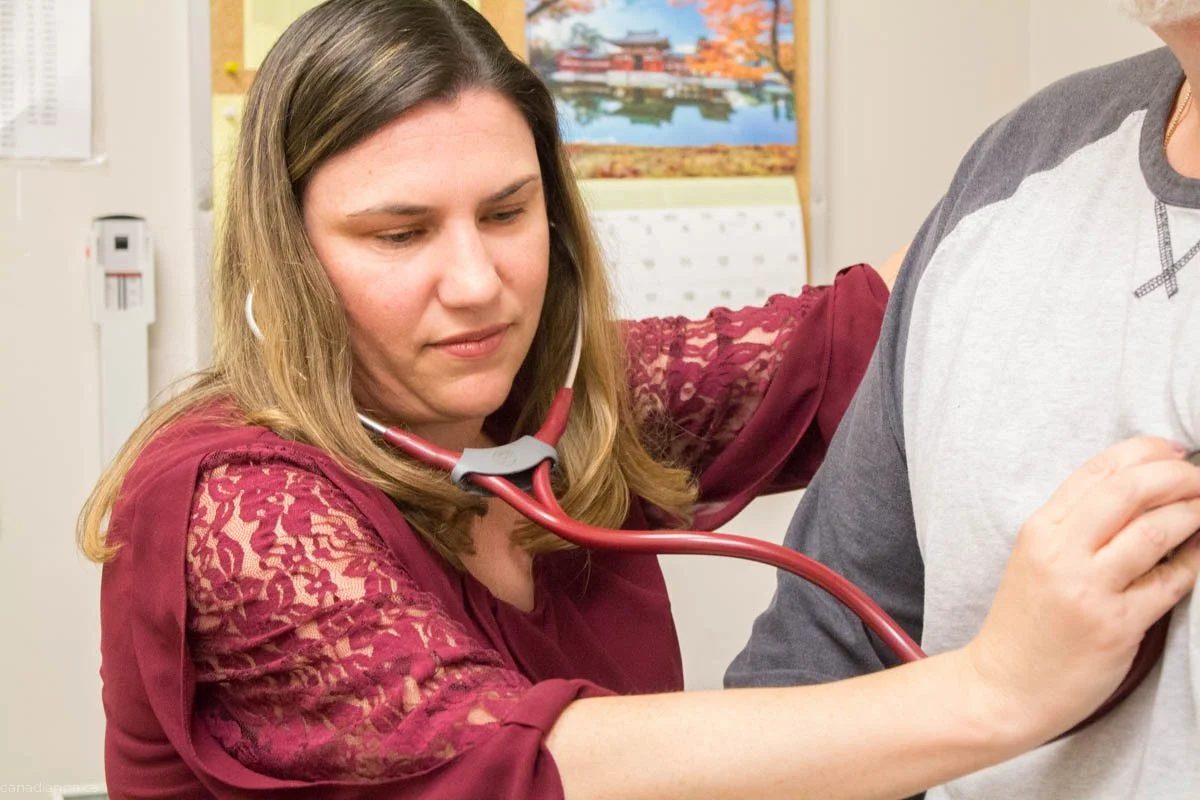
MEMORABLE QUOTE“Whatever it is, the way you tell your story online can make all the difference.”
— Deniece O’Leary, Family Medicine PA
ON CHOOSING PA OVER MD“I was very interested in dermatology and orthopedic surgery and family practice and Women's Health. Medical school made it very clear that you'd have to pick one, and that's your whole career. I thought, that's not good enough.”
— Deniece O’Leary, Family Medicine PA
ON PA LATERAL MOBILITY“When I started looking into the physician assistant role, that's exactly what it gave me — the flexibility to do different types of medicine. If I get bored with something, I can just change to something else. And if I decide that I really loved what I was doing before, I'm able to change back. That's really unique to our profession”
— Deniece O’Leary, Family Medicine PA
ON PA ADVOCACY“Outside of our little tiny silos, it's really important to get involved. Writing to the Minister of Health, writing to MPs, letting them know what a great job we're doing. If a lot of us did that more often, it would be very apparent how we're able to impact the healthcare system — and how much more we could impact it.”
— Deniece O’Leary, Family Medicine PA
-
How Deniece Discovered the PA Profession
Deniece [0:00] My name is Deniece O'Leary. I'm a physician assistant who works in family practice here in Ontario, Canada.
Interviewer [0:07] And how did you get into the PA role?
Deniece [0:13] I was interested in going to medical school. I looked into it quite a bit. I was living in Southern California and the university I attended did have a medical program, so I specifically chose the school for that. As I started getting closer to graduating, I started looking into physiotherapy and seeing what else interested me.
Deniece [0:34] I heard about the physician assistant program from one of the schools I was looking at, and it was a great combination of doing lots of different types of medicine — not always doing the same thing for your entire career. I was very interested at the time in dermatology, orthopedic surgery, family practice, and Women's Health.
Deniece [0:55] Medical school made it very clear that you'd have to pick one specialty — and that's your whole career. I thought, that's not good enough. I want to do more than one thing. So when I started looking into the physician assistant role, that's exactly what it gave me: the flexibility to do different types of medicine.
Deniece [1:15] Once I started practicing, I was also very interested in teaching. I started in family practice at a low-income clinic in Southern California, and then moved to Ontario, Canada, to help as the PA program was starting at McMaster University — which fulfilled that dream of being able to teach.
Deniece [1:37] And then I was able to pursue my interest in dermatology — I worked with a dermatologist for a few years here in Ontario — as well as in family practice and with an orthopedic surgeon.
PA Practice in California vs. Ontario: Key Differences
Interviewer [1:49] What are the main differences you've noticed between being a PA in California versus here in Canada?
Deniece [1:59] It's quite a bit different — mainly the scope of practice, and the acceptance and understanding from patients, other healthcare providers, and government. It's a difficult comparison because you're comparing a place that's had physician assistants for 50 years with a place that's had them for 10 — and even then, not in great numbers.
Deniece [2:23] There are so few physician assistants coming out that it's much harder to make a large impact quickly. That said, it was a slow process in the States too. I wasn't around at the beginning, so I'm sure those early PAs would tell similar stories.
Deniece [2:46] In California, we have DEA numbers, which allow us to prescribe narcotics — that's a significant difference. The medical directives we use in Ontario also differ from the practice agreement model used in California.
Deniece [3:12] And the funding model is one of the biggest issues. In California we had specific billing numbers to bill insurance companies and government programs. Here in Ontario, we don't have a solid funding model yet.
Comparing Day-to-Day PA Practice and Cross-Border Mobility
Interviewer [3:34] Was there a big difference in how you functioned day-to-day as a PA in California versus Ontario?
Deniece [3:42] It's actually quite similar in terms of daily function. In California, I was fairly autonomous. The physicians were in the office most of the time but running their own patient lists. If I needed them, I could ask a question at the end of the day or the week.
Deniece [4:02] Here there's been a bit more interaction, simply because it's a newer role. The physicians I work with are learning the scope of practice alongside me — and I'm learning the nuances of Ontario's system. For example, one of the first things I learned in my first week at the clinic was that you can't get an MRI tomorrow for a shoulder rotator cuff tear.
Deniece [4:31] So it's really just learning how to navigate the system — where to find what, and what specialists handle which things. I wasn't used to orthopedic surgeons who only do shoulders or only do knees. In California, they covered a much wider spectrum.
Deniece [4:55] But there's a bit more teamwork here, which I really love. I get to work with dietitians, mental health counselors, pharmacists, nurse practitioners — it's a much more collaborative care model, and I really enjoy that.
Interviewer [5:15] As an American PA, was it difficult to find work in Canada?
Deniece [5:21] I had a unique experience — I was brought here specifically to help with teaching for the PA program, so I had a visa tied to that role. I'm not sure how straightforward it would be for other Americans interested in coming up.
Deniece [5:38] I do get contacted fairly often by Americans who are interested or who have family in Canada. If they're Canadian citizens, it's much easier. If they're American citizens looking to move here to practice, they'd need a work visa and would need an employer to sponsor them — which is possible, but likely expensive and lengthy.
Deniece [6:10] There's also the consideration that Ontario PAs are often looking for work themselves, so the role would need to be one that couldn't already be filled by someone already here in Ontario.
Interviewer [6:16] Can Canadian-trained PAs obtain work in the United States?
Deniece [6:21] Canadian-trained PAs — and really anyone trained outside the US — cannot practice in the States. To practice in the US you have to graduate from an ARC-PA accredited program, which are only within the US, and then sit the national certification exam. So PAs trained in Canada, the Netherlands, Germany, the Middle East — none of them are currently eligible to take that exam and practice as a physician assistant in the US.
Switching Specialties: How Flexibility Defines a PA Career
Interviewer [7:02] Can you speak to what it was like switching specialties throughout your career?
Deniece [7:09] I started out in family practice with a strong interest in dermatology and orthopedic surgery. In Southern California, I did a dermatology rotation and given how sunny it is there, we saw a lot of skin cancers. I was doing at least 10 to 12 procedures a week — removing basal cells, doing biopsies, some malignant melanoma cases, wide excisions. Physicians and other PAs would refer patients to me, and if it was beyond my scope, I'd send them to the dermatologist.
Deniece [7:48] When I came to Canada, I started in family practice and teaching, but then a dermatology PA position was posted. So I worked part-time in dermatology while continuing in family practice — doing some biopsies and diagnosis work.
Deniece [8:10] One of the biggest challenges in switching specialties here is the lack of a funding model. Even when the physicians I work with see the value of having a PA, it's really hard when the healthcare system hasn't caught up with the collaborative care approach.
Deniece [8:28] After some more family practice, I was fortunate to have the opportunity to do a one-year maternity leave cover with an orthopedic surgeon, which was wonderful. I got to brush up my skills on shoulders, upper extremities, a bit of sports medicine and knees. I would love to eventually do orthopedic surgery — in the US there are a lot of surgical first-assist roles, and that would be a great goal for later in my career.
A Day in the Life: Family Medicine PA in Hamilton
Interviewer [9:18] Can you walk us through what a day in the life looks like as a family medicine PA in Hamilton?
Deniece [9:24] It's definitely very busy. I see somewhere between 20 to 26 patients a day, depending on volume. There's a lot of preventative healthcare — immunizations, well-child visits, Pap smears.
Deniece [9:46] For chronic disease management, we see diabetic patients, asthma, COPD, and other chronic conditions. I still see a fair amount of dermatology as well — patients with psoriasis and similar issues.
Deniece [10:03] For acute care, it's everything — abdominal pain, coughs, colds, work injuries, headaches, fatigue, shortness of breath, chest pain, high blood pressure. We try to book most patients in advance, but we always keep at least about six same-day appointments available.
Interviewer [10:45] How does the clinic determine whether the patient sees you or the physician? Are you interchangeable?
Deniece [10:50] It really comes down to scheduling — whether we're in the same clinic or different clinics, and what time works for the patient. I tend to work earlier in the day, so if they want an early appointment, they'll be with me. Patients can also request to see me specifically.
Deniece [11:05] I handle all of the Women's Health and well-baby visits, so those tend to get booked with me. And then sometimes it depends on complexity — I may see a patient for a couple of visits and then refer them over to the physician for follow-up, or we'll bring in a specialist if needed.
How a PA Enhances Patient Care and Clinic Operations
Interviewer [11:34] What would you tell a patient who has never seen a PA before — what should they expect?
Deniece [11:42] I always introduce myself as a physician assistant, and I let patients know a bit about what I do. One of their most common questions is whether they need a separate appointment for prescription refills, or whether I can handle everything in the same visit. I walk them through the medical directives and explain that I can take care of whatever their needs are. And if something is above my scope, I can ask the physician to come in, or we can coordinate the care and move the case forward from there.
Interviewer [12:33] How often are you interacting with your supervising physician?
Deniece [12:37] We see each other every day in the clinic. We make sure to talk about complex cases at least once a week, more often if needed. We also have an instant messaging function through the EMR, and if he's not in the clinic, I can always call him.
Interviewer [13:00] What differences has the clinic noticed since adding you on as a PA?
Deniece [13:06] We're able to see a lot more patients, for sure — the pace is fast and it's a lot of fun. There's really good care coordination now, and we're able to do a lot more preventative care.
Deniece [13:25] Patients really enjoy coming to the clinic, which is an unusual thing to hear. They feel comfortable. I've had patients open up about things like gender identity and other sensitive topics — as I get to know them and their families, they feel safe, which is wonderful. They often refer family members, neighbors, and friends as well.
The Breadth of Family Medicine and the Complexity of Care Coordination
Interviewer [14:04] You've worked in primary care as well as other specialties — what are some of the challenges unique to family medicine?
Deniece [14:18] The two biggest challenges are the breadth of knowledge and the coordination of care. On the knowledge side — you don't need to be an expert in everything, because you can always refer to a specialist, but you need to be quite good across multiple areas. There is no shortage of patients with all kinds of different presentations on any given day: throat pain, MSK problems, neurological issues, chronic illness, medications across every system.
Deniece [14:55] When I go to a conference, I want to attend almost every session because everything is applicable to family practice. Compare that to a dermatology conference I attended in Indiana — everything was very focused. You could go deep into specific procedures or very precise diagnostic details. Family medicine is the opposite: extremely broad.
Deniece [15:28] The second challenge is coordination of care. Sometimes I refer a patient for a test, the results come back, and now I need to refer them to a physiatrist or neurologist to take the case further. Navigating all of that — the tests, the consults, the highly specialized sub-specialists — can get quite complex in family medicine, where you're dealing with thousands of different specialists.
What Deniece Loves About Being a PA — and the Case for Advocacy
Interviewer [16:19] What do you enjoy about being a PA?
Deniece [16:23] Everything. I love working with patients. I love the interprofessional team. I appreciate the trust that patients place in us — and the trust we return by believing they're doing their best for their own health.
Deniece [16:39] I really love preventative medicine — keeping patients as healthy as possible and earning that trust so they feel comfortable coming in when there is a problem. And I love the ability to change scope of practice. If you find yourself burned out or bored, you can pivot — hospital, clinic, legal consulting. Physicians generally can't do that. As a PA, I have the flexibility to keep evolving. If I decide I loved what I was doing before, I can go back to it. That's really unique to our profession.
Deniece [17:26] I also love the networking — knowing PA colleagues across Ontario, seeing them at dinners and conferences, and knowing we're all working together to blaze a trail and establish this as a recognized and respected profession here.
Interviewer [18:00] Do you have any calls to action for physician assistants in Canada? What should they be doing more of?
Deniece [18:13] Advocacy. Within our own practices, we're doing a great job — patients know us, the staff trusts us. But outside of our individual silos, we need to get involved. Writing to the Minister of Health, writing to MPs, letting them know what we're doing and how we're making a difference. I'm guilty of not doing this enough myself. I do good work in the clinic, but finding the time and energy to tell the broader world about it — that's the gap.
Deniece [18:50] If more of us did that consistently, it would become very clear how much we impact the healthcare system — and how much more we could contribute if the scope of practice were fully realized, and if billing and regulation were in place. We could save the system money, support the physicians and hospitals we work with, and still maintain a really good work-life balance.
Advice for Physicians Considering Hiring a PA
Interviewer [19:20] If a physician is interested in hiring a PA or working with one, what would you tell them?
Deniece [19:30] I give them a little road map. I start by asking why they're interested in hiring a PA and what their specific need is — for the office or the hospital — because I want to make sure they're really looking for a physician assistant and not just an assistant or a secretary. I want them to actually understand our scope.
Deniece [19:54] I find out how much they already know — whether they've worked in the States, or spoken with a colleague who has a PA. That helps me know where to start educating them. Then I find out what specific problem they're trying to solve. Most physicians come with a unique situation and a set of deliverables in mind, and I want to understand those clearly.
Deniece [20:26] I usually have multiple conversations to make sure it's going to be a good fit — for the physician, the practice, and whoever ends up being placed there.
A Glimpse Into the Work: Admin, Results, and Patient Follow-Up
Interviewer [20:36] And can you show us what you're doing right now?
Deniece [20:38] Right now I'm going through consult notes from specialists and reviewing incoming mail — EKGs, chest X-rays, ultrasounds. I'm going through each one to determine whether we need to bring the patient back in for a visit, or whether everything looks okay and we can follow up at their next scheduled appointment.