Episode #2: Sandy, PA in Gyn/Onc
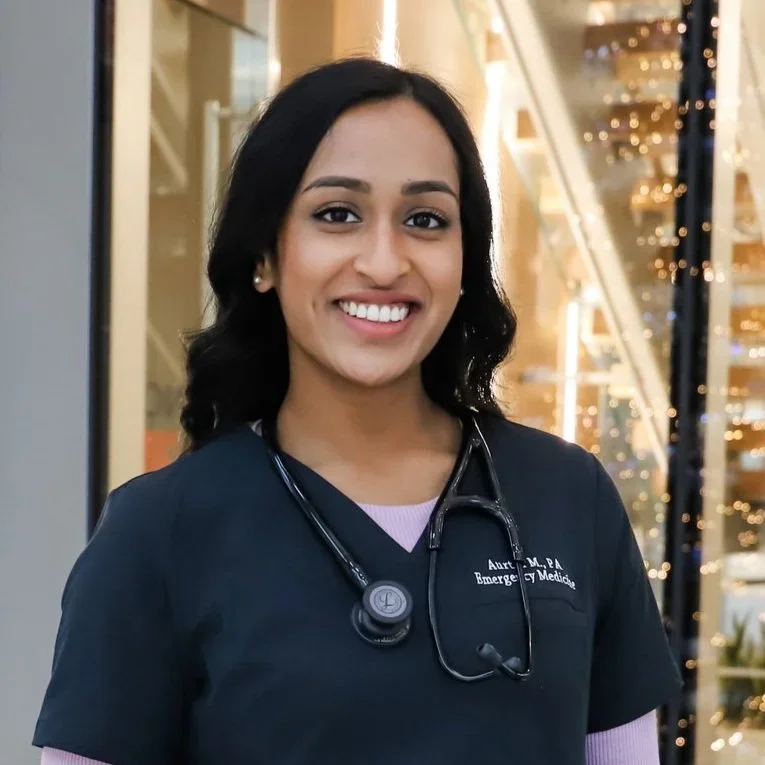
Canadian Certified Physician Assistant working in gynaecologic oncology, currently at Princess Margaret Hospital in Toronto. In this episode, she walks through how a conversation with a single practicing PA in fourth year undergrad set her on a path to one of the most specialized surgical oncology roles a Canadian PA can hold.
Sandy explains what gynaecologic oncology actually is, why it's unique among surgical oncology specialties, and what her day-to-day looks like across two major cancer centres. She works with patients across multiple clinical settings, including management of chemotherapy side effects in clinic to performing paracentesis and assisting with ovarian debulking in the OR.
WHAT YOU’LL LEARNWhat Gynaecologic-Oncology is, and why its a surgical specialty that both removes tumours and administers chemotherapy
How PAs provide continuity of care in cancer centres where residents rotate constantly
What procedures a gynae onc PA performs, from endometrial biopsies to ultrasound-guided paracentesis
GUEST BIOSandy discovered the Physician Assistant profession during her final year of undergraduate studies. After researching the career path and connecting with a practicing PA through her university’s career centre, she successfully applied to McMaster University’s PA Education Program. Upon graduating, she began her career in Hamilton as the first PA to join a gynaecologic oncology service, where she honed her skills in both clinical and surgical settings, including complex ovarian debulking procedures.
Now based in Toronto, Sandy continues to specialize in gynecologic oncology within a world-leading cancer center. Collaborating with a team of surgical oncologists, she provides comprehensive care across the entire patient spectrum. Her role spans the full continuum of the cancer journey, from initial diagnosis and active treatment to long-term surveillance and palliative care.
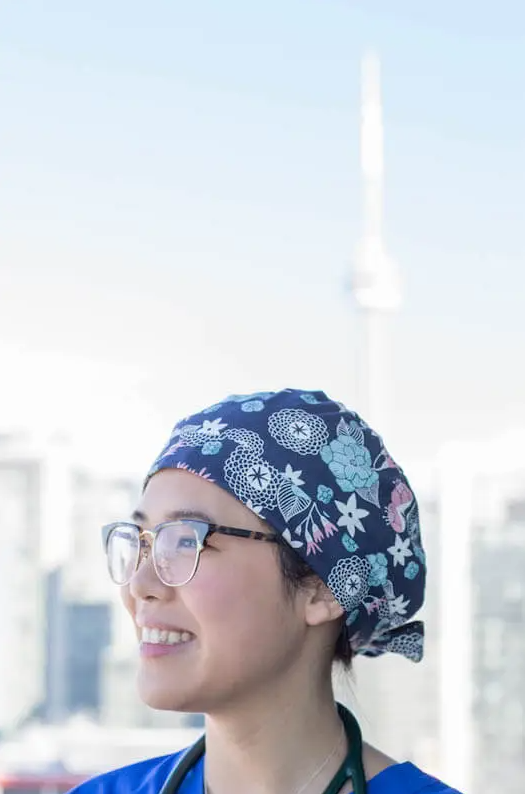
ON PAs PROVIDING CONTINUITY OF CARE“With the constant changing of residents and learners coming through, I'm really the constant. Whether the patient is seeing their doctor or has to see another physician because their primary care provider is away — they can always come to me.
— Sandy, PA in Gynecologic-Oncology
ON WORKING ALONGSIDE SURGEONS“While I'm doing the paracentesis and draining the fluid, I'm there from start to finish with the patient — while my staff can continue seeing the next patient.”
— Sandy, PA in Gynecologic-Oncology
ON FULFILLMENT AS A PA“Right now, working in gynaecologic oncology, I feel that I am having a very fulfilling career. I have a level of autonomy I'm comfortable with, working alongside my staff. I'm really happy with where I am.”
— Sandy, PA in Gynecologic-Oncology
ON ADVICE FOR ASPIRING PAs“Talk to a practicing physician assistant. Just like I did in fourth year undergrad. Even better if they can bring you into their workplace so you can see how they actually function”
— Sandy, PA in Gynecologic-Oncology
-
From Mentorship to a Fulfilling Physician Assistant Career
Sandy [0:00] Hi, my name is Sandy and I'm a Canadian gynaecologic oncology Physician Assistant.
Sahand [0:07] Hi everyone, my name is Sahand and welcome to the Canadian PA YouTube channel. With me I have Sandy Von, a PA working in gynae oncology in downtown Toronto. Welcome to the channel, Sandy.
Sandy [0:18] Thank you for having me.
Sahand [0:19] It's actually really exciting to have Sandy here because she is one of the few PAs I had the pleasure of mentoring, even before she got into the PA profession and throughout her PA career. It's really exciting to see you here now as a full-fledged oncology PA. How does it feel?
Sandy [0:38] I'm very excited to be where I am now, and like you said, I don't think I would have been here without meeting you in the first place.
Sahand [0:49] I don't think I had that much to do with Sandy getting into the program — I mostly helped guide her through it. How does it feel to be a gynae oncology PA? And more importantly, what motivated you to become a physician assistant?
Sandy [1:03] This all started back when I was in fourth year undergrad. I was looking for a career in healthcare and came across the physician assistant program on McMaster University's website. Through my career centre, I found a physician assistant who had gone to the University of Waterloo. I connected with him, met with him, learned about his role, and that really sparked my interest in the profession. I decided to apply, and once I got into the program, I found it truly amazing — the idea that I could practice medicine alongside physicians, nurses, and the rest of the team. Right now, working in gynaecologic oncology, I feel I have a very fulfilling career. I have a level of autonomy I'm comfortable with, working closely alongside my staff. I'm really happy with where I am.
Daily Impact of a PA in Gynaecologic Oncology
Sahand [2:13] You mentioned you work in gynae oncology. Can you explain to our viewers what gynaecologic oncology actually is?
Sandy [2:19] Gynaecologic oncology falls under the branch of surgical oncology. This is where surgeons have specialized training in tumours, particularly cancerous ones, and in their management. What makes gynaecologic oncology unique is that our surgeons are the only specialty that both performs the surgery to remove the cancerous tumour and also administers their own chemotherapy. Our surgeons focus on the female pelvic organs — the uterus, tubes, ovaries, vagina, and vulva — and they handle the surgical removal of cancerous or suspicious tumours arising from those organs. In other surgical oncology specialties, the surgeon does the operation, but a medical oncologist handles chemotherapy. In gynae onc, the same team does both.
Sahand [3:35] That sounds very interesting and very specialized. What is the role of the PA in this setting?
Sandy [3:42] I've worked in two cancer centres. I started at the Juravinski Cancer Centre in Hamilton, and I recently moved to Toronto and am now working at Princess Margaret Hospital. Both centres see a very large volume of patients. The feedback I've received from staff and nurses is that with the constant rotation of residents and learners through the service, I'm really the constant. I work with five to six surgical oncologists in gynae oncology. So whether a patient is seeing their primary oncologist or has to see another physician because their regular doctor is away, they can always come to me — they know I'll be there in clinic.
Sahand [4:36] Great. And what does the day-to-day look like on the gynae oncology team?
Sandy [4:43] I work in clinic almost every day unless I'm needed in the operating room. When patients come in for their appointment with their gynaecologic oncologist, they'll first see me. Depending on what the visit is for, I'll take a history, do a physical exam, and review any concerns they have and try to address those. After the history and physical, I review my findings with my staff and generally have a plan in mind for the patient. If they're there for a chemotherapy visit and their blood counts are okay, I make sure they have all their prescriptions sorted, let the staff know, and often the staff is happy to just quickly see the patient and send them on their way.
Sahand [5:34] Just to clarify for viewers — when Sandy says "staff," she's referring to her supervising physicians. And it sounds like having you in the clinic really improves access to care and speeds things up, while also giving patients more time to have their concerns addressed more thoroughly. Would you agree?
Sandy [6:07] Absolutely. Especially in oncology, patients are at very different stages of their cancer journey — diagnosis, surveillance, active treatment, or palliation. For more symptomatic patients, like those going through chemotherapy, there can be a lot of side effects. When they bring those concerns to me, I can work through a management plan, review it with my staff, and they may adjust things — like suggesting we decrease the dose of a chemotherapy agent. Then I go back in and review the updated plan with the patient.
Expanding Care Through PA-Performed Procedures
Sahand [6:52] A lot of your role is focused on clinic, but in certain surgical PA specialties there are also procedures involved. Is that part of your role, or are you more focused on the clinical side?
Sandy [7:09] When I was at the Juravinski Cancer Centre, I was their first physician assistant in the gynaecologic oncology service. They tried me in different settings. I was in the OR when they needed an extra set of hands — for example, with large pelvic masses or ovarian debulking surgery. Debulking means they're trying to remove all visible tumours from the abdominal and pelvic area. That was something I really enjoyed when I was at Juravinski. In clinic, I also do procedures like paracentesis — when a patient presents with ascites, or fluid in the abdomen, I perform the procedure under ultrasound marking done by the radiologist. I also do pap smears, endometrial biopsies, and other biopsies regularly in clinic.
Sahand [8:13] Having you there to perform procedures that can take a substantial amount of time is really valuable for the surgeons. Instead of doing those themselves, you can act as an extension of them and take that off their plate — which I'm sure they appreciate.
Sandy [8:32] Exactly. During a paracentesis, for example, I'm with the patient from start to finish while my staff continues to see the next patient.
Sahand [8:42] Which is really the essence of what we hope the PA role can be.
Essential Tips for Becoming a Canadian Physician Assistant
Sahand [8:46] Alright Sandy, that was really useful. What tips do you have for viewers who may be interested in becoming a PA?
Sandy [8:55] Going back to how my own journey started — I think the most important thing for students interested in applying to a PA program, or just learning more about the profession in Canada, is to actually talk to a practicing physician assistant. Just like I did in fourth year undergrad. The Canadian Association of Physician Assistants website has contacts you can reach out to, to find PAs who are willing to speak with prospective students. And even better if they can bring you into their workplace so you can see firsthand how they function.
Sahand [9:44] That's really helpful. We'll add links to some of those websites, as well as blogs and other resources, in the show notes below. Sandy, thank you so much for taking the time to come on and be part of the Canadian PA YouTube channel. It was a pleasure having you, and I look forward to continuing to see you grow as a Canadian PA. And for all our viewers — I hope you enjoyed this and took something away from it. Please subscribe, like, and comment below, and share this video with anyone you know who's interested in the profession. Sandy, it was great having you on. Keep up the good work.