Episode #1: Sahand, PA in Emergency Medicine
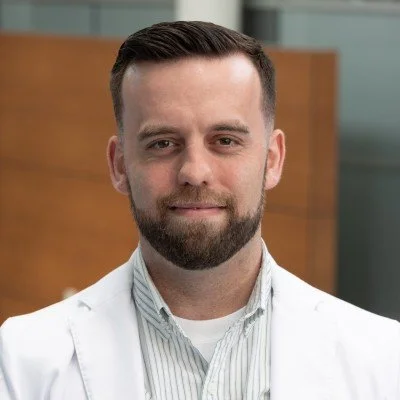
Sahand is a Canadian Certified Physician Assistant specializing in emergency medicine in downtown Toronto. He is a graduate of McMaster University’s PA program. While in his undergraduate study, Sahand transitioned from exploring pharmacy trajectory in favour of practicing medicine through the PA career route, seeking a direct patient-facing role with an efficient training-to-practice timeline. His focus remains on high-acuity, generalist care within fast-paced emergency department at an academic hospital.
WHAT YOU’LL LEARNHow Sahand decided PA was the right profession for him
How to use Clinical Rotations in 2nd year PA school to validate specialty fit
How PAs are deployed across different zones of an emergency department
GUEST BIOSahand Ensafi is a Canadian Certified Physician Assistant, and graduate from McMaster University PA Program. He currently works in Emergency Medicine.
While in PA school he focused his clerkship elective rotations exclusively on high-acuity environments. He currently operates within a high-volume emergency department at an academic hospital, managing common and complex patient presentations from assessment and diagnostic workup to definitive disposition.
In addition to his clinical responsibilities, Shahand is a founding member of the Physician Assistant group at University Health Network (UHN). His professional contributions focus on the integration of the PA role within Ontario’s healthcare infrastructure and the optimization of PA scope of practice within emergency medicine. He remains an active advocate for professional identity and the advancement of the PA model.

ON WORKING IN THE EMERGENCY DEPT.“The minute I walk into a room, I am ruling out the bad, life-threatening things. That is the bread and butter of emergency medicine anywhere in the world. If I can do that, I can generally send the patient home safely.”
— Sahand, CCPA, Emergency Medicine PA
ON PA SCOPE IN THE EMERGENCY DEPARTMENT“A well-trained PA will function similar to a senior resident or fellow of that service. I manage 80 to 90% of my cases from start to finish, and at the time of discharge I review the case with the physician and we discharge together.”
— Sahand, CCPA, Emergency Medicine PA
ON LEARNING IF PA IS THE RIGHT FIT“Get as much volunteer experience as you can. There's a list of PAs you can reach out to for advice. That's the best way to find out if this career is right for you — that's how I found out it was right for me”
— Sahand, CCPA, Emergency Medicine PA
ON WAIT TIMES“On days where we're fully staffed with PAs and NPs, wait times can be as low as an hour, for patients who in other settings might be waiting hours and hours on end to be seen”
— Sahand, CCPA, Emergency Medicine PA
-
From Pharmacy to Physician Assistant
Anne [0:08] Today we're interviewing Sahand Ensafi, a Canadian physician assistant working in emergency medicine in downtown Toronto. Welcome, Sahand.
Sahand [0:16] Thanks, it's great to be here.
Anne [0:18] Can you tell us a little bit about how you got into the PA profession, or what made you decide to pursue it?
Sahand [0:25] A lot of our Canadian colleagues probably share a similar viewpoint, and because the profession is so new in Canada, a lot of us kind of just stumbled upon it — which is similar to what happened to me. I went to the University of Waterloo for my undergraduate degree. I was doing life sciences and during my time there, I always believed I was going to go into pharmacy.
Sahand [0:41] After volunteering in a few pharmacies and reassessing what I wanted in my career, I decided pharmacy probably wasn't the right fit for me. So I started researching other healthcare professions. Medicine was something that was never very appealing to me. I'm someone who's much more practical. I like to get out and work, and learn on the job, as opposed to going through a very formalized education process.
Sahand [1:19] The idea of being in school for somewhere upwards of 11 to 15 years, depending on what you want to do in medicine — that did not appeal to me whatsoever. So I kind of knew medicine wasn't the option.
Sahand [1:37] I started to scramble and look for something that would allow me to practice medicine, but bypass a lot of that schooling. And I actually stumbled upon PAs in the US through a Forbes article. It rated physician assistants as the number one job in the United States.
Sahand [1:56] I thought, what the heck is a PA? I'd never heard of this before. Honestly, I looked at the name and thought they were probably doing clerical work for doctors — like, how is this the best job in the United States? When I actually researched it, I realized the name is almost a misnomer. You're not doing clerical tasks. You're a physician extender. You practice medicine, you see and diagnose and treat illness, you can prescribe medications, help in surgeries, and perform procedures yourself.
Sahand [2:34] I fell in love with it. I did a quick Google search and ran into McMaster's PA program opening — one of the first PA programs in Canada. I applied and fortunately got in.
Choosing Emergency Medicine
Anne [2:54] After finishing PA school, you chose emergency medicine. How did you make that transition?
Sahand [3:02] I went into the program with a very open mind. I always knew that I enjoyed emergency medicine — the fast-paced environment, the chaos. I'm someone who thrives in those kinds of environments and finds a lot of fulfillment in that setting.
Sahand [3:21] But I told myself I'd keep my mind open and not go in assuming I'd come out practicing in a specific field. Throughout clerkship, I did rotations in general surgery, family medicine, and emergency medicine. That's really when I realized emergency medicine was the rotation I was most excited about. Going to those shifts, learning, getting exposure — that's what I really enjoyed.
Sahand [3:54] I also chose all of my elective rotations in emergency medicine. So it was through that on-the-job training in second year that I got the sense emerg was probably the right fit for me. That said, I was still open to family medicine and internal medicine as well.
Sahand [4:32] What I'd say is that I personally gravitate toward roles where you're more of a generalist — general internal medicine, emergency medicine, family medicine. You're the person who knows the tricks of the trade and is ready for anything that comes in the door. Getting comfortable in those common, day-to-day presentations early in my career was exactly what I wanted.
What Emergency Medicine Actually Looks Like
Anne [4:54] What are some common conditions you come across during an emerg shift?
Sahand [5:00] It's interesting, because a lot of the time in emergency medicine, you're not actually diagnosing common illnesses. It's easier to break it down by complaints. We see things like chest pain, shortness of breath, abdominal pain. We see a tremendous amount of musculoskeletal complaints — broken bones, sprains, strains from any part of the body.
Sahand [5:34] At the centre I work at, we also see a lot of neurological complaints because we're a neuro centre — strokes, brain tumours, bleeds in the brain. And sometimes we do make a diagnosis from those complaints. Someone comes in with chest pain and we diagnose a myocardial infarction or a pulmonary embolism.
Sahand [5:50] But a lot of the time, we may not find the answer and we may not be able to tell them what's causing the pain. What we can tell them is what it's not. We're telling them: you're not having a heart attack, you're not having a pulmonary embolism, you're not having a life-threatening infection of the heart. You're safe to go home. So a lot of the time, we may not have the actual diagnosis for the patient.
Anne [6:21] So it's a lot of ruling out the red flags for your patients.
Sahand [6:25] Exactly. That is the bread and butter of emergency medicine anywhere in the world — ruling out the bad stuff. The minute I walk into a room, that is what I am doing regardless of the complaint. Musculoskeletal, cardiac, pulmonary — my job is to rule out the life-threatening things first. If I can do that, I can generally send the patient home safely.
Sahand [6:45] For some patients and for us as clinicians, that's not always very satisfying. People come to the emergency department expecting that we have all the answers. There can be a lot of frustration when we say we don't know what your pain is. Patients often ask, "Well, it's great I'm not having a heart attack, but what is this pain?" Sometimes we just don't know. But it's always about ruling out the dangerous stuff first.
Where PAs Work in the Emergency Department
Anne [7:23] Can you describe the structure of the emergency department and where PAs typically fall in terms of where they work during a shift?
Sahand [7:37] It depends on where you're working. The beauty of being a PA — in emerg or any setting really — is that physicians and colleagues can cater what you do to what the department actually needs.
Sahand [7:55] In some hospitals, PAs function primarily in the fast track or rapid assessment zones — the everyday bumps, bruises, fractures, lower-risk chest pains and abdominal pains. Those areas benefit a lot from having a PA because they require time-consuming procedures: splinting, suturing, reducing or setting broken bones, incising abscesses. So there's a lot of bang for your buck in those zones.
Sahand [8:43] In other hospitals, including where I work, PAs will go wherever the wait times and patient volume are highest on that particular shift. Our rapid assessment area actually sees about 80% of patient volume, and it's not truly a "minor" zone — we see chest pains and abdominal pains that end up being appendicitis or require surgical intervention. So PAs function there regularly.
Sahand [9:43] That said, if the acute or sub-acute sides of the department are busier, we go there too. It's not that PAs can only deal with minor complaints. That's where most of the volume is, but we have the skills to deal with more complicated patients as well. If the need is there, we go.
Sahand [10:19] What I often tell people who are familiar with the medical system is that a well-trained PA will function similar to a senior resident or fellow of that service. I'll manage the patient essentially up to the point of discharge. For about 80 to 90% of the cases I see in emerg now, I'll take the patient from start to finish, and at the time of discharge I'll review the case with the physician and we'll discharge together.
The Impact of PAs on Emergency Care
Anne [10:52] What differences has the emergency department noticed since adding PAs to the service?
Sahand [10:59] The most obvious change is improved access to care — wait times and length of stay have been reduced. When you have PAs, NPs, and advanced practice providers working alongside physicians, wait times drop significantly. On days where we're fully staffed, wait times can sometimes be as low as an hour, even for patients who in other settings might wait hours on end to be seen.
Sahand [11:42] I also personally believe PAs improve quality of care. When you have multiple clinicians on, the physician isn't stretched trying to see everyone independently. They can take more time with their patients. PAs tend to spend a bit more time with patients during their interactions, and with more time there's less chance of missing a diagnosis or making an incorrect one. Ultimately, that improves the care the patient receives.
Anne [12:21] So it sounds like you and the other PAs on that service have had a tremendous impact on the emergency department in Toronto.
Sahand [12:28] We definitely try.
Advice for Anyone Considering the PA Profession
Anne [12:31] Any tips or advice for anyone interested in becoming a PA in Canada?
Sahand [12:41] Research the profession. A lot of people look at it as a stepping stone to medical school, and I want to be clear — it's not. PAs are experienced and well-educated clinicians with a specific role in the healthcare system. It's always concerning when students come in thinking the PA program is just a backdoor into medicine. If you want to be a doctor, go be a doctor. Even though there are similarities between the roles, PA and physician are different professions.
Sahand [13:21] Beyond that, make sure you're up to speed with the minimum requirements for the programs and get as much volunteer experience as you can. In Canada it's a little harder to find someone to shadow, but there's a list of PAs you can reach out to for advice about their careers and to get a sense of whether this is the right path for you. That's the best way to find out.
Sahand [13:56] That's how I found out it was right for me — through volunteering I realized pharmacy wasn't the fit. And after weeks of research into the programs, the career outlook, and what it actually takes to get through — that's when I knew this was exactly what I wanted.
Wrap-Up
Anne [14:16] Thank you for watching another episode on the Canadian PA YouTube channel. Thank you Sahand for coming on — it was a pleasure having you.
Sahand [14:23] Pleasure being on.
Anne [14:24] Don't forget to like, subscribe and comment below. We have useful links and show notes in the description.