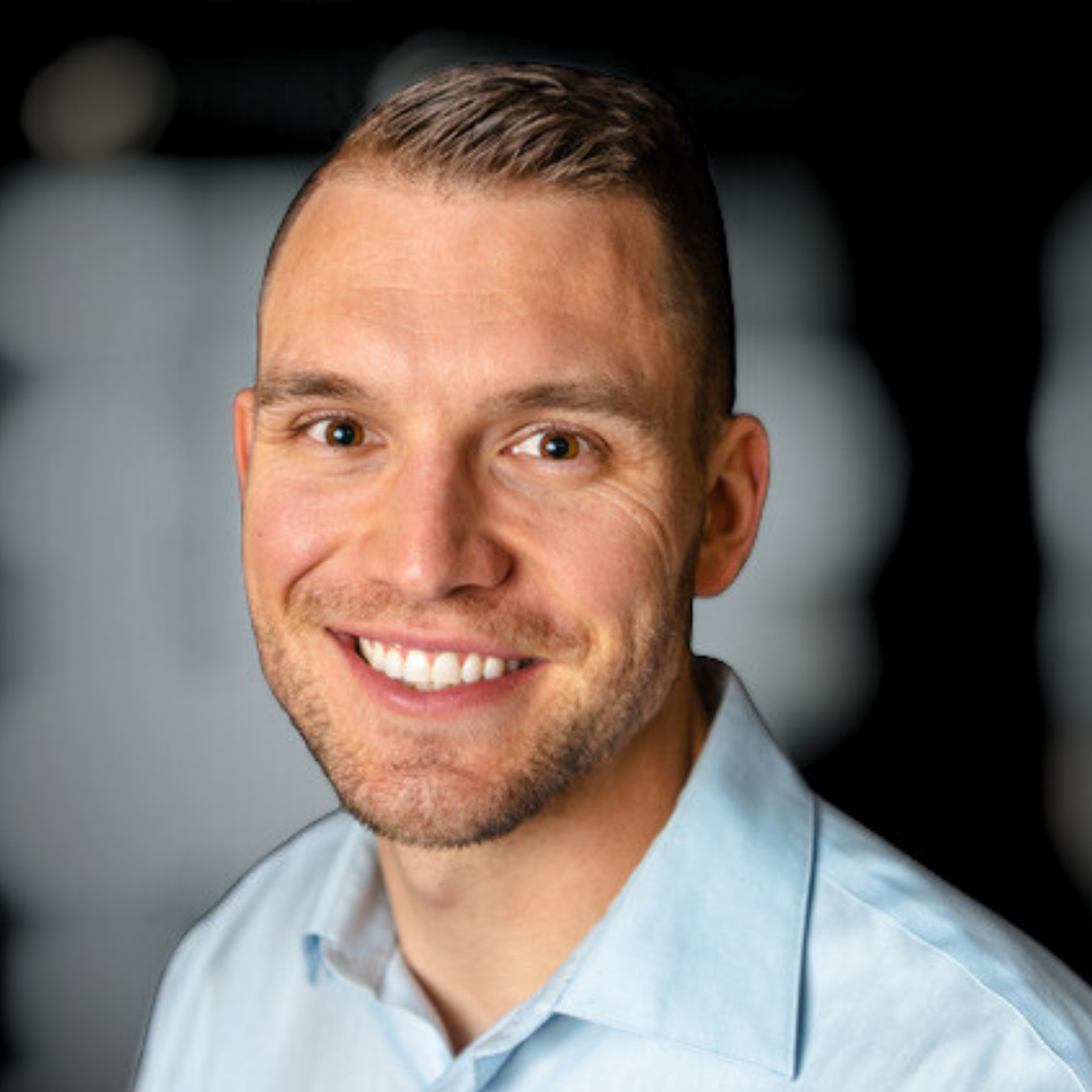
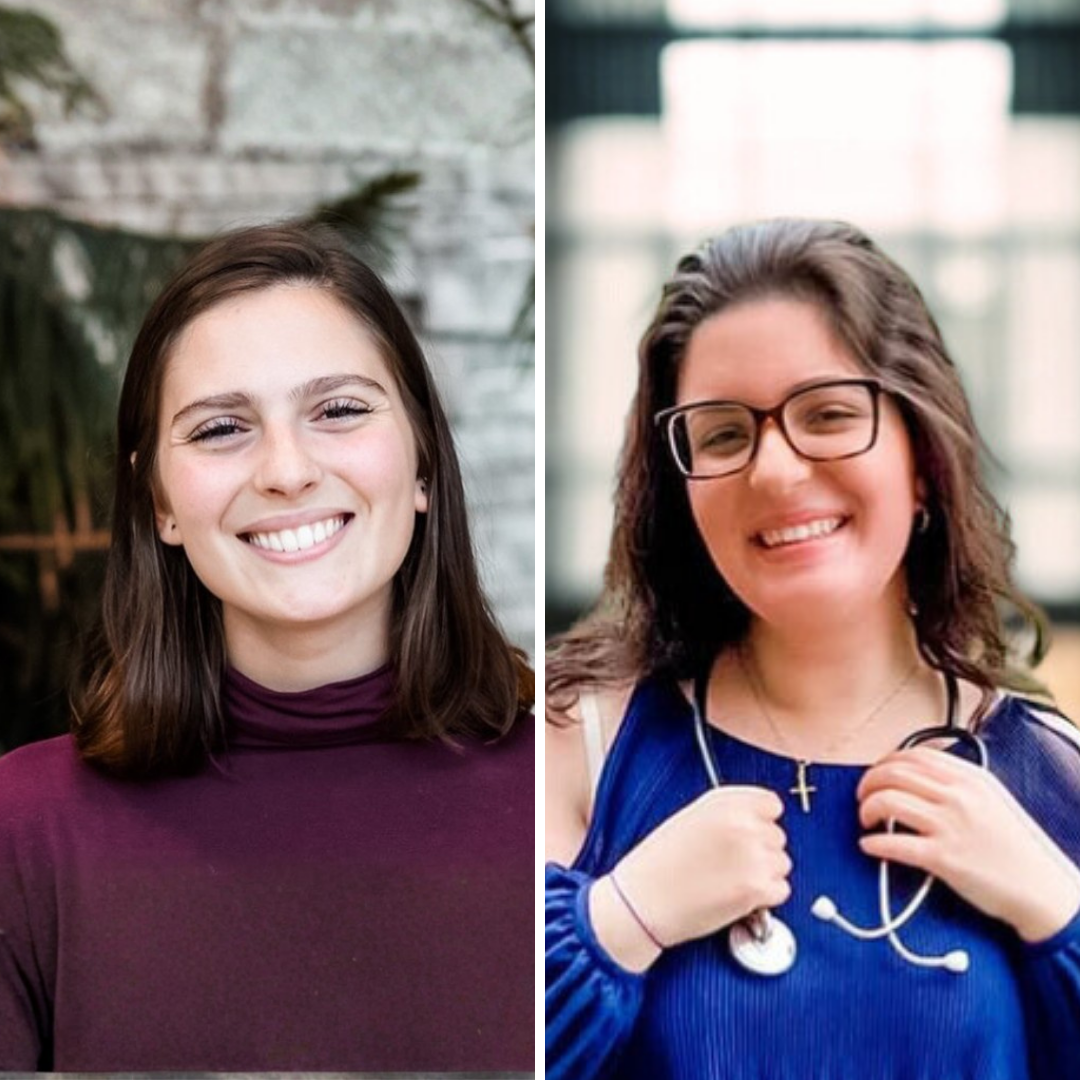
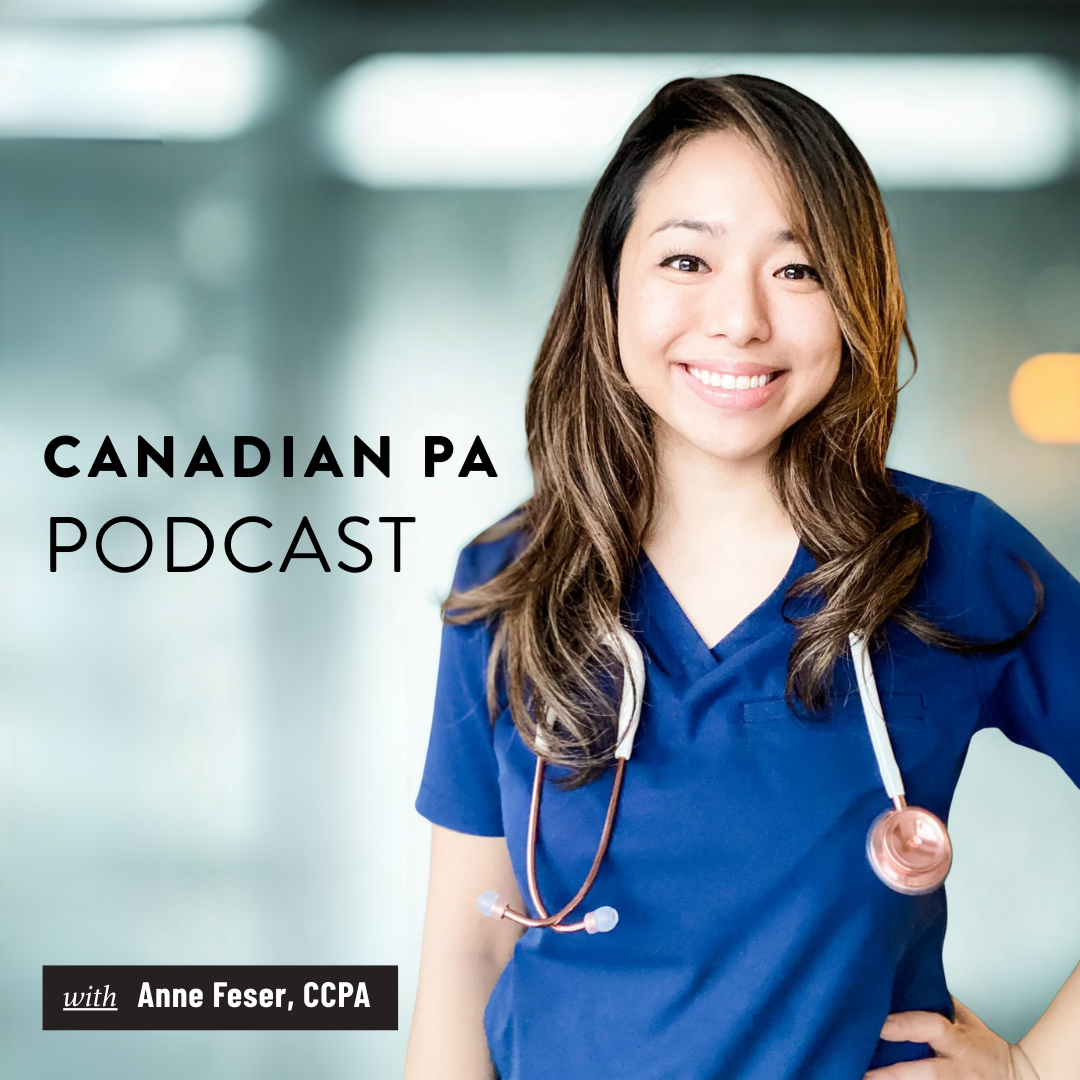
Episode #18: Brooke Grant, McMaster PAS2
“There’s a big difference between researching what the profession is like and actually watching a PA in action. You can really see how much more autonomy a PA has in clinic than you realize from the outside.”
Brooke Grant is a second-year PA student at McMaster University who made a deliberate choice to start clerkship in an elective rather than a core rotation. Over her first month in radiation oncology at Princess Margaret Cancer Centre, she saw new patients independently, presented a complex case at tumor board, and contributed to a quality improvement project redesigning H&P templates across multiple cancer site groups.
In this episode, Brooke reflects on what those first weeks looked like in practice. From navigating the mindset shift between student and clinician, to learning what the PA role actually looks like in a subspecialty setting.
WHAT YOU’LL LEARNHow to choose your first clinical placement based on learning environment rather than perceived skill transfer
What presenting a complex oncology case at a multidisciplinary tumor board looks like as a PA student
How to build clinical confidence when you're being evaluated from day one
What the PA role actually looks like in a subspecialty, from a student who observed it firsthand
GUEST BIOBrooke completed her Bachelor of Medical Science at Western University with a specialization in Interdisciplinary Medical Sciences before moving directly into McMaster's PA program. She discovered the profession through a peer during undergrad and was drawn to the role for its combination of rapid entry into practice, genuine clinical autonomy, and the flexibility to move across specialties throughout a career.
Now in her clerkship year, Brooke made the deliberate decision to begin with an elective in radiation oncology at Princess Margaret Cancer Centre, arranged through PA Maitry Patel. Over the course of that first month, she progressed from her very first patient interaction to presenting a complicated case at tumor board, while also contributing to a side project aimed at improving H&P templates across multiple oncology site groups. Looking ahead, Brooke's interests sit at the intersection of clinical practice and research, with oncology as her primary focus.

ON CHOOSING YOUR FIRST ROTATION“Whatever field you decide to go into for your first placement, you're going to get the base skills you need. Taking good histories, physicals, dictating-those are transferable skills you'll get anywhere you go.”
— Brooke Grant, 2nd year McMaster PA Student
ON PATIENT COMMUNICATION“I'd start every interaction the same way: I just want to hear from your perspective what your story's been and what brought you here today.”
— Brooke Grant, 2nd year McMaster PA Student
ON PRECEPTORS"You only have one year to ask as many questions as you want. Hopefully the people you're working with are open to facilitating that."
— Brooke Grant, 2nd year McMaster PA Student
ON LEARNING FROM MISTAKES"I knew I just needed to learn from the mistakes I made and not repeat them. By the end, I felt a lot more confident — not because I had everything figured out, but because I could see I had clearly improved."
— Brooke Grant, 2nd year McMaster PA Student
ON PRECEPTORS"You only have one year to ask as many questions as you want. Hopefully the people you're working with are open to facilitating that."
— Brooke Grant, 2nd year McMaster PA Student
ON PREPARATION & PROFESSIONALISM“When I walk into a room, I want the patient to be confident that the person they're speaking to is the right person to help guide them. The last thing they need is someone who feels unprepared”
— Brooke Grant, 2nd year McMaster PA Student
-
Discovering the PA Profession: Brooke's Background and Path to McMaster
Brooke [0:00] Hi, I'm Brooke Grant. I'm a physician assistant student from McMaster in my second year. I'm about one month into my clerkship. In terms of my background, I did my undergrad at Western in Medical Sciences. I graduated with a Bachelor of Medical Science with a specialization in Interdisciplinary Medical Sciences.
Brooke [0:36] I applied for the PA program towards the end of my degree and got in that cycle.
Anne [0:43] Congratulations. And how did you hear about the profession?
Brooke [0:46] The first exposure I had to it was from a friend who was on a charity committee that I was on in undergrad. When I was in second year, I heard he was applying to it and then he got into the program. That's when I started doing my own research and figured out that's what I wanted to pursue after my undergrad.
Anne [1:06] What really attracted you to this?
Brooke [1:11] One thing that attracted me was knowing someone who had experienced the program and had a good experience in it, so I knew going in that I'd get a good education. In terms of the actual PA career, I really liked the fact that after two years of training you can get right into the workforce while still having a high level of autonomy and a really solid medical background. I also thought it was really attractive being able to switch specialties if that's something you're interested in doing in the future.
Navigating the First Clerkship: Radiation Oncology at UHN
Anne [1:54] You just finished your first rotation. Tell us a little bit about that.
Brooke [1:59] My first rotation was in radiation oncology at UHN and I started at the beginning of September. I started in an elective. There are three different divisions of oncology practice: radiation oncology, medical oncology — which deals more with chemotherapy, immunotherapy, and different types of systemic therapies — and then surgical oncology. So we were dealing with radiation oncology for the month.
Brooke [2:30] The great thing about it was I got a lot of exposure to different groups throughout the month. I could spend a morning in breast clinic, the afternoon in GU, the next morning in skin clinic. So I got a lot of exposure to different types of cancer and different physicians.
Anne [2:50] What made you choose radiation oncology at Princess Margaret as an elective?
Brooke [2:54] It was Maitri Patel — she's who I organized my placement through. I saw the interview she did with Anne Dang at the end of last year, early this year, and I'd heard about radiation oncology through some people I know in medicine who are considering it for their residency. Knowing that there was a PA in the field, I did my longitudinal placement in the middle of first year and just had a really good experience. There was really good teaching and everyone was welcoming. I thought it would be a great learning experience for my first rotation.
Anne [3:32] What challenges did you experience starting with an elective, as opposed to students who start with a core rotation like family medicine or ER?
Brooke [3:41] The hardest part was knowing I was going into something I could potentially pursue as a career. So I had high expectations of myself — wanting to make a good impression on the physicians, PAs, and other healthcare practitioners I'd be working with. I had to shift away from that pressure and focus more on making improvement through the four weeks. Going from having no experience with patients to being able to take a history, case present, dictate, and see new patients more independently throughout the month. It was more of a mindset shift I had to work through in that first month.
Anne [4:35] What were your learning objectives going into your first clinical placement?
Brooke [4:39] Some of the more basic objectives were gaining solid experience taking histories, doing physical exams, and learning what the important questions are — and what you can leave out of a patient interaction. Being able to dictate and navigate the EMR was also a big part of what I wanted to learn. Those base skills I could carry into the rest of my placements. Then, specific to radiation oncology, I wanted to learn about tumor staging and how radiation oncologists work with medical and surgical oncologists in practice. A big one was also learning how to read imaging, and I got a lot of exposure to that in this placement.
Anne [5:32] What kind of imaging exposure did you get?
Brooke [5:34] Mainly CTs, PET scans, and some MRIs. Learning how to differentiate blood vessels from tumors or nodules on a scan. With PET scans, figuring out where common sites of uptake are and differentiating that from an actual metastatic nodule.
Anne [6:01] Overall, would you say you met your goals?
Brooke [6:04] Yes. I'd say I met all the goals I had set out. With histories, physicals, and case presentations, I was getting a lot of practice — particularly with new patients. In first year, if you go to a longitudinal placement, you tend to see a lot of follow-up patients because you're new to patient interaction. In this placement I saw a lot of new patients and was able to spend time reviewing their histories and doing a comprehensive look at the story of their diagnosis. I feel like I definitely developed skills in that area.
Brooke [6:41] Participating in rounds also gave me good exposure to how the different oncology specialties collaborate to build a comprehensive treatment plan. Specifically, last week during one of the GU clinics, there was a patient referred for radiation treatment and it was a complicated case — they weren't exactly sure how to approach the treatment plan. They let me present the case at tumor board. There was discussion between the surgeons, the radiologist who read the scans, the radiation oncologists, and the medical oncologists to figure out the next step in the treatment plan. So I got good exposure to the interdisciplinary teamwork that happens, especially at a place like UHN.
The Impact of Preceptors and Building Clinical Confidence
Anne [7:41] What should a PA student expect from a preceptor?
Brooke [7:46] I think what a PA student should expect is that no matter how busy the preceptor is, they'll take time to teach you. It may not be directly after a case, but at least a couple of times throughout the week they'll check in and ask what you want to get out of the placement and how they can facilitate that. As one of the physicians said to me this morning — you're there to learn, and you only have about one year to ask as many questions as you want. Hopefully the people you're working with are open to facilitating that.
Anne [8:26] What was it like having a PA as a preceptor? There are some rotations where that just isn't the case.
Brooke [8:34] It was really important to me to do at least one of my electives with a PA, because I know in my core rotations I may not have the option — there just may not be a PA in those placements. It was really helpful because there's a difference between doing a placement with a doctor versus a PA. You want to understand: if I work in this field, what is my role going to be? If there isn't a PA there, the only way to understand that is through asking. In addition to seeing what Maitri does day to day, she talked to me about potential areas where she sees the PA role expanding, even if that's not happening right now. Just different niches that not everyone could have explained to me the way a PA could. And the fact that she's been through the program, she knows what it's like to start in an elective — that was just really helpful.
Anne [9:41] How has your confidence in your skills changed from the start of the rotation to finishing it?
Brooke [9:47] I was really nervous to start. I just thought, I hope I'm not this nervous for the entire 12 months of clerkship, because it is stressful knowing that you're always being evaluated and people are always paying attention to what you're doing in clinic. That can be really intimidating. But I've gotten a lot more confident. In the first two weeks, I'd present a case to a physician and they'd ask me questions I couldn't answer and would have to tell me what needed to be included in the pathology report, the correct order to present it. I hadn't done it correctly, which was okay. I knew I just needed to learn from those mistakes and not repeat them. But towards the end, I learned what needed to be included and how different doctors liked things presented. I felt a lot more confident leaving those interactions — able to answer questions and knowing I had clearly made improvements, even though I still don't have everything figured out.
Personal Learning Project: Standardized Templates for Oncology
Anne [11:09] Did you have a personal learning project during your rotation?
Brooke [11:12] Yes. A couple weeks before starting my placement I reached out to Maitri to ask if there was anything I could do on the side to enhance my learning experience. Since oncology is something I'm really interested in — and something I've thought about pursuing outside of clinical practice, in research — I thought if there was anything that could give me exposure to the non-clinical side, I'd be interested. I ended up starting a project that Maitri had discussed with one of her supervisors.
Brooke [11:38] Basically, for all the different site groups — breast, lymphoma, GU — there are history and physical templates meant for residents and other learners going through new consults. They have some of the pertinent information you'd want to include in a history, all on one sheet, which is really helpful when you're coming in without knowing what the important parts of an exam are for each site group. My role was to use the templates, see where improvements could be made or things were missing, so that when residents and fellows come through the program, they're able to use them more effectively. It allows you to pull all the details from a patient's history onto one sheet so you can present it to the physician quickly and dictate efficiently. It improves the workflow that way.
Anne [12:52] What was your process in developing the standardized history and physical template for the different cancer site groups?
Brooke [13:00] My main process was using the pre-existing templates for the first couple of weeks. I would note if I took a history and there were certain aspects missing from the sheet that seemed important, or something the physician wanted to know. Then I'd modify the templates as needed until I felt they were comprehensive.
Anne [13:29] How has this personal learning project helped your growth?
Brooke [13:32] It helped with time management on top of a full-time placement — learning how to set aside time for a separate project on the side. I think it's good that I started doing that early so that for future placements I'm able to manage my time when it comes to finishing work and having the energy to study, or taking on other projects. And it just helped me learn about oncology. Going through those templates and looking at the pertinent details for different types of cancer was a way to solidify what I'd learned in placement.
Key Takeaways and Advice for Successful Clinical Rotations
Anne [14:19] What did you enjoy most about this rotation?
Brooke [14:24] I think the thing I liked most about being at UHN was the people and the learning experience. Anytime I saw a patient, the physician would let me ask any questions I had after the case was over. They'd sit down and explain the reasoning behind a treatment decision, or why they chose watchful waiting and follow-up. I was nervous about coming into a really specialized field without a lot of background in some of the more basic areas of medicine. But I got a really good foundation because UHN is just a great place to learn.
Anne [15:23] What would your advice be for students starting with an elective?
Brooke [15:28] One of the biggest pieces of advice I could give is to not just focus on choosing a specialty you think will help you most for the rest of clerkship. When I was trying to figure out where to start without much clinical experience, I was told that certain areas would give me more transferable skills for my next placements. But I feel like whatever field you go into for your first placement, you're going to get the base skills you need. Taking good histories, physicals, dictating — those are transferable skills you'll get anywhere you go. So I'm glad I focused more on doing a placement with people I knew would provide a good learning experience. Since I had met Maitri before, I knew we'd get along, and I knew the physicians there were great people. Knowing you can develop good communication with your preceptor and feeling confident going in that it'll be a positive learning environment — that was really the best choice I could have made.
Anne [16:52] How can other students also be successful in a challenging rotation like this?
Brooke [16:57] When I commit to something, I want to put 100% of my effort into it — especially in an area where cases are really complex. Part of what motivated me was that when I walked into a room, I wanted the patient to be confident that the person they were speaking to was the right person to help guide them with their treatment. Since I was usually the first person a new patient would see in that clinic before the physician, I wanted them to know I had spent time looking at their case. I'd get in early, make sure I knew when their tests were done and understood the full story of their diagnosis up to that point — so that by the end of our interaction, they felt they were in good hands.
Brooke [17:50] That drive came from wanting to do well and make improvements, especially since we only have two electives and oncology is a field I genuinely love. But it also came from caring about the patients themselves, because it's a tough time in their lives. The last thing they need is someone coming into the room who feels unprepared and doesn't know what their experience has been so far.
Adjusting to PA Student Life: Commuting, Studying, and Daily Rhythms
Anne [18:21] What do you do after a day? How did you manage your time outside of placement?
Brooke [18:29] It's a big adjustment. At McMaster, we're used to being in class only a couple of hours a day, five days a week, with most of our studying done at home. It's a whole different ballpark when you're at work all day. I also live out of town and was commuting into Toronto — up around 4:30 or 5 a.m., a two-hour train ride in, there from 8 to 5:30, then a two-hour commute home. By the time I got back at night, I didn't have a lot of time to do anything except decompress, eat dinner, and go to bed.
Brooke [19:04] So I used my commute time. For the first couple of weeks, I listened to podcasts on the way in — understanding the basics of what radiation treatment involves, the different types of radiation beams, and how treatment differs between cancer types. On the way home, I'd use the time to log my encounters, which we do at McMaster for all our rotations, and do flashcards. I tried to do that for at least half an hour to an hour every day. Most of my studying happened on the train. Once I got home, I had about an hour to an hour and a half before heading to bed to do it all again.
Evolving Understanding of the PA Role
Anne [20:09] Now that you've had the chance to work alongside a PA, how has your understanding of the profession changed from first year to second?
Brooke [20:17] There's a big difference between researching what the profession is like and actually going into clinical practice and watching a PA in action. You can really see how much more autonomy a PA has in clinic than you realize from the outside, and how well PAs are utilized even in sub-specialized fields.
Anne [20:44] So what's your elevator pitch now?
Brooke [20:46] When people ask me what a PA is, I say that a PA is a medical practitioner who works as an extension of the physician. They're able to see patients on their own — take histories, do physicals, decide on treatment plans — but they also work really closely with the physician. I think a really important aspect of the PA role is working in a team environment and being able to collaborate well with many different multidisciplinary positions.
Patient and Staff Interactions: Communication and Relationship-Building
Anne [21:20] Can you speak to how you make patients feel they're being listened to?
Brooke [21:25] Even though I'd review their chart beforehand and have a solid understanding of their history over the past couple of years, I'd start by giving them a chance to tell me who was in the room with them that day and just get to know who I was talking to. I'd start every interaction by saying: I just want to hear from your perspective what your story's been and what brought you here today. That helped me understand their own understanding of why they were in clinic — sometimes people didn't even realize that radiation treatment was the purpose of the visit. And it just gave them the opportunity to talk about their experience from their own point of view, instead of me walking them through a timeline of events. I think that small move of giving them space to speak first made a real difference.
Anne [22:36] What about building relationships with other staff — physicians, residents, nurses?
Brooke [22:45] I really tried to just be kind to everyone and make connections throughout the clinic — from the nurses who bring patients into the room, to the physicians, residents, and other healthcare practitioners. I wanted everyone to feel like they could approach me, and in turn, I wanted to feel comfortable approaching them with questions. In one of our clinics — the endocrine clinic — after we signed a patient up for radioactive iodine treatment, one of the nurses would go into the room and walk them through the whole treatment. By building a relationship with those nurses first, it was much easier to approach them when I needed a patient to have that conversation. It's a lot harder to ask someone for help if you haven't taken the time to connect with them first. You can't expect people to help you if you don't treat them with kindness.