Episode # 16: Kelsi, UofT PAS1
“Physicians told me that even though I’d only been in school for a short time, our education was really on par with what they learned in medical school. A lot of them really liked that.”
Kelsi is a first-year PA student at the Michener Institute and one of the few students in the program from Alberta. After six straight years of applying to medical school, she pivoted to PA and hasn't looked back.
Kelsi discusses costs financially, logistically, and emotionally, to pursue PA training as an out-of-province student. She covers her 25-hour drive from Calgary to Ontario, her strategy for surviving second-year rotations split between Thunder Bay and Toronto, and why she feels a genuine obligation to bring the profession back home to Alberta.
WHAT YOU’LL LEARNHow to turn years of medical school rejections into direct preparation for a PA interview
What out-of-province students need to plan before second-year clinical rotations begin
How to build a study schedule that holds up when you've been out of school for five or six years
What the PA profession currently looks like in Alberta and why early graduates carry unusual advocacy responsibility
GUEST BIOKelsi spent five years completing a Bachelor of Science in Psychology, then another six working in an endocrinology clinic while applying to medical school every single year. That combination of persistence and hands-on clinical exposure gave her a foundation most PA applicants don't have, and when she finally pivoted to PA, she brought strengths in endocrinology and behavioral health that her classmates ended up leaning on.
She's one of the only Alberta-based students at Michener, which meant navigating the entire program without a local support network. For second year, she planned a 25-hour solo drive from Calgary to Ontario and requested back-to-back five-month placements in Thunder Bay and Toronto specifically to avoid repeated moves and the instability that comes with them.
Beyond surviving the program, Kelsi is quietly becoming a voice for PA integration in Alberta. She made a habit during her LCS placements of taking a few minutes before each rotation to explain the PA scope of practice to supervising physicians, most of whom had never heard of the role, and found that a single placement was often enough to shift a physician's thinking about whether they'd want one on their team.
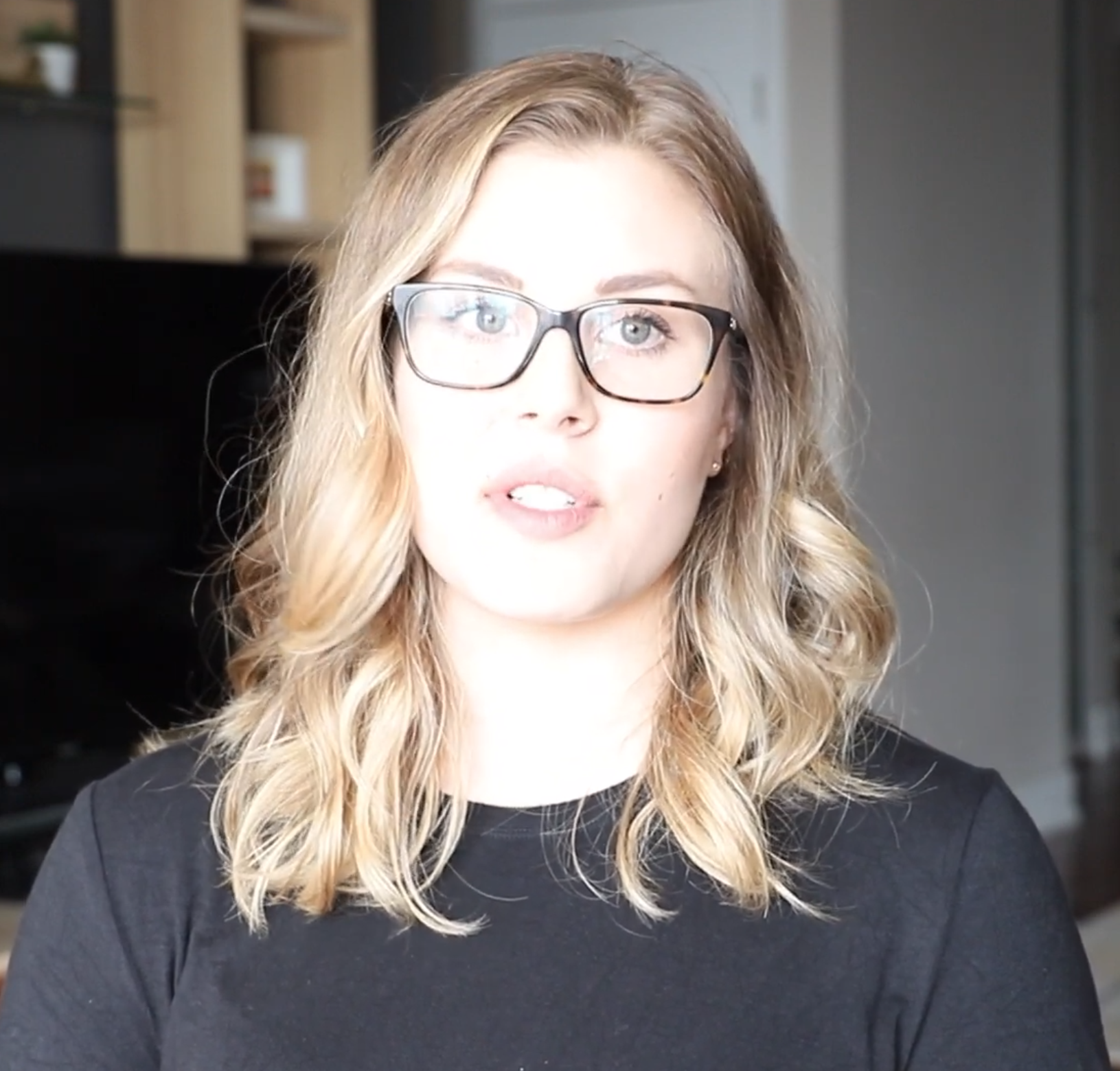
MEMORABLE QUOTE“You're basically running for the next two years and drinking from a fire hose with the amount of information coming at you. Take advantage of your summer.
— Kelsi, UofT BScPA Student
-
What Is a PA? Kelsi's Definition
Anne [0:40] So first, what is your definition of a PA?
Kelsi [0:43] A PA is an extension of a physician who's able to practice under a certain scope of practice, depending on what the supervising physician is practicing and where. Someone who is able to provide high quality healthcare to patients in a way that is similar to a physician, but also a little bit different because we're able to spend more time with the patient than most physicians are able to.
Kelsi [1:11] I may not have as much education as someone from medical school, but I like the ability to learn on the job and transition between specialties if needed.
Kelsi [1:26] I would say a PA is a highly trained, highly educated healthcare practitioner that can see patients, prescribe, and be really well integrated into a healthcare team, just under the supervision of a physician.
Six Years of Medical School Applications: Kelsi's Road to PA
Kelsi [1:45] I took my Bachelor of Science in psychology and it took me a total of five years to finish my degree. I didn't really know what I wanted to do after I finished, but I knew I wanted to be in medicine. When I was very young, I thought about dentistry or maybe being a physician.
Kelsi [2:05] It really wasn't until my third year that I realized I wanted to apply to medical school. I wrote my MCAT between my third and fourth year and then applied to medical school the following year. I was unsuccessful.
Kelsi [2:22] When I found out I didn't get in, I didn't really know what to do. I randomly started applying to jobs and landed a position at an endocrinology clinic. I told my employer I was applying to medical school and wasn't planning on staying long-term. They were well aware of my goals.
Kelsi [2:40] Every year I would apply to medical school and every year I never got in. After five or six years of doing that, I realized I needed to do something different. I was getting older and I eventually wanted a career, but also a family.
Kelsi [3:02] That's how I ended up here. I did some volunteer work in a hospital throughout my undergrad and it was always something I was very interested in. There's no one in my family in medicine. I was just always very intrigued by science and biology.
Kelsi [3:19] I took a lot of courses in that in my undergrad, and in my third year I realized being a physician seemed to line up well with my goals. That's why I started applying.
How Six Years of Med School Prep Shaped Her PA Application
Anne [3:36] How did your six years of applying to medical school prepare you for applying to PA?
Kelsi [3:41] Just filling out the application itself was something I was already used to, having filled out so many medical school applications. And during that time I had read the book Doing Right, as I think a lot of pre-PA and pre-med students have done.
Kelsi [4:01] I also attended a lot of MMI's for medical school. Even though I never got in, going through the MMI interview process really helped me with my PA interview. I actually didn't prepare for the PA interview at all because of how much MMI experience I already had.
Kelsi [4:19] In Alberta, there's a program for rural students. I was born and raised in a very rural northern Alberta community, and a family physician there connected me with a woman who did MMI prep for students wanting to go into medicine, specifically to encourage more students from rural communities to go back and practice there.
Kelsi [4:57] I did a few sessions with her. It was an unusual thing — I only found out about it through connections from my hometown. But it really helped me with everything from what to wear to an interview, to how to portray yourself, how to think through questions, and how to approach ethical questions. That's also why I read Doing Right.
Anne [5:27] Was that a free service for rural students?
Kelsi [5:30] For me, yes, absolutely free. This woman's husband is a physician and they worked just outside of Calgary. I got connected with her through one of the physicians from my hometown. She met with a few rural students applying to medicine and basically walked through how to do an MMI. She had actually conducted some of the interviews at MMI's at schools in Alberta.
Why Kelsi Is Glad She Pursued PA: People, Balance, and Purpose
Anne [5:57] Why are you glad that you pursued the PA profession?
Kelsi [6:00] I'm really glad I pursued the profession because of the people I met in the program. Even though it took me five or six years to get here, I'm weirdly grateful for that because if I had gotten in any other year, I wouldn't have met the people that I did.
Kelsi [6:17] Beyond that, I feel like I've finally found something where I'm able to pursue medicine, but still have the work-life balance I want.
Anne [6:39] So you really like the small community?
Kelsi [6:41] I do. Sometimes it can be frustrating that people don't know who you are or what a PA is. But at the same time, I'm proud to say I'm a PA and explain what that means. That's kind of how I see it.
Study Schedules and Avoiding Burnout in PA School
Anne [6:58] What does your study schedule look like day-to-day?
Kelsi [7:03] When I first started in October, I would look at my entire week, write down everything I had to do in my planner, and basically do school from 9 to 5. Once 5:00 hit, regardless of how much I got done, I would stop and do something else.
Kelsi [7:21] I was very strict about that for the first semester. As the semesters went on and the weather got nicer, I became a little more relaxed. But I still used my planner. I just wasn't as rigid about the 9-to-5.
Kelsi [7:40] The course loads also changed as semesters went on. Because I had been out of school for five or six years when I started the program, I had to relearn how to study. As I became more efficient, I didn't have to spend as many hours doing it.
Kelsi [8:05] In my first semester I always did Monday to Friday, 9 to 5, and tried not to work weekends. I think that's how I avoided burnout.
Specialty Interests and Out-of-Province Rotation Challenges
Anne [8:15] Do you have any idea of what specialty you want to work in based on your exposure so far in first year?
Kelsi [8:19] I really don't. I've been trying to keep an open mind because my LCS's haven't given me a ton of exposure to different specialties — really only three or four. I don't have enough experience to make that decision yet. I'm waiting for second year to get that clinical exposure and hopefully find something I absolutely love.
Kelsi [8:41] With that said, I've always been really interested in gynecology. Even when I was applying to medicine, I thought if I became a physician, it would probably be OB. I'm really looking forward to my women's health rotation. But I'm trying to keep an open mind and not close off doors before I've opened them.
Kelsi [9:12] As an out-of-province student, I'm required to do my rotations within Ontario. When I first applied, I asked if I could do any in Alberta, but because there's no PA program in Alberta, the program doesn't have the connections to set that up. They offered Manitoba, but without any financial support.
Kelsi [9:32] For me, if I'm already traveling to another province, I'd rather just come to Ontario where I have some additional financial support from the program. For second year, I requested to be placed in Thunder Bay for five months and then Toronto for five months, just for ease of travel and stability. I don't know anyone in Ontario outside of my classmates, and I don't have family to stay with.
Kelsi [9:56] I'm also driving from Alberta at the beginning of second year.
Anne [10:16] How long is that drive?
Kelsi [10:17] About 25 hours. So I wanted to drive to a place where I could stay and do the majority of my rotations for the first half, then drive south for the second half, and then figure out after that whether I'm driving back to Alberta or staying here.
Advice for Incoming Students: Enjoy Your Summer
Anne [10:38] What advice would you give to incoming first-year students? What should they do in the summer before coming?
Kelsi [10:44] Enjoy your summer. There are a lot of opinions about this — whether to study, brush up on anatomy, or travel. Because of my undergrad background in psychology, I didn't have any anatomy or physiology courses. A lot of my classmates came in with kinesiology or health sciences backgrounds, so they had that foundation. I came in blind.
Kelsi [11:12] Getting thrown into anatomy labs and cadaver labs with material I'd never touched before was overwhelming. But I knew I could learn quickly and study efficiently to get through it. So I used the summer to travel, hang out with friends and family, and work a little. We also had a medical terminology course during the summer.
Kelsi [11:37] I didn't know anyone in the program to warn me that first semester would be hard, and honestly I'm glad. I'm really grateful for those months because once September started, it was like a switch flipped. You're basically running for the next two years and drinking from a fire hose with the amount of information coming at you.
Kelsi [12:11] For most people, you just have to relax and enjoy the freedom you have now, because your next two years are going to be so busy and you'll have to sacrifice personal time. Take advantage of that summer.
Kelsi [12:35] In terms of anatomy specifically, I had no background, so I was learning 100% from scratch. Learning that much in one month was difficult. But I started to realize I brought things to the table that my classmates didn't — my psychology background, my endocrinology background. A lot of my classmates had never experienced those areas, even if they knew anatomy cold.
Kelsi [13:18] So I took the time to get to know my classmates, learn what their backgrounds were, and used them as a study tool. I had them teach me, and I taught them in return.
Anne [13:30] How did you do that? Was that in person or online?
Kelsi [13:31] In person. During our first residential block in September, we were doing anatomy labs and clinical skills. When I was struggling with anatomy, I buddied up with someone who had taken kinesiology and they basically taught me the whole human body in a month. Then in second semester when we dove into endocrinology, and in third semester when we hit psychology, classmates started coming to me for help in those areas.
Learning Clinical Skills: Physical Exam, OSCEs, and Building Comfort with Patients
Anne [14:05] What was your experience learning clinical skills, physical exam, OSCEs, and so on?
Kelsi [14:15] The clinical setting was actually something I was already used to. I had worked in clinical practice for about five years at that point, so interacting with patients and working in a clinic wasn't new to me. It was more about learning all the terminology and getting comfortable with hands-on patient contact — things like performing a physical exam — which I had never really done before beyond putting on a blood pressure cuff.
Kelsi [14:45] There was a learning curve, but I had already been exposed to patients and how to talk with them. The challenge was more about how to efficiently talk to them, perform a physical examination in five minutes, and manage the timing.
Envisioning Her PA Future: Alberta, Ontario, and the Career Start Program
Anne [15:04] How do you envision your PA practice going forward?
Kelsi [15:04] To be honest, I don't really know at this point. It's something I get asked weekly by family and friends — where are you going to end up working, where are you going to live? And I have to say, I don't know right now.
Kelsi [15:21] I know for second year I'll be in Ontario for my clinical rotations. Beyond that, I'm not sure if I'll stay for the Career Start program or go back to Alberta and find a position there.
Anne [15:37] Are you open to working in both provinces?
Kelsi [15:40] The Career Start program in Ontario is something I'm more open to, because I wouldn't be competing against PAs who already have experience. It's only for first-year graduating students, which is appealing.
Kelsi [15:58] But I've also thought about wanting to contribute to the profession in Alberta. Being the only person from Alberta in the program, and the first from Alberta to go through it, is something I never really expected. This sense of responsibility — being a trailblazer for Alberta PAs — has sort of fallen into my lap.
Kelsi [16:26] I do feel an obligation to go back to Alberta and expand the profession there. There aren't many PAs in Alberta, and we really are needed. I just don't think we're being utilized to our full ability right now. I'd love to go back if I can, but I'm open to staying here if needed.
Building Awareness for PAs in Alberta: One Rotation at a Time
Anne [16:50] In what way would you want to contribute in Alberta?
Kelsi [16:53] I just want to make physicians and patients more aware of the profession. During my LCS's, the majority of people I came across had never heard of a PA. I often took a lunch hour or a few minutes before starting my day to explain what I'm able to do and what I'm not.
Kelsi [17:12] Through those rotations, I saw genuine interest emerging from physicians who had never heard of the profession. Just having me in the clinic for a few hours started to show them that there was room for this kind of extended practitioner — someone who could do what a physician does, but not take over their role.
Kelsi [17:35] I even heard comments from physicians that even though I'd only been in school for a short time, our education was really on par with what they learned in medical school. A lot of them really responded to that. And since being in the program, I've talked with students from Alberta who are now interested in applying and entering the program. I feel like I've started a trend, hopefully.
What Out-of-Province Students Need to Know Before Applying
Anne [18:17] What should prospective out-of-province students know, beyond tuition and distance learning — what other barriers should they be aware of?
Kelsi [18:26] The flights, the living expenses, where you're going to live. And then there's the question of where you'll work after you graduate. They also need to be comfortable with being away from friends and family during second year. If you're from Ontario, people can at least drive to you or fly in relatively quickly. It's about a four-hour flight from Calgary, and it's not cheap.
Kelsi [19:00] I've had to make peace with potentially not seeing my friends and family for a year or two.
Anne [19:11] I can only imagine what that would be like. I'm such a homebody — I go home every weekend to see my parents. Are you planning around the big holidays? How are you going to stay sane, centred, and avoid burnout or loneliness? What are your plans for managing that in second year?
Kelsi [19:33] I've actually been lucky to be placed with some of my classmates for rotations. I'll be in Thunder Bay for five months and a lot of classmates and friends will be coming through at the same time. That'll help a lot.
Kelsi [19:49] I'm also lucky to have family coast to coast — Alberta and Nova Scotia — so Nova Scotia is actually a bit closer from here. I've already been thinking about Christmas: do I fly back to Calgary, fly to Nova Scotia, or stay in Ontario with a classmate's family? And I've thought about March break too — whether to take a vacation or not. It's an extra layer of planning that I think a lot of people don't anticipate.
Anne [20:31] Are there plans among your classmates to support each other through second year?
Kelsi [20:36] Yes. Like I said, a lot of us are placed together, which I think will be really good. And in terms of other support, even in first year I was regularly Skyping or FaceTiming classmates, or texting them. I'm going to continue doing that in second year too.
The Impact PAs Could Have on Alberta's Healthcare System
Anne [20:56] What difference do you think PAs will have in Alberta if they're fully introduced and integrated? What impact on healthcare?
Kelsi [21:07] A huge impact, especially because so much of Alberta is rural. The majority of the province is outside Edmonton and Calgary, and a lot of communities don't even have access to a family physician. The more PAs we get there, the more access to care we can provide, and we can drastically reduce wait times. In some specialties in Alberta, there's already a one to two year wait for a consultation. By introducing more PAs, I believe we can cut those wait times down significantly.