Episode #15: Eden, PA in Hematology-Oncology
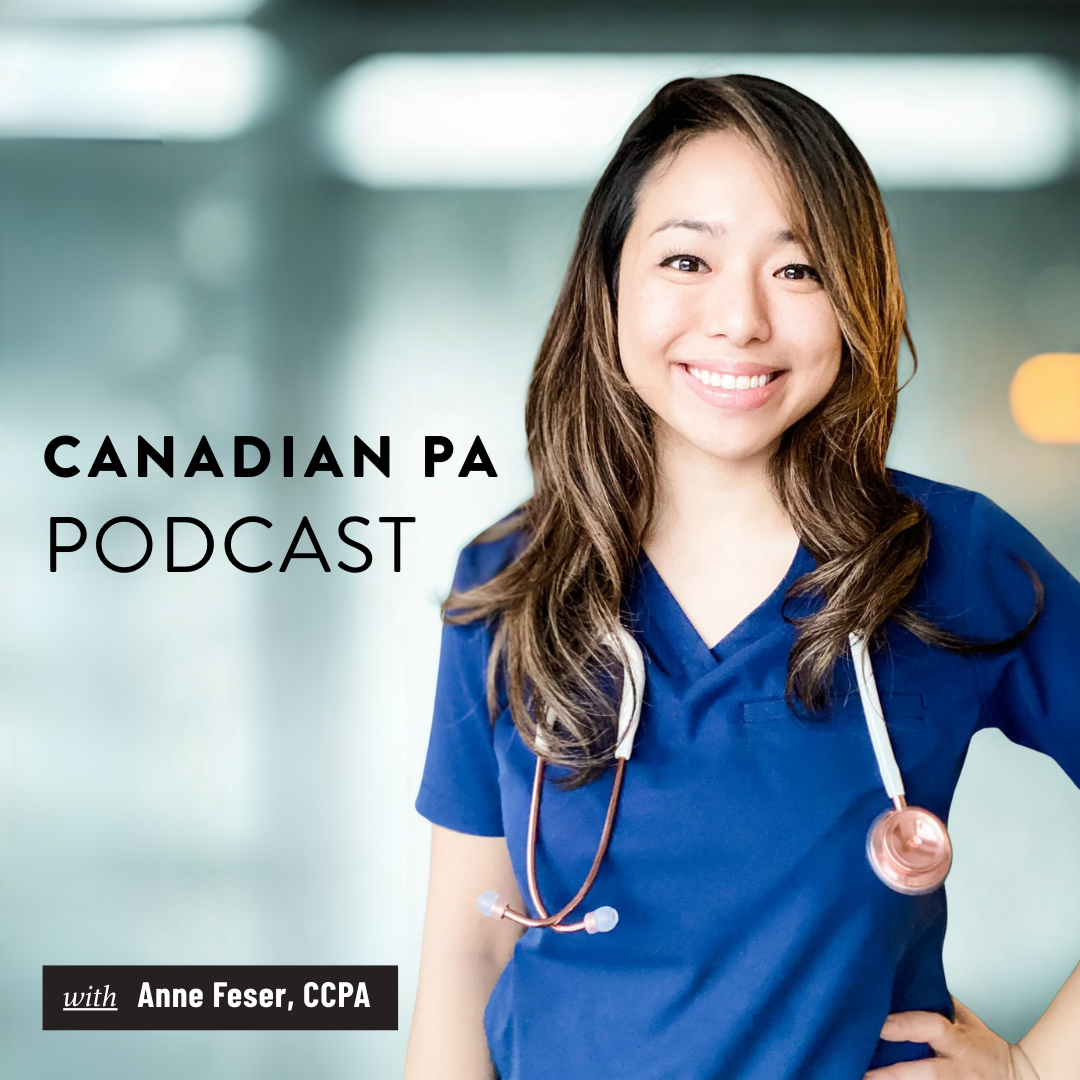
“Being a physician assistant is one of the best decisions I’ve made because you get to practice medicine, build real patient relationships, and still have a life outside the hospital.”
Eden shares her path from a microbiology background at the National Microbiology Lab to becoming a Physician Assistant through the University of Manitoba, highlighting how the removal of healthcare hour requirements changed her trajectory. She breaks down why the PA profession offers flexibility, strong patient relationships, and a sustainable career in medicine.
She outlines the structure of the Manitoba’s MPAS program, describing the intensity of first-year didactic learning, early clinical exposure, and the transition into clerkship rotations alongside medical students. Her insights clarify what it actually feels like to move from classroom learning to clinical responsibility without a built-in support system.
Eden walks through her transition from a rural hospitalist role with high autonomy to a specialized hematology-oncology position in acute leukemia and bone marrow transplant. She gives a clear picture of daily responsibilities, procedures, and the emotional and clinical complexity of caring for oncology patients.
GUEST BIOEden began her path in science with a Bachelor of Science in Microbiology and worked at the National Microbiology Laboratory in Winnipeg across viral and biorepository labs. Alongside her academic work, she was actively involved in dance, musical theatre, and community volunteering with organizations supporting pregnant youth and refugee populations.
Her decision to pursue the Physician Assistant profession came after discovering that healthcare experience requirements had changed, allowing her to apply to the University of Manitoba’s Master of Physician Assistant Studies program. During admissions and training, she developed a strong understanding of the PA role and demonstrated initiative through research, clinical exposure, and a clear commitment to patient care.
Since graduating, Eden has worked as a rural hospitalist PA with significant autonomy before transitioning into a highly specialized role in hematology-oncology, focusing on acute leukemia and bone marrow transplant. Her current work involves complex inpatient care, advanced procedures, and ongoing contributions to professional development through national collaboration and education initiatives.
ON STANDING OUT IN PA ADMISSIONS“It's not just about grades. The people who stand out are the ones who show initiative, curiosity, and a clear understanding of what a PA actually does.”
— Eden Dupont, PA in Hematology/Oncology
ON THE PA/MD SUPERVISORY RELATIONSHIP“The more a physician invests in teaching and trusting you, the more value you can bring back to the team.”
— Eden Dupont, PA in Hematology/Oncology
ON TRANSITION TO PA PRACTICE“You’re learning how to be a PA and learning medicine at the same time. That takes time, and you have to give yourself permission to grow into it.”
— Eden Dupont, PA in Hematology/Oncology
ON KNOWING YOUR LIMITS“You have to know when to ask for help. That’s not weakness, that’s how you become a safe and effective provider.”
— Eden Dupont, PA in Hematology/Oncology
-
Eden's Journey: From Microbiology Lab to Physician Assistant
Eden [0:00] Being a physician assistant is one of the best things I've ever done. I feel like it's a great profession if you want to work in medicine, but also be able to work closely with patients, see patients, have time with patients, and have a good quality of life.
Eden [0:28] I'm Evan DuPont and I'm a physician assistant at Health Sciences Centre in Winnipeg. I graduated from the University of Manitoba Masters program. Prior to becoming a physician assistant, I had my Bachelor of Science in Microbiology. I worked at the National Microbiology Lab in the Viral STDs and Viral Exanthema lab, and then transitioned to the Biorepository laboratory.
Eden [0:52] Aside from that, I was involved in dance and musical theatre, and volunteering with a group called Villa Rosa, a place for pregnant youth, as well as the Need Centre, which works with refugees.
Host [1:05] How did you hear about the PA profession?
Eden [1:09] I heard about it twice. The first time was during my undergrad, but I didn't look into it seriously because it required healthcare experience that I didn't have. The second time was when I was working in the lab, waiting on samples, and I was exploring other programs — whether to do a masters in medical microbiology or look into medicine.
Eden [1:26] At that point I noticed the program profile said it no longer required healthcare hours. I called the program maybe twice that day just to confirm before applying.
Eden [1:44] What really drew me to the PA career is that it allows you to work in different specialties, especially if you want to keep learning new things. It also offers a good quality of life. The program is only two years, and the hours required for work come with flexibility — call shifts, daytime shifts. There's just a bit more flexibility and time.
Host [2:13] And Manitoba's PA program is the only Masters in Canada.
Competitive Edge: Tips for Manitoba PA Program Applicants
Host [2:17] What tips would you have for students applying and ensuring that they're competitive?
Eden [2:24] For the University of Manitoba, I find they look for things outside the box — more volunteering, more original ideas. That tends to stick out. You need your basic sciences and a strong work ethic, of course, but they're really looking for people who have the drive to do a little more.
Eden [2:49] When I've sat in on interviews, there's a certain passion that stands out — applicants who have genuinely looked into the program, who have a sense of what PAs do and what they'd want to do if they became a PA. Just a bit more research into the capabilities of what a PA can do goes a long way.
Navigating the 'Big Blur': First and Second Year PA School
Host [3:08] What was your experience of Manitoba's program?
Eden [3:12] It was a big rush of information — the first year was a big blur, though a great time learning medicine and spending time with the group.
Eden [3:31] The first year is didactic. There are three semesters — at least when I was there, though it may have changed. It starts with basic sciences like biochemistry and physiology, then adds medicine progressively, alongside physical examination and clinical skills. Early on there's something called early exposure, where you shadow a PA or physician every week to see how the flow works. Every week there was a test or presentation from one of the courses.
Eden [4:16] There was also a research component getting started, and reflection classes as well. Second year was a big challenge in that we were separated. You become very close with a group of 12 people, and then when you go out on rotations, you're placed with the medical students and you no longer have that built-in support.
Eden [4:36] You do most of your core rotations in Winnipeg, across different hospitals. I was fortunate enough to go to the Diavik Diamond Mine near Yellowknife to see occupational medicine. That was interesting, but it was a big learning curve fitting in with the medical students when you're the only PA in the group.
Host [5:06] Would you say your clinical roles and responsibilities were similar to third or fourth year medical students?
Eden [5:12] It was quite a learning curve getting to that level, especially because a lot of the physicians who are teaching don't know what a physician assistant is. Finding where you fit in is hard when your role isn't recognized.
Host [5:30] So how did you navigate that? Was there a lot of education you had to do on the spot?
Eden [5:34] With the supervising attending, they would always ask what I was expected to do. I would educate them on what we can do and ask them to teach me similarly to how they'd teach medical students. The program does prepare you for that — we had the elevator speech on what PAs do, and the early exposure placements helped us see the full scope of what a PA can do.
Understanding the Capstone: Research in the Manitoba PA Program
Host [6:10] Tell us a little about the capstone project, because we don't have that in Ontario.
Eden [6:15] The capstone project can be either a review of existing papers in a specialty you're interested in, or an original piece of research. It's usually geared toward PA practice. A lot of my classmates did paper reviews with physicians in areas like endocrine, GI, or cardiology.
Eden [6:33] For mine, I surveyed PA graduates across Canada about emergency medicine — specifically whether they felt their program prepared them to work in emergency medicine. The first year lays the groundwork: how to create a PICO question, how to navigate research papers. The second year is when you formulate your question, get assigned a mentor, and get started.
From Graduation to Practice: The PA Job Hunt Then and Now
Host [7:22] How did the job plan work for graduates of the program? I know this was about five years ago.
Eden [7:27] We were a lucky class. They presented us with a package of available jobs in the province. There were more positions than our class size of 12 — some in the north, some in rural areas. We had a window to apply to the ones we wanted, there was an interview session, and we all had jobs by the time we graduated.
Host [7:56] Is that still the case for grads now?
Eden [7:57] Unfortunately, no. Jobs are now just posted publicly through the Manitoba Network, open to anyone.
Host [8:09] Do you still keep in touch with your classmates?
Eden [8:11] Yes, some of my best friends are from that class. A couple are working as hospitalists in peripheral hospitals in Winnipeg. There's one in plastics surgery, one in nephrology with the dialysis program, one in Calgary, and one working in emergency in New Brunswick.
Autonomy and Teamwork: Life as a Rural Hospitalist PA
Host [8:42] Your first job was as a hospitalist PA in rural Manitoba. Tell us about that.
Eden [8:48] I worked with one supervising physician during the week. We had about 30 patients depending on the load, across two floors — a surgical floor primarily managing pancreatitis and small bowel obstructions, and a second floor for internal medicine with more complex presentations. I was primarily responsible for the first floor. I'd round before the physician, do my own planning, and handle discharges myself. In the afternoon I'd go help the physician on the second floor. It was very much a team effort, but also very autonomous.
Host [9:38] When you say autonomous — were you writing your own prescriptions and ordering your own investigations, or did you need physician sign-off?
Eden [9:44] As time went on — and it was my first job, so it built gradually — I would see admissions myself, write my own orders, investigations, and manage the patient during the week. If they were ready for discharge, I'd handle that too. Sometimes the physician wouldn't directly see a patient but would be aware of them, and they'd take over responsibility overnight since I wasn't doing overnight call.
Host [10:11] How was working in rural Manitoba different from being a hospitalist in an academic centre?
Eden [10:18] In a rural area, there's more autonomy by necessity. With fewer physicians on site, you're more responsible for your patient — more discharge planning, more family conferences, and you become the point person for the family. In an academic centre there's more formality around rounding, and because patients have more complex specialty presentations, there's more involvement from other services.
From Rural to High-Stakes: Specializing in Hematology-Oncology
Host [11:08] You have a different specialty now. What made you decide to make the switch?
Eden [11:11] I was living in Winnipeg and commuting about an hour each way. During one winter, I was in a pretty bad rollover accident. I wasn't physically injured, thankfully, but I started looking for jobs in Winnipeg. When the hematology-oncology position was posted, I didn't look at it at first, but my husband — who's a pediatric pharmacist in bone marrow transplant — called it "magic science." That passion was contagious, and he pushed me to look into it further and apply.
Host [11:52] And what specialty do you work in now?
Eden [11:55] I work in acute leukemia and bone marrow transplant — a section of hematology-oncology. We do a lot of supportive care for patients admitted with leukemias, lymphomas, and anyone requiring high-dose chemotherapy who needs to be inpatient.
Host [12:24] How did they orient you as a new hire?
Eden [12:29] Fortunately, the service had previously worked with clinical assistants — international medical graduates doing a similar role — so the ward already understood our scope. They taught me the procedures: bone marrow biopsies, lumbar punctures with intrathecal chemotherapy, and skin biopsies. A lot of it was also independent learning because it's a specialty you simply don't learn in school. When I saw a new case, I'd go home that night and read everything — all the chemotherapy drugs, all the side effects. My husband helped me build a reference list of what to watch for and how to manage it on the ward.
Daily Life and Key Procedures in Bone Marrow Transplant
Host [13:28] Are there other procedures you do as well?
Eden [13:31] Lumbar punctures, bone marrow biopsies, and skin biopsies. Sometimes we help with bone marrow harvests in the OR with the attending, depending on the type of sample needed.
Host [13:45] How did you get those competencies — was there a workshop, or did someone teach you on the ward?
Eden [13:47] The clinical assistants and the other PAs on the ward taught me directly. See one, do one, teach one.
Host [14:00] What does a typical day look like?
Eden [14:05] There are five of us, so we do call shifts. During the day we pre-round, dividing patients among ourselves based on who's there. Mid-morning we do bone marrow biopsies as needed, then the attending joins for rounds — which are quite thorough, involving pharmacy, dietitian, social worker, and nursing. We go through each patient, build a plan, and make any necessary consults. After rounds we handle admissions, which can be planned for transplant or unplanned due to side effects like neutropenic fevers or graft-versus-host disease. Afternoons are usually when we do lumbar punctures with intrathecal chemo.
Preparing for Oncology: Learning Resources for Students
Host [15:22] For a student interested in doing a rotation or pursuing a job in hematology-oncology — looking back now, what would you recommend they use to prepare?
Eden [15:32] A good foundation in internal medicine is essential — managing heart failure, pneumonias, arrhythmias like A-fib — because a lot of the side effects you'll see are similar. On top of that, there are extra layers specific to the specialty, especially around chemotherapy. There's also a significant social aspect: these patients often receive a major diagnosis and are admitted for months at a time, so that emotional and relational side of care is really important to develop.
Eden [16:13] I'd say the first thing to do is go to a website called Be the Match. It has BMT 101 and a lot of introductory modules — a great starting point if you're interested.
Host [16:27] Have you had any students or medical learners rotate on your service?
Eden [16:33] Our ward more commonly takes residents — our senior residents and fellows. We rarely see medical students; the ward is primarily run by the clinical assistants and PAs.
Regulation, Funding, and Union: The Manitoba PA Landscape
Host [16:48] PAs are regulated in Manitoba — what does that mean practically?
Eden [16:51] Once you graduate and find a position, you get licensed through the College of Physicians and Surgeons of Manitoba. That involves a contract with the college that names your supervising physicians, outlines your expected roles, and includes your signature.
Host [17:15] And how are PA positions funded in Manitoba?
Eden [17:17] Our positions are currently funded provincially through the different regional health authorities. That's been the model from everything I've seen.
Eden [17:35] One thing that's new in the last three to four years is the union. That's been great for us — there's been a lot of contract work with the different regional authorities, which has improved communication around pay, seniority, and call. A lot of us do call shifts, so having that structure matters.
Host [17:59] Are there any restrictions on your practice — anything a resident or physician could do that you can't?
Eden [18:08] I can't think of anything that's specifically off-limits for us — as long as the physician knows how to do a procedure and teaches us, we're generally able to perform it. There are certain chemotherapy orders we can't sign off on, but the physician steps in for those. Otherwise, we can pretty much manage our patients in hospital, including prescribing opioids and benzodiazepines as needed inpatient. Outpatient, opioids require a triplicate form, which the physician holds — so we fill it out and they co-sign.
Effective Collaboration with Physicians, Nurses, and Allied Health
Host [18:54] How do you interact with physicians day to day?
Eden [18:59] We have a very trusting relationship. We're on the ward more often than the physician, so by the time they arrive, a lot of what needs to be managed has already been handled. It's a team-based approach built on communication and trust.
Host [19:21] And how do you interact with nurses and other allied health?
Eden [19:25] Our ward is fortunate — we work in a strong team and everyone gets along well. With nurses especially, I have to trust their clinical read when I'm on home call. If a nurse calls and says a patient is declining, I need to trust that assessment to decide whether I need to come in. With allied health, we work closely with social workers — because a hospitalization for a bone marrow transplant is a massive life disruption — as well as physio and occupational therapy when discharge planning begins.
Host [20:16] For new PA grads or PA students starting rotations, how should they be learning from and interacting with these different professions?
Eden [20:25] The best approach is just to listen, and to make sure communication goes both ways. Allied health often sees dimensions of a patient's situation that you might miss. It's a good learning habit to keep working together to find what's best for the patient.
How PAs Transform Departmental Flow and Reduce Physician Workload
Host [20:54] How would you compare the PA role to a nurse practitioner or physician?
Eden [20:59] I haven't worked directly with nurse practitioners, but from what I've seen, NPs tend to work more in the outpatient setting with their own patient cohort. They do have an attending physician they communicate with, but they function more autonomously. PAs are attached to an attending physician and work within that supervisory structure.
Host [21:36] What difference have you seen the service experience since adding PAs?
Eden [21:40] I'm the fifth extended practitioner on the ward, so a lot was already built when I joined. What PAs genuinely improve is communication — if nursing needs orders when the physician isn't present, we can handle that. If something needs immediate assessment, we can start management and, if needed, initiate a transfer to the ICU. It also reduces the physician's call burden. They have clinics running in parallel with the ward, so having us there means they can dedicate their time to the patients who need them most.
Host [22:26] Do you work with just your primary supervising physician, or with the whole department?
Eden [22:29] Right now it's five hematologists for the bone marrow transplant ward, but they're actually extending our practice to do procedural clinics, so we'll be working with more hematologists going forward.
Maximizing PA Potential: Guidance for Hiring Physicians
Host [22:42] Do you do anything outside your clinical role?
Eden [22:45] I've been doing some networking with a group called CTC — Cell Therapy Transplant Canada. I'm working to build an advanced practice group to connect nurse practitioners, clinical assistants, and PAs working in bone marrow transplant across Canada, and to share different approaches to practice.
Host [23:12] If a hospital or department was interested in working with PAs, what advice would you give them?
Eden [23:19] The more you invest in a PA, the more you get back. If you teach them, guide them, and then give them space, they'll build their own confidence and start to trust themselves. The relationship builds the PA. Figure out how they learn best — some want handouts, some want one-on-one teaching. My first physician in Steinbach would sit down with me after each case and review it with me. That built my confidence for the next case. As a new grad comes on, start with that close contact and mentorship style, then gradually build in more autonomy. The communication will start flowing both ways instead of just one.
Staying Current: CME, Conferences, and Lifelong Learning
Host [24:27] How do you keep up with CME and stay on top of current knowledge in your area?
Eden [24:35] In hematology-oncology, new therapies come up constantly — sometimes drugs where we don't even fully know the side effect profile yet. I rely heavily on UpToDate. There are CME lectures through the CTC, and there are online CME credits available through organizations in the US as well. But a lot of it is just daily reading, and knowing when to ask the attending. You have to know your limitations and be comfortable asking for help.
Host [25:16] Any conferences you've attended?
Eden [25:18] Two in my specialty. One is through the states — focused on ward management for bone marrow transplant patients, long-term care, and what to expect. It was great to see how different centres approach things, and how PAs and NPs work together in that space. The other was the CTC conference, held recently in Calgary. They've actually renamed it because of a new therapy called CAR-T that they're about to launch. It was a chance to see all the BMT centres across Canada and meet the range of practitioners doing this work.
Defining Your Role: Elevator Pitch and New Grad Learning Curves
Host [26:30] What's your elevator pitch for what a PA is?
Eden [26:32] A physician assistant is a medical provider who can diagnose and treat patients and prescribe medications. Sometimes I say we're like a resident who never leaves.
Host [26:49] What are the key differences between a PA and a physician in terms of how you work?
Eden [26:53] We work about 40 hours a week. If call is part of the role, we do call — but when we leave the hospital, we can leave it there. Physicians carry their patients with them in a way that doesn't fully switch off. I genuinely value being able to remove myself from work and just enjoy life.
Host [27:24] Any tips for new grads orienting themselves to a new specialty? There's this dual challenge of learning how to be a PA while also learning the clinical content. How do you balance that and prove your value early?
Eden [27:41] As a new grad, there are a lot of expectations you put on yourself. Most of it comes down to this: you need time to learn. You have to carry yourself knowing that you're learning while working at the same time. It takes time to build confidence. Ask questions. Read up on any new cases you see. Don't be afraid to ask your attending — or the nurses, who see the same patients and know a lot. And find a good support network. Even if you don't have a PA colleague in your department, connect with another PA outside it. Sometimes it's not even the medicine you need to talk through — it's the social reality of navigating a new team and finding where you fit.