Episode #36: Allie Penrose, Dalhousie MPAS Graduate
Pioneering the PA Path in Nova Scotia: Inside Dalhousie MPAS’ first in augural class
In this episode, I speak with Allie Penrose, a graduate from Dalhousie University’s inaugural Master of Physician Assistant Studies (MPAS) program.
Allie shares how she discovered the PA profession, how Dalhousie admissions works and what it was like helping introduce the PA role in Nova Scotia.
EPISODE At a Glance
Guest: Allie Penrose
Program: Dalhousie MPAS
Province: Nova Scotia
In this episode you'll learn:
How Allie discovered the PA profession
What Dalhousie looks for in applicants
How the first PA students helped introduce the role in Nova Scotia
What PA school is actually like at Dalhousie


Discovering the PA Profession
When Allie Penrose first learned about the Physician Assistant profession, the role was still largely unknown in Nova Scotia. Dalhousie University had just launched its inaugural Master of Physician Assistant Studies program, creating a unique opportunity for students interested in helping shape the future of healthcare in the province.
For Allie, the profession checked several boxes: the ability to practice medicine, collaborate closely with physicians and work in a dynamic clinical environment.
But entering a brand new program also meant stepping into uncertainty. With few practicing PAs in the province, the first cohort would need to help introduce the role to hospitals, clinics and employers across Nova Scotia.
This episode explores how Allie navigated that experience and what future applicants should know about Dalhousie’s MPAS program.

On Pioneering the PA profession in Nova Scotia:
“You’re really the first interaction that anyone has had with a PA. So you ready to advocate, educate and stand up for the profession. It was never a deterrent for me.
It was more like, ‘okay, let’s put on the advocacy hat and show everyone how amazing PAs can be as part of the team’”
-Allie Penrose, Dalhousie MPAS Student
Key Insights for Pre-PA Applicants
1. Dalhousie values real healthcare exposure
Pre-PA Applicants can benefit from meaningful clinical experience that demonstrates an understanding of patient care and healthcare systems.
2. Understanding the PA role matters
Because the profession is still growing in Atlantic Canada, applicants who can clearly articulate the value of PAs stand out during interviews.
3. MMI interviews test communication and ethics
Dalhousie uses a Multiple Mini Interview format that evaluates decision making, teamwork and communication.
-
1. Allie’s Pre-PA Journey
00:22 Meet Allie, Dalhousie MPAS Graduate
01:28 Discovering the PA path (and why it fit)
04:49 Getting exposure: networking, hospital jobs & role clarity
06:51 PA awareness in Nova Scotia: advocacy & pioneering the role
2. Dalhousie PA Admissions
08:05 Dalhousie PA admissions breakdown: prereqs, GPA, seats & residency
14:44 Finding Health Care Experience: shadowing & connections
16:55 Staying organized through PA Admissions
19:56 MMI interview prep: Practice Strategies
24:13 GPA vs the ‘whole picture’: what really makes an applicant stand out
3. Dalhousie MPAS Student Experience
25:46 Inside Dalhousie's PA Program
31:09 Studying Smarter: Cutting Down Resources & Setting Time Limits
32:42 Clerkship Reality Check: Unpredictable Schedules + Being the First PA Face
34:44 Can You Work During PA School? Sleep, Exercise, and Burnout Tradeoffs
35:30 City vs Rural Rotations: Where You Learn the Most (Nova Scotia Placements)
37:22 After Graduation: Licensing, Starting Family Medicine, and Job Hunting as the First Cohort
37:57 Did PA School Prepare You? Confidence, Clinical Skills, and Knowing Your Limits
39:16 How to Explain What a PA Does: The Elevator Pitch + Value to Employers
4. Advice for future PA Students
About Our Guest
Allie Penrose, MPAS, CCPA
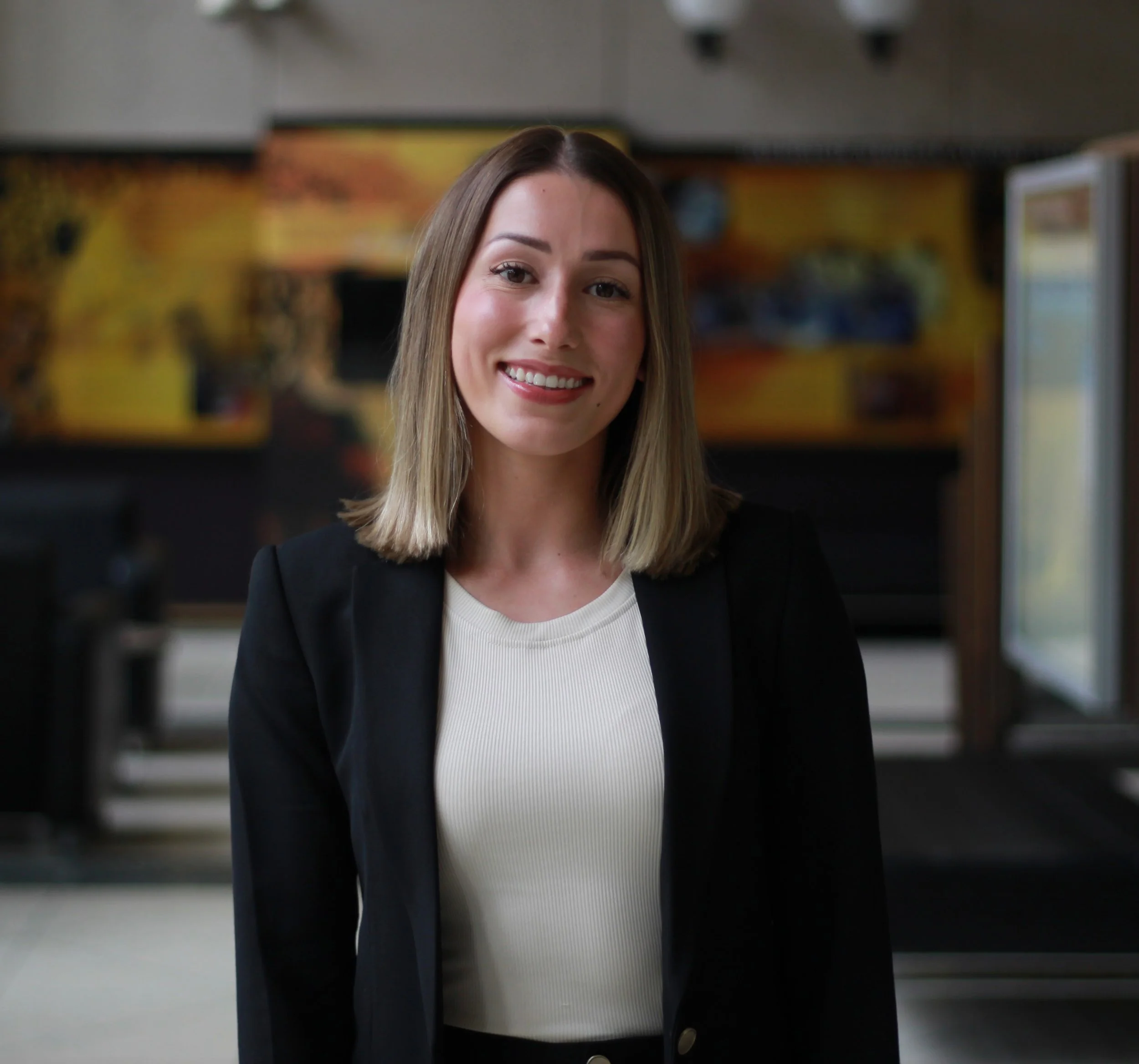
My name is Allie Penrose and I grew up in Halifax, NS. I’ve always been involved in sports and wellness, and from a young age knew I wanted to work in healthcare. I completed my undergraduate degree at Acadia University in Biology and Psychology (Neuroscience), then worked at the QEII Regional Tissue Bank assessing donor eligibility and assisting with surgical tissue retrieval.
Working closely with a variety of healthcare professionals helped me identify the path that best aligned with my long-term goals, and when Dalhousie University launched its Physician Assistant program, it felt like the perfect fit.
Outside of school, you’ll usually find me at the gym, spending time with friends and family, reading, or planning my next trip!
CONNECT:
IG: @alliepenrose_
IG: @dal.mpas
-
PART 1: ALLIE'S PRE-PA EXPERIENCE
Allie: My name's Allie Penrose. I'm from Halifax, Nova Scotia, born and raised. I actually am finished the Dalhousie PA program. It's a two year program and it starts, it's, I think it's the only one that starts in January. So I did my undergrad at Acadia University in biology and psychology, the neuroscience stream.
And I knew I really wanted to be in healthcare in some capacity. But I wasn't really sure what. So I decided to work at the QEII for a couple years in a few niche roles in healthcare, which I'm sure we'll chat about later as well. And then Dal announced the program and it felt like per the perfect timing for me to switch it up and and start my career as a PA.
Anne: So for those of us that aren't familiar with QEII, what is that?
Allie: Yeah, that's the hospital here, like the main hospital here in Halifax, Nova Scotia.
Anne: And you're originally a Halifax native?
Allie: I am, yep.
Anne: What's it like growing up there?
Allie: I love Halifax so much. The people are amazing.
It's like small town vibe. I just find the culture here is so incredible and I knew that I wanted to stay here. So when Dal announced the program, it just felt like it was all like falling together, yeah,
Discovering the PA path (and why it fit)
Anne: How did you first come across the PA profession?
Allie: I knew I wanted to be in healthcare in some capacity. But I just did what I think a lot of us did research pretty much every single career that there could be not really feeling like I needed to do like medical school, but something along those lines.
So I looked up like a RT anesthesia assistant, OT psychologist, like really did a deep dive in all the careers. So this would've been back in 2017 when I was wrapping up my undergrad and the PA profession at the time, I just kept coming back to it. It felt like it, checked all the boxes.
It was my chance to practice medicine, but also get a variety of different things. 'cause I'm so interested in so many different facets of medicine. So that during my research then in 2017 I just really clicked. But there was no PAs practicing in Nova Scotia at that time. The trial here of the ortho PAs hadn't even happened, so I was worried to go to a school in Ontario or somewhere else and start that path and then never be able to come home kind of thing.
So I just kept a pin in it and then kept thinking about it while I was doing other things
Anne: You mentioned that there were a lot of check boxes that pa fit for you. What specifically about it drew you to the profession?
Allie: I've always had, this desire to work in healthcare, wellness and healthy lifestyle.
It's always been such a big part of who I am. So I knew that that was the path for me. But then with the PA profession itself, I knew it was my chance to practice medicine like challenge myself intellectually. Also the, a huge part for me was the lateral mobility that everyone talks about.
It's like the key word, words we use when we think of the PA profession. The flexibility, because I was so scared to commit to one specific, like area of medicine, I wanted to be able to switch up specialties if I wanted to maybe do a couple specialties at once. So that was the big thing for me.
And I knew I wanted to be patient facing. Any like interactions I had with people were what really resonated with me during my undergrad and during some of my other careers. It was the patient facing that was the most rewarding part of my prior experiences. I don't know, I just, yeah, just those things were the main things and it all felt like the PA profession was lining up with all of that.
Anne: Can you give us a little bit of background on how you were able to determine that it was the best for you?
Allie: I took the time to actually really reflect, because when you're in undergrad, I think a lot of us feel like overwhelmed with the options, especially when you do science degree, but you're not really gonna go to medicine.
You're like in your head about all of the different ways you could go. So I did a lot of journaling. Like I had to really sit down and think, what are the things that are important to me? And that being like variety and the things I, I could practice like in the pa profession with the lateral mobility the patient facing aspect of it.
And then from there I also did reach out to people within the different disciplines. If anyone I knew that was an OT or an RT , a PT, and what their day to day was like, I did a lot of research. I did like I said, like a deep dive and then I would go in one direction and then almost commit, but then be like, it just doesn't feel quite right kind of thing.
So I think the biggest thing for me was like actually really taking the time to sit down, reflect, journal, and keep those values in my mind as I was going through each profession.
Anne: And when reaching out to those different disciplines a lot of PAs are not connected directly with healthcare providers.
Getting exposure: networking, hospital jobs & role clarity
Anne: So how did you get those opportunities? Was it an informational interview or was it more more shadowing that you had gotten?
Allie: Before I started my job in the hospital, it was really just like research online and then. If I knew a friend of a friend kind of thing, it would, it was pretty informal that way, reaching out to people trying to connect me or like any resources I had through my university, Acadia University.
Yeah, a little bit of an informal way to reach out to people. But then I thought what if I got a job in healthcare? That way I can see like firsthand how these professions work and what the day to day is, make a lot of connections that way, and then really start to figure out my path.
So really shortly after I graduated Acadia I got a very niche role in the hospital and it allowed me to meet a lot of people that way.
Anne: Fantastic. So it was through networking and building relationships through jobs, replacements that you had.
Allie: Yeah. Yeah.
Anne: And how important would you say that understanding different roles and understanding PA role is prior to applying? To the PA program.
Allie: Yeah, that's really huge. I think that it was such a important part for me and I think it is one of the things that I'm hoping showed in my interviews and in the whole application process because I was so thoroughly researched and tried to reach out to anyone I possibly could.
I think the PA profession is still so misunderstood in some ways, or not really. Like people don't really know what it is, and I think it's so important to know exactly what you're signing up for and make sure it is what you want. Because I think the last thing you want is just to choose PA because why not, or choose pa 'cause you don't, you think medicine's too long.
Those kind of things. It's not really the right reasons. It's more like. Making sure the ins and outs of exactly what it is that the profession will be. So I think that's like such an important part of it.
Anne: It sounded like you had a very self-reflective journey and you were very insightful on the reasons of why you wanted to apply.
I'm sure it was able to shine during your interviews.
PA awareness in Nova Scotia: advocacy & pioneering the role
Anne: So yeah, the reason why I ask that question is often, sometimes when I'm speaking to pre-PA students, they don't actually have an understanding of what a PA is. I know that speaking with most patients I know most people know what a nurse and a doctor is for for providers that aren't as well known midwives physician assistants, advanced practice, physios, nurse practitioners.
The awareness is getting better over time as the number of those types of practitioners increase. But was it ever a deterrent for you that PA wasn't as well known or not as well established within Nova Scotia?
Allie: I don't think so. Which is interesting because like in second year, especially when you're like the first PA in Nova Scotia, there's very few PAs.
We're growing all the time. But you're really the first interaction that anyone has had with a PA. So you really have to be like, ready to advocate, ready to educate and stand up for the profession. It never really, it. Was a deterrent for me. It was more like, okay, let's put on the advocacy hat and let's like show everyone how amazing we can be as part of the team.
Anne: So it sounds like you're almost drawn to that aspect of helping to pioneer the profession.
Allie: Yes. Yes, definitely.
Anne: Okay, wonderful. I think we're really lucky that we have someone like you pursuing the profession and being an advocate on the, our behalf. Thank you.
Dalhousie PA admissions breakdown: prereqs, GPA, seats & residency
Anne: So I wanted to move pivot to your experience as a pre-PA 'cause I know a lot of people are very curious about this.
I know that you had mentioned a few things before, but can you just break down some of your pre-PA stats in terms of your undergrad healthcare experience and any other admission requirements that you think might be helpful to know?
Allie: Every PA program you need an undergrad.
It's helpful if you have. Some met some science background. Prerequisites for Dalhousie specifically were anatomy and physiology and biochemistry. So I had those as part of my undergrad. And then as far as stats, I was just actually reviewing the Dalhousie application website because it does change very every year.
So if anyone is listening to this thinking of joining the Dal program, I would advise you to go to that website just to make sure you're up to date on everything. But for me it was at least a 3.0 GPA with 3.7 being the more competitive. So my, my GPA was 3.8 on a four. This is on a 4.0 scale. And then there was no healthcare hour requirements as part of Dalhousie to get in.
But I felt like I myself started in 2017 and then the program didn't start until 2024. So I had. Six years of experience. And I felt like that was a huge help in in my application process. I think it really taught me a lot and I was able to like call on that experience. I was able to tie in relationships and shadowing that I had done with that career and really show that I had that experience as part of the interview and the application process.
But it's, healthcare hours are not required. Everyone brings their own strengths. So I had that. And then as far as the other things required in the application process, we had to write a personal statement and then there was some short answer supplemental questions on how you handle certain patient interactions and that kind of thing.
And then Dal has 24 seats, mostly saved for Nova Scotians, but three for New Brunswick and one for PEI.
Anne: Okay, so I know one of the requirements is you have to be a resident of the Atlantic to even be considered for applying, which is interesting. Yeah. Why do you think they have that requirement?
Allie: I think they have that requirement as a way to retain people.
I think they would like, that's the only thing I could really think. They wouldn't want a lot of people going from outside and then going back to Ontario or Calgary and leaving Nova Scotia. So that's what I was thinking. But
Anne: yeah, I guess admitting locals or people that have lived there, they're more likely to go back to the communities they grew up in.
Pre-PA HCE
Anne: You had mentioned that you had six years. So what your I guess communication skills and your ability to problem solve critically think very different at the end of undergrad versus where you were after six years. Can you describe some of the jobs that you had and how you found those opportunities?
Allie: I graduated in 2017 and at that point in time I was just like, get me in the healthcare field in some way. And then from there, I'll make a lot of connections. I'll be able to see how people practice day to day and weave my own path. So I started in a very niche role in organ and tissue donation at the regional tissue bank at the local hospital here in Halifax.
And in that role we were responsible for screening donors after they had passed away for eligibility. So going through their medical chart, talking to the medical team speaking with loved ones about their medical history to ensure that they were suitable for donating their tissues. And then along with that, we would fly out on the in the Atlantic provinces for organ donation, which is perfusion support for that team.
So that role specifically very, very niche. A lot of like emotional intelligence and resilience. 'cause it was very tough to speak with families so soon after they had lost their loved one. And, but it was a beautiful thing to be able to offer them that gift of donation at such a sad time. So a lot of that side of things as well as surgical experience.
So we would go in the OR and actually surgically retrieve the tissues and assist in the organ ORs as well. So I picked all the things I love the most of that job, which is like the hands-on surgical skills as well as that like connection that I would have with patient families. And I also had a role for, it was connected to that laboratory here at the hospital in cell therapy and stem cell transplant.
So I would process human stem cells and cell therapy products like CAR T products. For transplant for people with blood cancers. And then I would be able to go to the patient room and be part of the transplant process where they got their magic cells that would help cure them of the cancer. So again, in that role, that specific like patient interaction and that like emotional connection I had with the patient was the best part for me.
Anne: Yeah, that sounds like amazing experience. How did you was there a lot of prior experience required in order to apply for and get those jobs?
Allie: Yes and no. They definitely wanted like the undergrad, but then straight from my undergrad I got into the tissue bank. And because it's such a niche role, there's not really a program you can do in advance.
It's an eight month, like on the job training, so I feel like for that one, I just got really lucky in my application process. I had some good references from my school to get in, like in the first place. I don't think they hire a lot of people right at our school. Usually they do want some healthcare experience, but I got lucky with that one.
And then otherwise again, I was just able to like, make those connections with hospital and move into that cell therapy role as well,
Anne: excellent. And what are some of the previous healthcare experiences or undergrads of your classmates?
Allie: Yeah. We had a very wide variety. A good amount came straight out of undergrad.
And like I said, everyone has their own strengths, so don't feel like just if someone's watching this trying to decide whether to join pa don't feel like overwhelmed or like just coming right outta undergrad is not enough. 'cause they brought so much of their own strength. With just the really great study skills and come, fresh like studying and a lot of that science is very like in their minds still.
But anyway, yeah, a lot of people came right outta uni or university. We had a couple paramedics, we had a respiratory therapist, the physio and someone who worked in the pharmacy. So a lot of different paths.
Anne: Anybody with just an undergrad background that didn't necessarily have a paid healthcare experience?
Allie: Yes definitely like almost half of our I would say eight people maybe of the 24 of our came class came right from their undergrad. And I think they had a lot of volunteering or had some like part-time gigs on the weekend to get their foot in the door for healthcare. But again, like I said, healthcare experience is not required to get into the Bell program, so I don't think that should deter you from trying to apply if you're right out of undergrad.
Finding Health Care Experience: Shadowing & connections
Anne: And do you have any suggestions for students that may not have strong healthcare experience on how they can find how they can find those types of experiences?
Allie: Yeah, I can speak for Halifax, Nova Scotia. I don't really know if it would be the exact same elsewhere. But for me, networking is actually quite easy in Halifax, I find because it's so small.
It's really easy to make those connections. So depending on what resources your undergrad university has, Acadia had a lot of good, like networking opportunities, that kind of thing. I find people are really open to shadowing. So I was lucky in that I did get my foot in the door in a healthcare position, but then from there I did so much shadowing that kind of was to help me get better at the job I was doing, but also not required at all.
With the donation program, like I would go to the OR to see a lot of the ortho surgery so that I could better understand. And this is me just going outta my way to find people to say, would you mind if I come observe? Because it would help me or a lot. Also part of the tissue donation is corneas, so I would go to see some like ocular surgeries as well.
Again, not required, but really people are so open to having you just come and observe. So if you can. Find someone within the hospital that can connect you with maybe a certain specialty that you're interested in. People are so open to having learners or even just people that are just trying to get like a sense for what the day-to-day is.
'cause it's so hard to really know what something like a job is really like until you see it, I don't know if that helps the actual specifics and if anyone in Halifax, I'm sure at some point here I can share my email and people can reach out to me 'cause I have a lot of connections within the hospital.
But yeah, if you can, even if it's like not a paid job or it's not official volunteering if you can try to reach out to someone and just say, can I come in and shadow you? I think that would really help.
Anne: Yeah. And coming from a place of genuine interest, I think a lot of pre-PA students sometimes fixate on trying to obtain shadowing from a PA, but.
Shadowing anybody within the healthcare system's important. I think because of understanding the scope of practice of different providers that you may potentially work with as a future PA is so invaluable.
Allie: Exactly. Yeah.
Staying organized through PA Admissions
Anne: Now going back to the application process, so I like to compare applying to PA school a lot, like having a part-time job. There's a lot of different moving parts and deadlines. How did you stay organized and on top of everything without getting overwhelmed during the application process?
Allie: It's funny because it was such a blur for me.
It was so hectic. Just the fast paced nature of it. And I think it was a little specific to our class because Dal had announced the program in August of 2023, and it came outta nowhere. I had the job, a job at that point, and I hadn't really been thinking about PA that much anymore, so I was like, oh my gosh, like this is my opportunity, I gotta do it.
But it, they announced the program in August. Applications went out the next month, and then part two of the applications, which was the short answer, was like couple weeks later, they immediately told us about interviews in October, and then the final decisions were all in November. So it was such a short amount of time, and I think it's a little bit more spread out now, but I just didn't have time to overthink it because I was like, let's just do it.
I just made sure to like really schedule in time to prepare for each part. A lot of the personal statement was more so just getting out like all of the reasons why I wanted to be a PA. And I think also a really important part for me is that I was from Nova Scotia and I made it very clear that I wanted to stay in Nova Scotia and help healthcare system here.
But yeah, as far as staying organized, I scheduled things like in my calendar every single day. I would leave my job and work on perfecting certain parts of my application, hoping that I would get an MMI interview. I started researching that and practicing MMI questions like as much as I could, but it was very quick and very hectic. So it was, yeah, it was hard,
Anne: fast, and furious. Just like PA school.
Allie: Yeah, exactly. Exactly. It was my first taste of what it was gonna be like.
Anne: Yeah, sometimes I think that if the deadlines are really dragged out, it's almost a bit more torturous. You're stressed for a lot longer because of the uncertainty and just waiting to get those things done.
Are they still doing a January start for Dalhousie?
Allie: It's still January start. I think. Like I said, the application process is a little different now as far as timelines and I do believe they plan to change it to a September start just 'cause every other program at Dalhousie is a September start.
And from what I understand, every other PA program in Canada I think is a September start. So we're a little, like strange in our timeline there. So I think the plan is to initially shift to that. But they're still January for now yet?
Anne: Yeah. There was a point in time where UFT actually I think they graduated their students in January.
Okay. And McMaster was in September. There was a little bit of a disconnect with regards to the jobs, the career start, and when people were able to apply for jobs and start working. So it's good that they were able to match it up, but because Halifax is, or sorry, Nova Scotia and the Atlantic is a very particular area, I don't think you're really competing with other graduates from other programs necessarily for the spots that are there, there that are there in the Atlantic.
MMI interview prep: Practice Strategies
Anne: So you had mentioned that you were practicing MMI questions. Can you tell us a little bit without, of course divulging like conflict of interest issues with the program, but what was your, what was the MMI like? What was your understanding? How did you prepare?
Allie: Yeah. That was like by far for sure, the most daunting part for me.
I find interviews very challenging. I think because I knew interviews were challenging. I tried to do as many as I could, like not even knowing I was gonna do PA school, but I was trying to get better at them. Even interviewing for the first job that I got in the hospital, thinking that it was, there was no way I was gonna get it.
But putting myself in those uncomfortable situations because being comfortable with the uncomfortable is like the whole motto of me in PA school, like everything is challenging. But yeah, putting myself in those situations, interviewing for jobs and switching it up to be more comfortable.
So just as far as prep in advance, just having that interview experience I think really helped me. Ours was in person, which I think I preferred. So yeah, as far as my expectations and preparations like I said, I just, I like to be very prepared, but knowing that MMIU can't like really know what they're gonna ask, so I just tried to find as many practice questions as I possibly could.
Researching they're still, and making sure that there were Canadian resources. I think in McGill, maybe McMaster, a lot of like practice MMI. So it's more just like getting in that habit of being comfortable with those types of questions, knowing that you can't come rehearse with the exact like, which they don't want.
It's just the whole point of an MMI you can't, you're never gonna know every single thing they're gonna ask and how to perfectly answer it, which is uncomfortable, but that's just the way it is. So really just getting in the habit, like practicing, watching YouTube videos, the different MMI practice attempts to, was really helpful.
Anne: And when you say practice were you recording yourself and watching the playback or were you practicing with a friend or family member?
Allie: I was doing both. I would practice with my partner. And just give him the list of the MMI questions I found online and get Yeah, get used to saying them out loud.
It was more that I think practicing with him. But I did record myself a few times and pick up on parts where I wanted to, like fix of it and that kind of thing. And I also had got a book, which I think you have some resources on your website too, of suggested books. But I got a book that had a lot of practice questions and like tips and tricks thing too.
Anne: So that was really helpful for you. That's good. Yeah. Now the day of was this a whole day of affair? Did it take up the entire morning and meeting your potential future classmates must have been intimidating too.
Allie: Yes. The whole thing was so intimidating. Like I said, that was almost better because we didn't have time to think about it much like we got announced that there was interviews in two weeks.
And it's just happening in two weeks. If there was, if that was dragged on, it would've been even worse. But it was, I think, I can't really remember now, I think maybe a two or three hour chunk. We were in different groups, so I was with maybe 20 other classmates. And there was a little intro session on like what PAs are, how the MMI is gonna work.
That was painful. 'cause we were sitting there for almost an hour, just like shaking in anticipation for the interviews themselves. But, so I got to briefly say hi to people and meet them, but at the same time, you're in your head. Then, yeah, the, I think it was 12 stations in person. I think they're now online through Dow.
But it all went by so quickly and it's hard to know really how exactly you did in an MMII find like I just kinda left being like, I did the best I could and we'll leave it at that,
Anne: Would you say that you managed your stress well? Or what did you do to combat that feeling?
Allie: Yes and no. I think I knew going in that I was going to like that kind of thing. Public speaking or interviews are really like a challenge for me. They make me really uncomfortable. So I think going in, I had to like really tell myself every room is a new start, which everyone tells you going into an MMI, but you really gotta stick with that.
And if you have a room where there's a question where you didn't really feel like you, you hit the nail on the head, you kinda have to just take a deep breath. I did some breathing exercises in the hallway and it was like, start fresh. You know what I mean? So I think that's the best. And leading up to it, like I said, just telling myself that I've done everything I can to prepare for this.
At this point, it's just like what's gonna happen is gonna happen.
Anne: Fair enough.
GPA vs the ‘whole picture’: what really makes an applicant stand out
Anne: there are a lot of students that may not have a higher GPA, so I know the average tends to be a little bit higher towards 3.7. You had mentioned you had 3.8, but I know that the range of those that get accepted is a bit wider, so
Can you speak to how important GPA is in terms of the success rate of getting in? Or do you feel like there are other factors that are more important?
Allie: Yeah, definitely other factors. I will say that Dal, the Dal website itself does say that 3.7 makes you more competitive. But everyone has their own unique experiences and I think that it's the whole picture.
Like I said, 3.0 on a 4.0 scale is. Gets you in to be considered. And then I think the most important part of the application process is really like focusing on what makes you unique. Because everyone's gonna have a pretty good GPA, everyone's gonna have that volunteer experience, maybe a little bit of healthcare experience.
But if you can really focus in on like your why I say your real reason of why you want to do the profession. And it's very clear you understand the profession. It's very clear that this is the route you wanna take. And then again, focus on that unique part that makes you different than someone else.
I think that's just as important. And you might in your head think it needs to be healthcare related, but it could be unique in any way. Like you're a competitive athlete in a certain sport. That kind of thing makes you so unique and it brings val different values, so I don't worry like definitely apply no matter what I would say.
And don't really try to focus on the GPA 'cause that's such a, like one part of such a big, background and experience.
Inside Dalhousie's PA Program
PART 2: DALHOUSIE'S PA PROGRAM
Anne: Now I wanted to move on to the next part. So what your experience was like at the Dalhousie program. So can you give us a quick overview of what's involved in the education? So I think it's very, it's similar to a lot of PA programs, but as they were forming it, they spoke with the other PA programs in Canada and came up with their own their own style. So it's 24 students every year and it's a January to January program. So we finished up, like we're the first class and we finished up in 20 December, 2025.
Allie: And then as far as the setup, like I said, similar to other programs in that first year is all didactic learning with the key courses being medical foundations, which at Dalhousie, very case-based. So it'll be a case, so the first unit was cardiology, so it'd be a case on something in the cardiology field and a lot of questions you had to answer that went into like clinical presentation, pathophysiology, anatomy management complications, all that kind of thing within that case.
And you work in small groups. So that's a very key part of the PA program. Then we had skilled clinician that a lot of schools have as well, which is more the hands-on skills, the practicing history, taking physicals, your OSCEs. And then we had professional competencies, which was a ethics and communications class.
And we also have a research component that's done in groups at Dalhousie. So you've, you're helped to find a mentor and then you do a research project with that mentor. And then anatomy and physiology labs. We, which were, we did some classroom lectures and then also cadaver labs.
So those are the key components of first year. And then second year is all clerkship from January to December with those key parts of medicine probably being very similar to other programs in Canada.
Anne: So what were some of the rotations or specialties that you did? Core and elective?
Allie: Yeah. So the rotations there, it varied as far as length.
We spent eight weeks doing family medicine pediatrics, psychiatry, obstetrics and gynecology internal medicine, surgery and emergency. I think that's all the core rotations. And then you got two electives that were each four weeks. So I did hematology. I had connections from my other cell therapy stem cell position.
I knew the team there. And there I have a really good collaborative team. So I did four weeks in hematology and then I did four weeks in dermatology.
Anne: . Now, before you did clerkship what specialties were you drawn to? Or what did you think you would practice?
Allie: I was someone who was so interested in so many different fields that it was so hard for me to decide going in.
I thought I would really wanna do surgery because I had that kind of surgery style background. So I really knew I was gonna that one. I really thought I would like psychiatry as well. And then I was excited for my elective in hematology 'cause I knew the team and I could see the fit of the PA on that team as well.
So those were the ones that I was really excited for, but I can't even. Express, like I loved every single rotation so much. I would be like in the middle of a rotation and text my classmates, my friends, being like, okay, I'm doing this. And then the next week I'd be in a different and I'd be like, no, I'm doing pediatrics.
I just really liked everything, which I think is a good thing. But it makes it hard to decide in the end like where you wanna go,
Anne: yeah. And what's nice is that you don't have to decide necessarily Exactly. Being a student or medical learner is very different than what it's like actually practicing.
So i'm glad you got exposure to all of those different areas. Now for first year, just moving back to that what would you say was the most challenging part?
Allie: Yeah I think if I were to break it up into like general, generally being a PA in any program, I'm assuming first year was just really getting used to that pace.
Everything is so fast, and it's very easy to become overwhelmed. I think also I, in my mind, I'm very much a perfectionist and I just really wanted to understand every single concept in such depth that the time just simply didn't allow for. So it was really hard for me to turn off that switch of studying.
I would leave class and I would just go home and study. 'cause I wanted to like really know everything. But then I would, I burn myself out really quick in first semester just because there was no one telling me like, you have to stop. Now is the time to stop. It was just I have to study, I have to study.
I can't go do social things because I need to like cram all this information in my head. I got a lot better as like the semesters went on at time managing and realizing like burning myself out is not gonna help anyone. It's not gonna really, I'm not learning that much more. I'm just feeling guilty for not setting.
So the pace. And trying to understand that perfection, like perfect isn't always attainable. That was the hardest thing for first year for me. And then for Dal specifically, because it was a brand new program, there was a lot of challenges with that. Like a lot of the content they had adapted and borrowed from the medical school.
So a lot of it was very, the cases we did, a lot of them were almost identical to what medical students were doing. So they were really in depth and it was hard for us to gauge like, how much do we need to know versus the medical students and like finding that line. So with that content kind of being created in real time, it was a little, a bit of that was a little hectic at the start as well.
But like I said, as the year goes on, you get your groove.
Anne: Yeah, that sounds very much like the experience that I had with Mac and I think establishing any new program, they work out the kinks, but subsequent applicants will get the benefit of feedback from previous students, so I'm sure they have a little bit more solid hold on their or handle on their curriculum.
Now.
Studying Smarter: Cutting Down Resources & Setting Time Limits
Anne: So you had mentioned that you were just studying so excessively and medicine's an enormous amount of information you need to have. So how did you go about I guess getting more efficient or managing your time differently? Was there something specific that you did?
Allie: There was a few things I did.
Like I said with the cases it was hard because it would ask a question like I don't know if it was like I said, a cardiology type of case and it would ask a question like specific about the symptoms. And you could go on, like your answer to that question could be two pages long if you want it to be.
So I'm on UpToDate, I'm on like Mark manual Toronto notes, like using every single, I think I had 12 resources at the start. So the best thing for me was to really condense what resources I was using instead of looking in 12 different spots, find the ones that I really liked, that I found had the information that made sense to me, accurate UpToDate information.
And then also realizing with these cases for medical foundations, like a two page answer. You're never gonna remember that's not actually gonna be applicable for medicine. So it was in my head like, what is gonna actually be applicable for me in practice? How do I condense this and make it make sense for me, but also so that I like know that I'll remember it kind of thing.
And then the biggest thing was like really condensing those resources and figuring out what worked for me. I think that's how I did it. And then also putting a limit on you can't spend seven hours on a case like you. I had to like time it for myself and be like, whatever I could get done in those three hours that I have allocated for that, then that's what I'm gonna get done.
Anne: Yeah, that makes sense.
Clerkship Reality Check: Unpredictable Schedules + Being the First PA Face
Anne: First year and second year are completely different in terms of applying everything that, you know. So what was challenging about clerkship?
Allie: There's lots of things of course that are challenging about clerkship, but for me it was such a breath of fresh air.
Like I, I really love being able to apply what I learned in second year or in first year to second year. I think the biggest challenge, again, generally as a PA is lifestyle changes. We don't know our schedule like whatsoever. And it was probably the same for you. I would start a rotation tomorrow and I wouldn't even know what hour I'm like waiting by my phone.
When do I do, I go in at 4:00 am I even working tomorrow? Like trying to figure out my schedule. So I couldn't plan anything, which was fine. I knew even going to PA school, like my social life was gonna take a toll and there were some things I would have to sacrifice, but I did not know my schedule at all.
Even really sometimes where I was gonna be for rotations, we had to do a couple rural rotations as part of Dalhousie. So even like in the summer, I was like, am I gonna be in the valley? Am I gonna be at home? That kind of thing. So lifestyle planning was like thrown at the door. And then as far as specific to Nova Scotia, like I said, this such a new profession that we were really the first face of a PA that anyone had seen.
So I felt a lot of pressure in that. Like I said, I was excited to be an advocate, but I felt a lot of pressure to show such a good face all the time and like really prove myself. And there was a lot of like advocacy, which when you're tired and you're oh, I'm explaining again what a PA is.
I'm explaining again what a PA is. And like I, I think I did a good job every time, but it was getting tiring,
Anne: Really perfecting that PA elevator pitch can be challenging. Yeah. So when I was going through I also had a lot of people that were it's the first time they ever worked with a PA student, much less a PA.
And I found that some placements treated me like a med student, like a med clerk, and that seemed to be the easiest way. Others were not certain. And again, the PA name is a bit of a misnomer. Some people think you're more administrative, which is not the case. It's all clinical work and seeing patients now, work like.
Can You Work During PA School? Sleep, Exercise, and Burnout Tradeoffs
Anne: One thing I wanted to ask was is it possible to work part-time during the PA program?
Allie: That's a good question. Some people did it. I, for myself, was not an option. I was on a leave of the position that I was previously doing, so they did tell me like, you can come back if you want work to work a couple hours here and there.
It was just not feasible for me. I was using all of my brain power, so anytime to I wanted to make sure I actually got sleep and I actually got to exercise this kind of thing. So it didn't make sense for me. I think for some people they did end up working maybe the weekends in second year, definitely not.
There's just so many extra hours you have to work and weekends. But maybe in first year, I think a couple people like picked up the odd shift. But I, myself, I would find that too much. I think.
City vs Rural Rotations: Where You Learn the Most (Nova Scotia Placements)
Anne: So in terms of where you did your placements, were they at the big hospitals, were they at smaller clinics?
And do you mind sharing what cities or areas that you did the rural rotations at?
Allie: Yeah. Going into clerkship, you talk to medical students or other PAs from other areas and they're, they always say they're rural rotations. You're gonna learn so much, you're gonna get to do everything.
But then in your mind you're also like, yeah, but the city's my home and I don't really wanna leave for months on end, to be rural. So you're like battling of like where you wanna be. Like I said, with Dalhousie you had to do at least one, two rotations, I think in a rural setting. So most of mine were in the city, a lot of 'em at the QE two hospital I was talking about, which is the main hospital here, or just across the bridge, which isn't far in Dartmouth.
Then as far as family clinics, mine was in the city. For pediatrics and obstetrics and gynecology, same thing. It had to be in the city because that's where all like the core of all that is. But then for my surgery rotation and internal medicine and then also emergency, I did them rural. So I was in the valley at the Valley Regional Hospital in Kentville here in Nova Scotia for surgery actually.
And then I enjoyed it so much and the team there and I was just being given so much opportunity hands-on, just like everyone tells you, like you're the only learner. There was only one other resident. There was no other student. So I was never like, I was scrubbing into every single surgery.
I was like hands-on. Really engaged. So after that I actually reached out to the program saying, is there any chance I can stay and do my internal medicine here? I love it at this hospital and I've met the team because it's such a small little hospital. You meet everyone and they're like, excited to have me.
So it worked out and I did that there as well. And same thing, they were just so good at involving me in everything they could. So the things people tell you as far as rural being excellent. I now can agree. Support, yeah.
Anne: Wonderful.
After Graduation: Licensing, Starting Family Medicine, and Job Hunting as the First Cohort
Anne: And what are your plans now that you've completed the PA program? Because you would've just finished how long ago? I just finished at the end of the year, like the year 2025. So in December we, we wrapped up, we wrote our final exams and then in Nova Scotia you can get a provisional license, which allows you to practice until you get pack, like you write the pack exam and get certified.
Allie: So the over January, February was like figuring out that license, getting all that paperwork and everything set up. And I start my position at a family me medicine clinic on Monday, actually close by, close to home. Yeah.
Anne: That's wonderful.
Allie: So I'm excited. Yeah,
Did PA School Prepare You? Confidence, Clinical Skills, and Knowing Your Limits
Anne: Do you feel like the PA program provided you a solid foundation for which to start practice as a PA?
Allie: I definitely do. I think the biggest thing it taught me, as I was saying earlier, is to be comfortable in the uncomfortable and understand that you're not gonna know absolutely everything.
Medicine is such a huge field, so just being confident in what, I think that kind of clicked for me in second year. So much of all these like things I was cramming and all these lectures I was reading, or like the flashcards I was doing, it didn't feel real until it starts to actually click and you're like, wow, I actually do understand a lot of this stuff.
I did retain a lot of this stuff. So as far as like physical exam, history taking, coming up with a differential diagnosis, I feel really confident in that. And I also understand that like I said, I'm not gonna know absolutely everything. So I know where to go, like what my resources are. I feel like I'm gonna be supported by this team that I'm starting with on Monday, and I'm never gonna be expected to be.
Put or allow myself to be put in a situation where I don't feel comfortable. So I definitely feel like it prepared me to just have a good connection with patients as well. And do a lot of that patient facing with all that like practice osce and then all of second year, like seeing patients.
It helped me that way and helped me really understand what resources to lean on and what to use, like when I need it kind of thing.
How to Explain What a PA Does: The Elevator Pitch + Value to Employers
Anne: And I also wanted to ask so I'm sure you encountered supervisors and other physicians that have never worked with a PA. So if you were to explain to someone, like a potential employer what a PA is and what they could offer to the practice what's your usual spiel or what would you say?
Allie: Yeah, it's interesting. I feel like my spiel kind of. Adjusted, depending on who I was talking to. But if it was for a practice that I was trying to work in I did try to avoid comparing it to other professions. 'Cause a lot of people you hear say it's very similar to an NP or it's like a doctor, but not, so I tried to stay away from that And just say that we are a very important part of the team.
We're really focused on practicing medicine in a collaborative way. So we can see patients take histories, do physical exams, try to get to the bottom of what's bringing someone in and come up with a diagnosis. And we are also able to prescribe medications. And we always have that collaborative relationship with the physician.
So if there's any time where we feel we need to consult them or need them involved, they're always there for us. But. We're really able to like, help provide access for patients and have good relationship with patients in practice, and help in so many ways, but help with burnout for other, for physicians help with like so many aspects, like a set of a, of access to care for patients, especially where in places like Nova Scotia, where it's really difficult
Anne: yeah. I sometimes I feel like speaking to prospective employers it's a little bit of a different language because you have to talk about how the business model of a PA makes sense. So there's definitely like non-monetary benefits quality of life, less burnout, opportunities to focus on other areas of your life.
Less documentation and less paperwork. But there's also increasing the size of the practice, reducing wait times. And I know that at our at our surgery practice at least in the outpatient setting the addition of a PA actually allowed the surgeon to decrease the time in clinic triple the number of patients they were seeing without wow.
Increasing the workload. So wow. It's there's different metrics and ways that you can do it. And billing can be a little bit tricky. I'm not sure how the the system is in Nova Scotia but it does, I think having a PA certainly makes sense especially if it's a, I like to use the term extent like physician extender.
Allie: Yeah.
Anne: Or we extend medical services but while also providing quality patient care. So it's an exciting thing to be part of, and I'm excited for you to see the profession grow.
PART 3: ADVICE FOR PRE-PAs
Advice for Pre-PAs: Choosing the Profession, Time Management, and Imposter Syndrome
Anne: Now, I know that you've been through a lot through your pre-PA journey and now having had completed PA school.
So do you have any overall lessons you've learned advice or encouragement for pre-pass that are in the throes or in the process of applying now?
Allie: , I've learned so, so much throughout the process and I think, yeah, looking back if there's certain things that I would really focus on it's making sure that you choose the profession because you want to be in this profession.
Like I said, doing a lot of your research, talking to current PAs current PA students to make sure you really understand the profession before going into it, because it would be. Really upsetting to like, put yourself through the two years really hard work and then choose not to do it.
It's not really the thing to do just because like I wanna do a shorter med school. You have to really wanna be, do this profession and be passionate about this profession. I think as far as the most important part of PA school is time management. Try to schedule things in, like even schedule in your self care, like schedule in your gym sessions, schedule in your social time because it's so easy to become overwhelmed and burn yourself out like I did at the start.
So you can work on your time management, try to put things in a schedule, however that works for you. That's really important. And then, again, it's like cliche, everyone says it, but imposter syndrome is real. I still have it to this day. Every single person has it. And I know you're gonna feel like everyone around you has it all figured out and they're smarter than you or are they like.
I understanding things better than you, but every single person feels it. And that's okay. And it's okay to reach out for help. I think it's nice now that future classes will have cohorts above them to reach out to and ask for advice, ask for help with resources, that kind of thing. So don't be afraid to ask for help 'cause we've all been there.
I think those are the main things. There's so many things I learned, but those would probably be like the key takeaways of advice for people.
Anne: Yes.
Study Tools & Apps: iPads, UpToDate, Toronto Notes, MDCalc, and Firstline
Anne: So I'm gonna inadvertently age myself here. So back when I was in PA school, we purchased textbooks. We brought our laptops. And I know that things have evolved. So what tools devices or apps are your you and your classmates using to study?
Allie: Yeah, like I said, I think that was the biggest part for me at the start, just the vast amount of things you could do and trying to figure out your path. It was hard, I think, because I did go to school a a little while ago.
I was so used to like the handwritten notes. So still to this day I have colored pens where I like write my handwritten notes written out. So my hands cramping by the end of it. A lot of people in my class had iPads to do the same thing, take notes on their iPad. That's as far as tools.
The main thing was definitely iPads. I have a laptop that I used every day as well. And then as far as apps resources I narrowed it down to really liking UpToDate. But as a lot of us know, it can be really in depth. So it's like you really gotta read through a lot of stuff to get to the core of it.
So if I'm really trying to understand a concept in depth, UpToDate, I love Toronto Notes and Merck Manual. Those are the ones that I like narrowed it down to at the end as my favorite. And then as far as apps like of course, MD Calc to do all your calculations in second year, every single person, the med students around you and whatever specialty you're in, the docs will be like, download this app, or download that app kind of thing.
We have an app here in Nova Scotia first line that tells us the first line medications to use for for our area. So that was really helpful for me. I think now Dalhousie will be better at having a source of these are the main resources you should use and that will help you the most, because I think that's so important.
As far as physical textbooks, I didn't really use any physical books. I was an online girl.
Anne: That's good. Yeah I still have to like, print out papers in order to annotate them. I can't, it's difficult for me to do that on an iPad or a screen. Just again, a generational thing.
Final Notes
Anne: So I'm so glad I got to get to know you and learn more about the Dalhousie program. I think there's so many parallels with some of the pros and cons and challenges that come with being part of some of the first classes. I was part of the second class for McMaster's PA program, so everything you were saying about clerkship, I'm like, oh my God, that was me too.
Allie: That's interesting. I didn't even think about that, but that makes a lot of sense that yeah, you would've had a lot of the same problems and challenges. Yeah
Anne: But it it's certainly evolved since that time. I don't even introduce myself I do introduce myself as a PA but I'm not explaining it as often.
A lot of PA students are having PAs as clinical preceptors, as they establish more graduates, so I'm sure the same thing is gonna happen in Nova Scotia as well.
Allie: Yeah, I'm excited for that to happen. I'm excited for it to expand. And I will just say even being the first class, there was a lot of advocacy we had to do in explaining our role, but the patients and the healthcare professionals that I encountered were so excited.
Like it really validated everything. Like they were so excited, really wel like open and welcoming of a PA. So I think that's a really positive thing and hopefully that just continues to grow.
Anne: Awesome. Yeah. Thank you so much for your time, Allie.
Allie: Thank you. It was nice to meet you.
Outro
Anne: And that's a wrap! Today, you heard Allie's journey from undergrad Uncertainty to becoming part of Dalhousie inaugural MPAS class. She shared how she researched multiple healthcare careers before realizing PA checked every box, why lateral mobility and patient facing medicine mattered to her, and how intentional reflection shaped her decision.
We also talked about Dalhousie admissions, GPA Realities, MMI prep, as well as her experience in Dalhousie PA program. If you want to connect with Allie directly, her email can be found in the show notes. You can also learn more about the program through the official Dalhousie MPAS program website which we've also linked in the show notes below.
If this episode was helpful, subscribe to the Canadian PA Podcast so you don't miss any upcoming conversations with students and PA graduates across Canada. I'll see you in the next episode.